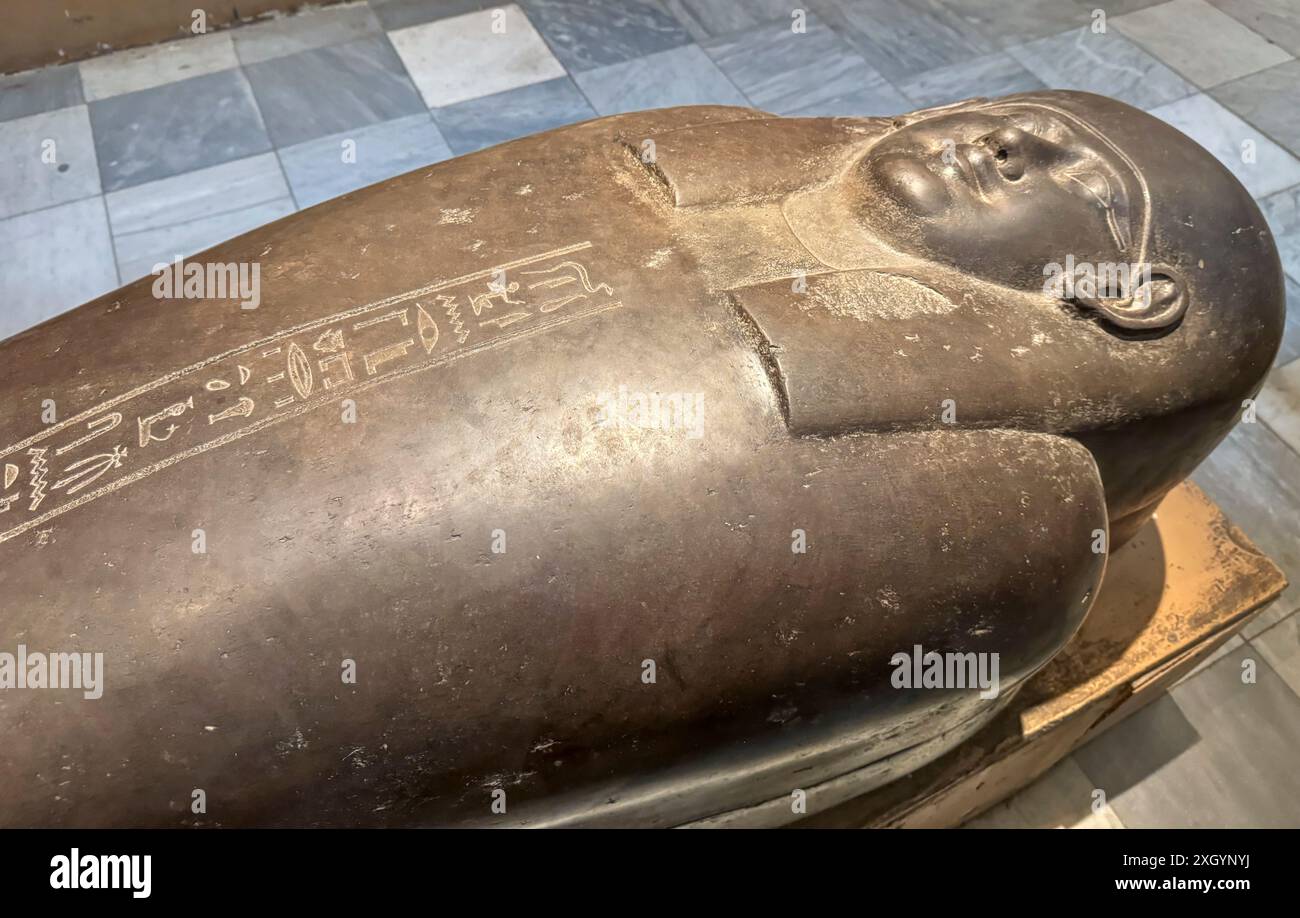
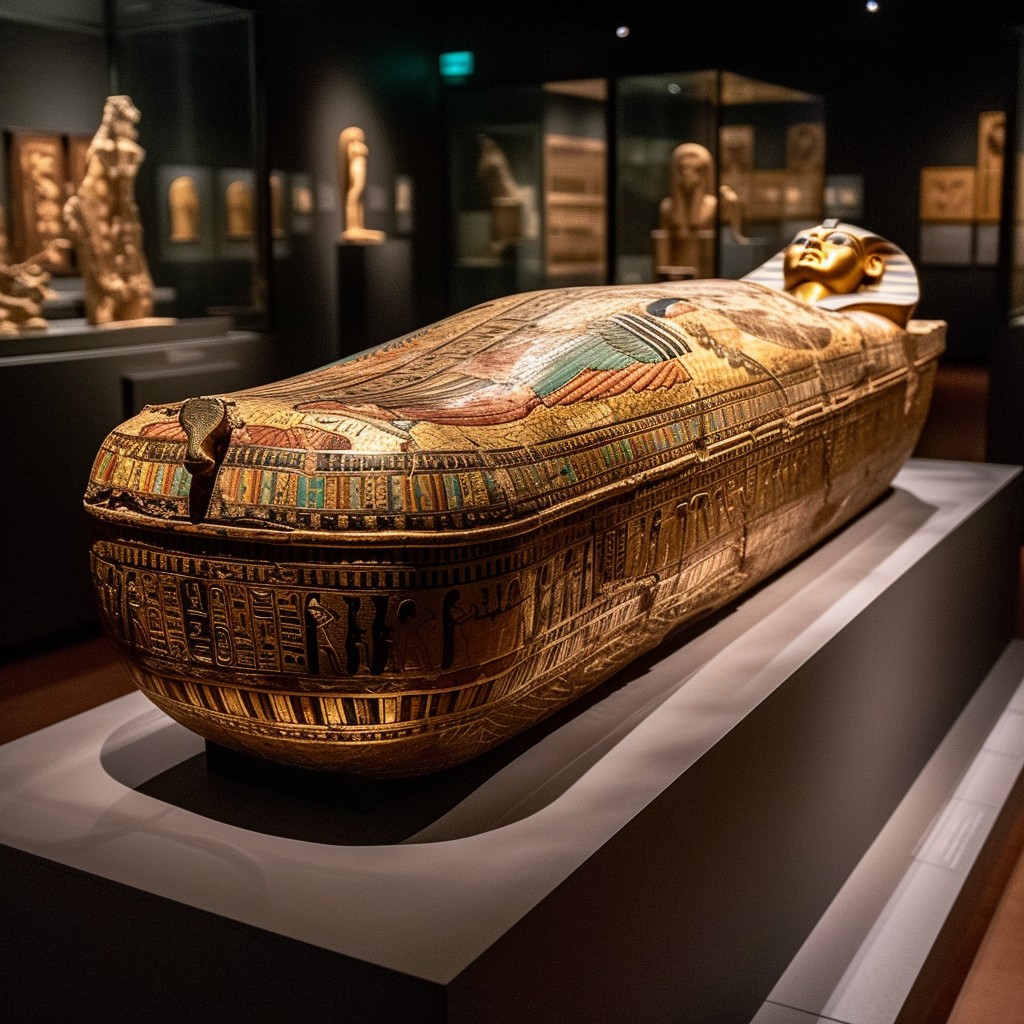
A sarcophagus in ancient Egypt was a protective funerary container designed to hold the remains of the deceased, serving as a physical and ritual barrier between the physical body and the dangers of the afterlife. Primarily carved from stone or constructed from wood, these vessels evolved from simple rectangular boxes into highly decorated, anthropoid shells that acted as artificial surrogates for the body, ensuring the soul’s eternal preservation.
The Etymology and Definition of a Sarcophagus
The term "sarcophagus" derives from the Greek phrase lithos sarkophagos, which translates literally to "flesh-eating stone." The Greeks believed that certain types of limestone had the chemical ability to dissolve a corpse placed within them. However, for the ancient Egyptians, the sarcophagus had an entirely different purpose: preservation, not consumption. In the Egyptian context, the vessel was intended to maintain the physical integrity of the mummy, which was considered the essential vessel for the Ka (life force) and Ba (personality) to return to in the afterlife.
Unlike the simple coffins used by commoners, the true sarcophagus was typically a substantial, heavy container, often housing one or more nested coffins. The transition from a simple burial pit in the Predynastic period to the monumental stone sarcophagi of the Old, Middle, and New Kingdoms reflects the growing theological importance of the preservation of the physical form and the status of the individual.
Materiality and Construction Techniques
The construction of a sarcophagus was a labor-intensive process that required significant resources, specialized labor, and advanced engineering knowledge. The material chosen often dictated the durability and prestige of the final resting place.
Stone Sarcophagi: The Eternal Shell
Stone was the preferred material for royalty and the high elite, as it was considered "eternal." Common materials included:
- Red Granite: Favored for its hardness and distinct color, often quarried in Aswan and transported hundreds of miles down the Nile.
- Limestone: Used frequently due to its relative abundance and ease of carving, though it was often painted or plastered to resemble more expensive materials.
- Quartzite: A metamorphic rock used specifically for high-status royal burials, often chosen for its durability and symbolic link to the solar cycle.
- Basalt and Greywacke: Highly prized for their dark color and ability to hold fine, intricate detail during the carving process.
The engineering of these stone vessels involved primitive but effective tools. Copper chisels, stone pounders, and abrasive sands were used to hollow out massive blocks. The removal of the interior material was often the most time-consuming phase, requiring teams of laborers to drill and peck away at the stone for months or even years.
Wooden Sarcophagi: The Elaborate Alternative
While stone sarcophagi were standard for royalty, high-ranking officials often utilized finely crafted wooden vessels. Cedar from Lebanon was the most highly valued, as it was rot-resistant and fragrant. These wooden containers were frequently covered in gesso (a mixture of glue and gypsum) and then elaborately painted with religious texts, deities, and protective spells drawn from the Book of the Dead.
Evolutionary Changes Through Egyptian History
The design of the sarcophagus shifted significantly over the three millennia of Egyptian dynastic history. These shifts were not merely aesthetic; they reflected changing funerary customs and religious priorities.
The Old Kingdom: The Rectangular Standard
During the Old Kingdom (c. 2686–2181 BCE), sarcophagi were generally rectangular. Their design often mimicked the architecture of contemporary palaces, featuring a "palace facade" motif on the exterior. This design was intended to serve as a symbolic home for the deceased in the afterlife, ensuring they remained within a protected, structured environment.
The Middle Kingdom: The Rise of Anthropoid Forms
By the Middle Kingdom (c. 2055–1650 BCE), the transition toward anthropoid (human-shaped) coffins began to influence sarcophagus design. While the outer stone shell often remained rectangular to accommodate nested coffins, the internal decoration began to focus heavily on the individual. The "Eye of Horus" was frequently painted on the left side of the sarcophagus to allow the deceased to look out toward the rising sun and the land of the living.
The New Kingdom: The Pinnacle of Artistry
The New Kingdom (c. 1550–1069 BCE) represents the peak of sarcophagus artistry. Royalty were buried in massive, deep, and heavily inscribed stone sarcophagi. The interiors were often decorated with star charts, while the exteriors featured excerpts from the Amduat or the Book of Gates, providing the deceased with a topographical map and a set of instructions for navigating the trials of the underworld.
Comparison of Burial Vessels
The distinction between a burial container and a sarcophagus is often misunderstood. The following table clarifies the hierarchy of Egyptian funerary equipment.
| Vessel Type | Primary Material | Intended User | Key Purpose |
|---|---|---|---|
| Simple Burial Pit | Earth/Matting | Commoners | Basic interment |
| Wooden Coffin | Sycamore/Cedar | Middle Class/Elite | Preservation & Protection |
| Anthropoid Case | Wood/Cartonnage | Elite | Direct body preservation |
| Sarcophagus | Granite/Quartzite | Royalty/High Elite | Ultimate, eternal stone housing |
The Theological Significance of Inscriptions
A sarcophagus was not merely a physical box; it was a ritual tool. Every surface was typically covered in hieroglyphic texts designed to transform the deceased into an Akh—an effective, transfigured spirit.
- Offering Formulas: Prayers meant to ensure the deceased received food and drink offerings in the afterlife.
- Protective Spells: Extracts from the Pyramid Texts or Coffin Texts that warded off malevolent spirits or creatures of the underworld.
- Vignettes of Deities: Representations of Anubis, Isis, Nephthys, and the Four Sons of Horus. These figures served as divine protectors who guarded the sarcophagus against grave robbers and spiritual decay.
The placement of these texts was precise. If a spell was meant to aid in breathing, it was positioned near the chest or head. If it was meant to provide mobility, it was often placed near the feet or sides. The sarcophagus acted as a literal "instruction manual" for the deceased during their dangerous journey through the Duat.
Practical Challenges: Transport and Installation
One of the most under-discussed aspects of a sarcophagus in ancient Egypt is the logistical challenge of its installation. A royal granite sarcophagus could weigh several tons.
- Transportation: These massive stones were moved via the Nile on specially constructed barges during the annual inundation when water levels were high enough to navigate the canals leading toward the necropolises.
- The Burial Chamber: Sarcophagi were often lowered into the burial chamber before the tomb was fully finished. This meant that architects had to plan the tomb’s layout precisely to accommodate the size of the container, often building the burial chamber around the sarcophagus rather than moving it through the finished corridors.
- Sealing: Once the mummy and its nested coffins were placed inside, the heavy stone lid was slid into place and secured with mortise and tenon joints or heavy dowels, then sealed with plaster to prevent future access.
FAQ: Common Questions Regarding Ancient Egyptian Sarcophagi
Did all ancient Egyptians have a sarcophagus?
No. Only the wealthiest individuals, specifically royalty and the high elite, could afford the cost and labor required to craft a stone sarcophagus. Most ancient Egyptians were buried in simple pits or wooden coffins, depending on their economic status.
What is the difference between a mummy case and a sarcophagus?
A mummy case is usually the outermost decorated wooden shell that fits tightly against the mummy. A sarcophagus is the larger, usually stone, outer container that houses one or more of these mummy cases.
Why do some sarcophagi have faces carved on them?
The face on a sarcophagus served as a "ka-statue." It acted as a focal point for the soul to recognize its own body. If the physical mummy was damaged or decayed, the face on the sarcophagus provided an alternate vessel for the spirit to inhabit.
Was the sarcophagus meant to be seen by the living?
Generally, no. After the funeral ceremony and the sealing of the tomb, the sarcophagus was intended to remain in darkness, seen only by the gods and the spirit of the deceased. The artistic effort was for the sake of the afterlife, not public display.
Can we see these in museums in 2026?
Yes, thousands of sarcophagi are preserved in institutions worldwide, such as the Egyptian Museum in Cairo, the British Museum in London, and the Metropolitan Museum of Art in New York. In 2026, most major museums utilize non-invasive imaging, such as CT scanning, to study the contents of these sarcophagi without risking damage to the delicate remains or the containers themselves.
Next Actions for Further Study
To deepen your understanding of these artifacts, consider visiting one of the major international collections that house intact funerary assemblages. If you are interested in the engineering aspects, look for site reports published by organizations like the Egypt Exploration Society, which provide detailed accounts of how these massive stone vessels were moved within the constraints of ancient tomb architecture. When viewing a sarcophagus in a museum setting, pay particular attention to the orientation of the inscriptions; they often reveal whether the vessel was designed for a specific tomb's alignment relative to the cardinal points.