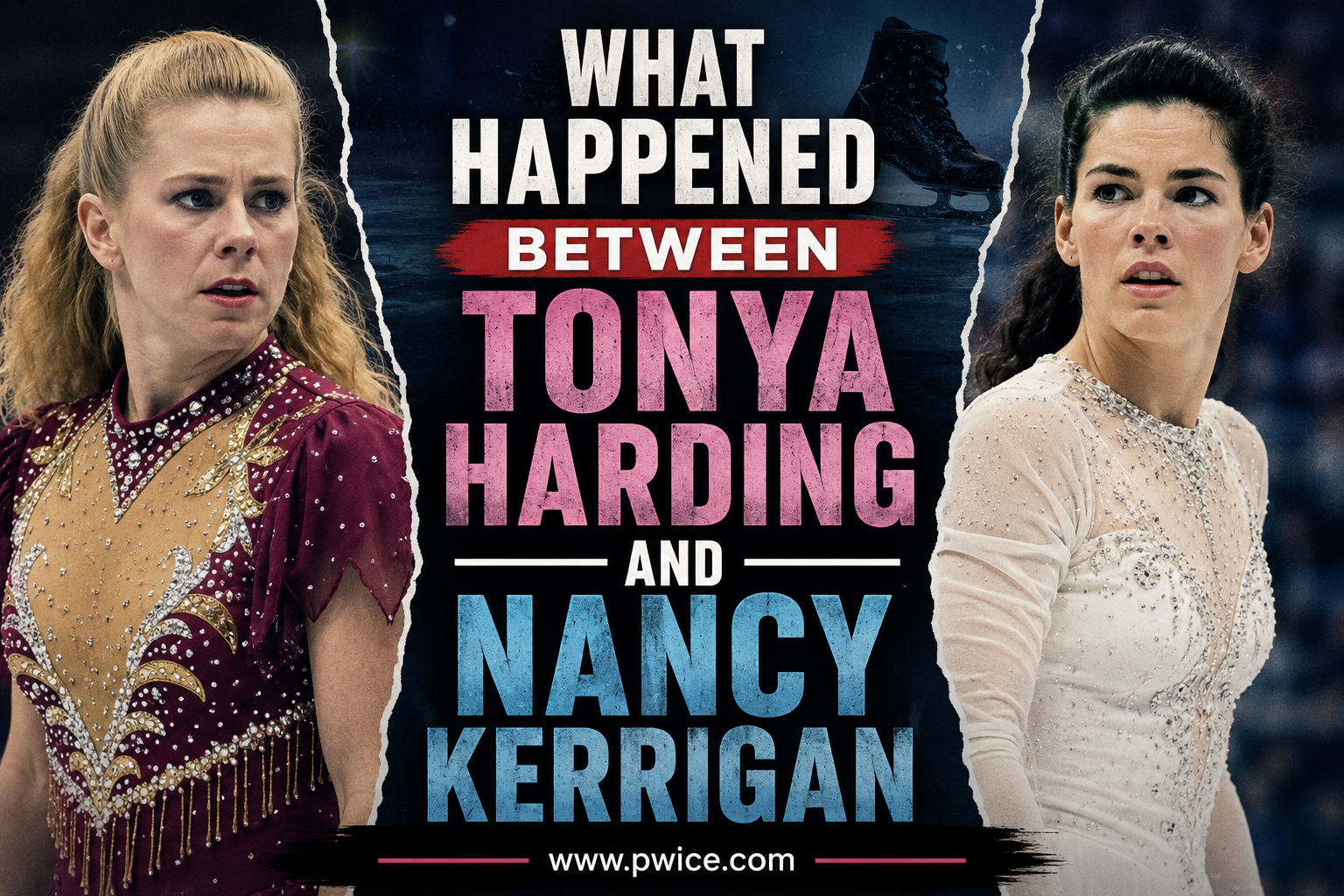
The relationship between Nancy Kerrigan and Tonya Harding remains one of the most scrutinized personal dynamics in the history of modern sports. In reality, the two former figure skaters are not friends and have maintained no meaningful contact for decades, following the infamous 1994 assault on Kerrigan that fundamentally severed any potential for a professional or personal acquaintance.
The Origin of the Rivalry and the 1994 Incident
To understand the nature of the disconnect between Nancy Kerrigan and Tonya Harding, one must look back at their contrasting origins within the competitive skating world. By the early 1990s, both women were elite competitors representing the United States. Kerrigan was often characterized in the media as the "ice princess"—elegant, poised, and a corporate darling. Conversely, Harding was portrayed as the tough, working-class outsider from Portland, Oregon, who struggled with the refined aesthetic expectations of the sport.
The turning point in their relationship occurred on January 6, 1994, at the U.S. Figure Skating Championships in Detroit. Following a practice session, an assailant struck Kerrigan on the knee with a telescopic baton. The attack was later revealed to be a orchestrated plot involving Harding’s ex-husband, Jeff Gillooly, and her bodyguard, Shawn Eckardt, intended to eliminate Kerrigan from the Olympic competition.
This event did not merely create a professional rivalry; it created a permanent, irreconcilable divide. While Harding was eventually banned from the U.S. Figure Skating Association for life due to her involvement in the cover-up, Kerrigan continued her career, winning a silver medal at the 1994 Winter Olympics in Lillehammer. The sheer magnitude of the betrayal—a fellow athlete allegedly implicated in a violent plot to physically disable a peer—precluded any possibility of a friendship.
Decades of Distance and Public Statements
In the thirty-plus years since the 1994 Olympics, the two women have occupied vastly different spheres of public and private life. Nancy Kerrigan transitioned into professional skating tours, television commentary, and acting, largely distancing herself from the tabloid frenzy that defined the mid-nineties. She has rarely spoken about Harding in interviews, generally preferring to focus on her family and her skating legacy.
Tonya Harding, meanwhile, spent years in the public eye through reality television appearances, boxing, and the continued media interest surrounding the 1994 scandal. Throughout the decades, Harding has frequently offered shifting accounts of her knowledge of the attack, at times claiming she was unaware of the plot, and at other times suggesting she was a victim of a manipulative environment.
For the public and the press, the question of whether they are friends often arises whenever the 1994 incident is revisited—most notably during the release of the 2017 biographical film I, Tonya. Despite the film's attempt to humanize Harding’s upbringing, it did not alter the reality of their relationship. Kerrigan has consistently maintained a stance of distance, neither seeking out reconciliation nor engaging in public feuds. For Kerrigan, the lack of friendship is not an act of ongoing hostility, but rather a reflection of the fact that the two women share no common ground, history, or mutual desire for connection.
The Psychological and Professional Divide
The lack of friendship between Kerrigan and Harding is rooted in more than just the physical assault; it is a fundamental clash of narratives. Professional sports require a certain level of respect between competitors. In 1994, that contract of respect was shattered.
From a sports psychology perspective, their inability to maintain a professional, let alone friendly, relationship is standard for individuals involved in such a high-stakes trauma. For Kerrigan, the attack was a career-defining injury that required significant physical and mental recovery. For Harding, the legacy of the event became an anchor that permanently altered her professional trajectory and public perception.
Comparison of Post-1994 Career Paths
| Category | Nancy Kerrigan | Tonya Harding |
|---|---|---|
| Competitive Status | Remained in good standing | Banned for life (USFSA) |
| Professional Focus | Commercials, coaching, broadcasting | Reality TV, boxing, celebrity appearances |
| Relationship to Scandal | Victim, focused on recovery | Perpetrator of cover-up, focused on legacy |
| Contact with Other | None | None |
Why the Public Still Asks
The persistent curiosity regarding their friendship is largely a byproduct of how the media framed their conflict in the 1990s. The "Kerrigan vs. Harding" narrative was presented as a classic good-versus-evil dichotomy, simplified for headline consumption. As we reflect on this in 2026, it is clear that this media framing contributed to an obsession with the idea that they might one day have a "reunion" or a public apology.
However, in reality, life is rarely as tidy as a scripted rivalry. There have been no apologies, no public meetings, and no private correspondence. The absence of a friendship is the most realistic outcome for two people whose paths were so violently and permanently altered by a criminal act.
Frequently Asked Questions
Did Tonya Harding ever apologize to Nancy Kerrigan? There is no public record of a direct, sincere, and accepted apology from Harding to Kerrigan. While Harding has expressed remorse in various interviews regarding her role in the lead-up to the attack, Kerrigan has never indicated that she received or accepted any formal overture from her former competitor.
Have they ever shared the ice together since 1994? No. They did not compete against one another after the 1994 Winter Olympics, and they have not participated in professional skating exhibitions or public events together. Both women have effectively ensured that their professional paths never intersect.
Did the 2017 movie I, Tonya impact their relationship? The film brought renewed attention to the scandal, but it did not facilitate a reconciliation. Nancy Kerrigan was largely unimpressed by the film’s portrayal of the events, noting in interviews that she preferred not to dwell on the past or the specific interpretations presented in the movie. It served as a reminder of the historical event rather than a bridge to any current relationship.
Are there any mutual friends or connections that link them? The two women moved in entirely different social circles following the scandal. Most of their former contemporaries within the figure skating community took sides or simply moved on, resulting in a total lack of a shared support network or professional association.
What is the current status of their careers in 2026? Both women are largely retired from professional athletic competition. Kerrigan maintains a quiet life with her family and continues to be involved in skating-related philanthropic efforts, while Harding occasionally makes appearances in media and entertainment segments. They remain entirely separated in both their personal and professional lives.
Moving Forward
For those interested in the lives of both women, the reality is that their "friendship" never existed to begin with, and it certainly does not exist today. They were competitors in a high-pressure sport, and their histories were irrevocably tied together by a singular criminal event. Moving forward, the most accurate understanding of their dynamic is one of total detachment. There is no ongoing conflict, but there is no relationship to speak of.
The story of Kerrigan and Harding serves as a case study in how public perception of "rivals" often craves closure or drama where, in reality, there is only the passage of time and the quiet separation of two people who have long since moved on to independent lives.