In 2026, Armor.com provides a comprehensive security-as-a-service platform that enables organizations to meet the stringent technical requirements of cyber insurance carriers while offering its own integrated financial guarantees. Rather than acting as a traditional insurance brokerage, Armor functions as a Managed Detection and Response (MDR) provider whose platform ensures that the "insurability" of a business remains high through continuous compliance and threat mitigation.
The relationship between Armor and cyber insurance is twofold: first, the Armor platform implements the mandatory security controls (such as MFA, EDR, and 24/7 monitoring) required by modern insurers; second, Armor offers a specific "Cyber Warranty" for eligible customers that provides a financial backstop in the event of a security failure within their protected environment.
The Evolution of Cyber Insurance Requirements in 2026
The landscape of cyber insurance has shifted dramatically over the last several years. As of 2026, insurance carriers have moved away from simple questionnaires toward "active underwriting." This means insurers now require real-time proof that security controls are not only present but are functioning correctly. Organizations that cannot demonstrate 24/7 monitoring, rapid incident response, and rigorous vulnerability management often find themselves denied coverage or facing astronomical premiums.
Armor addresses this market shift by providing a "security-first" path to insurance. By utilizing Armor’s cloud security platform, businesses can check off the majority of the technical requirements found on a standard 2026 cyber insurance application. This includes advanced threat detection, log retention for forensic purposes, and automated response capabilities. Because Armor maintains a SOC 2 Type II and PCI DSS compliant infrastructure, their clients can inherit these security postures, significantly simplifying the underwriting process.
Armor’s Security-as-a-Service as an Insurance Enabler
To understand how Armor.com interacts with cyber insurance, one must look at the specific security controls that insurers demand. In 2026, the "Big Five" requirements for any cyber policy are Multi-Factor Authentication (MFA), Endpoint Detection and Response (EDR), immutable backups, privileged access management, and 24/7 Security Operations Center (SOC) monitoring.
Armor provides several of these core components out of the box. Their platform, often referred to as "Armor Anywhere," integrates directly into public and private cloud environments (AWS, Azure, Google Cloud) to provide:
- Continuous Threat Detection: Utilizing AI-driven analytics to identify anomalies that precede a data breach or ransomware event.
- Log Management and Retention: Most insurers require 90 to 180 days of searchable logs to assist in post-incident forensics. Armor automates this collection and storage.
- Vulnerability Scanning: Demonstrating that a company regularly identifies and patches software weaknesses is a prerequisite for coverage. Armor’s built-in scanning provides the necessary documentation for insurers.
- Incident Response (IR): Having an IR plan is one thing; having a team ready to execute it is another. Armor’s SOC acts as the first responder, which often reduces the "deductible" or "retention" costs on an insurance policy because the carrier knows professional mitigators are already on-site.
The Armor Cyber Warranty vs. Traditional Cyber Insurance
A common point of confusion is the difference between Armor’s Cyber Warranty and a standard cyber insurance policy. It is vital to distinguish between these two financial instruments to ensure an organization is fully protected.
Armor’s Cyber Warranty is a service-level guarantee. It is a commitment from Armor that if their security platform fails to prevent a covered event—such as a data breach or unauthorized access—the company will reimburse the client for specific costs up to a predetermined limit (often $1,000,000 for qualifying tiers).
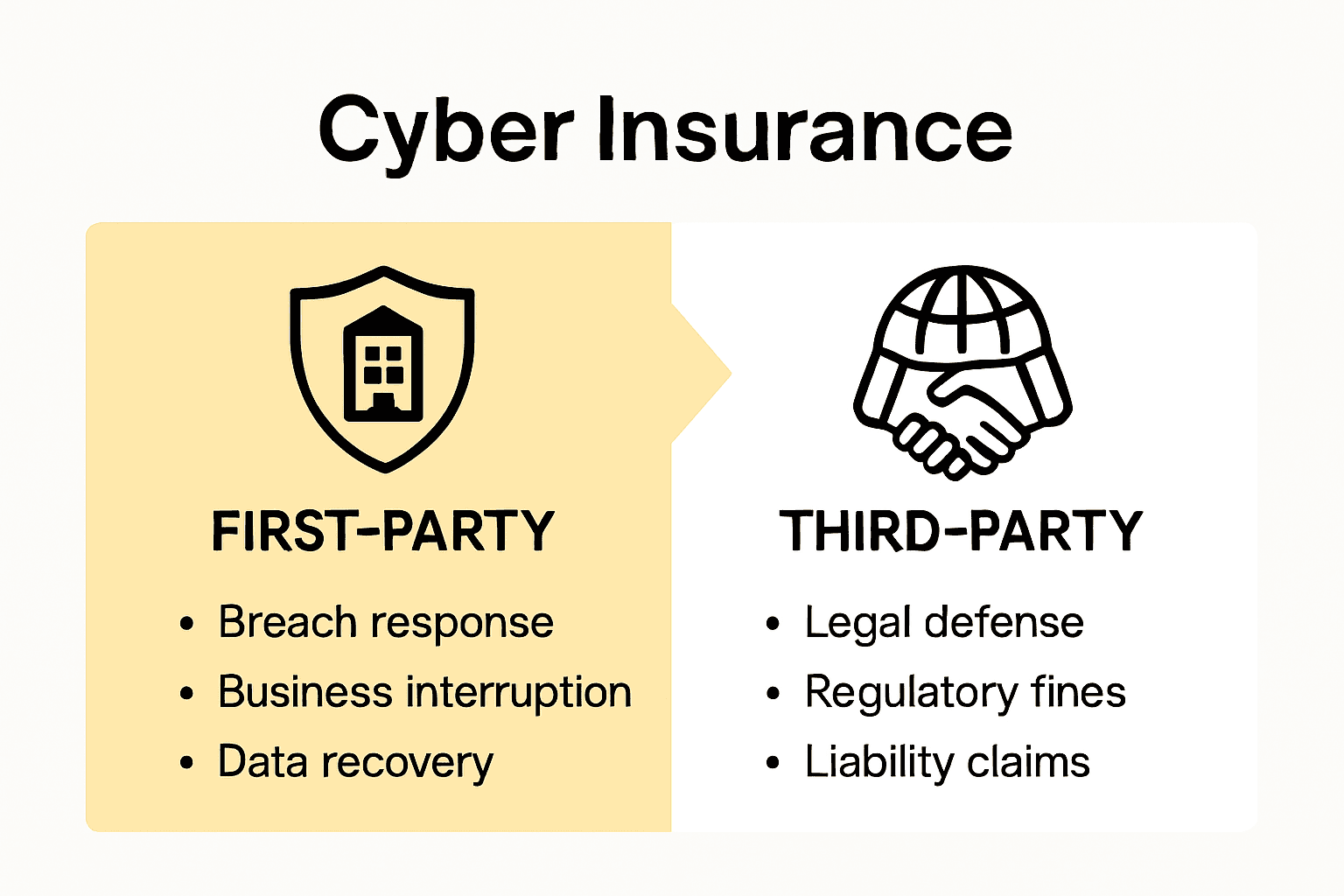
In contrast, traditional cyber insurance is a third-party policy that covers a broader range of liabilities, including legal fees, regulatory fines (like GDPR or CCPA violations), and business interruption losses that may extend beyond the technical failure of a security tool.
Comparison of Coverage and Scope
| Feature | Armor Cyber Warranty | Traditional Cyber Insurance |
|---|---|---|
| Primary Purpose | Guarantee of tool effectiveness | Broad financial risk transfer |
| Provider | Armor (Managed Security Provider) | Insurance Carrier / Underwriter |
| Triggering Event | Failure of Armor security controls | Any covered cyber incident (human error, etc.) |
| Regulatory Fines | Generally not covered | Often covered (if specified) |
| Legal Representation | Limited to technical defense | Comprehensive legal defense coverage |
| Underwriting | Based on Armor platform adoption | Based on company-wide risk profile |
| Cost Basis | Included in premium service tiers | Annual premium based on revenue/risk |
Technical Requirements for Armor-Backed Insurance
To leverage Armor for insurance purposes in 2026, organizations must adhere to specific technical configurations. Insurers will not grant lower premiums simply because a "brand" is used; they require evidence of implementation.
1. Endpoint Protection and EDR
Armor’s platform integrates with leading EDR tools. For insurance purposes, every server and workstation must have an active agent. In 2026, "silent" or "unprotected" endpoints are the primary reason for claim denials. Armor ensures that these agents are not only installed but are communicating with the central SOC.
2. Detection and Response Latency
Insurers now look at Mean Time to Detect (MTTD) and Mean Time to Respond (MTTR). Armor’s 2026 service levels aim for detection within minutes. Providing your insurer with Armor’s monthly SOC reports, which document these metrics, serves as powerful evidence of a mature security posture, often leading to "preferred" risk status.
3. Log Integrity and Forensic Readiness
If a breach occurs, the insurance company will send a forensic team to determine the root cause. If logs were deleted by the attacker or were never collected, the insurer may refuse to pay the claim due to a lack of evidence. Armor’s "immutable logging" features ensure that once a log is generated, it cannot be altered or deleted, even by an attacker with administrative privileges.
How Armor Helps Lower Cyber Insurance Premiums
Insurance is ultimately a game of risk math. Carriers use actuarial data to determine how likely a company is to suffer a loss. Companies using Armor.com often see lower premiums because they represent a "known quantity."
When an underwriter sees "Armor MDR" on an application, they recognize that the applicant has:
- Reduced Human Error: Managed security reduces the likelihood that a misconfigured cloud bucket or unpatched server will remain vulnerable for long.
- Proven Resilience: Armor’s history of defending cloud workloads provides a statistical baseline of safety.
- Simplified Audits: Instead of the applicant spending weeks gathering data for an insurance audit, Armor provides automated compliance reports that satisfy most carrier requirements.
Common Pitfalls When Combining Armor and Insurance
While Armor significantly strengthens a security posture, there are mistakes organizations must avoid to ensure their insurance remains valid.
Assuming the Warranty Replaces Insurance: This is the most dangerous mistake. The Armor Cyber Warranty is designed to complement, not replace, a comprehensive cyber insurance policy. The warranty focuses on the failure of the security stack, while insurance covers the broader business and legal fallout.
Failing to Disclose the Full Environment: Organizations often protect their "production" environment with Armor but leave "development" or "staging" environments unprotected. In 2026, attackers frequently use dev environments as a staging ground. If an insurer finds that the breach originated in an unprotected segment of the network that was not disclosed, they may void the entire policy.
Neglecting the "Human Element": Armor protects the infrastructure, but it cannot prevent a CEO from being tricked into a wire transfer via a sophisticated deep-fake or phishing attack. Cyber insurance is essential here, as it often includes coverage for "social engineering," a category that technical warranties rarely cover.
Steps to Obtain and Optimize Coverage via Armor
For businesses looking to secure or renew their cyber insurance in 2026 using the Armor platform, the following process is recommended:
- Baseline Assessment: Use Armor’s platform to conduct a gap analysis against common insurance frameworks (such as the NIST Cybersecurity Framework).
- Implementation: Deploy Armor agents across all cloud and hybrid environments, ensuring 100% coverage of the digital estate.
- Documentation Gathering: Pull the last six months of "Executive Security Summaries" from the Armor dashboard. These reports show your uptime, blocked attacks, and patching cadence.
- Broker Consultation: Present the Armor technical specifications to your insurance broker. Specifically highlight the 24/7 SOC monitoring and the existence of the Cyber Warranty, as these can be used as leverage for better terms.
- Policy Alignment: Ensure that your insurance policy specifically recognizes "Managed Security Services" as a mitigating factor in your risk profile.
Frequently Asked Questions
Does Armor.com sell insurance directly?
No, Armor is not a licensed insurance carrier. They are a cybersecurity provider. They offer a Cyber Warranty which is a financial guarantee of their own service performance, but for a standard cyber liability policy, you must work with a licensed insurance agent or broker.
What is covered under the Armor Cyber Warranty?
The warranty typically covers costs associated with data breach notification, forensic investigations, and certain remediation expenses that result directly from a failure of the Armor security platform to detect or block an attack. It generally does not cover third-party lawsuits or general business interruption not caused by a technical failure.
Can using Armor help me get coverage if I’ve been denied before?
Yes. Many companies are denied cyber insurance because they lack 24/7 monitoring or EDR. By implementing Armor, you immediately resolve these high-priority "red flags" that cause insurers to decline applications.
Is the Armor Cyber Warranty available for all customers?
No, the warranty usually requires the customer to be on a specific service tier (such as Armor MDR) and to follow a set of "Security Best Practices" or "Standard of Care" guidelines provided by Armor. If these configurations are altered, the warranty may be voided.
How does Armor help with the insurance claim process?
During a claim, the insurer requires vast amounts of data to prove what happened. Armor provides the forensic logs, timelines of the attack, and evidence of the mitigation steps taken. This documentation is essential for getting a claim approved and paid quickly.
Final Recommendation
For organizations navigating the complex digital landscape of 2026, relying on "insurance alone" is no longer a viable strategy. Insurance carriers now demand active defense as a prerequisite for coverage.
The most effective path forward is to utilize a platform like Armor.com to build a verifiable, monitored, and resilient security foundation. By doing so, you not only protect your operational integrity but also position your company as a "low-risk" entity in the eyes of insurers. This dual approach—technical defense through Armor and financial risk transfer through a traditional cyber policy—provides the most robust protection against the evolving threats of the mid-2020s.