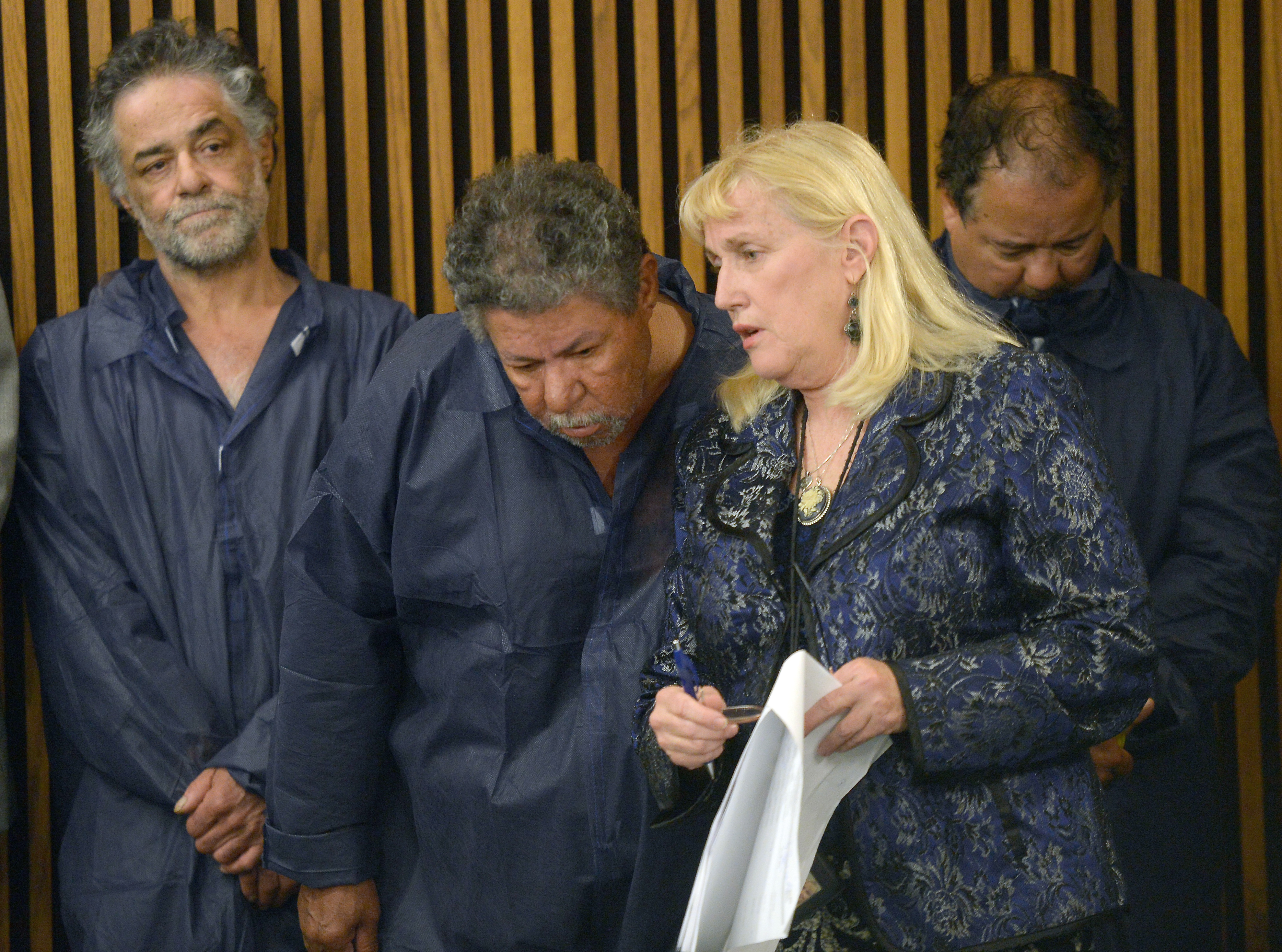
While Ariel Castro was the sole perpetrator of the decade-long imprisonment and abuse of three women in Cleveland, Ohio, his brothers, Pedro and Onil Castro, were initially arrested as co-conspirators. They were quickly exonerated after investigators and the survivors confirmed they had no knowledge of the crimes occurring inside the home.
The case of Ariel Castro remains one of the most harrowing instances of domestic kidnapping in American history. Between 2002 and 2004, three young women—Michelle Knight, Amanda Berry, and Gina DeJesus—disappeared from the streets of Cleveland. For a decade, they were held captive in a residential home on Seymour Avenue, subjected to unimaginable trauma. When the rescue finally occurred in May 2013, the initial shock was followed by a complex legal and social interrogation of the Castro family, specifically focusing on Ariel's brothers, Pedro and Onil.
As of 2026, the legacy of the "House of Horrors" continues to serve as a case study for law enforcement regarding the isolation of victims and the social stigma that can unfairly target the family members of violent offenders. Understanding the distinction between Ariel Castro’s calculated depravity and his brothers' lack of involvement is essential for a complete perspective on this historical event.
The Arrest of the Castro Brothers
On May 6, 2013, the world watched as Amanda Berry made a daring escape from 2207 Seymour Avenue with the help of neighbors. Shortly after police arrived and rescued Michelle Knight and Gina DeJesus, they apprehended Ariel Castro at a local McDonald’s. Within hours, authorities also took his brothers, Pedro (then 54) and Onil (then 50), into custody.
The initial arrest of the brothers was a precautionary measure based on the logic that it seemed impossible for one man to keep three women hidden in a busy urban neighborhood for ten years without assistance. Public sentiment was immediately hostile. At the time, the prevailing theory among the community was that the entire family must have been involved in a conspiracy of silence.
However, the legal reality shifted rapidly. Within days, the Cleveland Police Department and the FBI conducted exhaustive interviews with the survivors. All three women provided consistent testimony: Ariel Castro was their sole captor. They stated that he took extreme precautions to ensure that no visitors, including his own brothers, ever saw or heard them. Consequently, on May 9, 2013, prosecutors announced that no charges would be filed against Pedro or Onil Castro, as there was no evidence linking them to the kidnappings or the subsequent imprisonment.
Why Pedro and Onil Were Exonerated
The exoneration of Pedro and Onil Castro was not merely a matter of a lack of evidence, but rather the presence of evidence that pointed exclusively to Ariel’s solitary control. Several factors contributed to the official determination that the brothers were unaware of what was happening inside the house.
Controlled Access and Physical Barriers
Ariel Castro had turned his home into a fortress. He reinforced doors with multiple heavy-duty locks and chains, boarded up windows from the inside, and used a sophisticated system of alarms and "tripwires" (often simple items like a piece of tape or a positioned object) to detect if anyone had entered a room. When his brothers visited, they were strictly confined to the kitchen or the front porch. Ariel never allowed them access to the upstairs or the basement, often using the excuse that the house was "a mess" or that he had a "vicious dog" that shouldn't be disturbed.
The Survivors' Testimony
The most compelling evidence came from Michelle Knight, Amanda Berry, and Gina DeJesus. During their depositions and interviews with the FBI, they confirmed that Ariel acted alone. They noted that whenever Ariel expected company or even a brief visit from his brothers, he would force the women into closets or the basement, gag them, and turn up music or the television to drown out any possible noise. The women testified that they never saw Pedro or Onil inside the areas where they were being held.
Lack of Forensic and Digital Footprints
A thorough forensic sweep of the house, including DNA testing and a review of communication logs, failed to place Pedro or Onil in the restricted areas of the home. Furthermore, Ariel’s journals—found by investigators after the rescue—revealed a man who was deeply paranoid and secretive, even from his own family. His writings suggested he viewed himself as a "predator" who acted in isolation, driven by a need for total control that did not include sharing his "secret" with anyone else.
The Impact on Pedro and Onil Castro
While the legal system cleared them, the court of public opinion was less forgiving. Pedro and Onil Castro became victims of the intense social stigma surrounding their brother’s crimes. In the immediate aftermath of their release, they faced death threats, their homes were vandalized, and they found it impossible to maintain a normal life in Cleveland.
In a high-profile 2013 interview with CNN, the brothers spoke about the "living nightmare" they experienced. They described Ariel as a man who had isolated himself from the family over the years. Onil Castro remarked that if he had known what was happening, he would have called the police himself, regardless of their blood relation. Pedro Castro expressed a deep sense of betrayal, stating that Ariel had effectively "killed" their family name.
By 2020, the tragedy took another turn when it was reported that Pedro Castro had passed away at the age of 61. Throughout the years following the case, he had lived a mostly reclusive life, still struggling with the shadow cast by his brother's actions. The case serves as a grim reminder of how "collateral damage" affects the innocent family members of notorious criminals.
Ariel Castro’s Crimes and Sentencing
To understand why the brothers were scrutinized, one must look at the scale of Ariel Castro's operations. His crimes spanned over a decade and involved a level of planning that suggested a professional criminal mind.
- Michelle Knight: Abducted in August 2002 at age 21. She suffered the longest period of captivity and the most severe physical abuse, which resulted in significant long-term health issues.
- Amanda Berry: Abducted in April 2003 at age 16. During her captivity, she gave birth to a daughter, fathered by Castro. It was Berry’s bravery that eventually led to their rescue.
- Gina DeJesus: Abducted in April 2004 at age 14. She was a friend of Ariel Castro’s daughter, Arlene, which made the betrayal even more personal for the family.
Ariel Castro was eventually charged with 977 counts, including kidnapping, rape, and aggravated murder (related to the forced miscarriages of Michelle Knight). To avoid the death penalty, he pleaded guilty to 937 counts. In August 2013, he was sentenced to life in prison plus 1,000 years. During his sentencing hearing, he notoriously claimed he was "not a monster" and blamed his actions on a pornography addiction, a statement that was widely condemned by the judge and the public. Just one month into his sentence, in September 2013, Ariel Castro died by suicide in his prison cell at the Correctional Reception Center in Orient, Ohio.
Comparing the Roles and Legal Outcomes
The following table summarizes the legal and social status of the three Castro brothers following the 2013 rescue.
| Name | Relation | Legal Outcome | Findings | Status (as of 2026) |
|---|---|---|---|---|
| Ariel Castro | Perpetrator | Sentenced to Life + 1,000 years | Solely responsible for all 937 counts. | Deceased (2013) |
| Pedro Castro | Brother | Arrested, then Exonerated | No knowledge or involvement in crimes. | Deceased (2020) |
| Onil Castro | Brother | Arrested, then Exonerated | No knowledge or involvement in crimes. | Living/Private |
The Survivors in 2026: Life After the House of Horrors
Thirteen years after their rescue, the survivors have become symbols of resilience. Their paths have diverged, but each has contributed to the public's understanding of victim advocacy and recovery.
- Michelle Knight (Lily Rose Lee): She has become a best-selling author and a vocal advocate for victims of child abuse and human trafficking. Her books, Finding Me and Life After Darkness, detail her journey of healing. In 2026, she continues her work through speaking engagements and her foundation, focusing on those who "fall through the cracks" of the system.
- Amanda Berry: Amanda has worked in local television in Cleveland, helping families search for missing loved ones. Her work as a news contributor focused on missing persons cases has been credited with bringing renewed attention to cold cases in the Ohio area.
- Gina DeJesus: Gina co-founded the Cleveland Family Center for Missing Children and Adults with her family. Her focus remains on providing a support network for families who are currently experiencing the disappearance of a loved one, ensuring they do not have to navigate the trauma alone.
Forensic Lessons and Community Impact
The Ariel Castro case changed how local police departments handle missing persons reports. One of the primary criticisms during the decade the women were missing was that the cases were not treated with the urgency they deserved, particularly the disappearance of Michelle Knight, who was initially classified as a runaway because she was an adult.
In 2026, many law enforcement agencies have adopted the "Castro Protocol," which involves more rigorous check-ins on long-term missing persons cases and a lower threshold for initiating an amber alert or its equivalent for young adults. The case also highlighted the importance of neighborhood awareness. While neighbors reported odd behaviors at the Seymour Avenue home over the years—such as Ariel walking a child on a leash or seeing naked women crawling in the backyard—these tips were often dismissed or not properly followed up by responding officers.
FAQs About the Ariel Castro Case
Did Ariel Castro's brothers ever live in the house?
No. While Pedro and Onil visited the property, they did not reside there. Ariel lived alone in the house at 2207 Seymour Avenue. His brothers had their own residences elsewhere in Cleveland. This separation was a key reason why they remained unaware of the hidden rooms and the captives.
What happened to the "House of Horrors"?
The house was demolished in August 2013, shortly after Ariel Castro’s sentencing. The demolition was part of his plea deal, intended to prevent the site from becoming a morbid tourist attraction and to provide a sense of closure for the survivors and the neighborhood. Today, the site is an empty green space.
How did the brothers prove they were innocent?
Exoneration was based on polygraph tests, consistent statements from the three survivors, and a lack of physical evidence. Additionally, Ariel Castro’s own statements to police and his written "confession" notes indicated that he purposely kept his brothers in the dark to avoid being caught.
Did the survivors ever forgive the brothers?
The survivors have generally expressed that they do not hold Pedro and Onil responsible for Ariel's crimes. In various interviews, they have clarified that they knew Ariel was hiding them from everyone, including his own family. Gina DeJesus, whose family was actually friends with the Castros, has maintained a level of understanding that the brothers were also victims of Ariel's deception.
Is there any evidence that Ariel Castro had help?
No evidence has ever been found to suggest that Ariel Castro had an accomplice. Multiple investigations by the FBI and the Cleveland Police Department concluded that he acted entirely alone in the abductions and the daily management of the captives.
Final Perspective
The story of Ariel Castro and his brothers is a dual narrative of horrific criminal intent and the social fallout of being related to a monster. While Ariel Castro's name is synonymous with one of the most egregious criminal acts in modern history, the story of Pedro and Onil Castro serves as a cautionary tale about the dangers of "guilt by association." For those researching this case in 2026, the focus remains on the incredible strength of the survivors and the ongoing improvements in missing persons investigations, rather than the man who sought to destroy their lives.
For anyone interested in supporting the causes championed by the survivors, the most direct path is through local organizations dedicated to missing and exploited persons. These entities continue to provide the resources and vigilance that were tragically missing for Michelle, Amanda, and Gina during their decade of captivity.