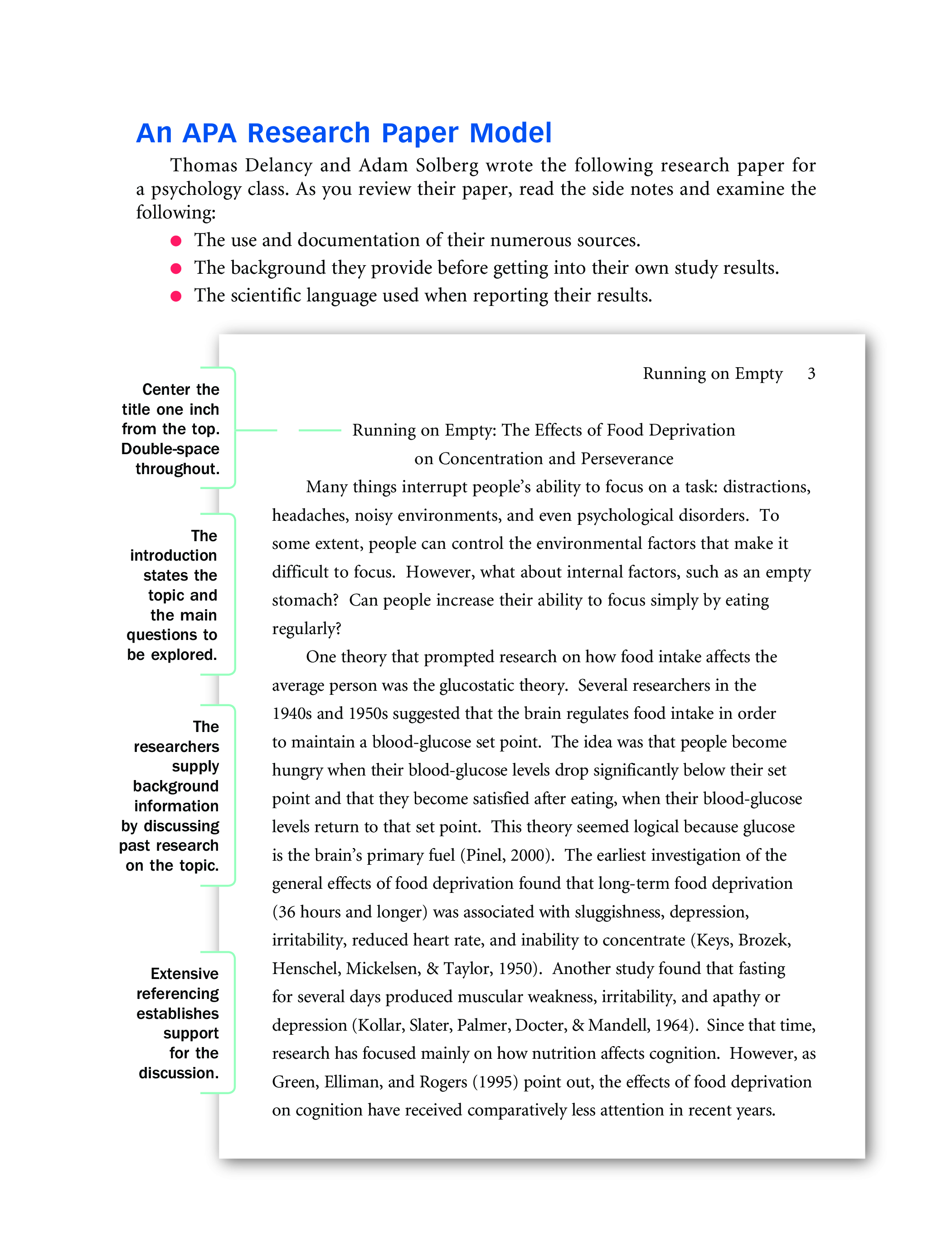
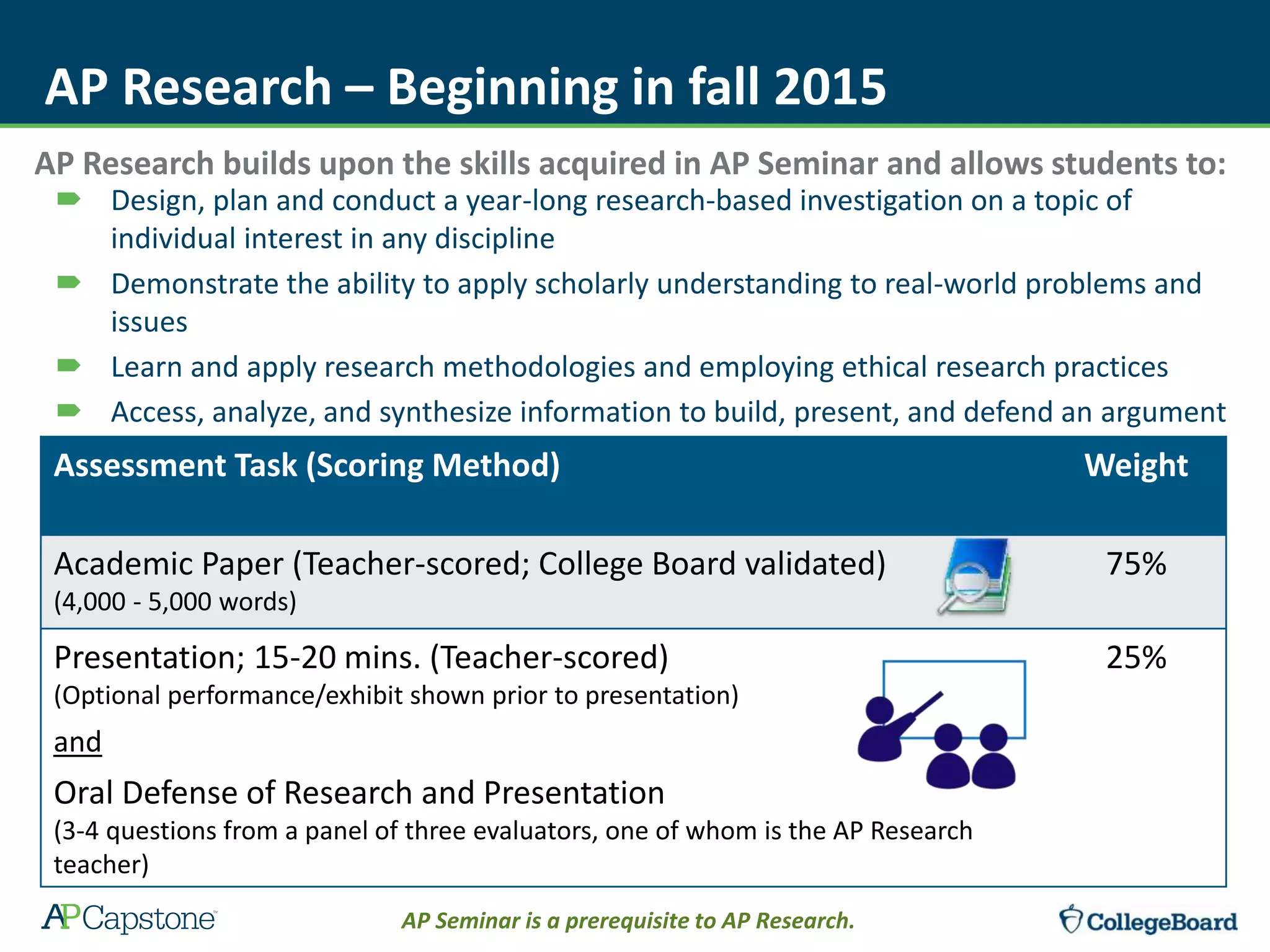
The AP Research paper is a 4,000- to 5,000-word academic thesis that serves as the primary assessment for the AP Research course, the second year of the College Board’s AP Capstone Diploma program. Students must design, plan, and conduct a year-long mentored investigation to address a specific research question, culminating in this formal paper and a presentation with an oral defense.
As of the 2025-2026 academic year, the AP Research paper remains one of the most rigorous academic challenges available to high school students. Unlike traditional Advanced Placement exams that rely on multiple-choice questions and timed essays, AP Research evaluates a student’s ability to engage in sustained, independent inquiry. This guide provides a detailed breakdown of the structural requirements, the research methodology, the submission process, and the scoring rubrics used to evaluate these professional-level documents.
The AP Capstone Framework and Prerequisites
To understand the AP Research paper, one must first understand its place within the AP Capstone Diploma program. This program is comprised of two year-long courses: AP Seminar and AP Research.
The Role of AP Seminar
AP Seminar is a mandatory prerequisite for AP Research. In Seminar, students learn the fundamentals of analyzing articles, research studies, and foundational literary and philosophical texts. They practice crafting arguments and collaborating on team projects. While AP Seminar introduces the "QUEST" framework (Question and Explore, Understand and Analyze, Evaluate Multiple Perspectives, Synthesize Ideas, and Team, Transform, and Transmit), AP Research requires students to apply these skills independently to create a new piece of knowledge.
Transitioning to AP Research
In the 2026 academic cycle, students entering AP Research are expected to have mastered the ability to identify credible sources and document them accurately using citation styles such as APA, MLA, or Chicago. The transition shifts the focus from analyzing others' arguments to generating an original inquiry. The "paper" is not a summary of existing information; it is a report on original research conducted by the student.
Structural Requirements of the Academic Paper
The College Board mandates that the AP Research paper be between 4,000 and 5,000 words. This word count excludes the abstract, title page, bibliography, and appendices. Failure to stay within this range can result in a scoring penalty, though the more significant risk is a lack of depth (if too short) or a lack of focus (if too long).
Essential Sections of the Paper
Every AP Research paper must follow a structure typical of professional academic journals. While the specific headings may vary by discipline (e.g., a humanities paper vs. a STEM paper), the following components are universally required:
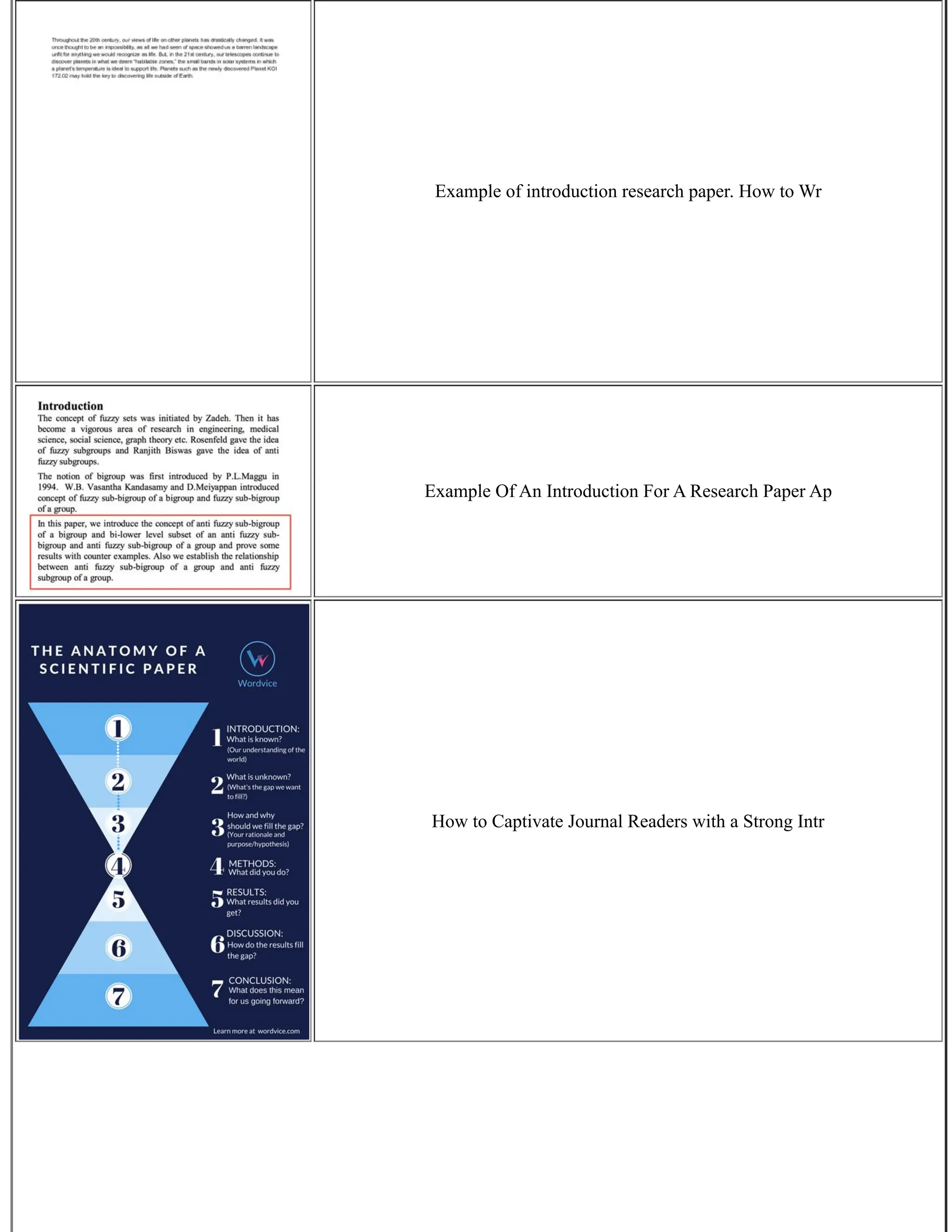
- Introduction: This section establishes the project's context. The student must clearly define the research question and explain its significance to the field.
- Literature Review: Students must synthesize existing research to identify a "gap." The literature review is not a list of summaries; it is an argument that justifies why the student's specific research is necessary.
- Methodology: This is perhaps the most critical section. Students must describe the specific methods used to collect data or evidence (e.g., surveys, interviews, laboratory experiments, or content analysis). They must also justify why this method was chosen over others.
- Results/Findings/Product: This section presents the data collected during the research process without interpretation. It often includes charts, graphs, or excerpts from qualitative interviews.
- Analysis/Discussion: Here, the student interprets the results. They must explain how the findings answer the research question and how they relate back to the existing body of literature mentioned earlier.
- Conclusion and Future Directions: The paper concludes by summarizing the findings, acknowledging limitations (such as sample size or time constraints), and suggesting areas for future research.
- Bibliography: A comprehensive list of all sources cited in the paper, formatted consistently in a recognized academic style.
Developing the Research Methodology
The methodology is the engine of the AP Research paper. In 2026, the College Board continues to emphasize "reproducibility" and "alignment." This means that the method chosen must be capable of actually answering the research question posed.
Common Research Methods
Students typically choose one of three broad methodological paths:
- Quantitative Research: Focuses on numerical data and statistical analysis. Examples include quasi-experimental designs or large-scale surveys.
- Qualitative Research: Focuses on non-numerical data to understand concepts, opinions, or experiences. Examples include case studies, phenomenological interviews, or thematic content analysis of media.
- Mixed Methods: A combination of both, where a student might use a survey to find a general trend and then conduct interviews to understand the "why" behind that trend.
Ethical Standards and IRB Approval
For papers involving human subjects, students must adhere to strict ethical guidelines. Most schools utilize an Institutional Review Board (IRB) or a similar committee to review student proposals. In 2026, compliance with these ethical standards is a "gatekeeper" requirement. If a student conducts unethical research (e.g., surveying minors without parental consent), their paper may be disqualified or receive a score of zero.
The Presentation and Oral Defense (POD)
While the written paper accounts for 75% of the total AP score, the Presentation and Oral Defense (POD) accounts for the remaining 25%. This 15- to 20-minute session involves the student presenting their findings to a panel of three evaluators (usually teachers) followed by three formal defense questions.
The defense questions typically focus on:
- The Research Process: "How did the choices you made when designing or implementing your research method impact your findings?"
- Depth of Understanding: "How did your review of methods used by other investigators inform your selection of a research method?"
- Reflective Practice: "What was the most important research skill you developed, and how will it inform your future expectations?"
Comparison: AP Seminar vs. AP Research Papers
Understanding the difference between the two Capstone courses is vital for students planning their 2026-2027 schedules.
| Feature | AP Seminar (IRR/IWA) | AP Research Paper |
|---|---|---|
| Primary Goal | Evaluate and synthesize existing arguments. | Conduct original research to create new knowledge. |
| Word Count | 1,200 (IRR) / 2,000 (IWA) | 4,000 – 5,000 words. |
| Topic Selection | Based on provided stimulus materials. | Entirely student-selected (any discipline). |
| Collaboration | Team project + Individual project. | 100% Individual project. |
| Methodology | Secondary research (analyzing others' work). | Primary research (collecting original data). |
| Timeframe | Several weeks per task. | Full academic year. |
Scoring and Evaluation in 2026
The AP Research paper is scored on a scale of 1 to 5. The College Board uses a holistic rubric that rewards students for high-level "alignment." Alignment refers to the logical flow from the research question to the literature review, into the methodology, and finally through the analysis.
High-Scoring Attributes
To earn a 5, a paper must demonstrate:
- Narrowly Focused Question: A question that is not too broad to be answered in a year but significant enough to warrant study.
- Explicit Gap: A clear explanation of what is missing from current academic conversations.
- Methodological Justification: A detailed explanation of why the chosen method is the best fit for the inquiry.
- Critical Limitations: A mature acknowledgment of what the research could not prove.
Common Pitfalls to Avoid
- The "Book Report" Syndrome: Writing a long summary of what other people have said without adding any original data.
- Topic Drift: Changing the research focus halfway through the year without updating the literature review or methodology.
- Formatting Errors: Inconsistent citations or poor data visualization (e.g., charts that are difficult to read).
- Word Count Violations: Going significantly over or under the 4,000–5,000 word limit, which often indicates poor editing or insufficient data.
Submission Deadlines and Digital Portfolio
For the 2025-2026 school year, the final deadline for uploading the AP Research paper to the AP Digital Portfolio is typically April 30. It is the student's responsibility to ensure the file is uploaded as a PDF and that all identifying information (student name, school name) is removed to allow for blind scoring by the College Board’s distributed readers.
Teachers are required to run the papers through plagiarism detection software. The College Board maintains a zero-tolerance policy regarding academic integrity. If a paper is found to contain unoriginal work that is not properly cited, the student will receive a score of 0 and may face further disciplinary action.
Frequently Asked Questions
Can I change my AP Research topic mid-year?
While technically possible, changing a topic after November is highly discouraged. By December, students should have completed their literature review and IRB approval. Changing a topic mid-year usually results in a rushed methodology and a lower-quality final paper. It is better to refine a narrow topic than to pivot to a completely new field in the second semester.
Is a mentor required for the AP Research paper?
A mentor is not strictly required by the College Board, but they are highly recommended. A mentor—typically an expert in the field of study—can provide specialized guidance on methodology and technical accuracy that a general classroom teacher might not possess. However, the student must remain the sole author of the work.
How do I find a "gap" in existing research?
Finding a gap involves looking for limitations in current studies. This could mean applying an existing research method to a new population, updating an old study with new data, or examining a specific location that hasn't been studied before. For example, if a study found a trend in urban schools, a student might research if that same trend exists in rural schools.
Can I use Artificial Intelligence (AI) to write my paper?
According to the 2026 College Board guidelines, the use of AI for generating content that is submitted as the student’s own work is considered a violation of academic integrity. While AI may be used for preliminary brainstorming or organizing thoughts (if permitted by the instructor), the actual drafting of the 4,000-5,000 word paper must be the student's original writing.
What happens if I don't meet the word count?
If a paper is under 4,000 words, it often lacks the necessary literature review depth or analysis required to reach the higher score tiers. If it is over 5,000 words, readers are instructed to stop reading at the 5,000-word mark, which means any conclusion or bibliography beyond that point will not be considered in the scoring.
Strategic Recommendations for Students
For students embarking on the AP Research journey in 2026, success is predicated on project management rather than just writing ability.
- Select a Topic of Genuine Interest: You will spend nine months on this single question. If you are not passionate about the subject, the 4,000-word requirement will feel insurmountable.
- Front-load the Literature Review: Complete your reading by October. This allows you the entire winter to collect data, which often takes longer than expected due to external factors (e.g., waiting for survey responses or lab results).
- Utilize Peer Review: The AP Research classroom is designed for collaboration. Use your peers to check for "alignment" issues. If a classmate cannot see the link between your question and your method, a College Board reader won't either.
- Master Your Citation Manager: Use tools like Zotero or Mendeley from day one. Manually formatting 50+ citations in April is a recipe for errors and unnecessary stress.
By following these guidelines and adhering to the structural requirements of the College Board AP Research course, students can produce a professional-grade academic paper that serves as a cornerstone of their college applications and academic careers.