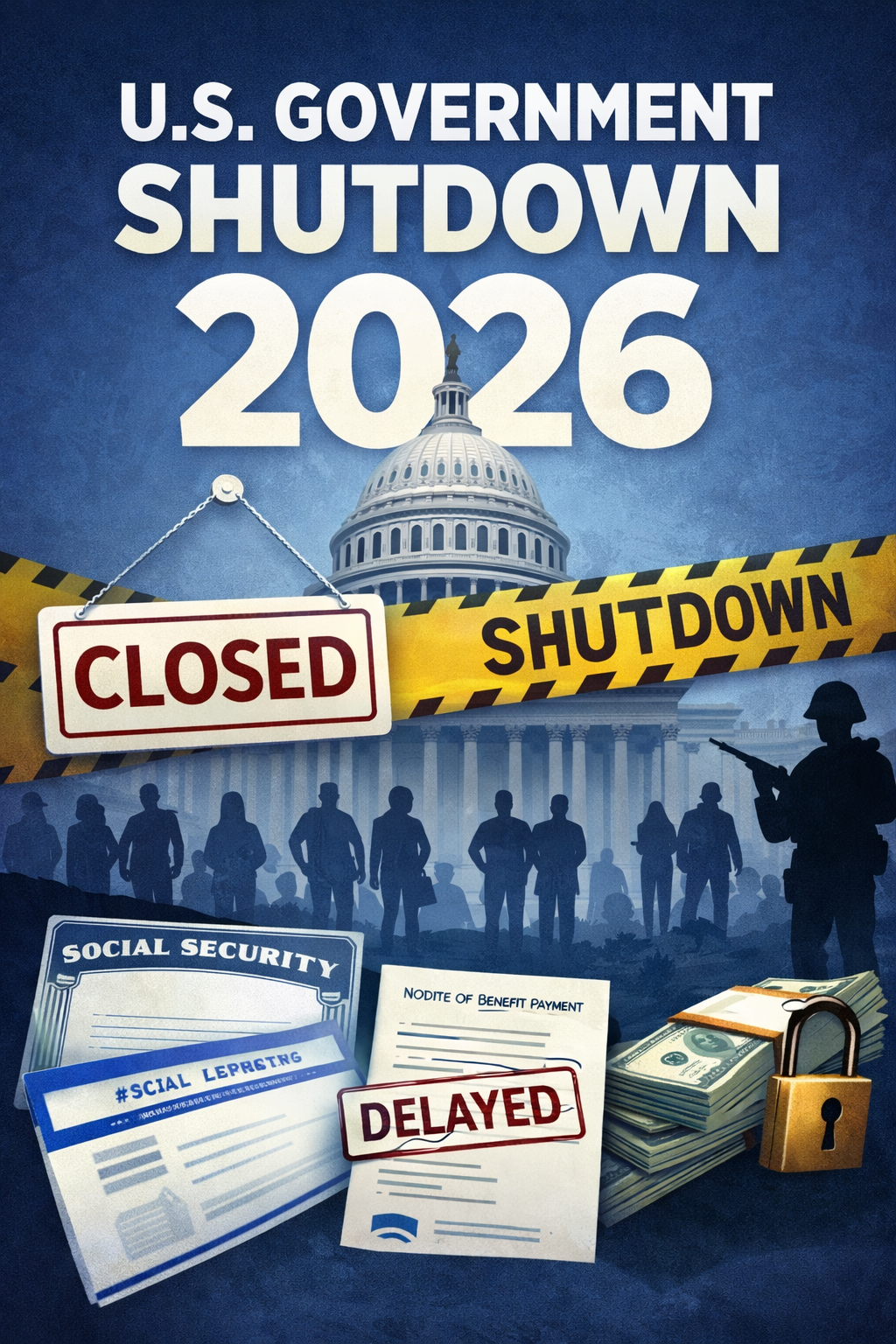
A government shutdown occurs when Congress fails to pass funding legislation, forcing federal agencies to cease all non-essential operations due to a lack of legal spending authority. While not legally mandated to occur yearly, the frequency of budget impasses has made the threat of an annual shutdown a recurring feature of the United States fiscal calendar.
The Legal Foundation: The Antideficiency Act
To understand why the federal government must close its doors during a funding lapse, one must look at the Antideficiency Act. Originally enacted in 1884 and significantly amended in 1950 and 1982, this law prohibits federal agencies from entering into contracts or spending money that has not been explicitly appropriated by Congress.
The Act serves as the "teeth" of the Constitution’s Power of the Purse. Under Article I, Section 9, "No Money shall be drawn from the Treasury, but in Consequence of Appropriations made by Law." Before the 1980s, the government often continued operating during funding gaps, assuming that Congress would eventually pass the budget. However, in 1980 and 1981, Attorney General Benjamin Civiletti issued landmark legal opinions stating that the Antideficiency Act requires agencies to suspend operations immediately if funding expires, except in cases of emergencies involving the safety of human life or the protection of property.
Consequently, a shutdown is not a choice made by an administration to "punish" the public; it is a legal requirement to avoid criminal penalties associated with unauthorized spending. When the clock strikes midnight on the first day of a new fiscal year or at the expiration of a temporary funding bill, federal managers must initiate "orderly shutdown" procedures for all activities not deemed "excepted."
The Appropriations Process and the "Annual" Threat
The U.S. fiscal year begins on October 1 and ends on September 30. For the government to remain fully operational, Congress must pass 12 separate appropriation bills that provide funding for various departments, from Defense to Agriculture.
In a perfect legislative cycle, these bills are debated, passed by both chambers, and signed by the President before October 1. However, since the late 1990s, this "regular order" has rarely occurred. Instead, Congress often relies on a Continuing Resolution (CR). A CR is a short-term "stopgap" measure that extends funding at current levels for a specific period—weeks or months—to buy more time for negotiations.
The reason shutdowns feel "annual" is that the polarization of the budget process often leads to multiple "cliffs" per year. As of 2026, the reliance on CRs has meant that the threat of a shutdown can appear not just in October, but also in December, March, or whenever a temporary extension expires. If a CR is not reached, or if a President refuses to sign it due to policy disagreements (such as border security, healthcare, or foreign aid), a funding lapse begins.
Essential vs. Non-Essential: Who Stays at Work?
During a shutdown, federal employees are divided into two primary categories: those who are "excepted" (often colloquially called essential) and those who are "furloughed."
Excepted Employees
Excepted employees are required to work during a shutdown because their roles involve the safety of human life or the protection of national security and property. This includes:
- Active-duty military personnel.
- Air traffic controllers and TSA agents.
- Federal law enforcement officers and Border Patrol.
- Medical staff at Veterans Affairs (VA) hospitals.
- Inpatient care providers at the National Institutes of Health (NIH).
Crucially, while these employees must work, they do not receive a paycheck on their scheduled paydays. They are only paid once a funding bill is signed into law.
Furloughed Employees
Non-excepted employees are placed on furlough, meaning they are legally barred from working—even from checking their work email. This group typically includes:
- National Park Service rangers and maintenance staff.
- Staff at the Internal Revenue Service (IRS) during non-tax-filing seasons.
- Researchers at NASA and the Smithsonian Institution.
- Administrative staff at the Department of Education and HUD.
The Government Employee Fair Treatment Act of 2019 guarantees that both excepted and furloughed employees will receive back pay once the shutdown ends. However, this provides little comfort to families living paycheck-to-paycheck during the actual duration of the impasse.
Economic and Social Impacts of a Shutdown
The consequences of a government shutdown extend far beyond federal office buildings. The economic ripples affect private contractors, local economies near national parks, and the broader national GDP.
Economic Growth and Credit Ratings
Analysis from the Congressional Budget Office (CBO) has historically shown that major shutdowns can shave 0.1% to 0.2% off real GDP growth for every week they last. While much of this activity is recovered later, some—such as lost spending at a restaurant near a closed national park—is gone forever. Furthermore, frequent shutdowns can lead credit rating agencies (like Fitch or Moody’s) to downgrade the U.S. credit rating, citing "erosion of governance" and the inability of the government to manage its fiscal affairs reliably.
Impact on Small Business and Housing
A shutdown halts the processing of Small Business Administration (SBA) loans and can delay Federal Housing Administration (FHA) mortgage approvals. For entrepreneurs waiting on capital to expand or families waiting for a closing date on a new home, a two-week shutdown can result in months of bureaucratic backlog.
Public Health and Safety
While "essential" services continue, the lack of support staff slows down secondary safety measures. For example, the FDA may suspend routine food inspections, and the EPA may stop monitoring hazardous waste sites. While the "emergency" is managed, the "preventative" work that keeps the public safe in the long term is paused.
Categorical Impact Overview
The following table outlines how different sectors are typically affected during a standard funding lapse.
| Sector/Agency | Status During Shutdown | Primary Impact |
|---|---|---|
| Social Security & Medicare | Partially Operational | Checks are sent (mandatory spending), but new benefit applications are delayed. |
| National Parks & Museums | Closed | Visitors are turned away; local tourism revenue is lost. |
| U.S. Postal Service | Operational | USPS is self-funded and does not rely on annual appropriations. |
| Passports & Visas | Limited | Processing continues as long as fee-funded offices have balances; otherwise, delays occur. |
| IRS | Restricted | Tax refunds may be delayed; audits and customer service are suspended. |
| Federal Courts | Temporarily Operational | Can usually operate for 2–3 weeks using court fees before requiring a shutdown. |
| Military | Excepted | Personnel remain on duty but receive no pay until funding is restored. |
Historical Precedents: Lessons from the Past
The U.S. has experienced several significant shutdowns, each providing a lesson in the political and economic costs of budget brinkmanship.
- 1995–1996 (21 days): A confrontation between President Bill Clinton and Speaker Newt Gingrich over Medicare and education spending. This was the first major shutdown that captured the public's attention regarding the impact on national parks and federal services.
- 2013 (16 days): Sparked by a disagreement over the Affordable Care Act (ACA). Roughly 800,000 federal employees were furloughed, and the CBO estimated it cost the economy $24 billion.
- 2018–2019 (35 days): The longest shutdown in U.S. history, centered on funding for a wall on the U.S.-Mexico border. This shutdown was "partial" because some appropriation bills had already been signed, but it heavily impacted the Department of Homeland Security and the TSA.
As we move through 2026, the patterns observed in these historical events remain relevant. The "35-day" precedent showed that the government could reach a breaking point where air travel safety (due to air traffic controller fatigue and financial stress) finally forces a legislative resolution.
Navigating the 2026 Fiscal Landscape
In 2026, the budget process remains highly contentious. With the fiscal year (FY2027) set to begin on October 1, 2026, taxpayers and federal employees should monitor the progress of the 12 subcommittees of the House and Senate Appropriations Committees.
If you are a federal employee or a contractor, the Office of Management and Budget (OMB) maintains a repository of agency "contingency plans." These documents detail exactly who is expected to work and which offices will close. Reviewing these plans at least 30 days before a funding deadline is a standard best practice for personal financial planning.
Frequently Asked Questions
Do Social Security checks stop during a shutdown?
No, Social Security checks continue to be sent. Social Security is considered "mandatory spending," which means it is funded by permanent law rather than annual appropriations. However, if you need to apply for new benefits or replace a lost card, you may face delays because the staff who process those requests are funded through the annual budget and may be furloughed.
Will federal employees get paid for the time they were furloughed?
Yes. Under the Government Employee Fair Treatment Act of 2019, all federal employees—including those who were furloughed and those who worked without pay—are guaranteed back pay. This pay is issued as soon as possible after the government reopens. Federal contractors, however, generally do not receive back pay unless their specific contract allows for it, which is rare.
How long can a government shutdown last?
There is no legal limit to how long a shutdown can last. It continues until Congress passes a funding bill and the President signs it. The 2018–2019 shutdown lasted 35 days, proving that these impasses can extend for over a month if a political compromise is not reached.
Does a shutdown affect the military?
Yes, but military members are "excepted" and must remain on duty. While they are guaranteed back pay, they do not receive their regular mid-month or end-of-month paychecks if the shutdown coincides with those dates. Combat operations and national security missions continue without interruption.
Can I still visit National Parks?
Generally, no. During a shutdown, the National Park Service typically closes its gates to protect resources and ensure visitor safety. While some "open-air" memorials in Washington, D.C., may remain physically accessible, there will be no staff, trash collection, or restroom facilities available.
Practical Recommendations
If a shutdown is imminent in the 2026 calendar year, take the following actions:
- For Travelers: Check the status of your destination via the specific agency website (e.g., NPS.gov). If you have a passport renewal pending, expedite it before the funding deadline.
- For Federal Employees: Update your contact information with your agency and save a copy of your most recent Leave and Earnings Statement (LES). Contact your financial institution; many credit unions offer 0% interest "shutdown loans" to federal workers.
- For Business Owners: If you are in the process of applying for a federal loan or permit, submit all documentation as early as possible to avoid being caught in the post-shutdown backlog.
Staying informed through official sources like the Office of Management and Budget (OMB) is the most reliable way to navigate the uncertainties of the annual budget cycle.