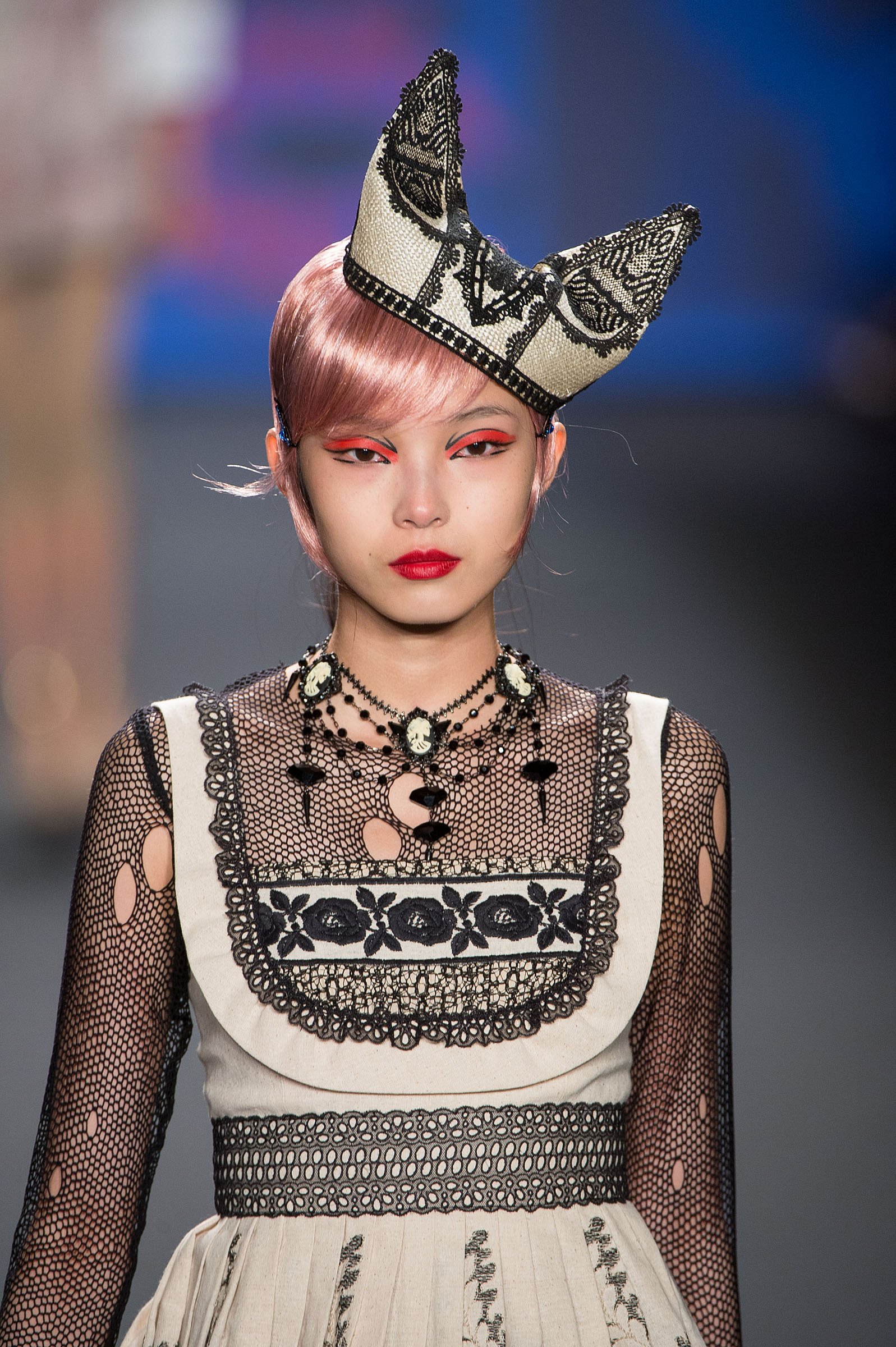
Anna Sui has significantly shaped the global fashion landscape by synthesizing subcultural aesthetics, such as punk, grunge, and Victorian romanticism, into a cohesive, high-end commercial vision. Her influence persists as a foundational pillar of modern eclectic design, characterized by an enduring commitment to textile innovation, whimsical storytelling, and the democratization of luxury through strategic licensing and beauty collaborations.
The Foundation of an Iconic Aesthetic
The impact of Anna Sui on fashion is best understood through her deliberate rejection of the minimalist trends that dominated the late 1980s and early 1990s. When Sui launched her namesake brand, she did not merely present garments; she curated entire atmospheric environments that reflected her personal obsession with rock and roll history, Hollywood glamour, and bohemian subcultures. Her ability to translate these niche inspirations into luxury apparel redefined how designers could approach brand identity.
Unlike her contemporaries who often aimed for a singular, static silhouette, Sui thrived on visual maximalism. Her work effectively bridged the gap between the DIY, anti-establishment ethos of the New York downtown scene—where she cut her teeth in the 1970s—and the polished expectations of the runway. This juxtaposition became her signature: delicate silk dresses layered under rugged leather jackets or adorned with vintage-inspired floral prints, proving that disparate elements could coexist within a luxury framework.
Textiles and Pattern Design as a Strategic Advantage
A core component of Anna Sui’s technical influence lies in her meticulous approach to textile design. Many designers outsource print and fabric development, but Sui treats these elements as the primary language of her collection. Her deep knowledge of fashion history—spanning from the Art Deco period to the Mod movement—informs the intricate, proprietary prints that define her runway shows.
By controlling the design process from the loom to the finished garment, she established a level of product integrity that resonates with consumers who prioritize craftsmanship. In 2026, her archives serve as a masterclass in pattern mixing, a technique that has since been adopted by countless contemporary brands. Her use of jacquards, intricate embroidery, and sheer layering remains a benchmark for designers who seek to convey depth and narrative through material alone.
The Democratization of Luxury and Brand Expansion
Beyond the runway, Anna Sui’s impact on the fashion business model cannot be overstated. She was among the first American designers to successfully translate a high-fashion runway aesthetic into an accessible beauty and lifestyle empire. Her fragrance line, launched in the late 1990s, set a template for how a designer’s brand DNA could be packaged into sensory products that reach a global audience beyond the traditional runway customer.
Sui’s business philosophy emphasizes the "Anna Sui girl"—a fantasy-driven persona that is accessible through makeup, accessories, and fragrance, even if a customer cannot purchase a full couture piece. This approach to brand expansion, which includes high-profile collaborations with brands like Hush Puppies, Tumi, and Target, anticipated the modern "drop" culture and the hyper-collaborative nature of today’s fashion industry.
Comparative Analysis: Traditional Fashion vs. The Sui Approach
| Feature | Traditional Luxury Model | Anna Sui Design Model |
|---|---|---|
| Design Focus | Seasonal, trend-based shifts | Consistent, narrative-driven identity |
| Aesthetic | Often minimalist or formal | Maximalist, eclectic, and layered |
| Product Reach | High-end, exclusive access | Scalable via beauty, scent, and collabs |
| Primary Inspiration | Contemporary art and lifestyle | Historical subcultures and rock music |
| Brand Identity | Evolving brand spokesperson | Personal reflection of the designer |
Influencing the Grunge and Bohemian Movements
Sui’s impact on the "grunge" aesthetic of the 1990s is historical record. Her 1992 runway show, which featured iconic supermodels like Naomi Campbell and Linda Evangelista wearing baby-doll dresses paired with combat boots, was instrumental in bringing the raw, anti-fashion elements of the Seattle music scene onto the global stage.
By legitimizing these "counter-cultural" styles through the lens of luxury silk and lace, she fundamentally altered the way mainstream retail understood youth culture. This influence remains visible in 2026, as designers continue to cycle through iterations of the "boho-chic" and "grunge-luxe" looks that Sui pioneered over three decades ago. She taught the industry that subcultures were not mere fleeting trends, but sustainable design languages that could be perpetually revisited and reimagined.
The Role of Store Environments as Marketing
Anna Sui’s influence also extends to the physical experience of retail. Her signature boutiques, known for their iconic violet walls, black lacquer furniture, and ornate brass fixtures, created a blueprint for experiential retail. Before the industry emphasized "Instagrammable" spaces, Sui had already mastered the art of creating a shop that felt like a sanctuary—a physical manifestation of her interior world.
This dedication to spatial design reinforced the idea that a brand is not just what the customer wears, but where they live and how they decorate their lives. By inviting the customer into her world through these retail experiences, she fostered a sense of brand loyalty that has helped her business remain relevant and independent in an era dominated by large luxury conglomerates.
Challenges and Sustainability in Modern Fashion
Despite her enduring influence, the business of Anna Sui operates within the challenging framework of the modern, rapid-turnover fashion cycle. Maintaining an independent label while adhering to the rigorous schedule of international fashion weeks requires a precise balance of legacy and innovation.
In recent years, the industry has placed greater scrutiny on supply chains and environmental impact. Sui’s reliance on complex embroidery and specialized textile production presents challenges in the context of sustainable manufacturing. However, her focus on high-quality pieces that do not adhere to seasonal "disposability" serves as a counterbalance to the fast-fashion cycle. Her work encourages consumers to curate collections rather than consume trends, which aligns with modern shifts toward mindful acquisition.
Frequently Asked Questions
How did Anna Sui change the way designers view subcultures? Anna Sui proved that subcultural aesthetics, like punk and grunge, could be elevated into high fashion without losing their edge. By combining these styles with high-end materials, she showed that "street" influences could be profitable, desirable, and timeless.
What is the "Anna Sui effect" on the beauty industry? Sui’s beauty line, initiated in the late 1990s, shifted the expectation of luxury makeup. It introduced whimsical, ornate packaging—often featuring roses and butterflies—that made the application of cosmetics feel like a part of the fashion experience, rather than a separate, utilitarian task.
Why are Anna Sui prints considered so influential? Her prints are influential because they are deeply historical and highly personal. Instead of relying on mass-market digital prints, Sui develops custom textiles that reflect specific eras or artistic movements, creating a unique visual language that is instantly recognizable.
How does Anna Sui’s brand remain relevant in 2026? The brand remains relevant by resisting the urge to mimic fast-fashion trends. By staying true to her core aesthetic while using social media to engage with younger generations who discover her vintage archives, she maintains a status as a "designer’s designer."
What is the best way to start a collection of Anna Sui pieces? For those looking to invest, start by identifying the iconic silhouettes of the 1990s, such as the slip dress or embroidered jacket. Verification of labels and original fabric tags is essential, as the brand has a rich history of specific seasonal collections that are highly sought after by collectors.
Recommendation for Further Engagement
To fully appreciate the impact of Anna Sui on the fashion industry, one should study the relationship between her 1992 runway show and the subsequent shift in high-fashion editorial standards. For those interested in the craft itself, exploring the archives at the Fashion Institute of Technology (FIT) or reviewing the detailed retrospectives of her work provides clear evidence of how her technical approach to textile design continues to influence the construction of modern garments. Aspiring designers are encouraged to examine her ability to maintain creative independence while building a multi-category lifestyle brand as a foundational case study for contemporary label management.