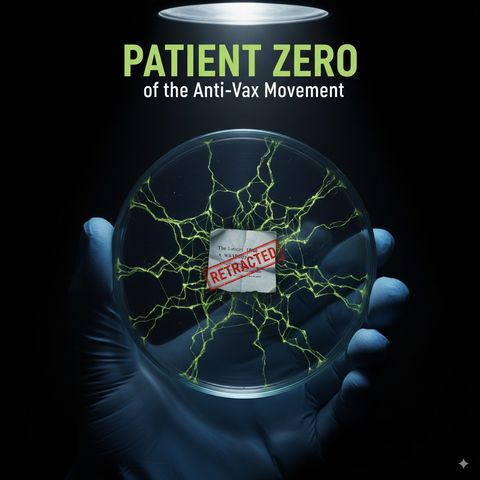
As of 2026, Andrew Wakefield’s net worth is estimated to be between $1 million and $5 million. This valuation is derived from his transition from a licensed medical professional to a prominent filmmaker, author, and public speaker within the global anti-vaccination movement. His primary income streams include documentary production, book royalties, and appearance fees.
The financial trajectory of Andrew Wakefield is a unique case study in how a controversial public figure can maintain—and even expand—personal wealth after the loss of a primary professional credential. Once a high-earning gastrointestinal surgeon in the United Kingdom, Wakefield's career path shifted dramatically following the 1998 publication and subsequent retraction of his paper in The Lancet. This analysis explores the mechanisms of his financial survival, the profitability of his media ventures, and the estimated value of his assets in the current year.
The Financial Transition: From Surgeon to Activist
To understand Andrew Wakefield's net worth in 2026, one must first examine the high-earning baseline of his early career. In the mid-1990s, Wakefield was a researcher and consultant at the Royal Free Hospital in London. At that time, a senior consultant in the UK's National Health Service (NHS) or associated academic institutions would have earned a comfortable upper-middle-class salary, likely supplemented by private practice and research grants.
However, the legal and professional fallout from his research into the MMR (Measles, Mumps, and Rubella) vaccine fundamentally altered his earning potential. Following the General Medical Council’s (GMC) 2010 ruling that he had acted "dishonestly and irresponsibly," Wakefield was struck off the medical register. This effectively ended his ability to earn a traditional medical salary in the UK or most other Western nations.
The Move to the United States
Following his professional exile from the UK, Wakefield relocated to Austin, Texas. This move was a strategic financial and professional pivot. In the United States, Wakefield found a more receptive audience for his theories and a regulatory environment that allowed him to operate as a consultant, author, and speaker without a medical license.
His early years in the U.S. involved significant legal expenses due to various lawsuits, including a high-profile defamation suit against journalist Brian Deer and the British Medical Journal (BMJ). While these legal battles were costly, they served to solidify his status as a "martyr" figure within certain circles, a brand identity that would later become a primary driver of his net worth.
Primary Revenue Streams in 2026
Wakefield’s current financial status is not built on medical practice but on a diversified media and influence portfolio. His ability to monetize controversy has allowed him to sustain a lifestyle that many observers note is inconsistent with a "disgraced" professional status.
1. Documentary Filmmaking and Media Production
The most significant contributor to Wakefield’s wealth in the last decade has been his role as a director and producer. His 2016 documentary, Vaxxed: From Cover-Up to Catastrophe, was a commercial success within its niche. Despite being pulled from the Tribeca Film Festival, the film received private screenings across the United States and was later released via streaming platforms and DVD.
- Box Office and Private Screenings: Vaxxed reportedly grossed over $1.2 million in limited theatrical release. However, the secondary market—including private community screenings and direct-to-consumer sales—is where the majority of the revenue was generated.
- Sequels and Spin-offs: Following the success of the first film, Wakefield was involved in Vaxxed II: The People's Truth (2019) and 1986: The Act (2020). These projects utilize a direct-distribution model that bypasses traditional studios, allowing a higher percentage of profits to remain with the producers.
2. Book Royalties
Wakefield is the author of several books, the most notable being Callous Disregard: Autism and a Punctured Promise. This book, which outlines his perspective on the MMR controversy, remains a staple in anti-vaccination literature. As of 2026, he continues to earn royalties from print and digital sales. While not a mainstream bestseller, the consistent demand from a dedicated global audience ensures a steady, albeit modest, passive income stream.
3. Public Speaking and Consultancy
Before the COVID-19 pandemic and continuing through 2026, Wakefield has been a fixture on the "wellness" and "health freedom" lecture circuits. High-profile speakers in this niche can command fees ranging from $5,000 to $20,000 per appearance, plus travel expenses. These events often include VIP "meet and greet" sessions, which provide additional revenue for the organizers and speakers.
4. Non-Profit and Foundation Ties
Wakefield has been associated with various non-profit organizations and private companies, such as Strategic Medical Solutions and the Autism Media Channel. While these are often structured to support his advocacy work, they frequently cover his travel, research, and production costs, effectively reducing his personal cost of living and preserving his private capital.
Estimated Assets and Lifestyle
Public records and investigative reporting provide glimpses into Wakefield’s personal assets. During his time in Austin, Texas, he was linked to a multi-million dollar estate in the Spanish Oaks community. This luxury property featured a swimming pool, five bedrooms, and expansive grounds.
| Asset Category | Estimated Value (2026) | Notes |
|---|---|---|
| Real Estate | $2,000,000 - $3,500,000 | Primary residence in Texas; values adjusted for 2026 market. |
| Media Rights | $500,000 - $1,000,000 | Residuals from Vaxxed franchise and future project options. |
| Liquid Assets | $250,000 - $500,000 | Cash, stocks, and private investments. |
| Intellectual Property | $100,000 - $250,000 | Book royalties and copyrights for lecture materials. |
Disclaimer: These figures are estimates based on available public records and market trends. As a private citizen, Wakefield is not required to disclose his full financial statements.
The Role of Legal Expenses and Liabilities
It is important to note that while Wakefield generates significant revenue, his net worth has been periodically suppressed by substantial legal liabilities. The process of being struck off the medical register in the UK involved a marathon hearing—the longest in the GMC’s history—which incurred massive legal costs.
Furthermore, his attempts to sue critics for defamation have largely been unsuccessful. In many jurisdictions, including Texas, losing such lawsuits can result in the plaintiff being ordered to pay the defendant’s legal fees under Anti-SLAPP (Strategic Lawsuits Against Public Participation) statutes. These financial hits have likely prevented his net worth from climbing into the decamillionaire range.
Fact-Checking Common "Net Worth" Myths
The internet is often populated with automated "net worth" sites that claim Wakefield is worth upwards of $50 million or, conversely, that he is bankrupt. Both extremes are generally unsupported by evidence.
- The "Secret Millionaire" Theory: Some claim Wakefield was paid millions by trial lawyers in the 1990s. While he did receive significant funding (reportedly over £400,000) from the UK legal aid board to find evidence for a lawsuit against vaccine manufacturers, much of this was used for research costs, and it does not represent his current liquid net worth.
- The "Broke Activist" Theory: Wakefield’s lifestyle in the U.S., including high-end real estate and frequent international travel, refutes the idea that he is in financial distress. His "deplatforming" from certain social media sites may have reduced his reach, but it has not eliminated his core revenue streams.
Financial Comparison: Pre-Disgrace vs. 2026
To provide context for his $1M - $5M net worth, we can compare his financial standing across different phases of his career.
- Academic/Medical Phase (1990-2003): High income ($150k-$250k USD equivalent), high stability, low personal brand value.
- Litigation Phase (2004-2012): Declining income, high legal costs, transition to the U.S., reliance on supporters.
- Media/Influence Phase (2013-2026): Variable but potentially high income, diversification into film and speaking, high personal brand value within a niche market.
While his current income is less stable than a surgeon’s salary, his "uncancelable" status within the anti-vaccine community provides a form of financial security that is decoupled from traditional institutional approval.
FAQs About Andrew Wakefield's Finances
Is Andrew Wakefield still a licensed doctor in 2026?
No. Andrew Wakefield was struck off the medical register by the UK General Medical Council in 2010. He is not licensed to practice medicine in the United Kingdom, the United States, or any other major jurisdiction. His income is derived from media, writing, and consulting, not medical practice.
How much did Andrew Wakefield make from the movie Vaxxed?
While exact personal earnings are private, the film grossed over $1.2 million at the box office. As the director and a key figure in the production company, Wakefield likely received a significant portion of the profits, supplemented by ongoing digital sales and screening fees.
Does he receive government funding or grants?
No. Since the retraction of his 1998 paper, Wakefield has been ineligible for traditional scientific research grants from government bodies like the NIH (National Institutes of Health) or the MRC (Medical Research Council). His work is funded through private donations, independent production companies, and ticket/book sales.
What is the primary source of his wealth in 2026?
The primary source of his wealth is his personal brand. This brand allows him to monetize various products, including documentaries, books, and live appearances. He functions essentially as a high-level influencer within the "alternative health" niche.
Has Wakefield lost money in defamation lawsuits?
Yes. Wakefield has filed several defamation lawsuits against journalists and medical journals that were ultimately dismissed. In some instances, he has been responsible for his own legal costs, and in others, he has faced motions to pay the legal fees of the defendants. These costs have significantly impacted his overall net worth over the last two decades.
Summary Recommendation for Researchers
When evaluating the net worth of a figure as polarizing as Andrew Wakefield, it is essential to distinguish between personal wealth and organizational revenue. Much of the money associated with Wakefield flows through private companies or non-profits. For financial researchers or biographers, the most accurate picture of his wealth is found not in a single number, but in the observation of his sustained high-end lifestyle and his continued ability to self-fund large-scale media projects. In 2026, he remains a financially solvent and influential figure, proving that professional deregistration does not necessarily lead to financial ruin in the age of niche media.