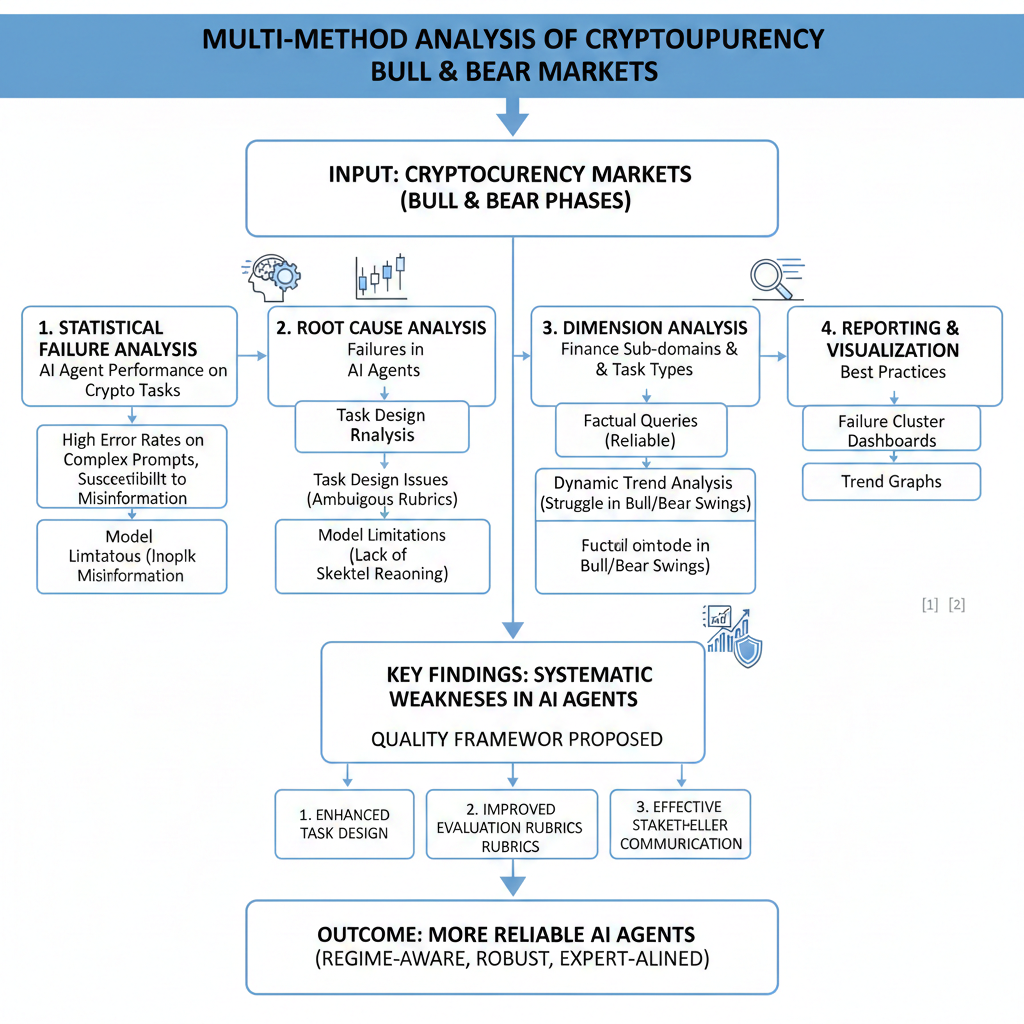
Analyzing cryptocurrency markets requires a rigorous understanding of the interplay between market sentiment, regulatory shifts, and underlying blockchain architecture. By evaluating asset liquidity, protocol maturity, and decentralized finance adoption, stakeholders can determine how digital asset trends accelerate innovation in distributed ledger technology, data privacy, and global payment infrastructure.
Understanding the Symbiotic Relationship Between Markets and Tech
The cryptocurrency market serves as an unprecedented laboratory for financial and computational innovation. When market capitalizations surge, venture capital inflow typically follows, leading to accelerated research and development in underlying technological layers. Conversely, when market volatility rises, the focus often shifts toward infrastructure hardening, security audits, and the optimization of consensus mechanisms.
The impact of these markets on technology is not merely speculative. Every price cycle tends to stress-test decentralized systems, forcing developers to improve scalability—often measured in transactions per second (TPS)—and reduce energy consumption. For example, the transition of major protocols from proof-of-work to proof-of-stake models was directly influenced by the market’s growing demand for environmental, social, and governance (ESG) compliance. By analyzing the current market landscape in 2026, we can observe a trend toward modular blockchains, where technology is separated into distinct execution, settlement, and data availability layers to solve the "blockchain trilemma" of security, scalability, and decentralization.
Key Metrics for Market Analysis
To effectively analyze cryptocurrency markets, professionals must go beyond surface-level price action. Technical analysis remains relevant, but fundamental analysis of the technological stack has become the primary indicator of long-term viability.
On-Chain Data Analysis
On-chain analytics allow observers to view the "ledger of truth." By tracking wallet activity, transaction volume, and the movement of assets between centralized exchanges and cold storage, analysts can gauge whether a project is experiencing genuine adoption or merely speculative trading.
- Active Address Growth: A steady increase in unique addresses suggests expanding user adoption.
- Hash Rate/Staking Ratio: High levels of staked assets indicate network security and long-term commitment from the ecosystem participants.
- Developer Activity: Monitoring code commits on public repositories provides insight into the "health" of a project’s technological roadmap.
Economic and Regulatory Indicators
Regulatory environments, such as the MiCA framework in the European Union or specific SEC rulings in the United States, act as constraints that force technological adaptation. If a token is categorized as a security, the technology underlying it must often incorporate KYC (Know Your Customer) and AML (Anti-Money Laundering) features directly into the smart contract level, impacting how permissionless a system can remain.
How Market Demands Drive Technological Evolution
The evolution of technology in the blockchain sector is rarely accidental; it is driven by the needs of the market. When users demanded lower fees during periods of high network congestion, the industry pivoted toward Layer-2 (L2) scaling solutions. These secondary protocols bundle transactions off-chain before settling them on the primary chain, a technological breakthrough that effectively commoditized transaction speed.
Furthermore, the integration of Oracle services—which bring real-world data onto the blockchain—was a market-driven necessity. Decentralized Finance (DeFi) platforms required accurate, tamper-proof price feeds to execute automated liquidations. This demand catalyzed advancements in cryptographic security, specifically in Zero-Knowledge (ZK) proofs, which allow one party to prove the truth of a statement without revealing the underlying data.
Comparative Analysis of Market-Driven Technological Tiers
| Technological Layer | Primary Market Demand | Impact of Market Cycles |
|---|---|---|
| Layer 1 Protocols | Decentralization & Security | Focus shifts to energy efficiency |
| Layer 2 Scaling | Throughput & Low Fees | Rapid innovation during high volume |
| Oracle Services | Real-world Data Accuracy | Incentivizes cryptographic security |
| ZK-Rollups | Privacy & Scalability | Accelerated adoption in bear markets |
Prerequisites for Technical Evaluation
Before conducting an analysis, stakeholders must verify the technical environment of the asset in question. A common mistake is analyzing the price without reviewing the protocol's documentation, specifically the "whitepaper" or the "technical specification."
- Verification of Consensus Mechanism: Does the project utilize a secure, audited consensus protocol? Evaluate the risk of "51% attacks" based on current network size.
- Smart Contract Audits: Always verify if a project has undergone third-party audits by reputable cybersecurity firms. The presence of an open-source, verified code repository is a non-negotiable prerequisite for institutional trust.
- Governance Structure: Determine whether the project is truly decentralized or if a centralized foundation controls the protocol updates. This significantly impacts the long-term technological stability of the asset.
Common Pitfalls in Market Analysis
Many analysts fail by applying traditional equity analysis frameworks to crypto assets. While metrics like Price-to-Earnings (P/E) ratios exist in crypto, they are often misleading because many protocols do not generate traditional "revenue" in the early stages.
Another frequent error is ignoring the "technical debt" of a project. A project might have high marketing visibility but possess a stagnant codebase. In the 2026 market climate, capital is increasingly flowing toward projects that prioritize "interoperability"—the ability of different blockchains to communicate and transfer assets seamlessly. Projects that remain siloed often see lower technological relevance and market participation.
The Role of Institutional Integration
Institutional interest has significantly shifted the technological focus toward compliance and custody. The emergence of tokenized real-world assets (RWAs) requires technological infrastructure that can bridge traditional finance databases with blockchain smart contracts. This necessitates the use of "permissioned" blockchains or "private subnets," which allow institutions to reap the benefits of distributed ledger technology without exposing sensitive transaction data to the public.
When analyzing these markets, look for partnerships between traditional financial institutions and blockchain projects. These partnerships often signal where the next major technological breakthrough will occur, as the technical requirements for institutional integration are significantly more stringent than those for retail-facing applications.
Frequently Asked Questions
How does market volatility affect the development of blockchain technology? Market volatility typically forces developers to focus on efficiency and security. During price corrections, speculative projects often fail, allowing resources to consolidate around robust, technologically sound protocols that prioritize utility over hype.
What is the most important technical indicator for a cryptocurrency’s long-term success? Developer retention and community-driven code contribution are generally the strongest indicators. If a project consistently updates its codebase and solves technical issues, it demonstrates the resilience required to survive multiple market cycles.
Why is interoperability considered a major technological goal? Interoperability solves the fragmentation issue in the blockchain space. As more specialized chains emerge, the ability to move assets and data between them without middleman risks becomes essential for a functional, global decentralized ecosystem.
Are decentralized finance (DeFi) protocols safer than centralized exchanges? DeFi protocols rely on smart contract code, which can be audited but may have undiscovered vulnerabilities. Centralized exchanges rely on company integrity and regulatory compliance. Both carry distinct risks; transparency is the primary difference.
How does 2026 regulatory guidance impact project development? Regulations in 2026 have pushed projects to prioritize "compliant decentralization," where developers implement tools that allow for regulatory adherence (like identity verification) while maintaining the permissionless nature of the underlying technology.
Next Steps for Stakeholders
If you are looking to analyze these markets effectively, start by selecting one specific sector, such as decentralized identity or modular scaling. Evaluate the top three projects in that niche based on their GitHub activity, the number of independent validator nodes, and the clarity of their technical roadmap. Avoid making investment or development decisions based on social media sentiment alone. Instead, focus on the "developer velocity"—the rate at which new, functional features are being shipped to the mainnet. By grounding your analysis in technical reality, you position yourself to better understand both the risks and the transformative potential of these markets.