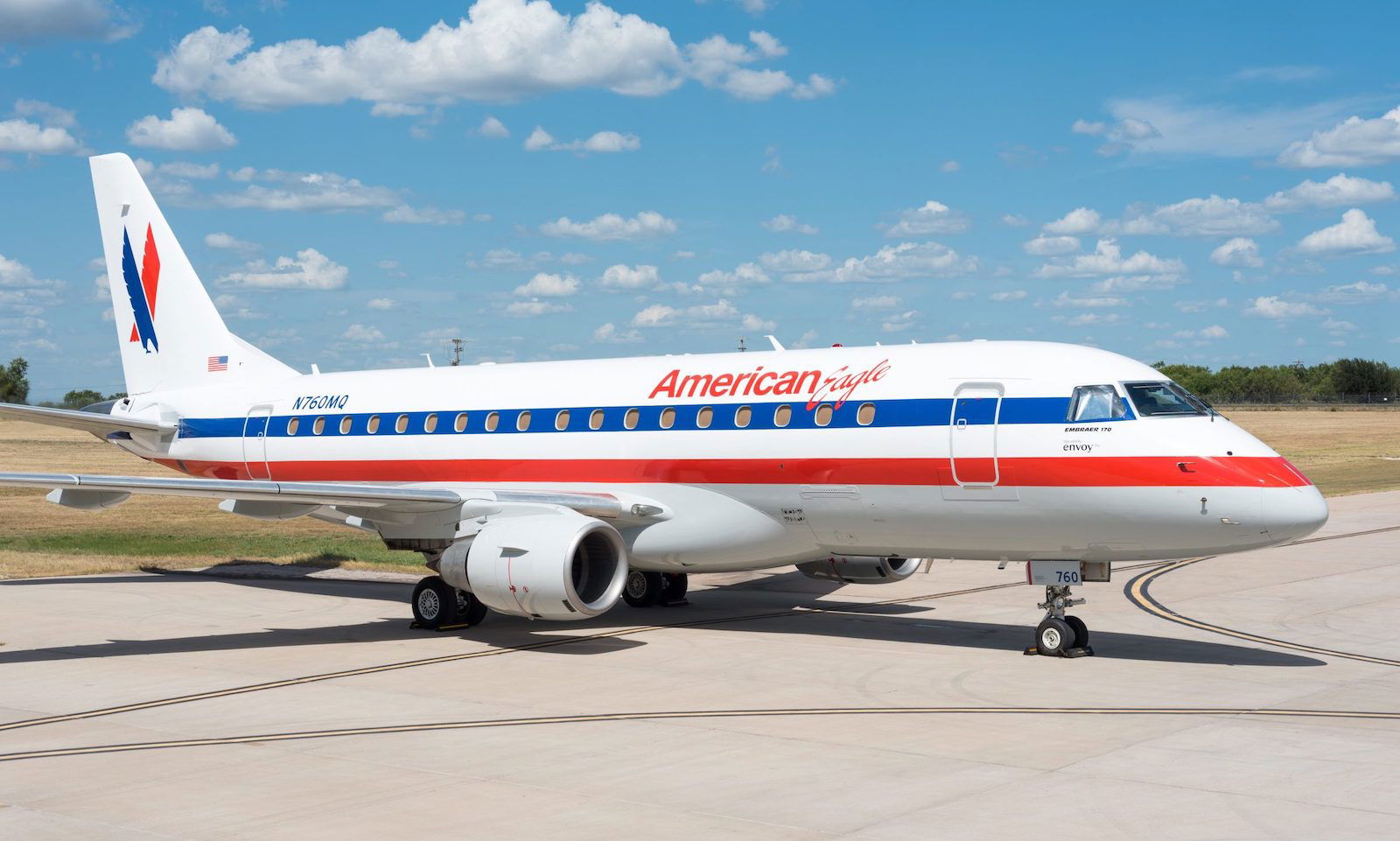
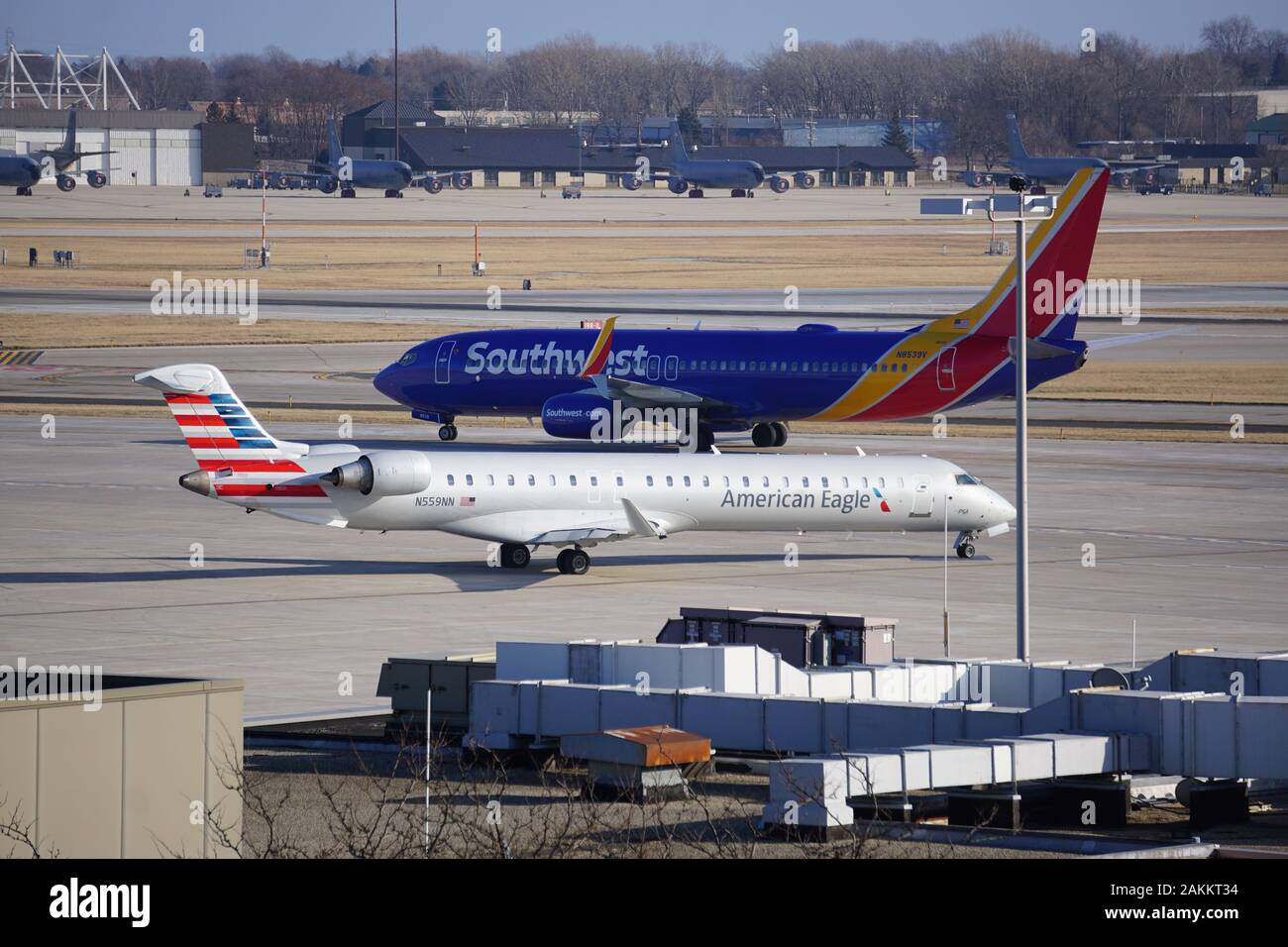
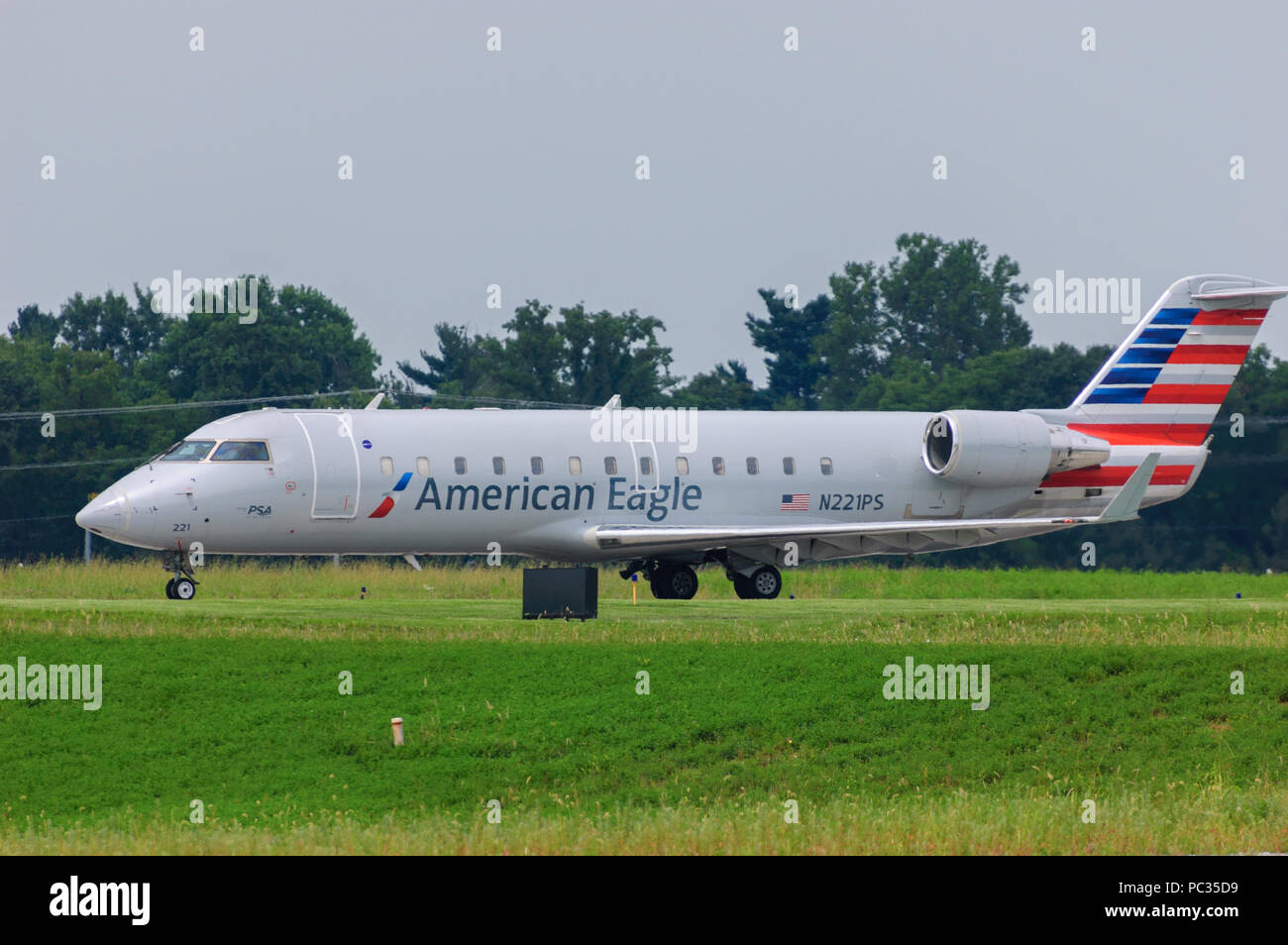
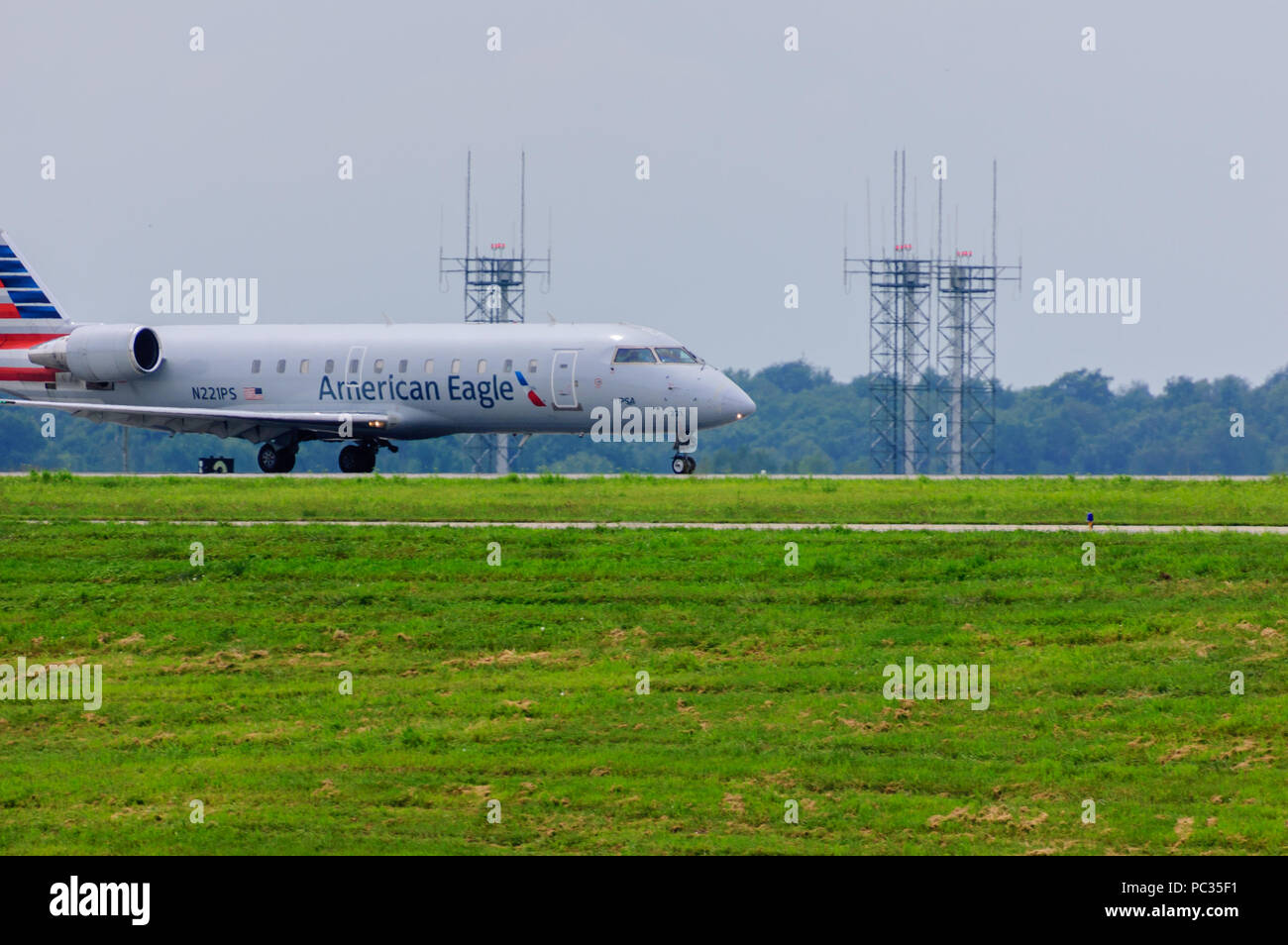
American Eagle operates as the regional branch of American Airlines, utilizing a diverse fleet of "small planes" including the Embraer 175, ERJ-145, and Bombardier CRJ series. These regional jets connect smaller markets to major hubs, offering varying levels of comfort, from the spacious 2-2 seating of the E175 to the compact 1-2 configuration of the ERJ-145.
As of 2026, the regional aviation landscape has shifted toward larger, dual-class regional jets to improve passenger comfort and operational efficiency. While many travelers use the term "small planes" to describe any aircraft with fewer than 100 seats, the technical reality involves a sophisticated network of regional carriers operating under the American Eagle brand. These carriers include wholly-owned subsidiaries like Envoy Air, Piedmont Airlines, and PSA Airlines, as well as contract partners like Republic Airways and SkyWest Airlines.
This guide provides an in-depth analysis of the American Eagle fleet, the logistics of flying on smaller airframes, and what passengers should expect regarding amenities, baggage, and safety.
The Structure of American Eagle Operations
It is a common misconception that American Eagle is a single airline. Instead, it is a brand name for the regional network of American Airlines. In 2026, the operation is divided among several distinct carriers, each maintaining its own FAA operating certificate, pilot groups, and maintenance teams, while all fly in American Eagle livery.
Wholly-Owned Subsidiaries
- Envoy Air: Headquartered in Irving, Texas, Envoy is the largest provider of American Eagle flights. They primarily operate the Embraer 175 and ERJ-145.
- PSA Airlines: Based in Dayton, Ohio, PSA is the primary operator of the Bombardier (now MHIRJ) CRJ-700 and CRJ-900 series.
- Piedmont Airlines: Headquartered in Salisbury, Maryland, Piedmont has historically operated turboprops but transitioned fully to the Embraer 145 jet fleet to provide high-frequency service to smaller East Coast markets.
Contract Partners
American Airlines also contracts with Republic Airways and SkyWest Airlines. These partners provide additional capacity, particularly in competitive markets like New York (LGA/JFK), Chicago (ORD), and Los Angeles (LAX). Understanding which carrier is operating your flight can often be found in the "Operated by" line on your boarding pass, which is relevant for knowing the specific aircraft type and its associated amenities.
Detailed Fleet Breakdown: The "Small Planes" of 2026
The American Eagle fleet is currently dominated by two manufacturers: Embraer and Bombardier (Mitsubishi Heavy Industries Regional Jet). The following sections detail the specific models you are likely to encounter.
Embraer 175 (E175)
The Embraer 175 is widely considered the "gold standard" of regional flying. Unlike smaller regional jets, the E175 features a wide-body feel with a 2-2 seating configuration in the Main Cabin, meaning there are no middle seats.
- Capacity: Typically 76 seats (12 First Class, 64 Main Cabin/Main Cabin Extra).
- Dimensions: Length of 103 feet 11 inches; wingspan of 94 feet 2 inches.
- Performance: A cruising speed of 515 mph and a range of approximately 1,800 nautical miles.
- Passenger Experience: The cabin height of 6 feet 7 inches allows most passengers to stand comfortably. The overhead bins are large enough to accommodate standard-size rollaboard suitcases, a significant advantage over smaller regional jets.
Bombardier CRJ-700 and CRJ-900
The CRJ series, originally developed by Bombardier and now supported by MHIRJ, remains a staple of the PSA Airlines fleet. These aircraft are known for their sleek, narrow profile and rear-mounted engines, which provide a quieter cabin experience toward the front of the plane.
- CRJ-700: Seats 65 to 70 passengers. It offers a dual-class cabin and a 2-2 seating arrangement.
- CRJ-900: A stretched version of the 700, typically seating 76 to 79 passengers.
- Limitations: The CRJ series features smaller windows that are positioned lower on the fuselage compared to the Embraer jets, and the overhead bins are more restrictive. Many standard rollaboard bags must be "valet tagged" (gate-checked) on these aircraft.
Embraer 145 (ERJ-145)
Often referred to as the "pencil jet" due to its long, thin fuselage, the ERJ-145 is the smallest jet in the American Eagle fleet in 2026. It is primarily used for short "puddle jumper" routes where demand does not justify a larger 76-seat aircraft.
- Configuration: 1-2 seating. This means the "A" seats are both window and aisle seats, with no neighbor, which is a favorite for solo business travelers.
- Cabin Height: 5 feet 11 inches. Taller passengers will find the cabin quite cramped.
- Storage: The overhead bins are extremely small, suitable only for backpacks, laptops, or small duffel bags. Almost all wheeled luggage must be gate-checked.
Technical Specifications Comparison Table
| Aircraft Model | Max Seats | Configuration | Engine Type | Range (NM) | Overhead Bin Capacity |
|---|---|---|---|---|---|
| Embraer 175 | 76 | 2-2 (Main) / 1-2 (First) | GE CF34-8E | 1,800 | Standard Rollaboards |
| CRJ-900 | 76-79 | 2-2 (Main) / 1-2 (First) | GE CF34-8C5 | 1,550 | Small Rollaboards only |
| CRJ-700 | 65-70 | 2-2 (Main) / 1-2 (First) | GE CF34-8C5 | 1,400 | Small Rollaboards only |
| ERJ-145 | 50 | 1-2 (Single Class/Main) | Rolls-Royce AE3007 | 1,550 | Personal items only |
The Regional Passenger Experience in 2026
Flying on a small American Eagle plane differs significantly from a mainline Boeing 737 or Airbus A321. Understanding these nuances can help travelers prepare for their journey.
Boarding and Baggage Logistics
The most critical difference involves carry-on luggage. Because regional jets have narrower fuselages, their overhead storage is limited.
- Yellow/Red Valet Tags: If you are flying on a CRJ or ERJ-145, you will likely be asked to "valet" your bag at the jet bridge. You receive a tag, leave the bag at the end of the jet bridge, and pick it up on the jet bridge at your destination rather than at the baggage carousel.
- The E175 Advantage: On the E175, gate checking is less common because the bins are designed to fit modern luggage. However, on full flights, late-boarding groups may still be required to check bags to their final destination.
Amenities and Connectivity
By 2026, American Airlines has made significant investments in regional fleet connectivity.
- High-Speed Wi-Fi: Most E175 and CRJ-900 aircraft are equipped with satellite-based Wi-Fi (Viasat or Starlink), allowing for streaming and high-speed browsing.
- In-Flight Entertainment: American Eagle planes do not have seatback screens. Instead, they offer a "Bring Your Own Device" (BYOD) model where passengers stream a library of movies and TV shows to their personal tablets or phones via the onboard Wi-Fi portal.
- Power Outlets: First Class and Main Cabin Extra seats on the E175 and CRJ-900 typically feature AC power outlets and USB ports. Standard Main Cabin seats may not always have dedicated power, especially on older ERJ-145 airframes.
Food and Beverage Service
Service on American Eagle flights is highly dependent on the flight's duration:
- Flights under 250 miles: Usually no scheduled beverage service due to the short time at cruising altitude.
- Flights 250–899 miles: Standard beverage service with snacks (pretzels or Biscoff cookies).
- Flights over 900 miles: First Class passengers receive a fresh meal or a premium snack tray, depending on the time of day. Main Cabin passengers can often purchase food, though availability is more limited than on mainline flights.
Safety and Operational Standards
A common question regarding small planes is whether they are as safe as larger aircraft. American Eagle carriers are governed by FAA Part 121 regulations, which are the same stringent safety, maintenance, and pilot training standards that apply to American Airlines' mainline operations.
Pilot Training and Experience
The "Regional Airline Safety Improvement Act" and subsequent FAA mandates require regional pilots to meet high flight-hour thresholds (usually 1,500 hours) before flying for a commercial carrier. Many American Eagle pilots are in a "flow-through" program, meaning they are highly trained professionals who will eventually transition to flying larger aircraft for American Airlines.
Flight Characteristics
Smaller planes have less mass, which means they can be more susceptible to turbulence. While this might result in a "bumpier" ride compared to a wide-body jet, it is not an indication of safety issues. Furthermore, regional jets often cruise at slightly lower altitudes (28,000 to 36,000 feet) than transcontinental jets, which can occasionally place them in more weather-active layers of the atmosphere.
Common Challenges and Troubleshooting
Why is my flight on a small plane delayed more often?
Regional flights are frequently the first to be delayed or canceled during weather events at major hubs. This is a strategy used by airlines called "Slot Management." If a hub like DFW or ORD has reduced capacity due to a storm, the airline would rather delay a 50-seat regional jet than a 300-seat international flight to minimize the total number of displaced passengers.
Seat Selection Tips
- Avoid the last row: On the ERJ-145 and CRJ series, the last row is near the engines and the lavatory, making it loud and high-traffic. Additionally, these seats often do not recline.
- The "A" Seats on ERJ-145: If you are traveling alone, always try to book an "A" seat. You get both a window and an aisle view without a seatmate.
- Main Cabin Extra: If you are tall, the extra 3-5 inches of legroom in Main Cabin Extra is worth the upgrade on a regional jet, as the standard seat pitch can be as tight as 30 inches.
Environmental Impact and Future Trends
The regional aviation sector is under pressure to reduce its carbon footprint. In 2026, we are seeing the beginning of a transition toward more fuel-efficient engines and the testing of hybrid-electric powerplants for short-haul routes.
American Airlines has invested in ZeroAvia, a company developing hydrogen-electric propulsion. While we are not yet seeing hydrogen-powered American Eagle flights in daily service in 2026, the data gathered from the current fleet of "small planes" is informing the next generation of sub-100-seat aircraft. For now, the focus remains on optimizing flight paths and using Sustainable Aviation Fuel (SAF) where available at regional outstations.
FAQs About American Eagle Small Planes
Do American Eagle small planes have bathrooms?
Yes, every aircraft in the American Eagle fleet, including the 50-seat ERJ-145, is equipped with a lavatory. On the smaller jets, the lavatory is located at the very rear of the aircraft. On the E175 and CRJ-700/900, there is typically one lavatory in the front for First Class and one in the rear for the Main Cabin.
Can I bring a standard carry-on bag on American Eagle?
It depends on the aircraft. On the Embraer 175, most standard 22" x 14" x 9" bags will fit in the overhead bins. On the CRJ-700, CRJ-900, and ERJ-145, you will likely have to valet-tag your bag. You will leave it at the plane's door and retrieve it immediately upon exiting at your destination.
Is First Class available on all American Eagle flights?
First Class is available on the majority of the fleet, specifically the E175, CRJ-700, and CRJ-900. The smaller ERJ-145 is a single-class aircraft and does not offer a First Class cabin, though it does offer "Main Cabin Extra" seating with additional legroom.
Why does the plane feel so small inside?
Regional jets are designed with a narrower fuselage to reduce drag and improve fuel efficiency on shorter routes. The "circular" diameter of an ERJ-145 is much smaller than a Boeing 737, which results in lower ceilings and narrower aisles. However, the E175 is designed with a "double-bubble" fuselage that provides more shoulder room and headspace than older regional models.
Are small planes safer than large ones?
Statistically, there is no significant safety difference between regional jets and mainline jets in the United States. Both operate under the same FAA safety standards and are equipped with advanced avionics, including TCAS (Traffic Collision Avoidance System) and weather radar, comparable to what is found on larger aircraft.
Practical Recommendations for Travelers
When booking a flight that involves an American Eagle regional jet, the best course of action is to check the aircraft type during the seat selection process on the American Airlines website or app.
If your flight is operated by an Embraer 175, you can expect a mainline-like experience with ample bin space. If your flight is on a CRJ or ERJ-145, prepare to valet-tag your luggage and ensure all essential items (medications, electronics, and valuables) are in a smaller "personal item" bag that can fit under the seat in front of you. By 2026, the reliability and connectivity of these smaller planes have reached a point where the gap between regional and mainline service is smaller than ever, provided you understand the specific limitations of the airframe you are boarding.