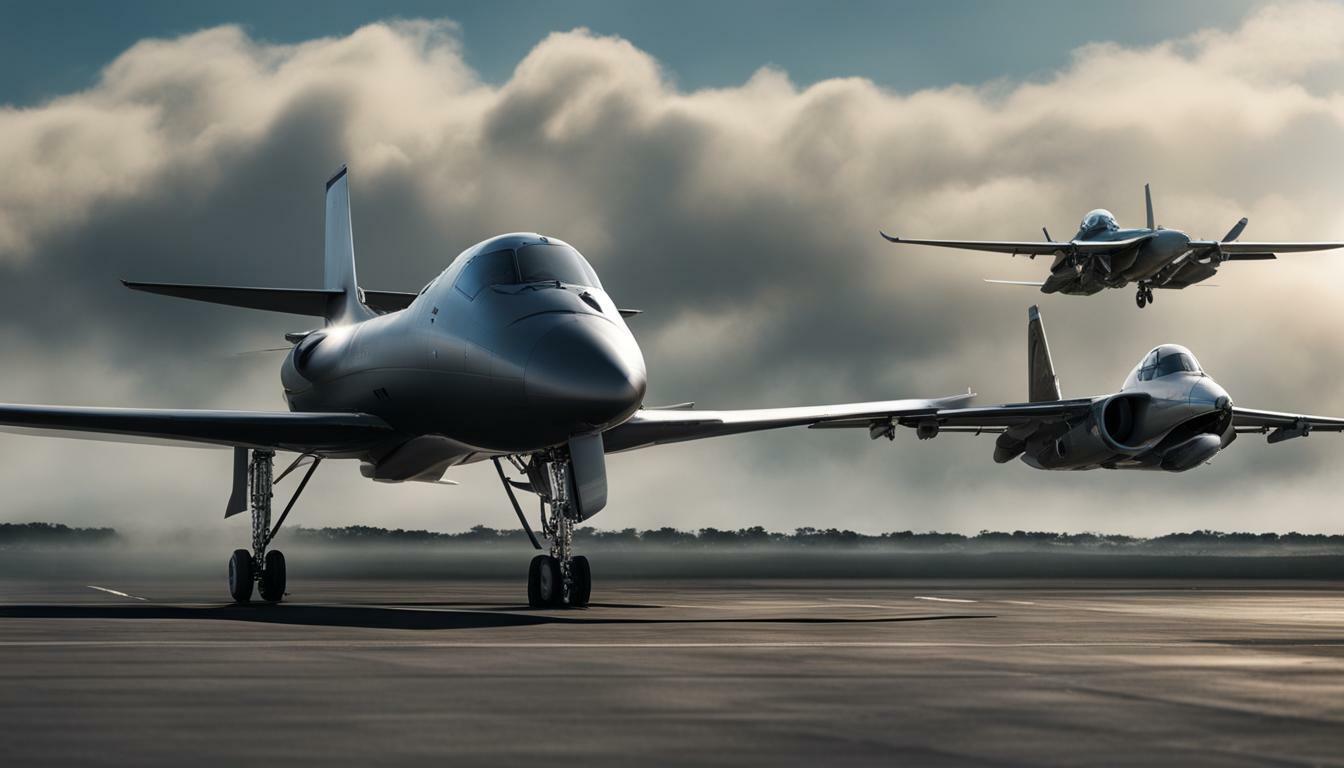
American drone aircraft represent the pinnacle of unmanned aerial vehicle (UAV) engineering, spanning from tactical military platforms to advanced commercial systems. In 2026, this sector is defined by a rapid shift toward autonomous operation, domestic supply chain security, and the integration of artificial intelligence for real-time decision-making in both defense and industrial applications.
The Strategic Evolution of American Military Drones
The landscape of American military drone aircraft has undergone a seismic shift over the last decade. Moving away from the long-endurance, permissive-environment platforms of the early 2000s, the United States Department of Defense (DoD) has prioritized survivability and "loyal wingman" concepts. This evolution is driven by the need to operate in contested airspaces where traditional platforms like the MQ-9 Reaper face significant threats from advanced integrated air defense systems (IADS).
Collaborative Combat Aircraft (CCA) and Autonomy
In 2026, the Collaborative Combat Aircraft (CCA) program stands as the cornerstone of the U.S. Air Force’s Next Generation Air Dominance (NGAD) initiative. These are not merely remote-controlled planes but highly autonomous systems designed to fly alongside manned fighter jets like the F-35 and the B-21 Raider.
The primary goal of CCA is to provide "affordable mass." By deploying lower-cost, unmanned aircraft that can perform electronic warfare, scouting, or weapon delivery, the military can increase its force projection without risking human pilots in high-threat zones. These systems utilize Open Mission Systems (OMS) architecture, allowing for rapid software updates and modular hardware swaps, ensuring that the fleet remains relevant as electronic threats evolve.
The Modernized Role of the MQ-9 Reaper and RQ-4 Global Hawk
While newer stealthy designs capture headlines, the MQ-9 Reaper and RQ-4 Global Hawk continue to serve as the backbone of American Intelligence, Surveillance, and Reconnaissance (ISR). As of 2026, the Reaper has been modernized with the "Dash 25" configuration, which includes enhanced propulsion, improved power distribution for high-energy sensors, and the integration of the Multi-Spectral Targeting System (MTS).
The RQ-4 Global Hawk, managed by the Air Force’s 319th Reconnaissance Wing, remains the premier high-altitude, long-endurance (HALE) platform. Its ability to hover at 60,000 feet for over 30 hours provides persistent coverage that satellites—limited by orbital mechanics—cannot match. Its role has increasingly shifted toward maritime surveillance and serving as a high-altitude communication node to link disparate forces across the Pacific and Atlantic theaters.
The Resurgence of the American Commercial Drone Industry
The commercial and industrial drone market in the United States has experienced a "domestic renaissance" by 2026. This was largely catalyzed by the American Security Drone Act (ASDA) and various National Defense Authorization Act (NDAA) provisions that restricted the use of foreign-made drones—specifically those from China—in federal and critical infrastructure projects.
The Blue UAS Framework and Security Standards
To facilitate this transition, the Defense Innovation Unit (DIU) established the Blue UAS program. This framework provides a vetted list of American-made drone aircraft that meet stringent cybersecurity and supply chain requirements. By 2026, this standard has expanded beyond the military, becoming the "gold standard" for state and local law enforcement, as well as energy companies inspecting power grids.
Key players in this space include:
- Skydio: Known for its industry-leading AI obstacle avoidance. The Skydio X10 has become the primary tool for first responders, offering "dock-to-flight" autonomy that allows drones to be deployed remotely without an on-site pilot.
- Teal Drones (Red Cat): Focuses heavily on the tactical edge, providing small, rugged systems like the Teal 2, which features high-resolution thermal imaging for night operations.
- Freefly Systems: Dominates the heavy-lift sector, providing platforms for professional cinematography and industrial payloads that require precision flight in turbulent conditions.
Industrial Applications: Beyond Simple Imaging
American drones in 2026 are no longer just "cameras in the sky." They are mobile data-gathering laboratories. In the agricultural sector, fixed-wing drones from companies like AgEagle use multispectral sensors to map nitrogen levels in soil, allowing for variable-rate fertilization that reduces costs and environmental impact. In the construction and mining sectors, LiDAR-equipped drones generate centimeter-accurate 3D twins of sites in minutes, a task that previously took days of manual surveying.
Technical Specifications and Performance Benchmarks
Understanding the capabilities of modern American drone aircraft requires a look at the core metrics that define their operational utility. These include SWaP-C (Size, Weight, Power, and Cost), data link encryption levels, and sensor integration.
| Platform | Category | Primary Mission | Max Endurance | Key Technology |
|---|---|---|---|---|
| XQ-58A Valkyrie | Stealth Combat | Loyal Wingman / Escort | 3,000+ Miles | Runway-independent launch |
| MQ-25 Stingray | Carrier-Based | Aerial Refueling | Classified | Autonomous carrier deck ops |
| Skydio X10 | sUAS (Small) | Public Safety / Inspection | 40 Minutes | AI-driven 360° obstacle avoidance |
| RQ-4B Global Hawk | HALE | Strategic ISR | 32+ Hours | Synthetic Aperture Radar (SAR) |
| Vanilla UAS | Ultra-Long Endurance | Tactical ISR / Relay | 10+ Days | Internal Combustion Engine (ICE) efficiency |
Sensor Payloads and Data Processing
The true power of American drone aircraft lies in their payloads. In 2026, the integration of Edge AI has revolutionized how these platforms function. Instead of streaming raw video over bandwidth-heavy satellite links, the drone’s onboard processor analyzes the footage in real-time. For example, a drone patrolling a border can identify and classify a vehicle versus an animal, sending only the relevant metadata and a small image snippet to the operator, thereby saving bandwidth and reducing cognitive load.
Advanced sensors now commonly include:
- Synthetic Aperture Radar (SAR): Allows for imaging through clouds, smoke, and darkness, providing high-resolution ground maps regardless of weather conditions.
- Hyperspectral Sensors: Used primarily in environmental and industrial roles to detect gas leaks or identify specific vegetation types based on their unique light-reflection signatures.
- SIGINT (Signals Intelligence) Suites: Tactical drones are increasingly equipped with pods to intercept and geolocate radio transmissions, providing a "digital map" of the electronic battlefield.
Regulatory Landscape and FAA Integration
The growth of American drone aircraft has been inextricably linked to the evolving regulations set by the Federal Aviation Administration (FAA). By 2026, the regulatory environment has shifted from "experimental" to "operational integration."
Beyond Visual Line of Sight (BVLOS)
The most significant regulatory milestone in recent years has been the implementation of the Part 108 regulations (building upon the foundation of Part 107). This provided a clear, scalable pathway for Beyond Visual Line of Sight (BVLOS) operations without the need for constant individual waivers. This is crucial for drone delivery services (like those tested by Amazon Prime Air and Wing) and long-linear infrastructure inspections (pipelines and railways).
Remote ID and Airspace Deconfliction
All American drones manufactured after 2023 are required to have Remote ID capabilities, which act as a digital license plate. In 2026, this system is integrated with UTM (Unmanned Aircraft System Traffic Management). This digital ecosystem allows drones to "talk" to each other and to traditional manned aircraft, automatically deconflicting flight paths to prevent mid-air collisions. This technology is vital as the density of drones in urban environments continues to increase.
Future Outlook: The Path to 2030
As we look toward the end of the decade, the trajectory of American drone aircraft points toward three major trends:
- Swarm Intelligence: The ability for hundreds of small, inexpensive drones to work together as a single cohesive unit. This complicates enemy defense strategies and allows for "graceful degradation"—if one drone is shot down, the rest of the swarm adjusts to complete the mission.
- Hydrogen and Solid-State Batteries: To overcome the flight-time limitations of lithium-polymer batteries, American manufacturers are investing heavily in hydrogen fuel cells and solid-state battery technology, aiming to triple the endurance of small-scale drones.
- Human-Machine Teaming (HMT): Future developments are focusing on the user interface. Using augmented reality (AR) goggles, operators can control multiple drones simultaneously through gesture and voice commands, making the control of complex UAV systems as intuitive as playing a video game.
FAQs About American Drone Aircraft
What is the difference between a UAV and a drone?
While the terms are often used interchangeably, "drone" is a broad term for any unmanned vehicle (including ground and sea). UAV (Unmanned Aerial Vehicle) specifically refers to the aircraft itself, while UAS (Unmanned Aircraft System) includes the aircraft, the ground control station, and the communication links required for operation.
Are Chinese-made drones legal to fly in the United States in 2026?
For recreational hobbyists, Chinese-made drones like those from DJI remain legal to fly under specific FAA rules. However, for federal agencies, military use, and many critical infrastructure sectors, the American Security Drone Act effectively bans the use of drones manufactured in "adversarial nations," pushing those entities toward American-made "Blue UAS" alternatives.
How high can American military drones fly?
The altitude varies by class. Small tactical drones typically operate below 10,000 feet to stay close to the action. However, HALE platforms like the RQ-4 Global Hawk routinely fly at altitudes above 60,000 feet, well above the cruising altitude of commercial airliners.
Do I need a license to fly an American drone?
Yes, for any commercial use, you must obtain a Remote Pilot Certificate under FAA Part 107 by passing a knowledge test. For recreational use, you must pass the TRUST (The Recreational UAS Safety Test) and register any drone weighing more than 250 grams with the FAA.
What is "Loyal Wingman" technology?
"Loyal Wingman" refers to an autonomous drone designed to act as a force multiplier for manned fighter jets. These drones, such as the XQ-58A Valkyrie, can carry extra sensors or weapons and are programmed to follow the lead of a human pilot, taking on high-risk tasks to protect the manned aircraft.
Practical Recommendations for Selecting a Platform
When choosing an American drone aircraft, the decision should be driven by the specific operational requirement rather than raw specifications. For public safety and first response, look for systems with integrated thermal imaging and "Zero-SDR" (Software Defined Radio) capabilities that ensure secure, interference-free video feeds in crowded urban environments.
For industrial inspection, prioritize platforms with high-degree-of-freedom gimbals (allowing cameras to look straight up, which is essential for bridge inspections) and modular sensor bays. For those in the defense sector, the focus should remain on "At Scale" attrition-tolerant systems that utilize open-architecture software to ensure the hardware can be updated as quickly as the threat environment changes. Always verify that your chosen platform is on the most recent DIU Blue UAS cleared list if you intend to perform government-contracted work.