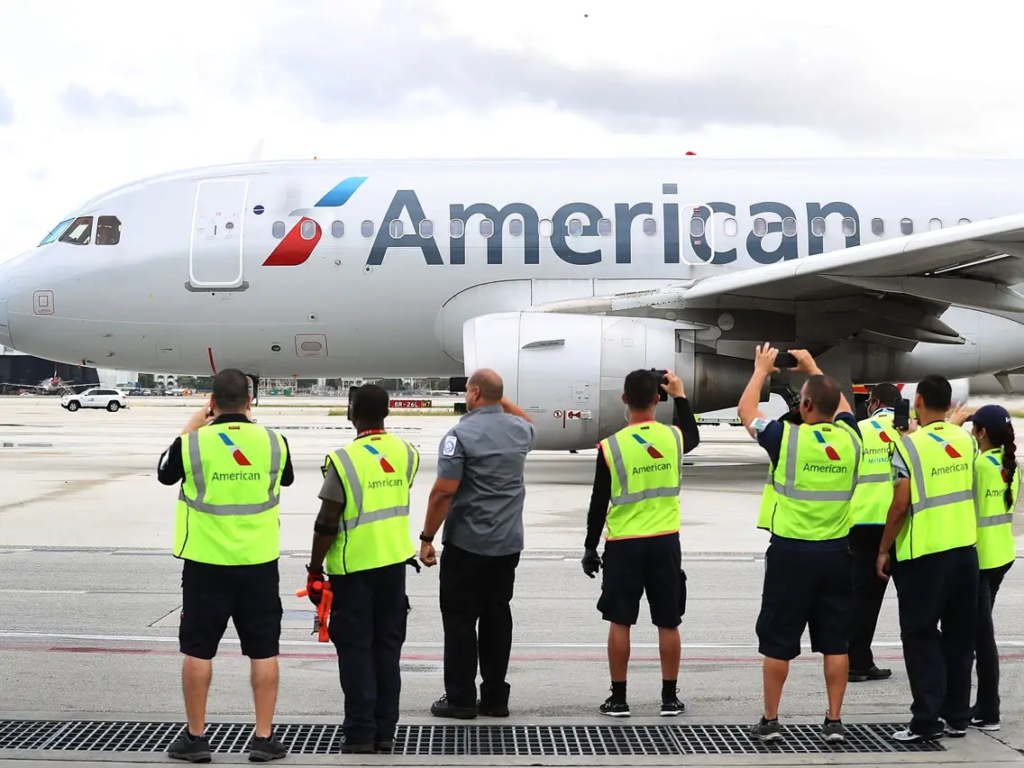
American Airlines workers' compensation provides medical coverage and wage replacement for employees who suffer work-related injuries or illnesses. As a self-insured employer, American Airlines typically utilizes a third-party administrator, such as Sedgwick, to manage claims. Coverage is governed by the specific workers' compensation laws of the state where the employee is based or where the injury occurred, ensuring that pilots, flight attendants, and ground crew receive mandated support.
Workers’ compensation is a "no-fault" system, meaning that in the year 2026, an American Airlines employee does not need to prove the company was negligent to receive benefits. In exchange for this guaranteed coverage, employees generally lose the right to sue the airline for personal injury damages. Understanding the nuances of this system is critical for navigating the complexities of the aviation industry, where injuries can occur across state lines or even in international airspace.
The Role of Sedgwick and Self-Insurance
American Airlines operates as a self-insured entity for workers' compensation purposes. This means the company pays for claims out of its own pocket rather than paying premiums to an external insurance carrier. To manage the day-to-day administration of these claims—including processing paperwork, approving medical treatments, and issuing checks—American Airlines contracts with Sedgwick Claims Management Services (Sedgwick).
When an employee is injured, they are not interacting directly with a human resources manager for their medical care; they are interacting with a Sedgwick claims adjuster. It is important to recognize that while Sedgwick facilitates the process, their primary obligation is to manage costs for American Airlines. This can sometimes lead to disputes regarding the necessity of certain treatments or the duration of disability leave.
Eligibility Across Diverse Job Roles
The physical demands of working for a major carrier like American Airlines vary significantly by department. Consequently, workers' compensation claims often mirror the specific risks associated with different roles.
Flight Attendants and Pilots
For flight crews, injuries often involve turbulence-related falls, overhead bin accidents, or repetitive strain from pushing heavy beverage carts. A unique challenge for these employees is jurisdictional nexus. Because flight crews travel constantly, a claim may be filed in the state where the employee is based (their "domicile"), the state where the company is headquartered (Texas), or the state where the injury actually happened.
Fleet Service and Ground Crew
Ground employees, including baggage handlers and ramp agents, face high risks of musculoskeletal injuries due to heavy lifting and repetitive motions. They are also exposed to environmental hazards, such as hearing loss from jet engine noise or respiratory issues from ramp fumes. These claims are generally filed in the state where the specific airport hub is located.
Technical Operations and Mechanics
Maintenance crews deal with heavy machinery, chemicals, and high-altitude work on scaffolding. Common claims in this sector include crush injuries, chemical burns, and long-term exposure illnesses.
The Claims Process: Step-by-Step for 2026
Navigating a claim requires strict adherence to timelines and procedural requirements. Failing to follow these steps can result in a claim being denied, regardless of the severity of the injury.
- Immediate Reporting: Employees must report the injury to their supervisor as soon as it occurs. While state laws vary, most require reporting within 30 days, but American Airlines’ internal policy usually encourages immediate reporting (within 24 hours).
- Seeking Medical Attention: For emergencies, employees should go to the nearest emergency room. For non-emergencies, employees may be required to visit an "authorized" provider within the American Airlines or Sedgwick medical network, depending on the state’s laws.
- The "Form C-1" or State Equivalent: The employee must complete the formal claim notification. In 2026, this is primarily handled through digital portals integrated with Jetnet, the airline’s internal employee system.
- Claim Investigation: A Sedgwick adjuster will review the report, medical records, and potentially interview witnesses or review surveillance footage (common in ramp or gate areas).
- Approval or Denial: The adjuster will issue a "Notice of Acceptance" or a "Notice of Denial." If denied, the employee has a limited window to file an appeal with the state's workers' compensation board or commission.
Types of Benefits Provided
Workers' compensation benefits are categorized into medical coverage and indemnity (cash) payments.
Medical Benefits
American Airlines is responsible for 100% of "reasonable and necessary" medical expenses related to the workplace injury. This includes surgeries, hospital stays, prescriptions, physical therapy, and medical devices. There are no copays or deductibles for the employee.
Temporary Total Disability (TTD)
If an employee is unable to work while recovering, they receive TTD benefits. In most states, this equals two-thirds (66.6%) of the employee’s Average Weekly Wage (AWW), subject to state-mandated maximums. It is important to ensure that the AWW calculation includes overtime, flight premiums, and per diems, as these are significant parts of an airline employee's compensation.
Permanent Partial Disability (PPD)
If an injury results in a permanent impairment (such as loss of range of motion in a shoulder or a permanent back injury), the employee may be entitled to a PPD settlement. This is calculated based on the "rating" assigned by a doctor once the employee reaches Maximum Medical Improvement (MMI).
| Benefit Type | Description | 2026 Standard Coverage |
|---|---|---|
| Medical Expenses | All treatment related to the injury. | 100% Covered (No deductible) |
| TTD Payments | Wage replacement while off work. | 66.6% of AWW (State caps apply) |
| Vocational Rehab | Training for a new role if unable to return to aviation. | Varies by State Law |
| Death Benefits | Support for dependents in the event of a fatal accident. | Burial costs + Weekly payments |
Jurisdictional Challenges for Airline Workers
One of the most complex aspects of an American Airlines workers' compensation claim is determining which state's law applies. This is known as the "Conflict of Laws."
If a flight attendant based in Philadelphia is injured during a layover in Los Angeles, they may have the option to file in either Pennsylvania or California. California typically offers higher disability caps and more employee-friendly medical choice laws, while Pennsylvania might have faster processing times.
In 2026, most collective bargaining agreements (CBAs) for the Association of Professional Flight Attendants (APFA) and the Allied Pilots Association (APA) provide specific guidance on which state law serves as the "default," but employees often have the right to choose the state that offers the most favorable benefits.
Common Obstacles: Denials and IMEs
Claims are frequently contested. Two of the most common hurdles are:
The Independent Medical Examination (IME)
Sedgwick may request that an employee see a doctor of their choosing for an IME. Despite the name, these doctors are paid by the administrator and often provide opinions that favor returning the employee to work or concluding that the injury is "pre-existing" rather than work-related.
Pre-existing Conditions
American Airlines may argue that a back injury or knee issue is the result of age or prior non-work injuries. However, in most jurisdictions, if a workplace incident aggravates or accelerates a pre-existing condition, it is still a compensable claim.
Returning to Duty and "Light Duty"
American Airlines often emphasizes "Return to Work" programs. If a doctor clears an employee for light duty, the airline may offer a temporary office-based role or a non-safety-sensitive position.
For pilots and flight attendants, light duty is rarely available on the aircraft due to FAA safety regulations. In these cases, the employee might be assigned to a training center or administrative office. If the employee refuses a valid light-duty offer that meets their medical restrictions, their TTD cash benefits may be suspended.
Frequently Asked Questions
What happens if I am injured during a layover?
Injuries during layovers are generally covered if the employee was engaged in activities "reasonably incidental" to their employment. This includes staying at the company-provided hotel or traveling to get a meal. However, injuries sustained while engaging in high-risk recreational activities or "frolics" during a layover may be denied.
Can I see my own doctor?
This depends entirely on the state. In states like Texas (where AA is headquartered), the employer often has significant control over the medical network. In other states, you may have the right to select your own physician. It is vital to check your state’s specific workers' compensation statutes or consult your union representative.
Does workers' comp cover mental health issues like PTSD?
In 2026, many states have expanded coverage for "mental-mental" claims (psychological injury without physical trauma) for first responders and transportation workers. If an American Airlines employee experiences a traumatic event, such as an emergency landing or an assault by a passenger, they may be eligible for benefits, though these claims face a higher burden of proof.
Can I be fired for filing a workers' comp claim?
No. It is illegal for American Airlines to retaliate against an employee for filing a lawful workers' compensation claim. However, the law does not necessarily guarantee that your specific job will be held indefinitely. Your rights regarding job security are often governed by a combination of the Family and Medical Leave Act (FMLA) and your union’s collective bargaining agreement.
How are per diems handled in wage calculations?
This is a common point of contention. In many jurisdictions, per diems are considered a reimbursement for expenses and are excluded from the Average Weekly Wage calculation. However, if the per diem exceeds the actual cost of living while traveling, a portion of it may be argued as "wages."
Practical Recommendations for Injured Employees
If you are injured while working for American Airlines, documentation is your most valuable asset. Keep a personal log of every conversation with Sedgwick adjusters, save copies of every medical report, and document all out-of-pocket expenses, including mileage to and from doctor appointments.
Because of the complexity of aviation-related claims—particularly regarding jurisdictional choices and AWW calculations involving flight pay—it is often advisable to consult with a workers' compensation attorney who specializes in airline industry cases. Most work-comp attorneys operate on a contingency fee basis, meaning they only get paid if they secure a settlement or win an award for you. Furthermore, stay in close contact with your union (APFA, APA, or IAM) as they often have dedicated benefits coordinators who can help navigate the interface between the company's internal policies and state legal requirements.