Finding reliable alternatives to Plastiq is essential for individuals and business owners looking to maximize credit card rewards or manage cash flow. In 2026, the leading alternatives include Melio for business-to-business payments, Bilt Rewards for residential rent, and PayPal Bill Pay for consumer utilities. Each platform offers varying fee structures, usually ranging from 2.9% to 3.5%, and specific card network support.
While Plastiq has long been the standard-bearer for "paying the unpayable" with a credit card, the landscape in 2026 has shifted. Changes in fee structures, card issuer restrictions—particularly from American Express and Capital One—and the emergence of niche-specific competitors have led many to seek out more cost-effective or specialized solutions. Whether you are trying to meet a minimum spend requirement on a new card or simply want to earn 2% back on your office rent, understanding the nuances of these alternatives is critical for financial efficiency.
The Financial Strategy Behind Third-Party Payment Services
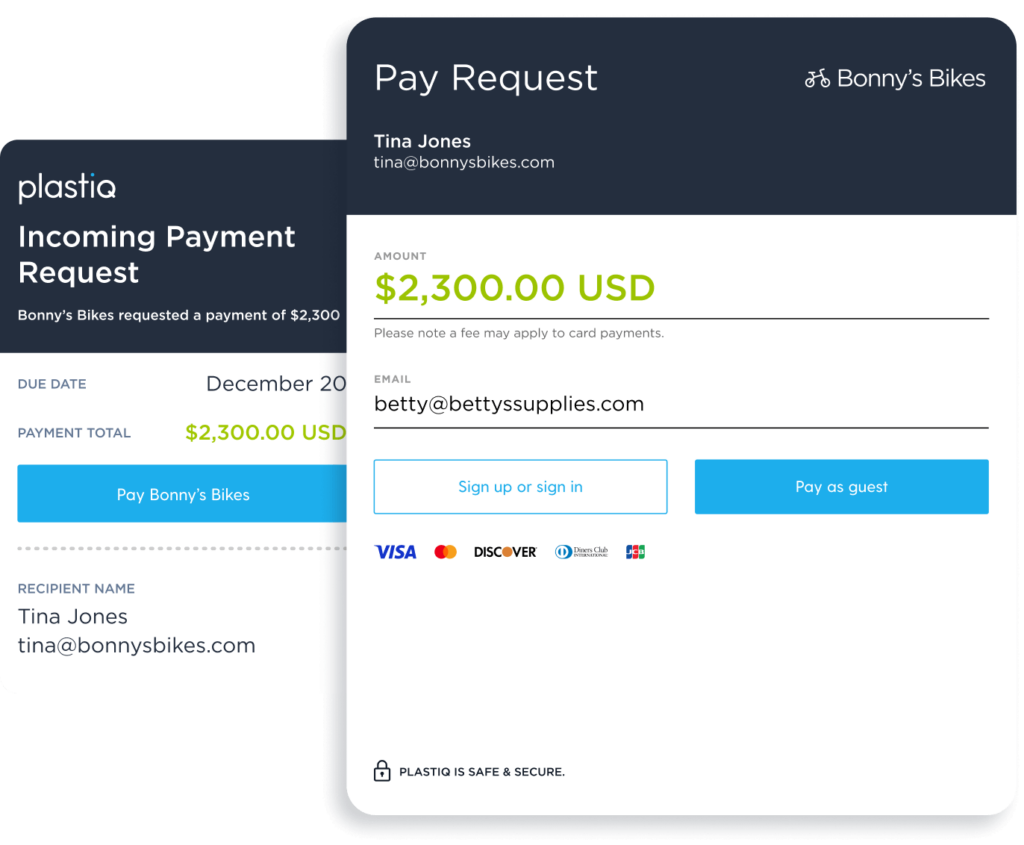
Before exploring specific alternatives, it is important to understand the mechanics of these services. Third-party payment processors act as an intermediary: they charge your credit card for the bill amount plus a service fee, then send a check, ACH transfer, or wire to your vendor.
In 2026, the "math" of using these services usually centers on two goals:
- Sign-up Bonus (SUB) Churning: Earning a massive influx of points (e.g., 100,000 miles) by meeting a high spending threshold in a short period.
- Working Capital Management: Businesses use these tools to keep cash in their bank accounts for an extra 30–50 days by floating expenses on a credit line.
Disclaimer: This article provides financial information for educational purposes and does not constitute professional financial or legal advice. Always verify current fee structures and terms of service with individual providers, as financial regulations and corporate policies are subject to change.
1. Melio: The Primary Competitor for Business Payments
Melio has solidified its position as the most robust alternative to Plastiq for small-to-medium-sized businesses (SMBs). While Plastiq caters to both consumers and businesses, Melio is strictly focused on the B2B sector.
Features and Functionality
Melio allows businesses to pay almost any vendor via credit card, even if that vendor only accepts checks or bank transfers. The interface is designed to integrate seamlessly with accounting software like QuickBooks, Xero, and FreshBooks. This integration is a significant advantage over Plastiq for users who need to automate their bookkeeping.
Fee Structure and Card Support
As of 2026, Melio maintains a competitive standard fee of 2.9% for credit card payments. They support Visa, Mastercard, and notably, American Express. However, users should be aware that American Express often restricts the types of industries that can be paid via third-party processors. Melio provides a real-time verification tool during the payment setup to confirm if your specific transaction is permitted under the card issuer’s current policies.
Why Choose Melio?
Melio’s primary "draw" is its "Pay Your Way" philosophy. You can pay via credit card, and your vendor can choose to receive a paper check or an ACH transfer without ever needing to sign up for a Melio account themselves. This reduces friction in the vendor relationship, which is a common pain point with smaller, less sophisticated payment tools.
2. Bilt Rewards: The "Free" Alternative for Rent
If your primary reason for using Plastiq was to pay residential rent, Bilt Rewards is the definitive 2026 market leader. Bilt has disrupted the space by creating a way to pay rent with a credit card without paying the typical 2.9% fee.
How the Bilt Ecosystem Works
Bilt offers two paths. The first is the Bilt Mastercard, which allows users to pay rent through the Bilt app with zero transaction fees while earning 1x points on rent (up to 100,000 points per calendar year). The second path is the Bilt Rent Account, which provides a routing and account number that you can use in your landlord’s existing online portal. Bilt then charges your linked credit card.
Strategic Advantage
While Plastiq charges roughly $87 on a $3,000 rent payment, Bilt charges $0. This makes it an incomparable alternative for the specific use case of housing costs. Furthermore, Bilt points are highly valued in 2026 due to their 1:1 transfer ratios with major airlines and hotel chains, often making the "effective return" on a rent payment much higher than standard cashback.
3. PayPal Bill Pay: The Consumer Utility King
For individual consumers looking to pay utilities, insurance, or taxes, PayPal Bill Pay (housed within the PayPal app) has become a formidable, albeit more limited, alternative to Plastiq.
Service Scope
PayPal Bill Pay works by connecting to thousands of established billers (electric companies, water departments, property tax offices). Unlike Plastiq, you generally cannot "add" a custom vendor like a private landlord or a small contractor. You must select from their directory of supported institutions.
The "No-Fee" Loophole
One of the major draws of PayPal Bill Pay in recent years has been the lack of an added convenience fee for many billers. Because PayPal handles the transaction as a standard "purchase" rather than a "third-party payment," users can often pay their electric bill or car insurance via credit card without the 2.9% surcharge. However, as of 2026, many major card issuers have begun to categorize these as "Government Services" or "Utilities," which may result in lower rewards rates depending on your card’s category bonuses.
4. Venmo for Business and Peer-to-Peer
While often overlooked as a "Plastiq alternative," Venmo has expanded its business profile features significantly by 2026. This is particularly useful for paying sole proprietors, freelancers, or small service providers (like landscapers or house cleaners).
Transaction Mechanics
If a vendor has a Venmo Business Profile, you can pay them using a credit card. Venmo charges a 3% fee for credit card transactions. While this is slightly higher than Melio’s 2.9%, the ubiquity of Venmo makes it a path of least resistance for many small-scale transactions.
The Cautionary Note
Using a personal Venmo account to pay a friend for a "business service" with a credit card to avoid fees is a violation of terms of service and can lead to account freezes. Always ensure the recipient is flagged as a business or the transaction is marked as "Goods and Services" to maintain protection and compliance.
Comparison of Top Plastiq Alternatives (2026 Data)
| Service | Primary Target | CC Fee | Best For | Amex Support |
|---|---|---|---|---|
| Melio | Businesses (SMB) | 2.9% | B2B, Vendor Invoices | High (Industry dependent) |
| Bilt Rewards | Renters | 0%* | Residential Rent | No (Uses Bilt Mastercard) |
| PayPal Bill Pay | Consumers | Varies (Often 0%) | Utilities, Insurance | High |
| Venmo Business | Individuals | 3.0% | Freelancers, Small Services | High |
| ACI Payments | Taxpayers | ~2.2% - 2.5% | IRS & State Taxes | High |
| Bill.com | Enterprises | Variable | Large Scale AP/AR | High |
*Bilt is 0% when using their specific Mastercard or Rent Account ecosystem.
5. Specialized Tax Payment Processors
If your goal is specifically to pay federal or state taxes, Plastiq is rarely the best option. The IRS authorizes specific third-party processors that offer much lower fees than Plastiq’s standard rate.
In 2026, processors like pay1040.com, PayUSAtyax.com, and ACI Payments, Inc. typically offer fees between 1.85% and 2.5%.
- Pay1040: Often features the lowest fee for federal income tax.
- ACI Payments: Broad support for state-level taxes and local property taxes.
When compared to Plastiq’s 2.9% (or higher), these specialized portals save users roughly $5 to $10 for every $1,000 paid. For a $10,000 tax bill, that is a $40–$90 difference, which covers the annual fee on many premium rewards cards.
Crucial Prerequisites and Technical Considerations
Switching from Plastiq to an alternative requires an understanding of how card issuers view these transactions.
The "Cash Advance" Risk
The greatest risk when using alternatives like Melio or Venmo is the transaction being coded as a Cash Advance. Cash advances do not earn rewards, have no grace period (interest starts immediately), and often carry fees of 5% or more.
- Verification Step: In 2026, most savvy users set their "Cash Advance Limit" to $0 or the lowest possible amount (e.g., $100) through their bank's mobile app. If the payment processor attempts to code the transaction as a cash advance, the bank will decline it, protecting you from unintended fees.
Processing Lead Times
Plastiq is known for its relatively predictable delivery dates, but alternatives vary:
- Melio: ACH takes 3 business days; paper checks can take 7–10 days.
- Bilt: Generally instantaneous for portal payments but requires lead time for checks.
- PayPal Bill Pay: Can take up to 5 business days to reflect on the biller's side. Always initiate payments at least 10 days before the actual due date to avoid late fees from your vendors.
The "Math" of Rewards vs. Fees
Using an alternative is only logically sound if the value of the rewards exceeds the fee.
- If a card earns 2% cashback and the fee is 2.9%, you are losing 0.9% on every dollar. This is only advisable if you are meeting a sign-up bonus or if the tax deduction of the business fee (for Melio/Plastiq) offsets the cost.
- If you are using a card that earns 3x points on business categories and you value those points at 1.5 cents each, your effective return is 4.5%. Subtracting a 2.9% fee leaves you with a 1.6% net profit.
Common Mistakes to Avoid When Switching
- Ignoring Amex "Level 3" Data: American Express is more aggressive than Visa/Mastercard in monitoring third-party payments. They often require "Level 3 Data" (detailed invoice info), which some smaller Plastiq alternatives do not provide. If the data is missing, Amex may not grant points for the transaction.
- Paying Yourself: A common "get rich quick" scheme involves using a service to pay oneself to generate points. In 2026, fraud detection algorithms are highly sophisticated. Attempting to pay yourself, a spouse, or a business you own with a credit card via these platforms will result in an immediate permanent ban and potential reporting to credit bureaus for "suspicious activity."
- Missing the Business/Consumer Divide: Using Melio (a business tool) for personal rent is a violation of their terms. Conversely, using PayPal Bill Pay for a $50,000 corporate vendor invoice will likely trigger a manual security review that could freeze your funds for weeks. Match the tool to the specific intent.
Frequently Asked Questions
Can I pay my mortgage with a credit card using these alternatives? In 2026, paying a mortgage with a credit card remains extremely difficult. Plastiq and Melio generally do not support mortgage payments due to complex financial regulations (specifically the Truth in Lending Act). Some users have success using "Mastercard/Visa Gift Cards" purchased at grocery stores to pay at certain credit unions, but the primary alternatives listed here generally exclude mortgages.
Is the 2.9% fee on Melio or Plastiq tax-deductible? For business owners, yes. If you are using these services to pay legitimate business expenses (utilities, inventory, rent), the transaction fee is considered a "cost of doing business" and is generally deductible on your Schedule C or corporate tax return. This effectively "lowers" the cost of the fee based on your tax bracket.
How does Bilt avoid the credit card fee for rent? Bilt has established direct partnerships with major real estate REITs (like AvalonBay and Equity Residential). For landlords outside this network, Bilt essentially issues a "ghost" checking account. When you charge your credit card, Bilt pays the landlord via ACH/Check and settles the balance with your card issuer, absorbing the interchange costs as a marketing expense to acquire users for their financial ecosystem.
What is the best alternative for paying international vendors? While Plastiq supports some international payments, Wise (formerly TransferWise) or Airwallex are better alternatives in 2026. They offer much better exchange rates, although paying Wise with a credit card can be expensive. Melio also recently expanded international capabilities for US-based businesses paying vendors in select countries.
Will these payments count toward a "Welcome Offer" or Sign-Up Bonus? Yes, in the vast majority of cases, these are treated as standard purchases and count toward your spending requirements. This is the most common reason people tolerate the 2.9% fee; paying a $5,000 tax bill via Melio or Plastiq to unlock a 100,000-point bonus is a high-value move.
Final Recommendations
Choosing the right Plastiq alternative depends entirely on your specific bill.
- For Business Owners paying vendors: Melio is the superior choice due to its accounting integrations and lower friction for recipients.
- For Renters: Bilt Rewards is the only logical choice to avoid fees.
- For Consumer Utilities/Insurance: PayPal Bill Pay should be your first check to see if your biller is listed, as it can often save you the service fee entirely.
- For Tax Payments: Skip the general-purpose tools and use Pay1040 or ACI Payments to secure the lowest possible government-negotiated rates.
Before committing to a large payment, start with a small "test" transaction of $20 to ensure the payment codes correctly and is received by your vendor within the expected timeframe.