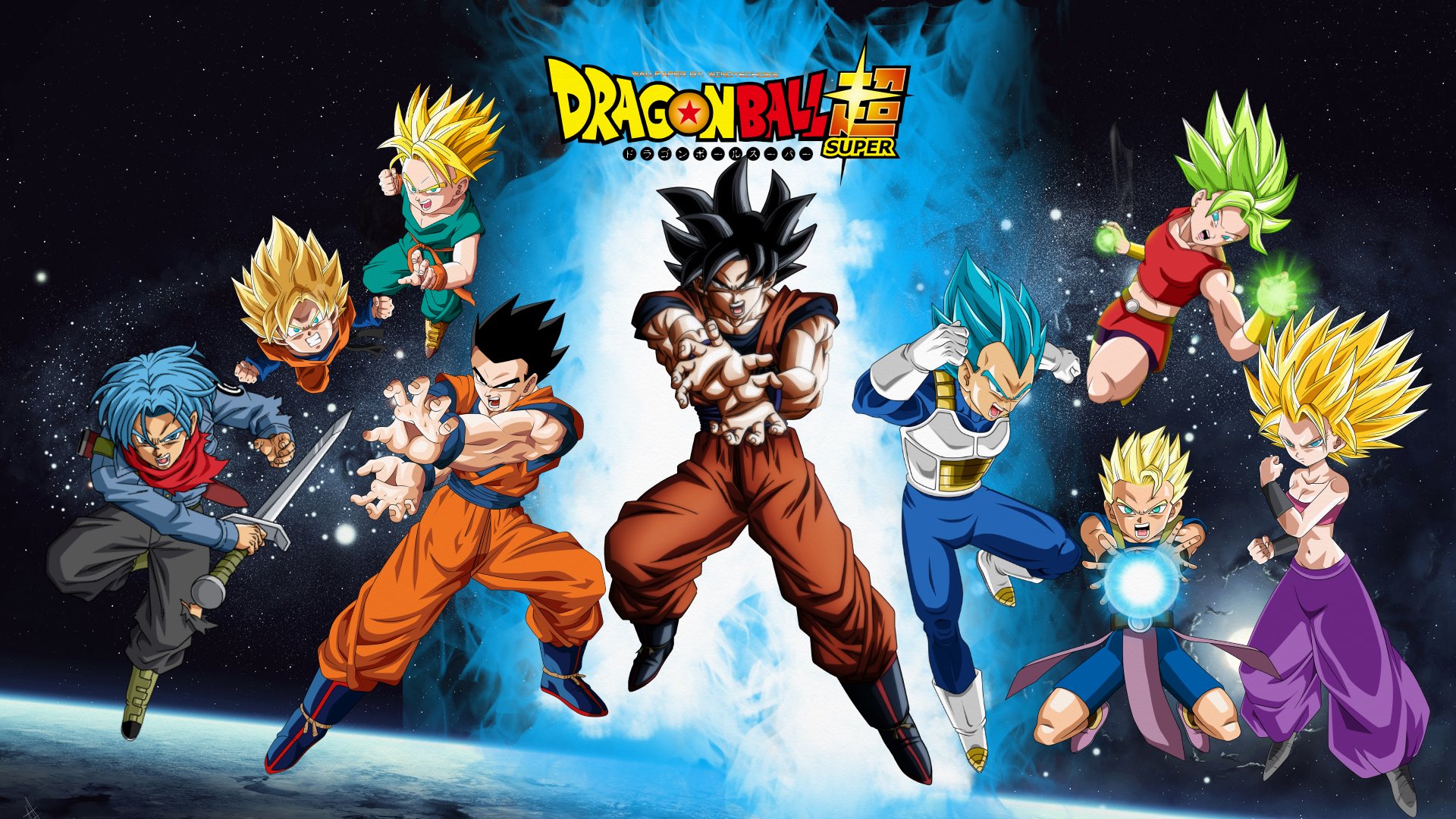
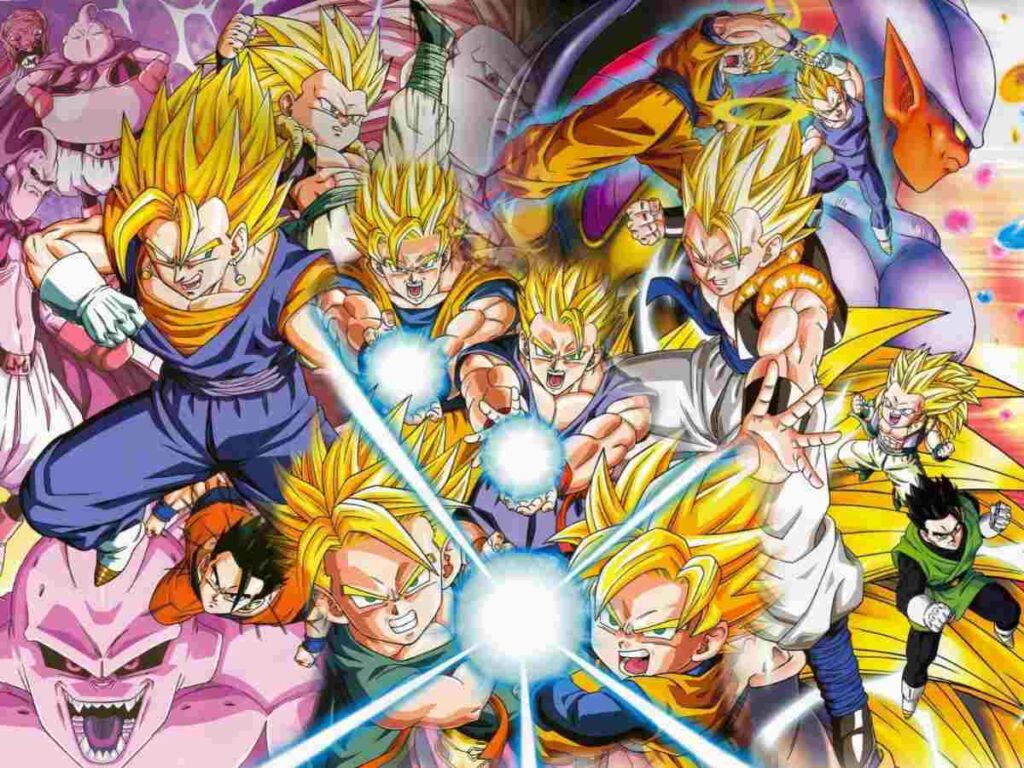
The Saiyans are a naturally aggressive, technologically adoptive, and physically resilient warrior race originating from the Dragon Ball multiverse. Primarily residing in Universe 7 on Planet Vegeta (formerly Planet Plant) and in Universe 6 on Planet Sadala, they are distinguished by their black hair, monkey-like tails, and an unique biological capacity to increase their strength exponentially after recovering from near-fatal injuries.
Biological Foundations and Saiyan Physiology
To understand the Saiyans, one must first analyze their unique biological makeup, which separates them from almost every other humanoid race in the multiverse. As of 2026, scientific lore—largely derived from the "Daizenshuu" guides and supplemental creator interviews—identifies several key physiological traits that define a Saiyan.
The Role of S-Cells
The ability of a Saiyan to transform into a Super Saiyan is not merely a matter of willpower; it is governed by a microscopic biological component known as S-Cells. Most Saiyans historically possessed few S-Cells due to their violent and turbulent lifestyles. However, a gentle spirit combined with high combat power facilitates the cultivation of these cells. This explains why Earth-raised Saiyans like Goku or hybrids like Gohan achieved transformations more rapidly than the battle-hardened warriors of the Frieza era.
Zenkai: The Genetic Survival Mechanism
The "Zenkai" boost (or Power Blast) is a genetic trait that allows a Saiyan’s power level to increase significantly after surviving a near-death experience. When a Saiyan is pushed to the brink of death and subsequently heals, their body adapts to the level of stress it just endured. During the Frieza Saga, this was the primary method used by Vegeta to bridge the gap between his initial power and the elite levels of the Ginyu Force.
Aging and Longevity
Saiyans are biologically programmed for combat, which affects their aging process. They remain in their physical prime far longer than humans, often showing little to no signs of aging until they reach their 80s. This evolutionary trait ensures they can fight and conquer for the majority of their lives. In the current 2026 timeline of the series, characters like Goku and Vegeta, despite being in their chronological 50s, retain the physical appearance and stamina of men in their 20s.
The Tail and the Blutz Wave
A defining feature of the Universe 7 Saiyan is the brown, prehensile tail. This tail acts as a sensory organ and a catalyst for the Great Ape (Oozaru) transformation. When a Saiyan with a tail absorbs 17 million units of Blutz Waves (typically reflected from a full moon), a reaction occurs in their blood, triggering a massive size increase and a ten-fold increase in power. While Universe 6 Saiyans have evolved past the need for tails, they remain a foundational element of the original race's identity.
Historical Trajectory: From Sadala to Planet Vegeta
The history of the Saiyans is a tale of migration, conflict, and eventual near-extinction. Their origins are split between two distinct timelines in Universe 7.
The Original Planet Sadala
Originally, the Saiyans lived on Planet Sadala. However, internal conflict and the destruction of the planet led the remaining Saiyans to migrate through space. Around the year Age 550, they discovered a world known as Planet Plant, inhabited by the technologically advanced but physically weaker Tuffles.
The Saiyan-Tuffle War
For decades, the Saiyans and Tuffles lived in an uneasy coexistence. The Saiyans, living in primitive conditions, eventually launched a full-scale invasion under the leadership of King Vegeta. Utilizing the power of the full moon, the Saiyans wiped out the Tuffle population, claimed their technology, and renamed the world Planet Vegeta. This victory transitioned the race from primitive warriors to a spacefaring mercenary force.
The Frieza Annexation and Genocide
The Saiyans' prowess eventually caught the attention of the Cold Force, led by King Cold and later his son, Frieza. The Saiyans were assimilated into Frieza's empire, serving as "planetary brokers" who cleared planets of indigenous life to be sold to the highest bidder. Fearing the legend of the Super Saiyan and the collective growing power of the race, Frieza destroyed Planet Vegeta in Age 737. Only a handful of Saiyans survived, including Prince Vegeta, Nappa, Raditz, and Kakarot (Goku).
Societal Structure and Hierarchy
Saiyan society on Planet Vegeta was strictly meritocratic, based entirely on combat potential measured at birth.
- Lower-Class Warriors: The vast majority of the population. These Saiyans had low power levels (under 2,000) and were often sent to weak planets as "infant infiltrators." Goku was famously categorized as a lower-class warrior.
- Mid-Class Warriors: A smaller group of elite fighters who commanded squads. Only about ten Saiyans held this rank at any given time.
- Elite-Class: Reserved for the royal family and those with exceptional power levels (typically exceeding 10,000). King Vegeta and Prince Vegeta were the primary representatives of this class.
In contrast, the Saiyans of Universe 6 in the 2026 lore context never lost their original Planet Sadala. They evolved into a peacekeeping force rather than a race of conquerors. This fundamental difference in culture led to a more efficient biological evolution, allowing them to trigger Super Saiyan forms through emotional or physical focus (the "tingly back" sensation) without the need for the ancestral tail.
Comprehensive List of Notable Saiyans
This overview categorizes the most significant Saiyans across the franchise's history and various universes.
| Name | Universe | Status/Role | Key Characteristic |
|---|---|---|---|
| Goku (Kakarot) | 7 | Earth's Protector | First to achieve Super Saiyan in the modern era. |
| Vegeta | 7 | Prince of Saiyans | Known for his intense rivalry with Goku and "Ultra Ego." |
| Broly | 7 | Legendary Super Saiyan | Possesses a rare, berserker-like "Full Power" form. |
| Gohan | 7 | Human-Saiyan Hybrid | Latent potential unlocked in "Beast" form. |
| Cabba | 6 | Sadala Defense Force | Protégé of Vegeta; bridges the U6/U7 gap. |
| Caulifla | 6 | Street Punk / Leader | First female Super Saiyan shown in the series. |
| Kale | 6 | Berserker | The Universe 6 counterpart to the Legendary Super Saiyan. |
| Bardock | 7 | Low-Class Soldier | Goku’s father; led a final rebellion against Frieza. |
| Future Trunks | 7 (Alt) | Time Traveler | Hybrid warrior who saved the timeline from the Androids. |
The Hierarchy of Saiyan Transformations
The defining characteristic of the Saiyan race in popular culture is their ability to transform. These forms represent a breakthrough in the ceiling of their biological limits.
The Super Saiyan Spectrum (Grades 1–3)
The standard Super Saiyan form, characterized by golden hair and a fierce aura, was initially triggered by intense rage. Over time, Saiyans developed "Grades" of this form to increase muscle mass, though this often resulted in a loss of speed. The mastery of this form, known as Full Power Super Saiyan, allows the user to remain transformed indefinitely with minimal strain.
Beyond the Wall: Super Saiyan 2 and 3
Super Saiyan 2 doubles the power of the first form and is distinguished by bio-electricity (sparks) in the aura. Gohan was the first to achieve this during the Cell Games. Super Saiyan 3 pushes the body to its absolute limit, resulting in long hair and the disappearance of eyebrows. While immensely powerful, its energy consumption is so high that it is often impractical for long battles.
Divine Evolution: God and Blue
In recent developments (Age 778 onwards), Saiyans learned to tap into Godly Ki.
- Super Saiyan God: Achieved through a ritual of six righteous Saiyans or intense training with divine beings. It grants a slim physique and crimson hair.
- Super Saiyan Blue (SSGSS): This is the result of a Saiyan who has obtained the power of a Super Saiyan God further transforming into a Super Saiyan. It combines divine Ki with the explosive power of the traditional golden form.
Unique Trajectories: Ultra Instinct and Ultra Ego
By 2026, the two leading Saiyans have diverged into unique paths that reflect their personalities. Goku has mastered Ultra Instinct, a state of "self-movement" typically reserved for Angels. Vegeta, conversely, has developed Ultra Ego, a power fueled by the thrill of battle and the acceptance of damage, reflecting the destructive nature of the Gods of Destruction.
Hybridization: The Human-Saiyan Connection
One of the most significant aspects of Saiyan biology is their genetic compatibility with Humans. Hybrids such as Gohan, Trunks, and Goten often possess higher potential than pure-blooded Saiyans.
The scientific explanation provided in the lore suggests that the combination of Human emotions and Saiyan genetics creates a volatile but powerful mix. Hybrids are often born without tails (if the recessive gene is dominant) and can access the Super Saiyan state at a much younger age than their parents. For example, Goten achieved the transformation at age seven, a feat that took Goku decades of life-or-death combat to realize.
Frequently Asked Questions
Can female Saiyans transform?
Yes. In Universe 6, Caulifla and Kale demonstrated that female Saiyans possess the same biological capacity for Super Saiyan transformations as males. In Universe 7, the lack of female Super Saiyans was primarily due to the near-extinction of the race, leaving very few females (like Pan or Bulla) who are now reaching the age where such transformations are possible.
Why do Universe 6 Saiyans not have tails?
Evolutionary biology in Universe 6 took a different path. According to Cabba, Saiyans in his universe had tails in the distant past, but they were lost through the process of evolution as the race moved away from primitive, Oozaru-based combat and toward a more refined, peace-keeping role.
What is the "Legendary Super Saiyan"?
The Legendary Super Saiyan (often associated with Broly) is a rare genetic mutation that occurs once every thousand years. Unlike standard Super Saiyans, a Legendary Super Saiyan possesses a "Berserk" state where their power grows uncontrollably and their hair takes on a greenish-yellow hue. Their stamina and durability are significantly higher than standard transformations.
Are there any Saiyans left in Universe 7?
Following the destruction of Planet Vegeta and the subsequent wars, the surviving pure-blooded Saiyans in Universe 7 include Goku, Vegeta, Broly, and Tarble (Vegeta's brother). However, the Saiyan bloodline continues to thrive on Earth through numerous hybrids, including Gohan, Goten, Trunks, Bra (Bulla), and Pan.
Do Saiyans need to eat more than other races?
Yes. Due to their high metabolic rate and the massive energy requirements of their transformations, Saiyans require a caloric intake significantly higher than humans. This is a recurring comedic and practical element in the series, as their bodies process nutrients at an accelerated rate to maintain muscle mass and Ki reserves.
Strategic Recommendation for Lore Enthusiasts
For those seeking to study the Saiyan race in further detail, it is essential to distinguish between the "Primary Canon" (the original manga and Super) and "Legacy/Expanded Lore" (GT and the original 1990s movies). While Super Saiyan 4 and the Truffle Revenge arcs in GT provide fascinating "what-if" scenarios, they do not align with the current 2026 continuity established by the Dragon Ball Super series. To understand the modern trajectory of the race, focus on the development of S-Cells and the divergence between Universe 6 and 7.