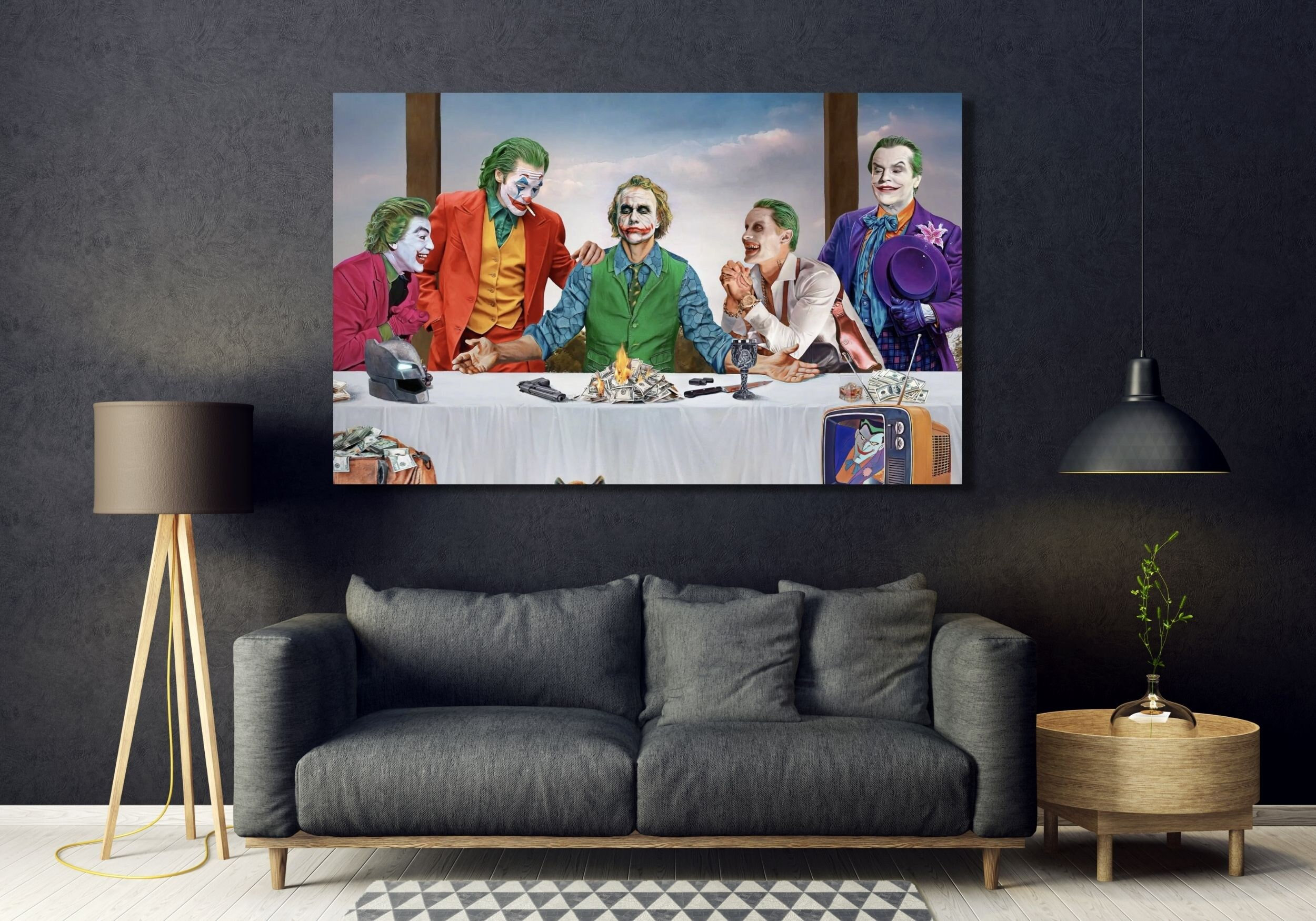
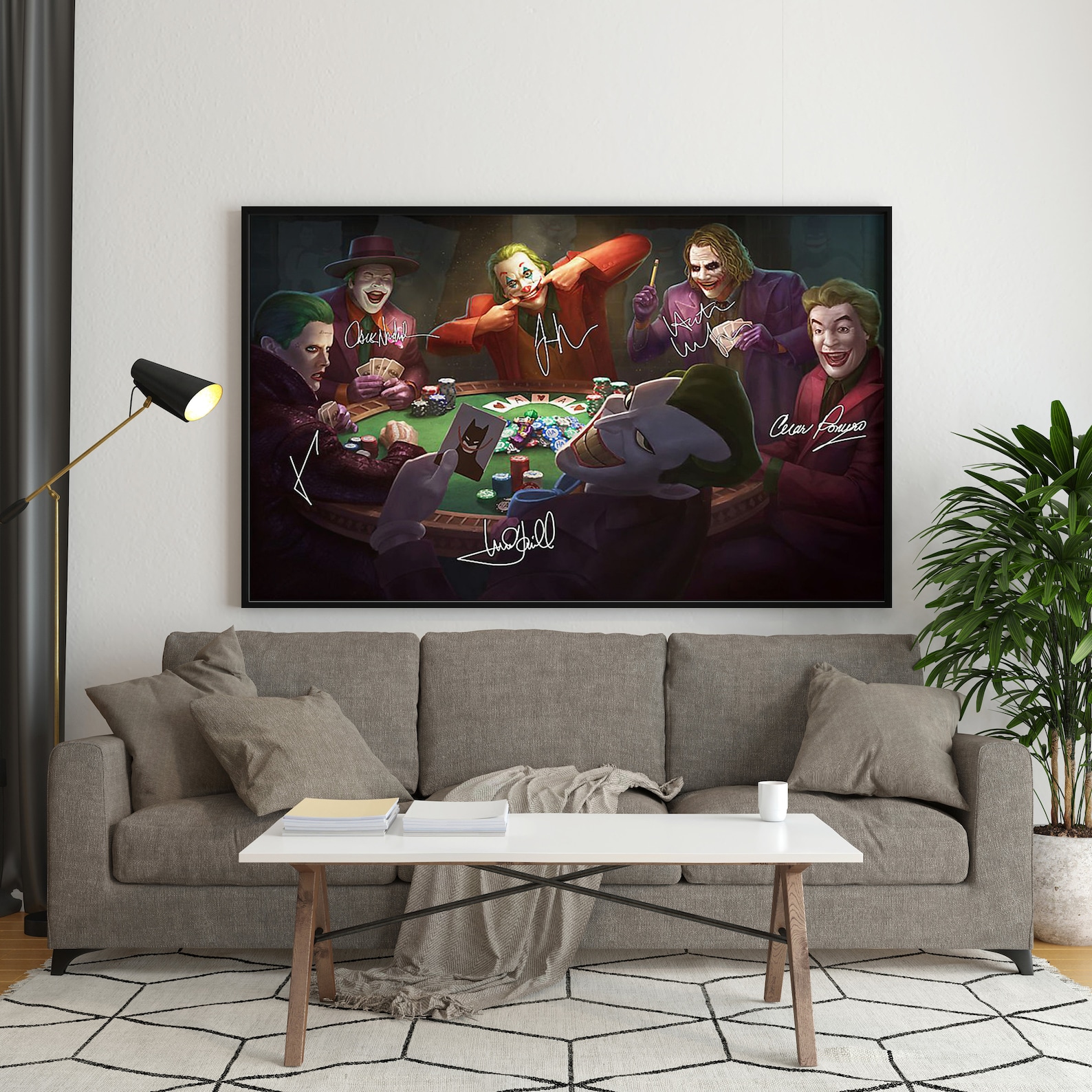
The Joker has evolved from a simple comic book foil into one of the most complex psychological figures in modern fiction. Since his debut in 1940, "all of the Jokers" refers to a vast lineage spanning comic book eras, live-action cinema, groundbreaking animation, and immersive video games, each reflecting the cultural anxieties and artistic trends of their specific time.
The Joker’s identity is famously "multiple choice," a concept that has allowed writers and actors to reinterpret him as everything from a campy prankster to a nihilistic terrorist. To understand the full scope of the character, one must look at the primary pillars: the foundational comic iterations, the definitive live-action performances, and the legendary voice-acting contributions that have defined the character’s auditory presence for decades.
The Comic Book Foundations (1940–2026)
The Joker first appeared in Batman #1 in 1940. Created by Bill Finger, Bob Kane, and Jerry Robinson, the character was originally intended to be killed off in his first issue. However, editorial intervention spared him, leading to the creation of DC's most enduring villain.
The Golden Age: The Cold-Blooded Killer
In his earliest appearances, the Joker was a sophisticated jewel thief and serial killer who left his victims with a grotesque, permanent grin via "Joker Venom." He was a grim reflection of the pulp-era villains, utilizing chemistry and high-level planning to outwit the law. This version was remarkably lethal, showing little of the theatricality that would define later eras.
The Silver Age: The Campy Prankster
As the Comics Code Authority (CCA) implemented strict censorship in the 1950s and 60s, the Joker was forced to change. He transitioned from a murderer to a "harmless" nuisance. During this period, his gadgets became gag-based—acid-spraying flowers, joy buzzers that delivered non-lethal shocks, and elaborate, nonsensical heists. This era heavily influenced the 1966 television series.
The Bronze and Modern Ages: The Psychopath Returns
The 1970s marked a return to the character's darker roots, starting with Denny O’Neil and Neal Adams' "The Joker’s Five-Way Revenge." This paved the way for Alan Moore’s The Killing Joke (1988), which suggested a tragic origin story (the "One Bad Day" theory) and cemented the Joker as a psychological mirror to Batman. In the 2010s, Scott Snyder’s "Death of the Family" and "Endgame" arcs introduced a nearly supernatural, immortal-feeling version of the character.
The Three Jokers Theory
A pivotal moment in the "all of the Jokers" lore occurred with the Three Jokers storyline by Geoff Johns. This narrative confirmed that there were actually three distinct individuals who had operated as the Joker:
- The Criminal: The calculating, cold strategist of the Golden Age.
- The Clown: The theatrical, campy prankster of the Silver Age.
- The Comedian: The nihilistic, sadistic psychopath of The Killing Joke.
The Live-Action Legends: Cinematic Evolution
Live-action portrayals have arguably had the greatest impact on the general public's perception of the character. Each major actor has brought a distinct philosophy to the role, often earning critical acclaim and Academy Awards.
Cesar Romero (1966–1968)
In the Batman television series and the 1966 film, Cesar Romero portrayed the Joker as a flamboyant, high-energy prankster. Romero famously refused to shave his mustache, simply painting over it with white greasepaint. His performance focused on the "Clown" aspect of the character, emphasizing manic laughter and colorful spectacles over genuine threat.
Jack Nicholson (1989)
Tim Burton’s Batman introduced Jack Napier, a high-ranking mob enforcer who falls into a vat of chemicals. Nicholson’s Joker was a blend of the Silver Age showman and a violent gangster. For the first time, the Joker was given a definitive name and a direct connection to Batman’s origin (as the killer of Thomas and Martha Wayne). Nicholson’s performance was defined by a macabre sense of art and ego.
Heath Ledger (2008)
Heath Ledger’s portrayal in The Dark Knight is widely considered the gold standard for comic book villains. Ledger depicted the Joker as an "agent of chaos," a domestic terrorist with no clear origin or motive other than to prove that anyone can be corrupted. His performance earned him a posthumous Academy Award for Best Supporting Actor. Ledger’s Joker focused on anarchy, using grimy makeup and a disheveled aesthetic to distance the character from his comic "dandy" roots.
Jared Leto (2016–2021)
Appearing in Suicide Squad and Zack Snyder’s Justice League, Leto’s Joker was a modern, "street-style" take. Influenced by cartel imagery and urban crime culture, this Joker featured tattoos (notably the "Damaged" forehead ink) and chrome teeth. While controversial among fans, Leto’s version explored the character’s obsessive relationship with Harley Quinn more deeply than previous films.
Joaquin Phoenix (2019–2024)
In Todd Phillips' Joker and its sequel Joker: Folie à Deux, Joaquin Phoenix played Arthur Fleck, a failed stand-up comedian with a neurological condition. This version is a grounded character study of mental illness and societal failure rather than a traditional supervillain story. Phoenix won the Academy Award for Best Actor for the first film, making the Joker one of only two characters (alongside Vito Corleone) to earn Oscars for two different actors. By 2026, the legacy of Fleck is seen as a deconstruction of the Joker mythos itself.
Barry Keoghan (2022–Present)
In Matt Reeves’ The Batman universe, Barry Keoghan briefly appeared as an "Unseen Prisoner" in Arkham. This version features heavy facial scarring and a more visceral, monstrous appearance. As of 2026, Keoghan’s role has expanded, positioning his Joker as a manipulative strategist who operates from the shadows of the prison system, drawing inspiration from the more grotesque comic designs of the 2010s.
Voice Acting and Animation: The Mark Hamill Legacy
While live-action gets the most media attention, the "all of the Jokers" list is incomplete without acknowledging the voice actors who have defined the character for millions of viewers.
Mark Hamill
Since Batman: The Animated Series (1992), Mark Hamill has been the definitive voice of the Joker for many fans. His ability to shift between a playful tenor and a terrifying, gravelly bass created a dynamic auditory profile for the character. Hamill continued his role through the Batman: Arkham video game series and the animated adaptation of The Killing Joke. His Joker is characterized by a "musical" laugh that can express everything from genuine amusement to murderous rage.
Kevin Michael Richardson and Troy Baker
In The Batman (2004), Kevin Michael Richardson provided a more bestial, barefoot version of the Joker, bringing a different physical energy to the role. Troy Baker, known for his work in Batman: Arkham Origins, famously stepped in to voice a younger version of Hamill’s Joker, successfully capturing the essence of the character while adding a more aggressive, youthful edge.
Comparison of Major Joker Portrayals
The following table summarizes the core differences between the most influential versions of the Joker across various media.
| Actor/Version | Medium | Era/Year | Primary Character Trait | Key Inspiration |
|---|---|---|---|---|
| Cesar Romero | TV/Film | 1966–1968 | The Prankster | Silver Age Comics |
| Jack Nicholson | Film | 1989 | The Mobster Artist | Golden Age / Burtonesque |
| Mark Hamill | Animation | 1992–2024 | The Ultimate Showman | The Killing Joke / BTAS |
| Heath Ledger | Film | 2008 | The Anarchist | Nihilism / Terrorism |
| Jared Leto | Film | 2016–2021 | The Modern Gangster | Cartel Culture |
| Joaquin Phoenix | Film | 2019–2024 | The Tragic Outcast | Character Study / Scorsese |
| Barry Keoghan | Film | 2022–2026 | The Monstrous Strategist | New 52 / Body Horror |
The Joker in Video Games: The Arkham Evolution
The Batman: Arkham series (developed by Rocksteady and WB Games Montréal) provided what many consider the most holistic view of "all of the Jokers." These games combined the visual flair of the movies with the narrative depth of the comics.
In Arkham Asylum, the Joker is the mastermind who takes over the facility. In Arkham City, he is dying from a blood disease caused by his own "Titan" formula, exploring his mortality. Even after his death in Arkham Knight, he remains as a hallucination inside Batman’s mind, a psychological parasite. This trilogy allowed the character to evolve over 30+ hours of gameplay, showing his vulnerability, his obsession with Batman, and his inability to exist without his heroic counterpart.
Technical Specifications: The Anatomy of a Villain
Across almost all incarnations, certain "technical" traits remain consistent, regardless of the actor or writer:
- The Appearance: Permanent or temporary white skin, green hair, and red lips. While the cause varies (chemical bath vs. makeup), the silhouette is iconic.
- The Arsenal: High-concentration toxins (Joker Gas/Venom) that cause lethal laughter, modified firearms, and concealed blades.
- The Philosophy: Most Jokers adhere to the idea that the world is a cruel joke and that order is a fragile illusion.
- The Relationship: A codependent obsession with Batman. Most Jokers believe that Batman completes them, and they often refuse to kill the hero because "it would be too boring."
Common Misconceptions About the Joker
When researching all of the Jokers, several inaccuracies frequently arise due to the character's long history:
- "He always fell into a vat of acid": While common (Nicholson, Hamill, New 52), the Heath Ledger and Joaquin Phoenix versions explicitly use makeup, and the original 1940 version did not have a clear chemical origin for several years.
- "He was always Harley Quinn’s partner": Harley Quinn did not exist until 1992. For the first 50 years of his existence, the Joker worked alone or with disposable henchmen.
- "He has no name": While usually true to maintain mystery, he has been named Jack Napier (1989, White Knight comics) and Arthur Fleck (2019).
Frequently Asked Questions
Who is the most accurate Joker?
"Accuracy" depends on the comic era you prefer. Mark Hamill is often cited as the most accurate to the balanced "Bronze Age" Joker, while Heath Ledger is the most accurate to the "Agent of Chaos" archetype. If you prefer the original 1940s killer, Jack Nicholson’s early scenes come closest.
Why are there three Jokers?
In the DC Comics Rebirth era, it was revealed that three men have shared the mantle. This was a narrative device used to explain how the character could change so drastically from a campy thief to a mass murderer over 80 years of publication.
Did the Joker ever win?
In several storylines, the Joker achieves his goals. In The Dark Knight, he successfully corrupts Harvey Dent. In the Injustice series, he tricks Superman into killing Lois Lane and destroying Metropolis, leading to a global dictatorship.
Which Joker has the highest body count?
The Joker from the Injustice: Gods Among Us universe has the highest confirmed body count, as his actions led to the nuclear destruction of an entire city, killing millions.
Is the Joker immortal?
In the "Endgame" comic arc by Scott Snyder, it is suggested that the Joker used a substance called Dionesium to heal from fatal wounds, making him effectively immortal. However, this is usually depicted as a temporary plot point rather than a permanent character trait.
Next Steps for Fans and Researchers
To truly understand "all of the Jokers," fans should start by reading Batman: The Killing Joke for the character's psychological foundation, then watch The Dark Knight to see the character's cinematic peak. For those interested in the most current developments as of 2026, exploring the Three Jokers graphic novel and the extended cut of Joker: Folie à Deux provides the best insight into how the character is being deconstructed for modern audiences.