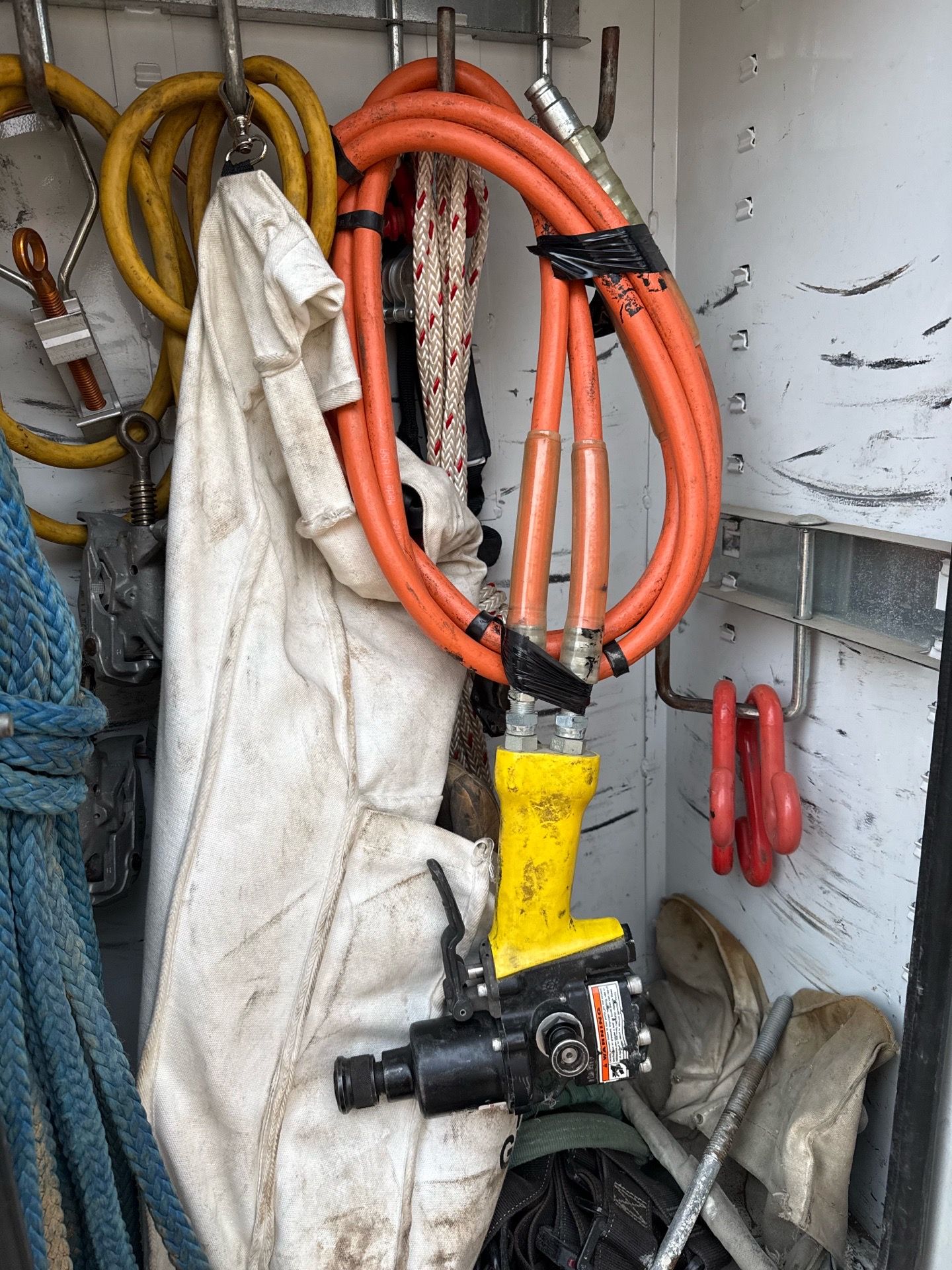
Alan’s Hydraulics Inc. is a premier hydraulic repair and fabrication facility in San Antonio, Texas, specializing in cylinder rebuilding, pump and motor repair, and custom machining. Since 1978, they have served the industrial and construction sectors by providing high-precision maintenance for critical heavy machinery components across the South Texas region.
As of 2026, the industrial landscape of San Antonio continues to expand, driven by significant infrastructure projects and the persistent demands of the Eagle Ford Shale. For businesses operating heavy equipment—from excavators and dozers to industrial presses—maintaining hydraulic integrity is not merely a matter of maintenance; it is a prerequisite for operational survival. Alan’s Hydraulics has positioned itself as a cornerstone of this ecosystem, bridging the gap between OEM (Original Equipment Manufacturer) replacement costs and the necessity for rapid, reliable repairs.
The Role of Alan’s Hydraulics in the San Antonio Industrial Sector
In the high-stakes environment of heavy industry, hydraulic failure equates to immediate downtime. Whether it is a leaking cylinder on a construction site near Loop 1604 or a pump failure in a manufacturing plant off IH-35, the need for localized, expert intervention is critical. Alan’s Hydraulics in San Antonio provides a centralized hub for complex fluid power solutions, offering a level of technical depth that general mechanical shops cannot match.
The facility’s longevity—spanning nearly five decades—is a testament to its adaptation to evolving hydraulic technologies. While the fundamental principles of Pascal’s Law remain unchanged, the tolerances and pressures found in modern machinery have become significantly more demanding. Alan’s Hydraulics manages this complexity through a combination of traditional craftsmanship and modern machining technology.
Why Regional Expertise Matters
San Antonio’s climate and soil conditions (notably the high-clay content and heat) place unique stresses on hydraulic systems. High ambient temperatures lead to faster oil degradation and seal hardening, while abrasive dust can cause premature scoring on cylinder rods. A local specialist like Alan’s Hydraulics understands these environmental variables, often recommending seal materials or rod coatings specifically suited for the South Texas environment.
Comprehensive Hydraulic Cylinder Repair and Rebuilding
The most visible component of most hydraulic systems is the cylinder. It is also the component most prone to physical damage and wear. At Alan’s Hydraulics, the approach to cylinder repair is systematic, moving beyond simple seal replacement to full-scale restoration.
Disassembly and Diagnostic Inspection
Every cylinder that enters the shop undergoes a rigorous teardown. This is not just about taking the unit apart; it is a forensic process. Technicians inspect the barrel for "ballooning" (permanent expansion of the tube due to over-pressurization), the rod for straightness and chrome integrity, and the piston for galling.
Often, a cylinder fails because of an underlying system issue, such as contaminated oil or a faulty relief valve. By analyzing the wear patterns—such as side-loading marks on the gland or heat-checking on the seals—Alan’s Hydraulics provides operators with feedback that can prevent future failures.
Rod Restoration: Straightening and Chroming
The hydraulic rod is the heart of the cylinder’s movement. Even a minor nick or a microscopic bend can destroy a new set of seals within hours of operation. Alan’s Hydraulics utilizes specialized presses to straighten rods that have been slightly deformed under load.
For rods with surface damage, the facility manages the process of stripping old chrome, grinding the rod surface, and applying a new layer of industrial hard chrome. This process, often referred to as "chrome-plating," provides the necessary hardness and corrosion resistance to survive the abrasive environments of rock quarries and construction sites.
Barrel Honing and Re-tubing
If the interior of a cylinder barrel is scored, it cannot maintain a high-pressure seal. Alan’s Hydraulics employs honing machines to smooth out minor imperfections, ensuring a perfect "cross-hatch" pattern that retains a thin film of oil for lubrication. In cases where the damage is too deep for honing, the shop provides re-tubing services—essentially welding a new, precision-honed tube to the existing cylinder base and ports.
Pump, Motor, and Valve Services
While cylinders provide the "muscle," pumps and motors are the "heart" and "brain" of the hydraulic system. These components operate with incredibly tight tolerances, often measured in ten-thousandths of an inch.
Precision Testing and Diagnostics
Repairing a hydraulic pump is more than just replacing parts; it requires a deep understanding of fluid dynamics. Alan’s Hydraulics services various pump types, including:
- Gear Pumps: Known for their durability in low-to-medium pressure applications.
- Vane Pumps: Valued for their quiet operation and efficiency.
- Piston Pumps: The most complex and high-pressure units found in modern excavators and industrial machinery.
The repair process involves lapping wear plates to ensure perfectly flat surfaces, replacing rotating groups, and verifying the integrity of compensators and control valves.
Component Sourcing and Obsolete Parts
One of the primary challenges in 2026 is the maintenance of older machinery. As OEMs phase out support for legacy models, finding replacement parts becomes difficult. Alan’s Hydraulics leverages an extensive network of suppliers and its own in-house machining capabilities to source or manufacture components that are no longer available on the open market. This capability is vital for San Antonio’s agricultural and municipal sectors, which often rely on equipment that has been in service for several decades.
Custom Machining and Fabrication Capabilities
What distinguishes a dedicated hydraulic shop from a parts distributor is the ability to fabricate. Alan’s Hydraulics maintains a full-service machine shop equipped with lathes, mills, and welding stations.
In-House Manufacturing
When a cylinder is "totaled" or a rod is snapped beyond repair, the facility can manufacture a new component from raw stock. This includes:
- Custom Glands and Pistons: Machined from high-strength alloys to meet or exceed OEM specifications.
- Custom Rods: Utilizing 1045 or 4140 ground and polished chrome-plated shafting.
- Port Modifications: Adding or moving hydraulic ports to accommodate custom applications or upgrades.
Certified Welding
Hydraulic components are pressure vessels. Welding a base onto a cylinder or a flange onto a pump requires certified expertise to ensure the weld can withstand thousands of pounds of pressure per square inch (PSI). Alan’s Hydraulics utilizes specialized welding techniques to ensure deep penetration and structural integrity, preventing catastrophic failures that could lead to injury or massive fluid spills.
Technical Specifications and Quality Standards
In hydraulics, precision is the difference between a machine that lasts five years and one that fails in five days. Alan’s Hydraulics adheres to industry standards that govern the fluid power industry.
| Component | Standard Service/Tolerance | Material/Method Often Used |
|---|---|---|
| Cylinder Rods | Straightness within .001" per foot | 1045/4140 Hard Chrome Plated Steel |
| Cylinder Barrels | Honing to RMS 16 or better | ST52.3 Precision Honed Tubing |
| Seal Kits | Pressure ratings up to 10,000 PSI | Polyurethane, Viton, or Nitrile |
| Pump Lapping | Flatness within 2-3 light bands | Diamond Abrasive Lapping Plates |
| Testing | Static and Dynamic Pressure Testing | ISO 4406 Cleanliness Standards |
The Importance of Seal Selection
Not all seals are created equal. Alan’s Hydraulics selects seals based on the application’s specific needs. For high-heat environments, Viton seals are preferred for their thermal stability. For high-pressure, high-cycle applications, reinforced polyurethane seals provide the necessary abrasion resistance. Understanding these technical nuances is a core part of the service provided at their San Antonio location.
Troubleshooting Common Hydraulic Failures
Many customers come to Alan’s Hydraulics after a system failure. Understanding the "Why" is essential for long-term reliability.
- Contamination: By far the most common cause of failure. Small particles of metal or dirt act as an abrasive, "sandblasting" the internal components of pumps and valves.
- Heat: Excessive operating temperatures cause seals to become brittle and hydraulic oil to lose its viscosity. This leads to internal leakage and loss of power.
- Aeration and Cavitation: When air enters the system or when the pump cannot get enough oil, it creates "imploding" bubbles that can literally eat away at the metal surfaces inside a pump.
- Improper Fluid: Using the wrong type of hydraulic oil can lead to chemical incompatibility with seals or inadequate lubrication at high temperatures.
Alan’s Hydraulics assists customers in identifying these issues through fluid analysis and component wear inspection, helping to implement better preventive maintenance schedules.
Serving Diverse Industries in South Texas
The client base for Alan’s Hydraulics in San Antonio is as diverse as the city itself. The facility supports several key economic pillars:
Construction and Earthmoving
San Antonio’s constant growth requires a massive fleet of yellow iron. From the compact track loaders used in residential landscaping to the massive excavators used in highway expansion, Alan’s Hydraulics keeps these machines moving. They understand that for a contractor, a downed machine on a job site is a loss of thousands of dollars per hour.
Oil and Gas (Eagle Ford Shale)
While the oil field is a few hours south, San Antonio serves as a major logistics and repair hub for the Eagle Ford Shale. Hydraulic systems on drilling rigs, fracking pumps, and transport trailers operate under extreme conditions. Alan’s Hydraulics provides the heavy-duty repair services required to handle these high-pressure environments.
Waste Management and Recycling
Garbage trucks and recycling bailers are perhaps the most hydraulic-intensive machines in the city. The constant cycling of cylinders in refuse collection leads to significant wear and tear. Alan’s provides rapid turnaround for fleet operators to ensure municipal services remain uninterrupted.
Manufacturing and Food Processing
From automotive plants to large-scale bakeries, hydraulic presses and conveyor systems are vital. Alan’s Hydraulics offers the precision repair needed for industrial actuators that must perform repetitive tasks with millimeter accuracy.
Frequently Asked Questions (FAQ)
How long does a typical hydraulic cylinder repair take?
The timeframe for a repair depends heavily on the extent of the damage and the availability of seals. A basic reseal can often be completed in 2 to 4 business days. However, if the rod requires chroming or a new barrel must be fabricated, the process may take 1 to 2 weeks. Alan’s Hydraulics prioritizes efficiency to minimize client downtime while ensuring that quality standards are not compromised for speed.
Can Alan’s Hydraulics manufacture a cylinder from scratch?
Yes, the facility has the engineering and machining capability to manufacture custom hydraulic cylinders. This is particularly useful for specialized industrial equipment or when an OEM cylinder is no longer manufactured. By using high-strength steel and precision-honed tubing, they can often build a unit that is more durable than the original.
What information do I need to provide for a pump repair estimate?
To provide an accurate estimate, the shop typically needs the make and model number of the pump (usually found on a metal data plate) and a description of the failure symptoms. However, a definitive quote usually requires a "tear down and inspect" (T&D) process, as internal damage cannot be fully assessed from the exterior.
Does Alan’s Hydraulics offer on-site repair services?
Alan’s Hydraulics primarily operates as a specialized repair and fabrication facility. While they focus on component repair (cylinders, pumps, motors) brought to their shop, their work is a critical part of the broader ecosystem of mobile mechanics and site foremen who handle the removal and reinstallation of these components.
Is it always cheaper to repair a component than to buy new?
In the majority of cases involving large or specialized components, repair is significantly more cost-effective—often saving 50% to 70% compared to the cost of a new OEM unit. Furthermore, a rebuilt component from Alan’s Hydraulics frequently features upgraded seals or materials that can outperform the original factory specifications.
How do I know if my hydraulic rod needs to be replaced or just polished?
If a rod has visible scratches that you can catch with a fingernail, it will likely leak, as those scratches provide a path for oil to bypass the seal. If the rod is bent, it must be straightened or replaced. Alan’s Hydraulics uses precision measuring tools to determine if the rod is within "spec." Minor surface oxidation can often be polished out, but deep pitting or scoring usually requires chroming or a new rod.
Conclusion and Next Actions
For businesses in San Antonio, Alan’s Hydraulics represents a vital resource for maintaining the mechanical integrity of heavy equipment. Their combination of historical expertise and technical machining capability ensures that hydraulic systems are not just patched, but restored to peak operational condition.
If you are experiencing a loss of power, visible leaks, or unusual noises in your hydraulic system, the most effective next step is to pull the affected component and deliver it to their facility for a professional diagnostic. For large-scale operations, establishing a relationship with a dedicated shop like Alan’s can lead to better preventive maintenance strategies and a significant reduction in long-term equipment overhead.
For further technical standards on hydraulic safety and maintenance, you may consult the International Fluid Power Society (IFPS) or the National Fluid Power Association (NFPA).