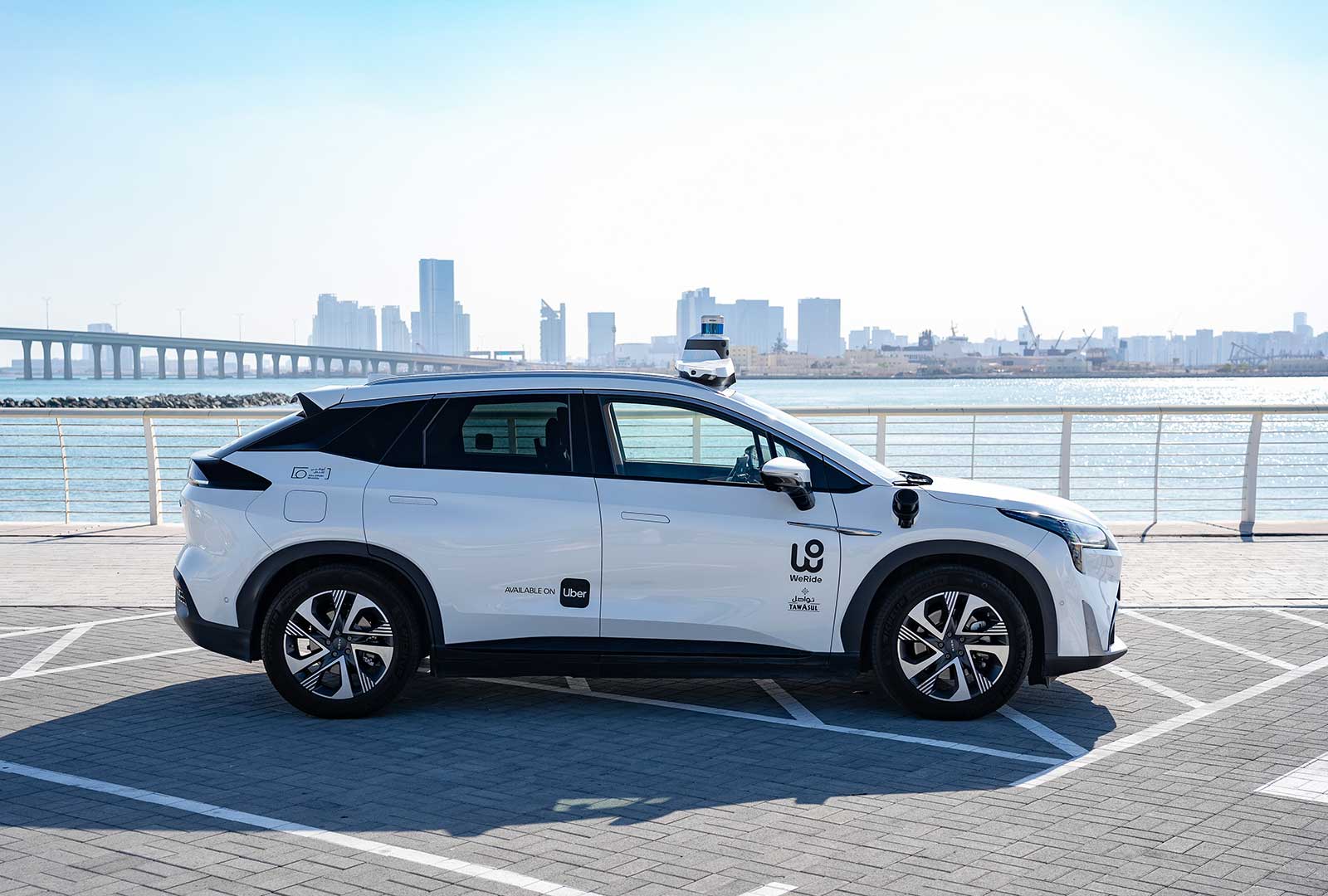
AI drive platforms refer to the integrated software and hardware stacks—often termed Automated Driving Systems (ADS)—that enable vehicles to perceive their environment, make tactical driving decisions, and execute maneuvers with varying degrees of human oversight. Achieving true autonomy is a complex engineering evolution, shifting from advanced driver-assistance systems toward fully unsupervised operational domains.
The Architecture of AI Drive Platforms
At the core of any AI drive platform is a modular software architecture designed to mimic human cognitive processes: perception, localization, prediction, planning, and control. These platforms are not monolithic; they are built upon deep learning frameworks that process petabytes of sensor data.
The perception stack relies on a sensor fusion approach, typically combining LiDAR (Light Detection and Ranging), high-resolution cameras, and radar. LiDAR provides precise spatial geometry, while cameras offer semantic understanding—identifying signs, traffic lights, and pedestrian intent. Radar remains essential for tracking velocity, particularly in adverse weather conditions where optical sensors might suffer from signal attenuation.
Once sensor data is ingested, the "fusion engine" creates a localized environment model. This model must operate in real-time, necessitating onboard compute platforms (often utilizing specialized Graphics Processing Units or custom AI accelerators) capable of performing trillions of operations per second. The road to autonomy depends heavily on this compute density, as latency in the decision-making loop can be the difference between a safe maneuver and a collision.
From Driver Assistance to Full Autonomy
The industry categorizes progress through the SAE J3016 levels of driving automation. Understanding these tiers is essential for evaluating the capabilities of modern platforms.
- Level 2 (Partial Automation): The platform handles steering and acceleration/deceleration, but the human driver remains the primary supervisor, responsible for monitoring the environment and responding to system failures.
- Level 3 (Conditional Automation): The system can handle all aspects of driving under specific conditions (e.g., traffic jams on a highway). The driver can disengage from the driving task but must be ready to intervene when the system requests it.
- Level 4 (High Automation): The vehicle can perform all driving functions within a specific operational design domain (ODD), such as a geofenced urban area. No human intervention is required within these parameters.
- Level 5 (Full Automation): The system can navigate any environment, under any condition, without human intervention. This remains a theoretical target that current AI platforms have not yet reached for general-purpose, non-geofenced consumer use.
The Critical Role of Operational Design Domains (ODDs)
The path to full autonomy is constrained by the Operational Design Domain (ODD). An ODD specifies the exact conditions under which an AI drive platform is designed to function safely. This includes environmental factors (weather, lighting), roadway types (urban streets, limited-access highways), and operational constraints (maximum speed, traffic density).
Most commercial platforms currently operate successfully within restricted ODDs. The "Road to Autonomy" is essentially a project of expanding these domains. For instance, a platform that is highly capable in sunny, well-mapped highway environments may fail in heavy snow or construction zones where lane markings are non-existent. The maturity of an AI platform is measured by its ability to maintain safety as the ODD increases in complexity.
Comparison of AI Drive Platform Components
Modern platforms differentiate themselves through their integration strategy and data collection methods. The following table highlights common technical requirements for current-generation systems.
| Component | Function | Technical Requirement |
|---|---|---|
| Sensor Fusion | Synthesizes LiDAR, Radar, Camera inputs | Low latency (<50ms processing) |
| Localization | High-definition (HD) mapping | Centimeter-level accuracy |
| Predictive Modeling | Anticipating other road users | Behavioral intent inference |
| Path Planning | Dynamic trajectory calculation | Collision avoidance algorithms |
| Compute Engine | Executing neural network inferences | High TFLOPS (Tera-FLOPs) |
Training the Platform: Simulation and Real-World Miles
AI drive platforms require vast amounts of data to learn edge cases—rare or unpredictable events that a vehicle might encounter once in millions of miles. Because relying solely on real-world driving to encounter these events is inefficient and dangerous, manufacturers utilize synthetic simulation.
In a simulation environment, developers can recreate difficult scenarios—such as a child running into the road at night during rain—and test the platform’s reaction thousands of times with slight variations. This "sim-to-real" pipeline is the backbone of platform safety validation. Only after a system achieves a statistical threshold of success in simulation is the software deployed to the physical vehicle fleet for road testing.
Challenges and Limitations
Despite rapid advancements, significant hurdles remain on the road to full autonomy.
Perception Uncertainty
AI models often struggle with "long-tail" events. While a system can easily recognize a pedestrian on a sidewalk, it may fail to correctly interpret a person in a non-standard pose, such as someone wearing a costume or riding a non-traditional vehicle. Reducing this uncertainty requires more robust training datasets and higher-fidelity sensor inputs.
Computing Power and Energy Consumption
Running advanced AI models onboard a vehicle consumes significant electrical power. This is a critical issue for electric vehicle (EV) platforms, as the compute stack can reduce overall vehicle range. Optimizing "inference efficiency"—the ability to make accurate decisions with fewer computational cycles—is an active area of research.
Regulatory and Legal Frameworks
As of 2026, the legal framework for AI driving platforms is still evolving. Liability in the event of an accident—whether it lies with the manufacturer, the software provider, or the human in the seat—remains a complex legal issue that varies by jurisdiction. Developers must ensure their systems maintain detailed logs of the vehicle’s state and decision-making processes for post-incident analysis.
Frequently Asked Questions (FAQ)
1. Does AI autonomy mean the driver can sleep while driving? No. Even in vehicles equipped with sophisticated Level 3 systems, the driver is legally and functionally required to remain available to take control if the system issues a takeover request. Only at Level 4/5 (in specific ODDs) is the driver truly free from the driving task.
2. How do AI platforms handle software updates? Most modern platforms utilize Over-the-Air (OTA) updates. This allows manufacturers to patch vulnerabilities, improve perception models, and introduce new capabilities to the vehicle after it has left the factory, effectively turning the car into a living, evolving piece of software.
3. What is the difference between supervised and unsupervised autonomy? Supervised autonomy requires the human to monitor the road and act as a fail-safe. Unsupervised autonomy means the vehicle is responsible for the entire driving task within its ODD, with no expectation that a human inside the vehicle can or should intervene.
4. Can an AI platform drive in any weather? Currently, most commercial systems have significant limitations in extreme weather. Heavy precipitation, fog, or snow can obscure cameras and interfere with LiDAR pulses. True "all-weather" autonomy is one of the final frontiers for AI drive platforms.
5. Are HD maps mandatory for autonomous driving? While some approaches rely heavily on pre-loaded high-definition maps for localization, others aim to achieve "mapless" driving using real-time perception. Most industry leaders currently use a hybrid approach to ensure redundancy and safety.
Next Steps for Implementation and Evaluation
For those integrating or evaluating AI drive platforms, the primary focus should be on verifying the ODD limitations. Never assume a system’s capabilities exceed the manufacturer’s stated specifications.
- Define your ODD: Determine if your use case (logistics, public transport, or private transit) fits within the platform’s validated operational domain.
- Audit the Sensor Suite: Ensure the hardware redundant stack matches the safety requirements of your specific application.
- Review Safety Logs: If testing or operating a fleet, mandate the use of high-fidelity data logging to monitor the platform’s decision-making patterns.
- Stay Updated on Compliance: Regulatory standards for automated vehicles change frequently. Ensure that your operations remain compliant with local and national transport authorities as the industry moves closer to wider Level 4 deployments.