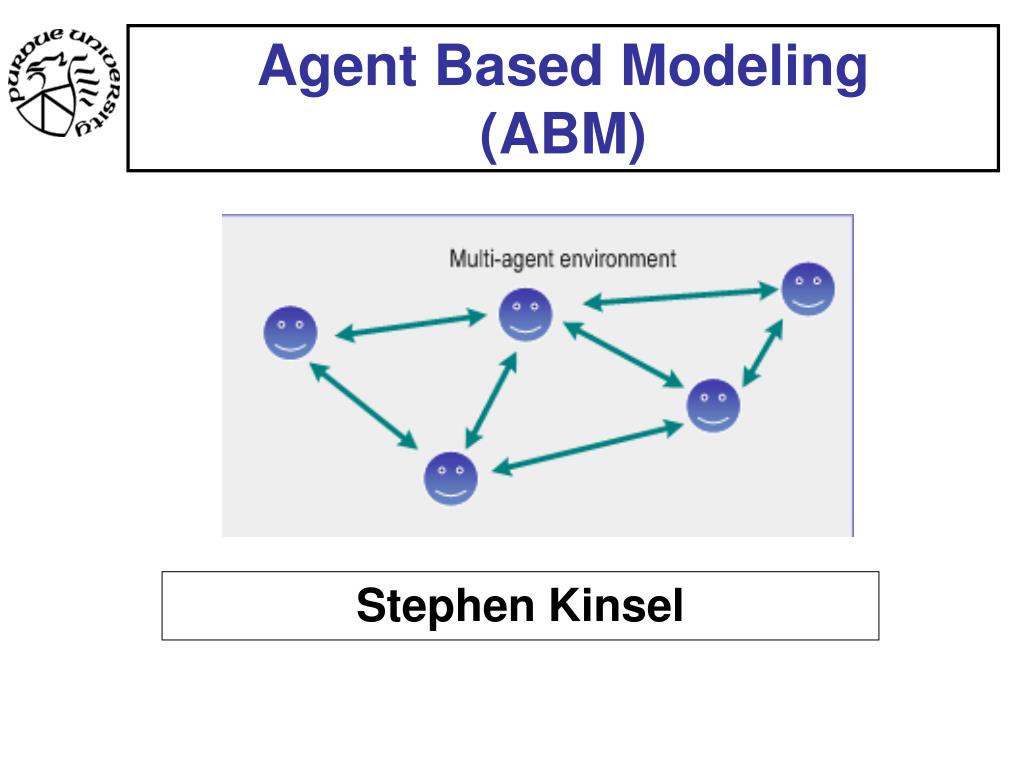
Agent based modeling software provides a specialized computational environment to simulate the actions and interactions of autonomous agents—representing individuals, organizations, or biological entities—to observe the emergent behavior of a system as a whole. These tools allow researchers and decision-makers to solve complex problems in logistics, social science, and epidemiology by building models from the "bottom-up" rather than relying on aggregate equations.
The field of Agent-Based Modeling (ABM) has evolved from a niche academic pursuit into a critical tool for industrial optimization and public policy planning. In 2026, the landscape of agent based modeling software is characterized by a divide between high-performance, code-heavy frameworks designed for supercomputers and user-friendly, visual platforms aimed at educators and business analysts. This guide explores the technical foundations of these tools, compares the leading platforms, and provides a roadmap for selecting the right software for your specific modeling objectives.
Understanding the Fundamentals of Agent-Based Modeling
At its core, agent based modeling software is designed to handle "Emergence." Unlike traditional System Dynamics (SD) models, which use top-down differential equations to describe how groups of things change over time, ABM focuses on the individual components. By defining simple rules for how one "agent" behaves, a modeler can observe how complex, often unpredictable patterns emerge at a global level.
The Four Pillars of ABM Software
Every robust ABM platform must facilitate the definition of four primary elements:
- Agents: These are discrete entities with specific attributes (e.g., age, wealth, infection status) and behaviors.
- Environment: The space where agents exist, which can be a 2D grid, a 3D physical space, a GIS map, or a social network topology.
- Rules of Interaction: The logic that dictates how agents respond to their environment and to other agents (e.g., "if neighbor has a virus, 10% chance of infection").
- Schedules: The temporal logic that determines when agents act—either in discrete time steps or continuous time.
By managing these pillars, agent based modeling software allows users to run "in silico" experiments that would be impossible, unethical, or too expensive to perform in the real world.
Leading Agent Based Modeling Software Platforms in 2026
The market for ABM software is diverse, ranging from open-source libraries to high-end commercial suites. Each caters to a different level of technical proficiency and specific industry needs.
AnyLogic: The Commercial Standard
AnyLogic remains the most prominent commercial player in the industry. Its primary strength lies in its multimethod modeling capability. It allows users to combine ABM with Discrete Event Simulation (DES) and System Dynamics within a single model.
- Target Audience: Enterprise consultants, logistics planners, and large-scale manufacturing firms.
- Technical Base: Built on Java, it offers a graphical drag-and-drop interface while allowing power users to write custom Java code for complex logic.
- Key Advantage: Native support for Geographic Information Systems (GIS) and professional-grade 3D animation for stakeholder presentations.
NetLogo: The Educational and Prototyping Workhorse
Originally developed for educational purposes, NetLogo is the most widely used ABM software in academia. It uses a simplified version of the Logo programming language, making it accessible to those without a formal computer science background.
- Target Audience: Students, social scientists, and researchers performing rapid prototyping.
- Technical Base: Java-based runtime with its own "Logo" syntax.
- Key Advantage: A massive "Models Library" containing hundreds of pre-built simulations across biology, chemistry, and economics, which can be adapted easily.
Repast (Recursive Porous Agent Simulation Toolkit)
Repast is a suite of advanced modeling tools designed for high-performance computing (HPC). It is frequently used in scientific research where the agent population reaches millions.
- Target Audience: Data scientists and researchers with strong programming skills.
- Technical Base: Offers "Repast Simphony" (Java-based) and "Repast HPC" (C++ based for distributed computing).
- Key Advantage: Exceptional scalability. Repast HPC can distribute a single simulation across thousands of processor cores, making it ideal for modeling entire national populations.
Mesa: The Pythonic Approach
As Python has become the dominant language for data science, Mesa has emerged as the go-to library for ABM within the Python ecosystem.
- Target Audience: Data analysts and AI researchers who already work in Python/Jupyter environments.
- Technical Base: Pure Python.
- Key Advantage: Seamless integration with standard data science libraries like Pandas for analysis, Matplotlib for visualization, and Scikit-Learn for machine learning integration.
Comparison of Leading ABM Software
Choosing the right tool requires balancing ease of use against computational power. The following table compares the most prominent platforms currently in use.
| Software | License Type | Primary Language | Difficulty | Best For |
|---|---|---|---|---|
| AnyLogic | Proprietary | Java / Visual | Moderate | Commercial logistics and hybrid modeling. |
| NetLogo | Open Source | Logo (Custom) | Low | Education, social science, and quick prototyping. |
| Repast HPC | Open Source | C++ | High | Large-scale simulations on supercomputers. |
| Mesa | Open Source | Python | Moderate | Data-science integrated models and ML research. |
| GAMA Platform | Open Source | GAML (Custom) | Moderate | Complex spatial and GIS-based environmental models. |
| MASON | Open Source | Java | High | Fast, "headless" simulations for research optimization. |
Key Features to Look for in 2026
When evaluating agent based modeling software, certain technical features are non-negotiable for modern applications.
GIS Integration
The ability to import real-world map data is essential for urban planning and epidemiology. Software like GAMA Platform and AnyLogic allow agents to move along real road networks or interact with specific geographic shapes (polygons), providing a level of realism that abstract grids cannot match.
Experiment Management and Batch Running
A single run of an ABM model is rarely enough because the models are often stochastic (involving randomness). High-quality software must include tools for "BehaviorSpace" or "Batch Run" capabilities, allowing the modeler to run the simulation thousands of times with varying parameters to find statistically significant results.
High-Performance Computing (HPC) Support
If your model requires simulating millions of agents—such as the movement of individuals in a global metropolis—the software must support parallel processing. Repast and MASON are specifically optimized for this, whereas simpler tools like NetLogo may struggle with memory management at these scales.
Technical Requirements for ABM Projects
Developing a model is computationally intensive. Unlike standard software, ABM performance is often gated by memory (RAM) and CPU clock speed rather than graphics or storage.
- Memory (RAM): Each agent is an object in memory. If an agent has 50 attributes and you have 1 million agents, the memory overhead can be several gigabytes just for the state of the system, excluding the logic overhead.
- Processor (CPU): Most ABM software is single-threaded by default for agent logic to prevent "race conditions" (where two agents try to change the same variable at once). However, modern platforms are increasingly using multi-threading for batch experiments.
- Visualization vs. Headless Mode: For massive simulations, you should look for software that supports "headless" mode. This allows the simulation to run without a Graphical User Interface (GUI), saving significant computational resources for the actual logic.
Challenges and Common Mistakes
Despite the power of agent based modeling software, implementation often faces several hurdles.
- Over-modeling (The "Borgesian" Map Problem): A common mistake is trying to make agents too complex. A model that is as complex as reality is as difficult to understand as reality. The best models use the minimum number of rules necessary to trigger the emergence.
- Verification and Validation (V&V): It is difficult to prove that an agent's behavior accurately represents a human or a cell. Verification (is the code doing what I think?) and Validation (is the model output matching real-world data?) are the most time-consuming parts of the process.
- Data Scarcity: ABM is data-hungry. To program an agent’s rules, you need high-quality empirical data on how individuals behave under various conditions, which is often unavailable or expensive to collect.
Implementation Strategy: From Concept to Simulation
To successfully deploy a project using agent based modeling software, follow these structured steps:
- Define the Research Question: Identify exactly what you want to observe. Are you looking for the "tipping point" of a market crash or the "saturation point" of a virus?
- Choose the Platform: Select software based on your team's coding skills and the scale of the model. Use NetLogo for quick logic testing; move to AnyLogic or Mesa for professional deployment.
- The ODD Protocol: Use the "Overview, Design concepts, and Details" (ODD) protocol to document your model. This is the industry-standard way to describe an ABM so that other researchers can replicate it.
- Sensitivity Analysis: Use the software's experiment tools to change one variable at a time. This identifies which agent behaviors have the biggest impact on the final system state.
- Iterative Refinement: Start with a "Null Model" where agents move randomly. Gradually add rules and check if the results move closer to observed real-world data.
Frequently Asked Questions
Is Python or Java better for agent based modeling?
Java is generally faster and more established in the ABM community, powering tools like AnyLogic, Repast, and NetLogo. However, Python (via the Mesa library) is better for those who need to integrate their models with modern machine learning and data analysis pipelines. If raw execution speed is the priority for millions of agents, C++ or Java is preferred.
Can agent based modeling software be used for AI training?
Yes. ABM environments are frequently used as "gyms" for Reinforcement Learning (RL). Agents can be controlled by neural networks that learn optimal behaviors by interacting with the simulated environment created within the ABM software.
How much does professional ABM software cost?
Open-source tools like NetLogo, Repast, and Mesa are free for both academic and commercial use. Professional platforms like AnyLogic can cost several thousand dollars per license, depending on whether you need GIS support, cloud execution, or maintenance contracts.
Do I need a supercomputer to run these simulations?
Not for most projects. Most models involving up to 100,000 agents can run comfortably on a high-end consumer workstation with 32GB of RAM. Supercomputers are only necessary when modeling millions of complex agents or running massive genetic algorithms to optimize agent rules.
What is the difference between ABM and Microsimulation?
While both model individual entities, microsimulation is typically data-driven and focuses on the progression of individuals through states (like aging or disease progression) without emphasizing the interaction between them. ABM is centered on the interactions and the emergent feedback loops created by those interactions.
Practical Recommendation
If you are new to the field, start by downloading NetLogo. Its extensive library of pre-made models allows you to understand the "logic of emergence" without writing complex code. For professional or industrial applications, evaluate AnyLogic if you have the budget for a proprietary solution, or Mesa if your team is already proficient in Python and data science. Regardless of the tool, prioritize the ODD Protocol to ensure your models are transparent, reproducible, and scientifically valid.