Planning adventure tours Israel requires an understanding of the country's diverse topography, which packs dramatic deserts, rugged mountain ranges, deep canyons, and coastal waters into a remarkably compact geographic area. Experiencing this region actively involves navigating unique logistical considerations, seasonal weather patterns, security protocols, and specific regional requirements for outdoor expeditions.
Understanding the Landscape of Adventure Tourism in Israel
Israel’s unique geography serves as a natural playground for outdoor enthusiasts. Despite its small size, the country features distinct ecological zones that dictate the types of physical challenges and journeys available. From the arid expanses of the Negev and Judean Deserts to the forested ridges of the Galilee and the Golan Heights, the terrain shifts rapidly over short distances.
When organizing or booking adventure tours Israel, participants must recognize that these micro-climates require specialized preparation. A multi-day trek through the red sandstone canyons of Timna or the sheer cliffs of the Ramon Crater demands advanced desert survival knowledge, precise hydration planning, and navigation skills. Conversely, navigating the rushing winter streams of the northern Galilee or mountain biking through the Carmel forests involves entirely different technical gear, physical conditioning, and environmental awareness.
Professional tour operators in the region typically categorize their expeditions based on physical intensity, technical skill requirements, and environmental exposure. Understanding these classifications helps travelers select appropriate itineraries that match their experience levels, whether they are seeking moderate day hikes or grueling multi-week endurance challenges.
Major Regions and Activities for Adventure Travelers
The country is divided into several distinct adventure hubs, each offering specialized activities tailored to the local landscape.
The Negev and Judean Deserts
The southern deserts dominate more than half of Israel's landmass, offering vast, remote landscapes ideal for high-impact activities.
- Canyoning (Abseiling/Rappelling): The Judean Desert and the Makhtesh Ramon (Ramon Crater) feature vertical limestone and sandstone cliffs where participants can rappel down deep gorges. Activities here often require technical rope management and certified guide supervision.
- Overlanding and 4x4 Expeditions: Remote tracks cutting through the Arava Valley and the Zin Wilderness allow for extended off-road vehicle tours, testing both driving capabilities and vehicle endurance against extreme heat and rough terrain.
- Desert Trekking: Multi-day backpacking along sections of the Israel National Trail (Shvil Israel) through the southern deserts requires carrying all necessary water supplies or coordinating cache drops with local operators.
The Galilee and Golan Heights
In stark contrast to the arid south, northern Israel offers lush vegetation, permanent water sources, and volcanic topography.
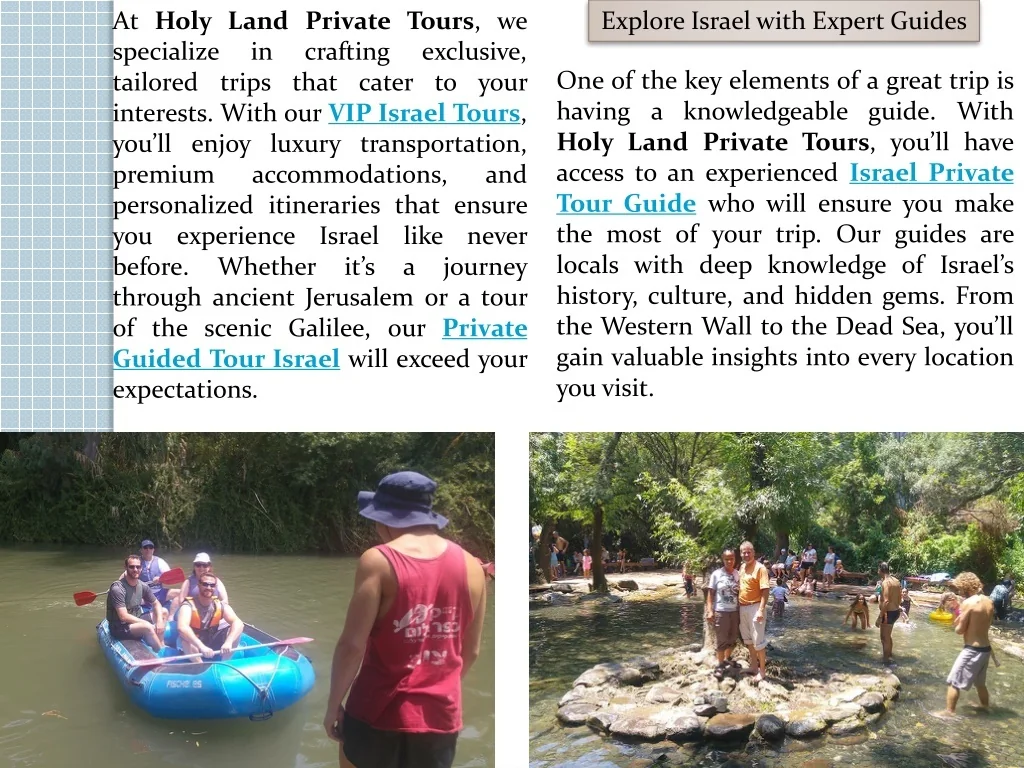
- Whitewater Rafting and Kayaking: The Jordan River and the Dan River provide dynamic river routes for kayaking and rafting, particularly during the spring snowmelt from Mount Hermon.
- Mountain Biking: The Biriya Forest and the Golan Heights feature extensive singletrack networks maintained by local cycling communities, ranging from cross-country routes to technical downhill descents.
- Rock Climbing: The cliffs of the Upper Galilee, such as the Nahal Kziv area, offer bolted sport climbing routes and traditional climbing challenges for various skill levels.
The Coastal Plain and Red Sea
- Scuba Diving and Snorkeling: Eilat, situated on the northern tip of the Red Sea, is a premier destination for marine adventures. The Coral Beach Nature Reserve offers accessible shore dives and vibrant reef ecosystems teeming with marine life.
- Kitesurfing and Windsurfing: The Sea of Galilee (Kineret) and the Mediterranean coast near Bat Yam and Haifa attract wind and kite sports enthusiasts due to reliable thermal and seasonal wind patterns.
| Region | Primary Activities | Optimal Season | Technical Difficulty |
|---|---|---|---|
| Judean Desert | Canyoning, Rappelling, Hiking | Late Autumn to Early Spring | Moderate to High |
| Negev Desert | 4x4 Overlanding, Ultra-running, Backpacking | Winter (November–February) | High |
| Golan Heights | Mountain Biking, Caving, Hiking | Spring and Autumn | Moderate |
| Upper Galilee | Rock Climbing, River Trekking, Trail Running | Year-round (Spring optimal) | Moderate to High |
| Eilat / Red Sea | Scuba Diving, Technical Diving, Kiteboarding | Year-round | Low to Advanced |
Planning Logistics, Safety, and Regulations
Executing a safe and legally compliant adventure trip in Israel requires strict adherence to local regulations, environmental laws, and safety protocols. Because many adventure routes traverse nature reserves, military zones, or border areas, independent travelers and tour operators must coordinate their movements carefully.
Permits and Restricted Zones
Many wilderness areas in the Negev and along international borders overlap with Israel Defense Forces (IDF) active training zones or sensitive security perimeters.
- Weekday vs. Weekend Access: Entering military firing zones (Shetach Esh) is strictly prohibited during weekdays when active training occurs. Access is generally permitted only on weekends (Friday afternoons through Saturday) or Jewish holidays, and advance clearance from the regional coordination centers is mandatory.
- Nature Reserve Entry Fees and Registration: Parks managed by the Israel Nature and Parks Authority (INPA) require entrance fees and adherence to strict conservation rules. Overnight camping is only permitted in designated campsites or approved backcountry spots. Venturing off marked trails in desert regions is dangerous and illegal due to the risk of getting lost or damaging fragile ecosystems.
Hydration and Climate Management
Dehydration and heat exhaustion represent the primary physical threats during adventure tours Israel, particularly between May and September when desert temperatures frequently exceed 40°C (104°F).
- Water Requirements: Standard wilderness protocols in the desert recommend carrying a minimum of 4.5 to 6 liters of water per person per day for standard hiking, increasing for strenuous activities.
- Flash Flood Warnings: During winter (November to March), narrow desert canyons are subject to sudden flash floods triggered by rainfall occurring miles away in the highlands. Monitoring meteorological reports issued by the Israel Meteorological Service is mandatory before entering any wadi or canyon.
Comparing Independent Travel Versus Guided Tours
Deciding whether to book a fully supported guided expedition or undertake an independent journey depends heavily on experience, logistical capacity, and the specific activity chosen.
[Traveler Assessment] | +---> Technical Activity? (Canyoning, Deep Desert Trek) | |---> YES ---> Recommended: Certified Local Guide / Operator | |---> NO ---> Independent Planning Possible | +---> Border / Military Zone Proximity? |---> YES ---> Mandatory Coordination / Guided Logistics |---> NO ---> Standard INPA Regulations Apply
Guided Expeditions
- Advantages: Local operators handle complex logistics, including vehicle support, emergency satellite communication, equipment rental (harnesses, helmets, camping gear), water caching in remote deserts, and navigation through complex terrain. Guides also hold mandatory certifications from recognized institutions and possess up-to-date knowledge of security and weather conditions.
- Disadvantages: Higher financial cost, fixed itineraries with less personal flexibility, and adherence to group pacing.
Independent Exploration
- Advantages: Complete autonomy over schedule, pace, and route selection; generally lower financial outlay.
- Disadvantages: The burden of logistics falls entirely on the traveler. Navigating Hebrew-language trail markers, coordinating military zone access, managing emergency extraction insurance, and securing transportation to remote trailheads can present significant hurdles for foreign visitors.
Frequently Asked Questions
What is the best time of year for adventure tours Israel?
The optimal window for outdoor adventure spans from October through April. During this period, desert temperatures are manageable, and northern waterways are active. Summer months (June to August) are intensely hot, making strenuous desert activities dangerous, though coastal water sports and shaded northern trails remain viable with proper precautions.
Do I need special permits to hike the Israel National Trail?
The Israel National Trail does not require a single overarching permit to hike, but specific sections require coordination. Passing through certain nature reserves requires paying park entrance fees, and sections crossing active military zones require scheduling hikes for weekends or holidays when training is suspended.
Are adventure tours in Israel safe for solo travelers?
While Israel has a well-developed tourism infrastructure and emergency response network, solo travel in remote desert environments or near border regions carries inherent risks. Solo travelers are strongly advised to join organized group tours or register their itineraries with local authorities and use reliable satellite tracking devices.
What kind of physical fitness is required for these tours?
Fitness requirements vary widely depending on the chosen activity. Easy coastal diving or day walks require standard cardiovascular health, whereas canyoning, multi-day desert treks, and advanced mountain biking demand high cardiovascular endurance, core strength, and previous technical experience.
How do flash floods occur in the desert, and how can I avoid them?
Desert flash floods happen rapidly when heavy rain falls on impermeable rock surfaces upstream, channeling massive volumes of water down dry riverbeds (nahalim or wadis). To avoid them, never enter a canyon or dry wash if rain is forecasted anywhere in the drainage basin, and heed all warnings from park rangers immediately.
What gear should I pack for an adventure trip in Israel?
Essential gear includes sturdy, broken-in hiking footwear, high-SPF sun protection (hat, sunglasses, sunscreen), moisture-wicking clothing, a reliable daypack or expedition pack, a headlamp with extra batteries, an offline GPS mapping application, and adequate water storage capacity (hydration bladders and hard flasks).
Practical Recommendations for Travelers
To ensure a seamless and safe adventure experience, secure all necessary bookings and permits several months in advance, particularly if traveling during peak spring and autumn holiday seasons. Verify that any commercial tour operator you select holds active licensing from the Israel Ministry of Tourism and employs certified wilderness first responders or guides accredited by recognized national sports associations. Always purchase comprehensive travel insurance that explicitly covers extreme sports, search and rescue operations, and medical evacuation by helicopter before embarking on your journey.