The Accenture Life Insurance and Annuity Platform (ALIP) is a comprehensive, cloud-native software suite designed to manage the entire lifecycle of life insurance and annuity products. By consolidating policy administration, underwriting, and distribution into a single ecosystem, it enables carriers to replace fragmented legacy systems with a modular, API-first architecture that accelerates product innovation and operational efficiency.
As of 2026, the life insurance industry has moved beyond basic digitization. Carriers are now focused on hyper-personalization, real-time data processing, and the integration of generative AI into core workflows. The Accenture Life Insurance and Annuity Platform (ALIP) serves as a foundational technology for this shift, providing the tools necessary to manage complex insurance products while meeting the rising expectations of digital-first consumers and distributors.
The Evolution of the Life and Annuity Value Chain
Historically, life insurance and annuity providers operated on monolithic legacy systems, some dating back decades. These systems were often brittle, making it difficult to launch new products or integrate with modern third-party data sources. The ALIP platform was developed to solve these structural bottlenecks by offering a unified environment for product development, sales, and service.
In the current 2026 landscape, the platform’s value proposition centers on "agility at scale." This means providing carriers with the ability to prototype new index-linked annuities or term-life products in weeks rather than months. By decoupling the product logic from the core administration engine, ALIP allows business users—not just IT departments—to configure rules and calculations, significantly reducing the traditional "IT backlog."
Core Functional Modules of ALIP
The Accenture Life Insurance and Annuity Platform is not a single tool but a modular suite. Organizations can implement the entire stack or select specific components to solve immediate business needs.
1. New Business and Automated Underwriting
The underwriting module is arguably the most critical component for modernizing the "front-end" experience. It utilizes a powerful rules engine to automate the assessment of risk. By 2026, this module has evolved to integrate seamlessly with Electronic Health Records (EHRs), prescription histories, and even wearable data, allowing for "straight-through processing" (STP). For the carrier, this means a significant portion of applications can be approved instantly without manual intervention, while high-risk cases are flagged for human underwriters with all relevant data pre-collated.
2. Policy Administration System (PAS)
The PAS is the heart of the platform. It handles the "middle-office" functions, including premium billing, collections, policy changes, and financial processing. Unlike legacy systems that often require manual workarounds for complex riders or dividend calculations, ALIP uses a centralized calculation engine. This ensures that every transaction—from a simple address change to a complex partial withdrawal from a variable annuity—is processed accurately and reflected across all reporting layers in real-time.
3. Product Configuration and Workbench
One of the primary drivers for adopting ALIP is the Product Workbench. This environment allows product manufacturing teams to define features, pricing, and regulatory requirements using a low-code interface. In a high-interest-rate environment or a shifting regulatory landscape (common in 2026), the ability to tweak annuity crediting rates or update life insurance mortality tables across an entire product line is a significant competitive advantage.
4. Claims and Payout Management
The claims module streamlines the often-cumbersome process of death benefit payouts or annuity annuitization. By automating the verification process and integrating with fraud detection algorithms, ALIP reduces the time-to-payout. This is critical for maintaining "Net Promoter Scores" (NPS) and fulfilling the brand promise of financial security during a beneficiary's time of need.
Technical Architecture and Integration Capabilities
The shift to a cloud-native model is the defining technical characteristic of the Accenture Life Insurance and Annuity Platform. This architecture supports the high availability and scalability required for modern global operations.
Cloud-Native Design
ALIP is typically deployed on major cloud providers such as Microsoft Azure or AWS. This transition away from on-premise servers allows carriers to leverage "elastic" computing power—scaling up during peak enrollment periods and scaling down during quiet cycles. It also ensures that disaster recovery and data redundancy are built into the fabric of the infrastructure.
API-First and Microservices
The platform is built on a microservices architecture, meaning individual functions (like a tax calculation or a beneficiary update) operate as independent services. These services communicate via RESTful APIs. This is essential for 2026’s "ecosystem" approach to insurance, where a carrier might need to connect their core platform to an external insurtech app, a bank's distribution portal, or a third-party KYC (Know Your Customer) service.
AI and Generative AI Integration
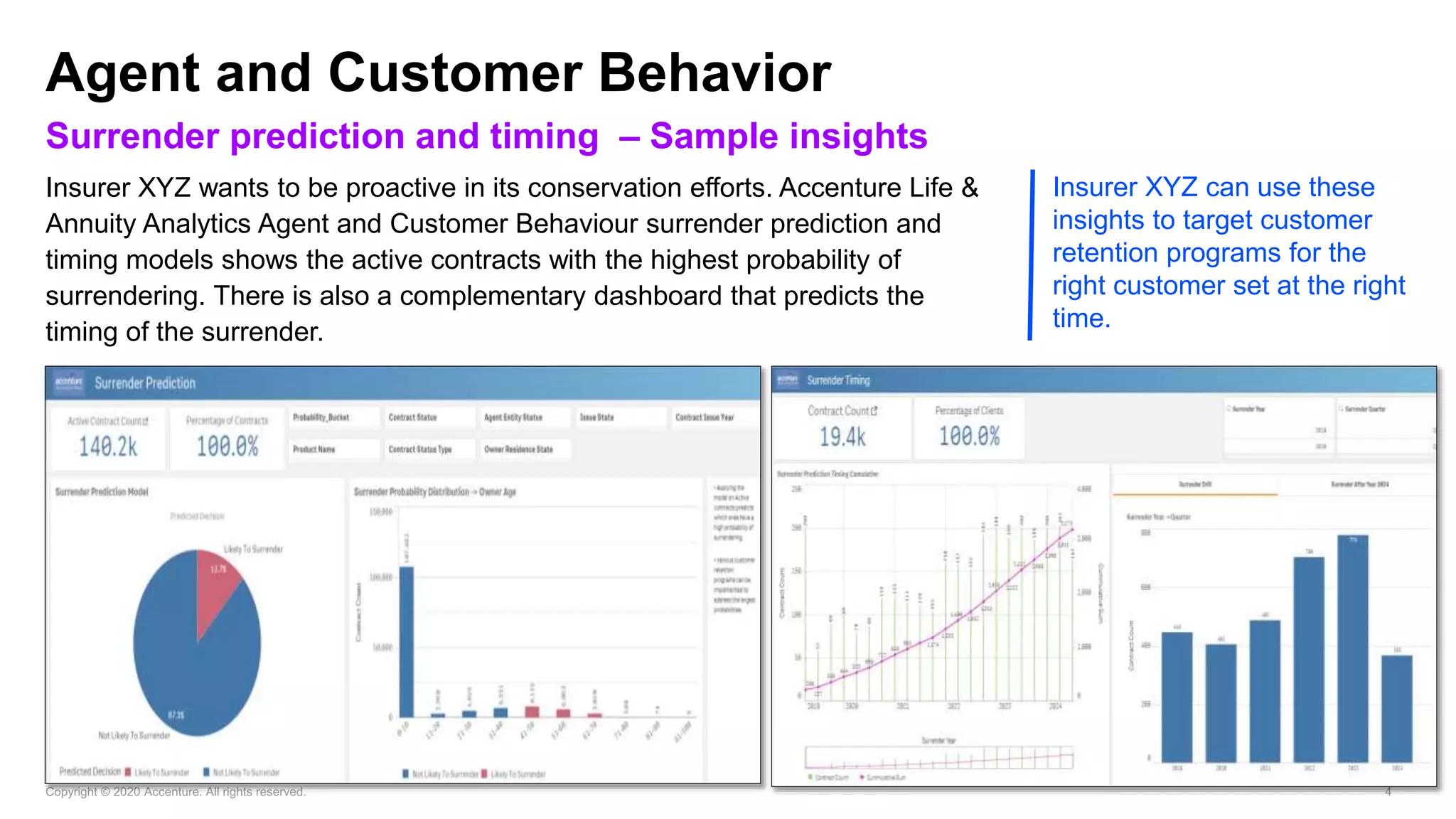
By 2026, ALIP has integrated generative AI capabilities to assist both employees and customers. For customer service agents, the platform can summarize complex policy histories and suggest "next best actions." For developers, it can assist in generating the code necessary for complex system integrations. Furthermore, the platform’s data layer is designed to feed clean, structured data into machine learning models for predictive analytics, such as identifying policies at risk of lapse.
Comparison: ALIP vs. Legacy Systems vs. Generic SaaS
| Feature | Legacy Systems | Generic SaaS Platforms | Accenture ALIP (2026) |
|---|---|---|---|
| Product Launch Speed | 12–18 Months | 6–9 Months | 2–4 Months |
| Data Structure | Siloed / Mainframe | Cloud-based / Rigid | Cloud-native / Modular |
| Underwriting | Manual / Paper-based | Basic Rules-based | AI-driven / Real-time |
| Integration | Difficult (Batch) | API-enabled | API-First / Microservices |
| Regulatory Support | Custom-coded | Variable | Native Multi-jurisdictional |
| Scalability | Limited by Hardware | Moderate | High (Elastic Cloud) |
Strategic Benefits for Life and Annuity Carriers
Implementing a platform of this magnitude is a multi-year commitment, but the strategic outcomes are designed to future-proof the business.
Operational Efficiency and Cost Reduction
By consolidating multiple systems into ALIP, carriers can drastically reduce their Total Cost of Ownership (TCO). Maintenance costs for disparate legacy databases are eliminated, and the reduction in manual processing lowers the "cost per policy." Furthermore, the use of automated workflows reduces human error, which can be a significant source of financial leakage in annuity calculations.
Enhanced Distribution Reach
Modern agents and brokers expect a seamless digital experience. ALIP provides the back-end support for sophisticated agent portals, allowing distributors to track commissions in real-time, view pending applications, and access marketing materials. This "ease of doing business" is a primary factor in which carriers an agent chooses to represent.
Regulatory Compliance and Security
In 2026, data privacy regulations (such as evolving versions of GDPR or various US state-level privacy acts) are more stringent than ever. ALIP includes built-in compliance frameworks that track data lineage and ensure that sensitive personal information is handled according to local laws. Security patches and updates are managed centrally, ensuring the platform remains resilient against modern cybersecurity threats.
Implementation Strategies and Common Challenges
Transitioning to the Accenture Life Insurance and Annuity Platform is a complex undertaking that requires a clear roadmap.
The "Lift and Shift" vs. "Greenfield" Approach
Most carriers choose between two primary paths. The Greenfield approach involves launching new products on the ALIP platform while keeping the "back-book" (existing policies) on the old system. This allows for a faster initial launch. The Lift and Shift (or Migration) approach involves moving all existing policies to the new platform. While more complex due to data cleansing requirements, it offers the greatest long-term efficiency gains by allowing the carrier to decommission legacy hardware entirely.
Data Migration Hurdles
The most common challenge in any platform implementation is data quality. Legacy data is often incomplete or stored in non-standard formats. Successful ALIP implementations require a robust data strategy that involves cleaning, mapping, and validating decades of policyholder information before it enters the new environment.
Change Management
The shift to a digital platform requires a change in organizational culture. Underwriters must learn to work alongside AI, and customer service teams must adapt to real-time data visibility. Accenture typically pairs the platform implementation with a change management program to ensure staff are trained and processes are optimized for the new technology.
Future Outlook: Life Insurance in 2026 and Beyond
As we look toward the latter half of the decade, the Accenture Life Insurance and Annuity Platform is positioned to support "Embedded Insurance"—the sale of life products directly within non-insurance platforms, such as mortgage applications or wealth management apps. This requires the extreme connectivity that ALIP’s API-first design provides.
Additionally, the rise of "Wellness-as-a-Service" means that life insurance is becoming more proactive. Instead of just paying out a death benefit, carriers are using platforms like ALIP to engage with customers throughout their lives, offering health incentives and financial planning tools. The platform’s ability to ingest and analyze continuous streams of data is the engine behind this transition from a reactive product to a proactive service.
Frequently Asked Questions
What types of products does the ALIP platform support?
The platform is designed for a broad range of products, including individual and group life insurance (term, whole, universal), and various annuity structures (fixed, variable, indexed, and deferred). Its flexible calculation engine allows for the creation of complex riders and customized payout options.
Is ALIP only for large-tier insurance carriers?
While many of the world’s largest insurers use ALIP, the platform is scalable. With the advent of cloud-based delivery models, mid-tier carriers can also leverage the platform to achieve the same level of digital sophistication as their larger competitors without the need for massive on-site data centers.
How does ALIP handle regulatory updates?
Accenture maintains the platform to ensure it stays current with major regulatory shifts. The modular design of the rules engine allows carriers to update specific compliance logic (such as tax withholding or disclosure requirements) without having to overhaul the entire system.
Can ALIP integrate with existing CRM systems like Salesforce?
Yes, ALIP is designed with an API-first philosophy. It frequently integrates with leading CRM platforms, allow sales and service teams to see a 360-degree view of the customer, combining the policy data from ALIP with the interaction data from the CRM.
What is the typical timeframe for an ALIP implementation?
Timelines vary significantly based on the scope. A "Greenfield" launch of a single product line might take 6 to 9 months, whereas a full-scale migration of a multi-million policy back-book can take several years, often executed in phased releases.
Summary and Next Steps
The Accenture Life Insurance and Annuity Platform represents a shift from "keeping the lights on" to "driving the business forward." For insurance leaders, the priority in 2026 is no longer just stability, but the ability to adapt to a volatile market and changing consumer behaviors.
To begin the transition, organizations should:
- Conduct a Gap Analysis: Identify where current legacy systems are failing to meet distribution or customer experience goals.
- Define the Migration Strategy: Decide between a Greenfield launch for new products or a comprehensive migration of existing books of business.
- Engage in Data Profiling: Start the process of auditing and cleaning legacy data early to avoid delays during the integration phase.
By adopting a modern, cloud-native platform like ALIP, life and annuity carriers can transform their operations from a back-office cost center into a high-speed engine for growth and innovation.