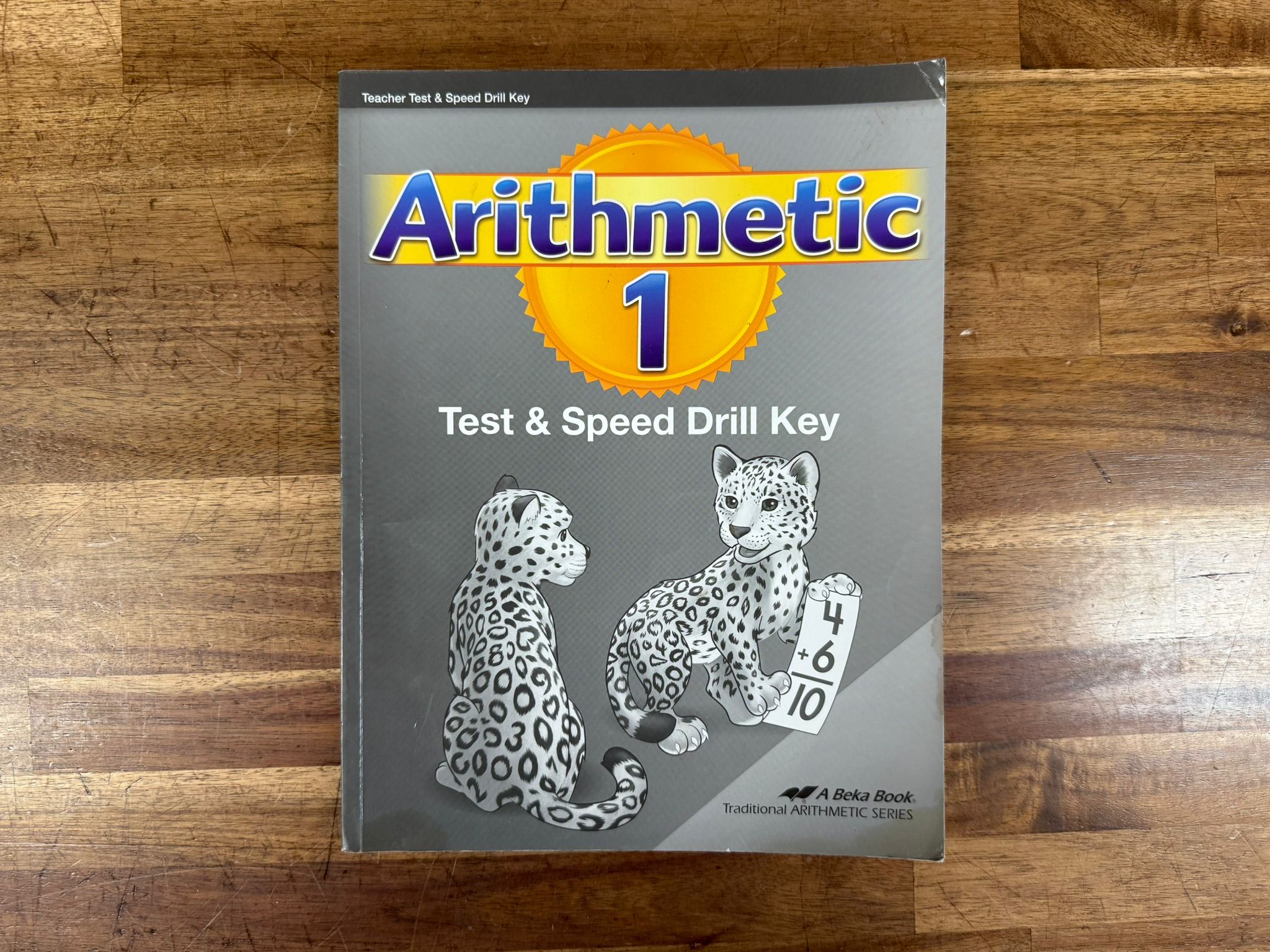
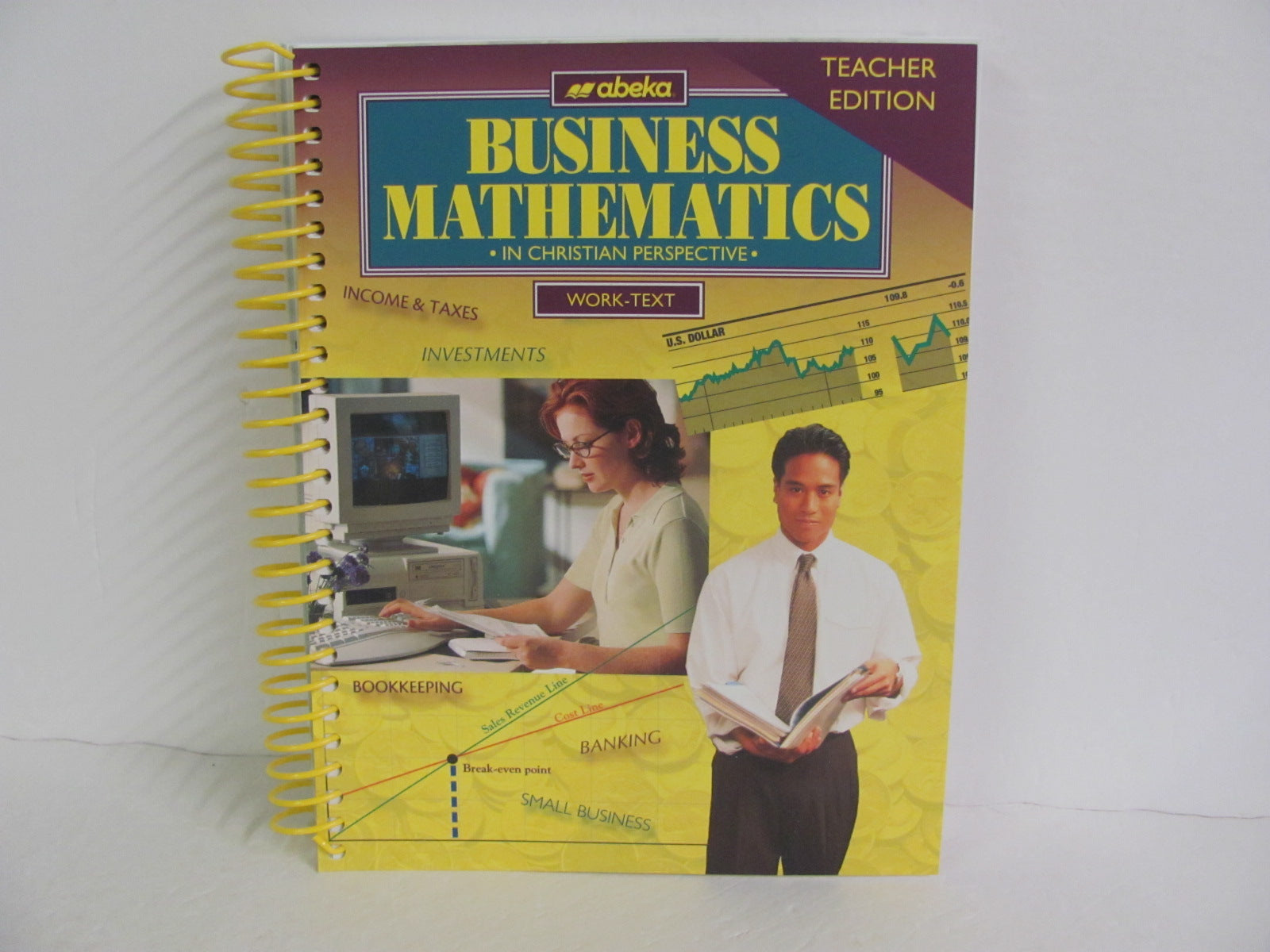
Abeka math in middle school focuses on transitioning students from foundational arithmetic to higher-level abstract thinking through a structured, spiral-based curriculum. For the 2026 academic year, the program primarily consists of Intermediate Mathematics (Grade 7) and Pre-Algebra (Grade 8), emphasizing mastery through constant review and traditional Christian educational values.
The middle school years represent a critical junction in a student’s mathematical journey. During this period, the focus shifts from the "how" of basic operations to the "why" of algebraic reasoning and geometric proofs. Abeka, a leader in traditional Christian education for decades, approaches this transition with a methodology that prioritizes repetition, speed, and accuracy. For parents and educators navigating the 2025-2026 school year, understanding the specific mechanics of Abeka’s middle school offerings is essential for ensuring students are prepared for the rigors of high school Honors Algebra and beyond.
The Spiral Approach in Middle School Mathematics
At the heart of the Abeka curriculum is the spiral approach, a pedagogical method that introduces a concept, provides immediate practice, and then revisits that concept at increasing levels of complexity throughout the year. While some modern curricula favor "mastery" or "block" learning—where a student stays on one topic until it is perfected before moving on—Abeka’s spiral ensures that no concept is ever truly "finished."
In a middle school context, this means a student in Grade 7 will see fractions, decimals, and percentages in the first month, the third month, and the ninth month. The benefit of this approach is long-term retention. By the time a student reaches the end of their eighth-grade year, the foundational rules of arithmetic are so deeply ingrained that they do not struggle with basic calculations while trying to solve complex multi-step algebraic equations.
Critics sometimes argue that the spiral approach can feel repetitive for students who grasp concepts quickly. However, Abeka compensates for this by increasing the depth of the application rather than just repeating the same difficulty level. In middle school, this looks like moving from simple interest calculations to complex compound interest problems within the same year.
Grade 7: Intermediate Mathematics (2026 Edition)
Grade 7 serves as the official bridge between elementary arithmetic and secondary mathematics. Abeka’s Intermediate Mathematics curriculum is designed to solidify every skill learned in grades 1–6 while introducing the language of algebra.
Core Topics Covered
The 2026 curriculum focuses heavily on practical applications of mathematics. This includes:
- Consumer Applications: Students learn about banking, taxes, insurance, and investments. This "real-world" math is a signature of the Abeka program, aiming to produce financially literate young adults.
- Geometric Foundations: Moving beyond basic shapes, seventh graders begin exploring formal definitions, perimeter, area, and volume of complex figures.
- Introduction to Statistics: Students learn to interpret and create various graphs, calculate probability, and understand mean, median, and mode in more complex datasets.
- Pre-Algebraic Concepts: The curriculum introduces variables, exponents, and basic linear equations earlier than many secular programs, providing a "soft landing" into the abstract.
The Workload and Structure
A typical lesson in Intermediate Mathematics consists of a "Daily Review" section, a new concept introduction, and a comprehensive practice set. One common strategy for teachers and parents in 2026 is the "odd/even" method—assigning only half the problems if a student demonstrates immediate mastery—because the sheer volume of problems in an Abeka textbook is designed to provide more than enough practice for even the most struggling learner.
Grade 8: Pre-Algebra and the Leap to Abstract Reasoning
By the time a student enters Grade 8, the Abeka curriculum shifts gears into Pre-Algebra. This is often considered one of the most challenging years in the Abeka sequence because it requires a significant leap from concrete numbers to abstract variables.
Building the Algebraic Foundation
The Grade 8 curriculum is meticulously organized to prepare students for Algebra 1. Key focus areas include:
- Polynomials and Factoring: Students begin working with basic polynomials, learning the distributive property and how to factor simple expressions.
- Radicals and Roots: There is a heavy emphasis on square roots, cube roots, and the Pythagorean theorem.
- Coordinate Geometry: Students spend significant time graphing linear equations on the Cartesian plane, calculating slope, and finding intercepts.
- Scientific Notation: This is integrated with units on physics and chemistry, showing the interdisciplinary nature of math in the middle school years.
Preparation for High School
The rigor of Abeka’s Pre-Algebra is often cited as being a semester ahead of standard public school curricula. Students who successfully navigate the Grade 8 program typically find the first half of high school Algebra 1 to be a review, which builds confidence during the transition to secondary education.
Abeka Academy vs. Parent-Led Instruction
In 2026, families have two primary ways to implement Abeka math in middle school: the traditional parent-led (or teacher-led) approach and the video-based Abeka Academy.
Parent-Led Instruction
This requires the teacher to use the "Teacher Edition" of the textbook, which includes lesson plans, answer keys, and pedagogical tips. It offers the most flexibility, allowing the teacher to speed up or slow down based on the student's needs. However, it requires the teacher to have a solid grasp of middle school math concepts, especially as the curriculum enters Pre-Algebra.
Abeka Academy (Video Lessons)
Abeka Academy provides pre-recorded classroom sessions. A master teacher delivers the lesson, conducts the daily review, and explains new concepts. For many middle schoolers, this provides a "classroom feel" even in a homeschool setting. The video lessons are particularly helpful for Grade 8 Pre-Algebra, where the concepts can become difficult for parents who have not engaged with high-level math in many years.
Comparison of Middle School Math Tracks
The following table outlines the progression and primary focus of the two middle school years within the Abeka curriculum.
| Feature | Intermediate Mathematics (Grade 7) | Pre-Algebra (Grade 8) |
|---|---|---|
| Primary Goal | Mastery of Arithmetic & Consumer Math | Transition to Abstract Algebraic Reasoning |
| Major Topic: Algebra | Introduction to variables and 1-step equations | Polynomials, factoring, and multi-step equations |
| Major Topic: Geometry | Area, volume, and basic construction | Pythagorean theorem and coordinate geometry |
| Major Topic: Practical | Banking, interest, and household budgeting | Statistics, probability, and scientific notation |
| Difficulty Level | Transitional / Moderate | Preparatory / High Rigor |
| Assessment Style | Frequent quizzes and bi-weekly tests | Heavy emphasis on cumulative semester exams |
Key Components of the Abeka Middle School Kit
To successfully run the program in 2026, several components are necessary. Abeka sells these in "kits," but they can also be purchased individually.
- Student Textbook: The primary work-text where students read explanations and complete problems.
- Teacher Edition: Contains the full student text with answers filled in, plus daily lesson plans and "mental math" exercises to start each class.
- Quiz and Test Books: These are separate from the textbook to ensure the integrity of the assessments.
- Solution Key: Different from the Teacher Edition, the Solution Key provides the step-by-step "work" for every problem, which is invaluable for troubleshooting mistakes in multi-step equations.
- Concept Cards: Often used in Grade 7 to help memorize formulas for area, volume, and unit conversions.
Pros and Cons of Abeka Math for Middle Schoolers
Understanding the strengths and limitations of any curriculum is vital for academic success. Abeka is a specific "flavor" of education that suits some students better than others.
Advantages
- Strong Foundation: Students leave middle school with exceptional mental math skills and a thorough understanding of mathematical rules.
- Predictability: The daily routine of review, new material, and practice provides a stable learning environment that reduces anxiety for many students.
- Comprehensive Teacher Support: The materials are so detailed that even someone with minimal teaching experience can effectively lead a student through the curriculum.
- High Standards: The curriculum is rigorous, often exceeding national standards for middle school mathematics.
Disadvantages
- Volume of Work: The "busy work" aspect can lead to burnout if the teacher does not actively manage the number of assigned problems.
- Rigidity: The spiral approach can feel tedious for "gifted" math students who prefer to move quickly through known concepts to reach more challenging material.
- Traditional Focus: While it covers modern statistics, the focus remains heavily on paper-and-pencil calculations, with less emphasis on calculator-based discovery common in some 2026 STEM initiatives.
Managing the Transition: From Arithmetic to Algebra
The shift that occurs during the middle school years is psychological as much as it is mathematical. In grades 1–6, math is about "finding the number." In grades 7–8, math becomes about "finding the relationship."
One of the most common mistakes parents make with Abeka math in middle school is failing to emphasize the "work" over the "answer." In Pre-Algebra, a student may get the correct answer through mental math but fail to understand the algebraic process. Abeka’s curriculum encourages teachers to require students to write out every step. In 2026, as digital tools and AI solvers become more prevalent, this focus on the manual process of equation solving is a critical safeguard for ensuring students actually internalize the logic of mathematics.
Evaluation and Grading in the Abeka System
Abeka uses a traditional grading scale, and the curriculum includes a rigorous schedule of quizzes and tests. In middle school, these assessments are designed to be cumulative. A test in April will still contain concepts introduced in September.
For the 2025-2026 cycle, Abeka recommends a grading weight that favors tests over quizzes and daily work. This prepares students for high school and college, where the majority of a grade is often determined by a few high-stakes exams. Educators are encouraged to use the "Daily Review" scores as a diagnostic tool rather than a primary grade, allowing the student to learn from mistakes before they reach the formal testing phase.
Frequently Asked Questions
Is Abeka Math for middle school too advanced?
Abeka is generally considered to be about a half-year to a full year ahead of standard public school curricula. While "advanced," it is also very incremental. Most students who have used Abeka since elementary school find the transition natural. Students transferring into Abeka in middle school from a less rigorous program may need to take a placement test and potentially start with the Grade 7 book regardless of their age.
Does the 2026 curriculum include Common Core standards?
Abeka explicitly rejects Common Core standards, favoring a traditional, phonics-based (in English) and logic-based (in Math) approach. They focus on "traditional mathematics" which emphasizes memorization of facts and standard algorithms over the "discovery" methods often found in Common Core-aligned textbooks.
How much time should a middle schooler spend on Abeka math daily?
In a typical 2026 school setting, a student should expect to spend 45 to 60 minutes on math. This includes about 15-20 minutes of instruction and 30-40 minutes of independent practice. If a student is consistently spending more than 90 minutes, it is usually a sign that the teacher needs to reduce the number of problems assigned or that the student needs additional help with foundational concepts.
Can a student jump from Abeka Grade 8 directly into Honors Algebra 1?
Yes. The Abeka Pre-Algebra (Grade 8) curriculum is specifically designed to provide the rigorous foundation necessary for Honors-level high school math. Students who maintain an "A" or "B" average in Abeka Pre-Algebra are typically well-prepared for any standard Algebra 1 course.
Is a calculator allowed in Abeka middle school math?
Abeka generally discourages calculator use in Grade 7 to ensure students maintain their arithmetic skills. In Grade 8 Pre-Algebra, calculators are introduced for specific units, such as calculating complex square roots or working with certain trigonometric ratios, but the primary goal remains manual mastery of the concepts.
Final Recommendation for Educators
When implementing Abeka math in middle school, the key to success is balance. Use the spiral approach to ensure no concept is forgotten, but remain flexible enough to adjust the workload to prevent student burnout. For the 2025-2026 school year, prioritize the "Solution Key" as a teaching tool—not just an answer checker—to help students visualize the logical steps required in Pre-Algebra. By focusing on the process of mathematical reasoning rather than just the final product, you will prepare your students for the complexities of high school and beyond.