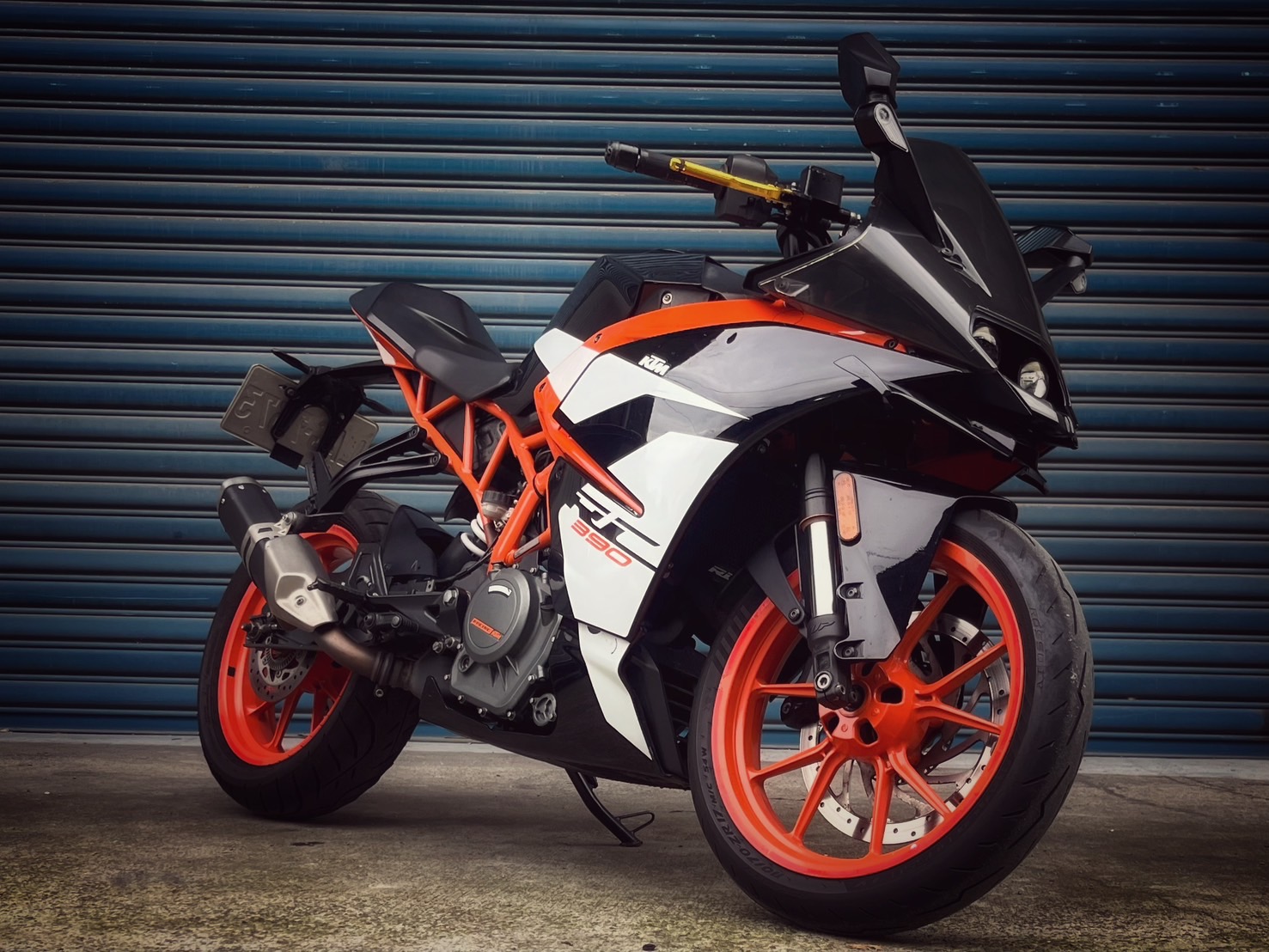
The KTM RC 390 typically achieves a 0-60 mph time of approximately 4.2 to 4.8 seconds, depending on the model year and rider skill. This metric is frequently misunderstood because it fails to account for the bike’s specific gearing ratios, the mechanical nature of its high-performance single-cylinder engine, and its primary design as a cornering-focused supersport rather than a straight-line drag racer.
Understanding the Benchmark: Why 0-60 Matters (and Why it Doesn't)
In the world of motorcycling, the 0-60 mph (0-96 km/h) sprint is the universal yardstick for performance. For a sub-500cc motorcycle like the KTM RC 390, this number places it firmly in the "quick" category, often outperforming many sports cars and keeping pace with larger-displacement "beginner" bikes. However, looking at the raw data—usually hovering around the 4.5-second mark for the 2024–2026 iterations—only tells a fraction of the story.
The RC 390 is an outlier in the small-capacity supersport segment. While competitors like the Yamaha R3 or the Kawasaki Ninja 400 use parallel-twin engines, KTM has doubled down on the "thumper" (single-cylinder) philosophy. This choice fundamentally alters how the bike accelerates. To truly understand why the 0-60 time is often misinterpreted, one must look at the mechanical, electronic, and aerodynamic factors that govern how this Austrian machine moves from a standstill to highway speeds.
1. The Gearing Bottleneck: The Shift That Costs Time
One of the most significant reasons the RC 390’s 0-60 time is misunderstood involves its transmission and final drive gearing. In many high-performance motorcycles, 60 mph can be reached at the very top of first gear or early in second gear. The RC 390, however, is geared relatively short to maximize its 373cc (or the updated 399cc in newer LC4c platforms) displacement’s torque.
On most production RC 390s, reaching 60 mph requires a shift from first to second, and often another shift into third gear just before the 60 mph mark, depending on the specific sprocket setup and rev limit. Every gear change, even with the assistance of KTM's Quickshifter+, consumes precious milliseconds. In a 0-60 test, a bike that requires two shifts will almost always post a "slower" time on paper than a bike with a taller first gear, even if the former is actually faster in real-world roll-on acceleration.
Riders who judge the bike solely by its 4.6-second sprint often fail to realize that the bike is "busier" during those seconds than a twin-cylinder rival. The short gearing is a deliberate choice by KTM to ensure the bike feels punchy and responsive in the mid-range, which is where most track and canyon riding occurs, rather than optimizing for a singular, static sprint metric.
2. Single-Cylinder Torque vs. Multi-Cylinder Inertia
The RC 390 is powered by a large-bore single-cylinder engine. In the 2026 market, this remains its most defining and polarizing feature. Most enthusiasts assume that a single-cylinder engine is "lazy" or purely for off-road use, leading to a misunderstanding of how the RC 390 delivers its power.
Unlike a four-cylinder bike that needs to scream to 12,000 RPM to find its power, the RC 390 delivers a massive hit of torque early in the rev range. This makes the initial 0-30 mph launch incredibly aggressive. However, as the piston speed increases, the single-cylinder inherent vibration and mechanical limits begin to taper off the acceleration curve compared to a smoother parallel twin.
The "misunderstanding" here is that people expect the acceleration to be linear. In reality, the RC 390 "jumps" off the line but requires precise throttle management to keep the front wheel down. This explosive low-end torque can actually make the bike harder to launch perfectly for a 0-60 test compared to a softer-launching twin-cylinder bike, leading to inconsistent times in amateur hands.
3. The Power-to-Weight Ratio and Rider Sensitivity
As of 2026, the KTM RC 390 remains one of the lightest bikes in its class, with a dry weight often hovering around 155 kg (341 lbs). This incredible lightness is a double-edged sword for 0-60 metrics.
On a 200-horsepower liter bike, the difference between a 150-lb rider and a 220-lb rider is negligible in a 0-60 sprint because the engine has an overwhelming surplus of power. On a 44-horsepower RC 390, the rider's weight represents a significant percentage of the total vehicle mass. A heavier rider can easily add 0.5 to 0.8 seconds to the 0-60 time.
When people see conflicting 0-60 reports—some claiming 4.2 seconds and others 5.1 seconds—they often blame the bike's consistency. In reality, they are seeing the laws of physics at work on a lightweight platform. The RC 390 is highly sensitive to "payload," and its performance metrics must be viewed through the lens of the power-to-weight ratio rather than peak horsepower alone.
4. Electronic Intervention: MTC and Launch Dynamics
Modern iterations of the RC 390 (2022 through 2026) come equipped with sophisticated electronics, including Motorcycle Traction Control (MTC) and Cornering ABS. These systems are designed for safety and lap time consistency, but they are often misunderstood in the context of a 0-60 sprint.
Standard traction control settings on the RC 390 are quite conservative. When a rider attempts a hard launch, the ECU detects the rapid change in wheel speed and may cut power to prevent a wheelie or a slide. For an inexperienced rider, this "stutter" feels like a lack of engine power, leading to a slower 0-60 time.
To achieve the "magazine" numbers often cited in technical specs, the rider must often disable MTC or use a specific "Street" mode that allows for some slip. The misunderstanding is that the bike’s electronics are "slowing it down," when in fact, they are optimized for safety on the road. The bike's true mechanical potential is often hidden behind its digital safety net.
5. Aerodynamics and the "Small Bike" Myth
There is a common misconception that because the RC 390 is a "small" bike, its aerodynamics are secondary to its engine output. However, the RC 390's fairing design is one of the most advanced in the sub-500cc category, derived directly from KTM’s Moto3 efforts.
In a 0-60 sprint, wind resistance begins to play a major factor once the bike crosses the 45-50 mph threshold. The RC 390 requires the rider to be in a full, aggressive tuck to hit the fastest 0-60 times. Many riders testing the bike do so in a "standard" upright position, which creates significant drag. Because the engine has a finite amount of power, this drag has a disproportionate impact on the final 10 mph of the 0-60 sprint. The bike isn't "running out of steam"; it is fighting a physical wall of air that requires proper rider body positioning to overcome.
6. Thermal Management and Performance Consistency
Single-cylinder high-performance engines like the KTM LC4c series run hot. They are designed with high compression ratios to extract maximum power from a single piston. This leads to a misunderstanding of the bike’s performance during repeated testing.
If you perform three or four 0-60 runs in quick succession on a warm day in 2026, the ECU will naturally pull back ignition timing slightly to protect the engine from knock and overheating. The first run might be a 4.4, while the fourth run is a 4.9. Critics often point to this as a sign of a "weak" engine, but it is actually a sign of a highly tuned, high-strung powerplant operating at its thermal limits. Unlike a de-tuned commuter bike, the RC 390 is a race-bred machine that performs best when it has adequate airflow—something a 0-60 sprint in a parking lot doesn't always provide.
7. The Purpose Misalignment: Corner Exit vs. Standing Start
Perhaps the greatest misunderstanding of the RC 390’s 0-60 time is the belief that this number defines the bike's "speed." In the 2026 motorcycling landscape, the RC 390 is widely regarded as one of the best-handling motorcycles at any price point.
The engine is tuned for corner exit speed, not standing-start drag racing. The way the torque is delivered at a 30-degree lean angle coming out of a second-gear apex is where the RC 390 shines. A 0-60 time doesn't capture the bike's ability to hold a line, its mid-corner stability, or its braking performance. When people compare the RC 390's 4.5-second 0-60 to a 600cc bike's 3.2-second time, they miss the point that on a tight, technical track, the "slower" RC 390 can often embarrass much more powerful machines because its acceleration is usable and its weight is negligible.
Technical Specification Comparison (2024-2026 Class)
To provide context on how the RC 390 compares to its closest rivals in 2026, the following table outlines the key metrics that influence 0-60 performance.
| Motorcycle Model | Engine Type | Peak Horsepower | Curb Weight (Approx) | Estimated 0-60 MPH |
|---|---|---|---|---|
| KTM RC 390 | Single-Cylinder | 44 hp | 364 lbs (165 kg) | 4.3 - 4.6 Seconds |
| Kawasaki Ninja 500 | Parallel-Twin | 51 hp | 377 lbs (171 kg) | 4.1 - 4.4 Seconds |
| Yamaha YZF-R3 | Parallel-Twin | 42 hp | 375 lbs (170 kg) | 5.0 - 5.3 Seconds |
| Honda CBR500R | Parallel-Twin | 47 hp | 421 lbs (191 kg) | 4.8 - 5.1 Seconds |
| Aprilia RS 457 | Parallel-Twin | 47 hp | 385 lbs (175 kg) | 4.0 - 4.3 Seconds |
Note: These figures are based on standard manufacturer specifications and independent testing benchmarks available as of 2026. Real-world results vary based on fuel load, tire pressure, and environmental conditions.
Factors Influencing the "Real" Acceleration
Beyond the 0-60 number, several technical factors influence how the RC 390 accelerates in real-world scenarios:
- Unsprung Mass: The 2022+ redesign introduced significantly lighter wheels (3.4 kg reduction). This reduces the moment of inertia, allowing the bike to spin up faster, even if the peak horsepower remained similar to previous generations.
- Slipper Clutch Dynamics: The PASC (Power Assist Slipper Clutch) doesn't just help on downshifts; it allows for more aggressive clutch engagement on upshifts without upsetting the chassis, contributing to a smoother (if not always faster) acceleration curve.
- Fuel Mapping: Aftermarket maps or the "Track" mode settings on later models can sharpen throttle response. This doesn't necessarily add horsepower, but it reduces the "dead zone" at the start of the throttle twist, which can shave tenths off a 0-60 time.
- Tire Grip: The RC 390 often comes stock with high-performance rubber (like Continental Contiroad or similar). On a cold surface, these tires can struggle to find the "bite" needed for a sub-4.5 second launch, a factor often overlooked by those simply reading a spec sheet.
Frequently Asked Questions
Is the KTM RC 390 faster than a Ninja 400 or 500 in 0-60?
In a straight 0-60 mph sprint, the Kawasaki Ninja 500 generally has a slight advantage due to its larger displacement and twin-cylinder smoothness at the top end. However, the RC 390 often feels faster in initial "pull" from 0-30 mph because of its single-cylinder torque. The Ninja is more forgiving to launch, whereas the KTM requires more finesse to extract its best time.
Why does my RC 390 feel slower than the advertised 0-60 times?
The most common reasons are rider weight, altitude (which affects non-turbocharged engines significantly), and shifting technique. If you aren't shifting exactly at the peak of the power curve (usually around 9,000–9,500 RPM) or if you are leaving Traction Control on its most intrusive setting, your times will be higher. Additionally, fuel quality and tire pressure play minor but cumulative roles.
Can a quickshifter improve the 0-60 time on an RC 390?
Yes, the KTM Quickshifter+ allows for full-throttle upshifts without using the clutch. In a 0-60 test where one or two shifts are required, this can save approximately 0.1 to 0.2 seconds compared to a manual clutch shift. It also maintains the bike's longitudinal stability, preventing the "pitching" motion that can occur during manual shifts.
Does the 2024-2026 RC 390 have a different 0-60 than the older models?
The newer models are slightly faster than the pre-2022 versions, primarily due to weight reduction in the wheels and chassis. While the engine's peak output has stayed relatively consistent around 44 horsepower to remain A2-license compliant in Europe, the reduction in rotating mass (wheels/brakes) allows the bike to accelerate more efficiently.
Is 0-60 a good way to judge a beginner sportbike?
Not necessarily. For a beginner, the 0-40 mph time and the roll-on acceleration (e.g., 30-60 mph in 3rd gear) are much more relevant for city traffic and highway merging. The 0-60 metric is a "perfect world" stat that requires an aggressive launch which most beginners will not—and should not—attempt on public roads.
Final Recommendation
When evaluating the KTM RC 390, do not let the 0-60 mph time be the sole arbiter of your decision. While a 4.5-second sprint is objectively fast, the true value of the RC 390 lies in its power delivery and agility.
If you are looking for the fastest possible 0-60 time in the lightweight class, you might find the parallel-twin competitors slightly easier to launch consistently. However, if you value a bike that "punches" out of corners and offers a visceral, mechanical connection to the road, the RC 390’s performance is unmatched. To get the most out of the bike, focus on mastering the Quickshifter+ and understanding the specific RPM where the single-cylinder engine produces its peak torque. The RC 390 is a tool built for the track that happens to be street-legal; treat its acceleration as a means to an end—getting to the next corner as quickly as possible.