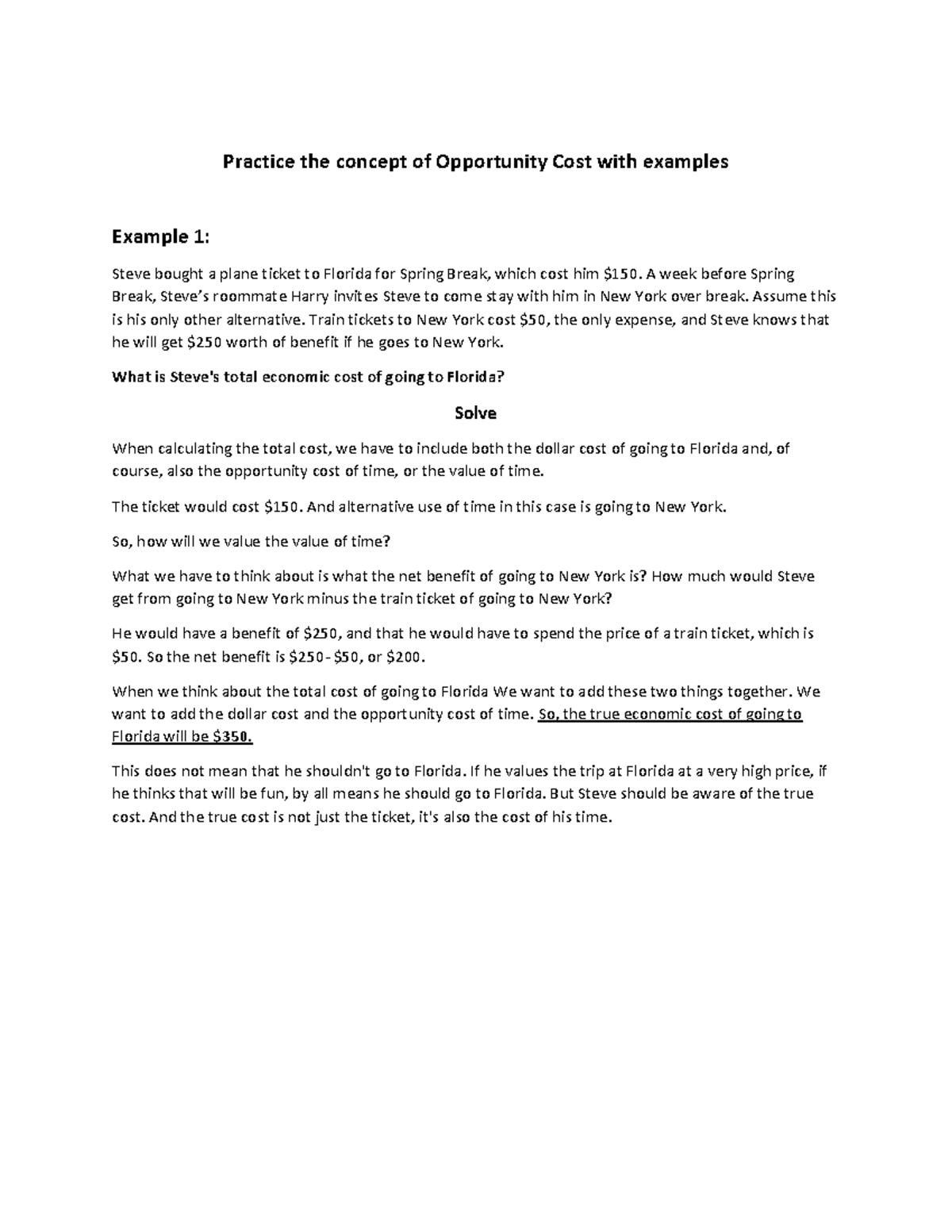
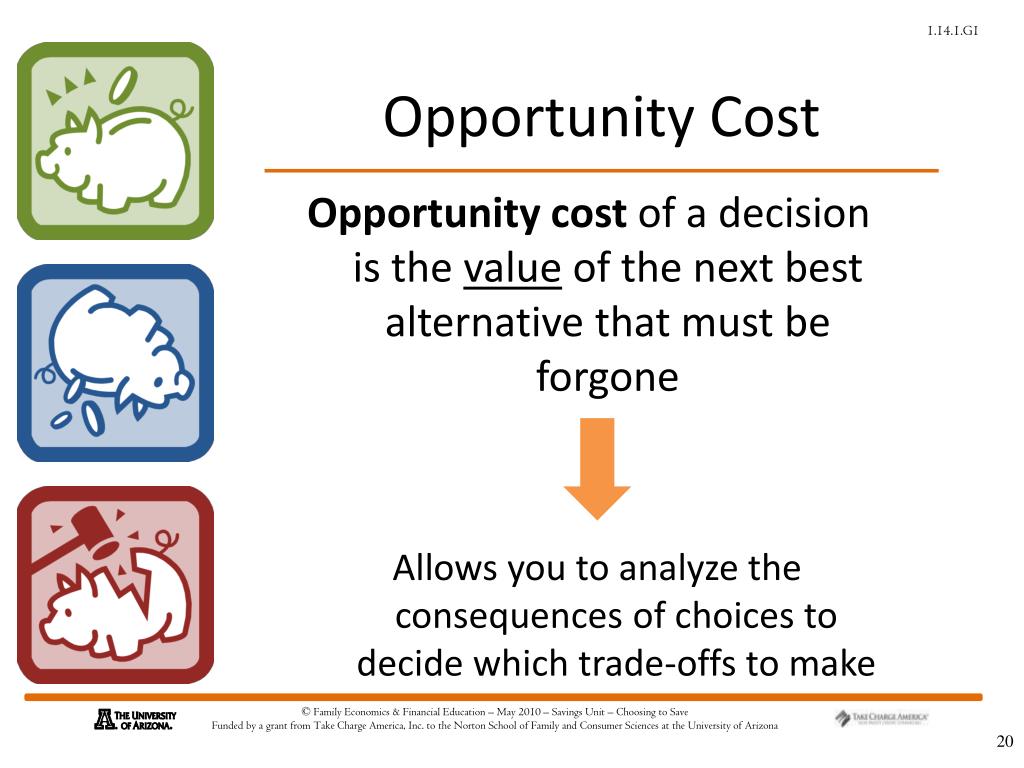
Opportunity cost represents the hidden price of a choice: the value of the next-best alternative given up when a decision is made. While traditional financial analysis focuses on explicit monetary outlays, understanding implicit trade-offs helps executives, founders, and managers evaluate resource allocation, operational focus, and strategic growth without falling into cognitive traps.
Understanding Opportunity Cost in Modern Corporate Strategy
In microeconomics and business management, opportunity cost is the foundational metric that measures what must be foregone to pursue a specific path. Unlike explicit costs—such as payroll, rent, inventory acquisition, and software subscriptions—opportunity costs are implicit. They do not appear on standard income statements or balance sheets, yet they profoundly dictate long-term enterprise viability, valuation, and market positioning.
Every time a business commits capital, time, talent, or physical infrastructure to one project, it automatically rejects every other potential application of those assets. Recognizing these hidden trade-offs requires a shift from viewing accounting profit alone to evaluating economic profit. Economic profit factors in both explicit costs and the implicit cost of capital and labor alternatives.
Failing to calculate opportunity cost leads to systemic biases in corporate decision-making. Decision-makers often fall victim to the sunk cost fallacy, pouring additional resources into failing initiatives because capital has already been spent, while completely ignoring the superior returns those new resources could generate elsewhere. By systematically analyzing opportunity costs across various organizational domains, businesses can optimize resource deployment and protect themselves against strategic stagnation.
1. Keeping Founders and Executives Mired in Administrative Tasks
One of the most insidious and overlooked opportunity costs in early-stage and mid-market companies involves executive time allocation. When founders, chief executive officers, or senior operational leaders spend valuable hours handling routine administrative duties—such as manual invoice processing, basic customer support, or low-level vendor negotiations—they are paying a massive hidden fee.
The Mathematics of Executive Trade-Offs
Consider a software startup founder whose strategic guidance, enterprise sales calls, and product vision-setting have the potential to drive millions in annual recurring revenue. If that founder spends ten hours a week managing office logistics or basic bookkeeping instead of closing major enterprise accounts, the business is trading millions in potential growth for a few hundred dollars in saved administrative wages.
The opportunity cost formula in this scenario is straightforward: $$\text{Opportunity Cost} = (\text{Value Generated per Hour of Strategic Focus}) - (\text{Cost to Outsource or Delegate Task})$$
When the strategic value of an executive's hour is evaluated at five hundred dollars or more, performing a task that could be handled by a fifteen-dollar-per-hour assistant or automated software solution results in a severe net loss for the enterprise.
Mitigating Executive Misalignment
To eliminate this hidden drain, growing businesses must conduct rigorous time audits. Leaders should track their weekly activities, categorize them by economic value, and aggressively delegate, automate, or eliminate low-leverage tasks. Hiring administrative support or implementing enterprise resource planning tools may introduce explicit costs, but the corresponding recovery of executive bandwidth typically yields an asymmetric positive return.
2. Rejecting Automation in Favor of Familiar Manual Processes
Many established enterprises hesitate to invest in digital transformation, process automation, or advanced enterprise software, operating under the assumption that keeping existing manual workflows is the financially prudent choice because it requires no upfront software licensing fees or implementation budgets.
The Illusion of Free Labor
Manual workflows carry a massive, recurring opportunity cost disguised as "business as usual." When data entry clerks, financial analysts, or supply chain coordinators spend hours manually copying information between disparate spreadsheets, enterprise systems, and client databases, the organization incurs severe efficiency penalties.
- Speed-to-Market Deficits: Manual processes create severe operational bottlenecks. While an automated competitor processes loan applications, fulfillment requests, or customer onboarding in seconds, a manual workflow takes days.
- Error Rates and Remediation: Human data entry inevitably introduces errors. The time spent auditing spreadsheets, correcting invoice discrepancies, and managing customer service escalations represents hours stolen from high-value tasks.
- Employee Morale and Attrition: Highly skilled professionals do not join modern enterprises to perform repetitive data entry. Requiring skilled staff to execute manual routines leads to disengagement, burnout, and high turnover—forcing the business to absorb steep recruiting and training replacement costs.
Calculating the True Cost of Stagnation
Evaluating automation requires weighing the initial capital expenditure against the cumulative opportunity cost of lost output, delayed revenue recognition, and higher error correction expenses. Organizations that cling to manual legacy systems out of familiarity or fear of change frequently find themselves outpaced by leaner, technology-enabled competitors.
3. Holding Excessive Cash Reserves Out of Risk Aversion
Liquidity management is a core pillar of corporate finance. Maintaining an adequate cash runway is essential for weathering economic downturns, meeting short-term obligations, and seizing unexpected market opportunities. However, treating cash hoarding as a risk-free strategy ignores the profound opportunity cost of underperforming capital.
The Inflation and Yield Penalty
When a company maintains millions of dollars in low-yield checking accounts or conservative short-term instruments well beyond its required operational reserve, that capital loses purchasing power over time to inflation. More importantly, it foregoes the higher economic returns that could be unlocked by deploying those funds into growth-generating activities.
| Capital Allocation Strategy | Expected Return Profile | Associated Opportunity Cost | Primary Risk Factor |
|---|---|---|---|
| Excess Cash Hoarding | Minimal (Standard bank interest) | High loss of compounding growth and market share gains | Inflation, purchasing power erosion, strategic obsolescence |
| Reinvestment in R&D | Variable (High upside, moderate failure risk) | Temporary cash flow reduction | Execution failure, market rejection of new product lines |
| Strategic M&A | Scaled (Immediate capability expansion) | High integration friction and upfront capital outlay | Cultural misalignment, overpayment for acquired assets |
| Aggressive Marketing Scale | Direct (Immediate customer acquisition) | Diminishing marginal returns if channels saturate | Customer acquisition cost exceeding lifetime value |
Finding the Equilibrium
Optimizing cash management requires establishing a rigorous treasury policy. Once a business secures an appropriate liquidity cushion—typically three to six months of operating expenses depending on industry volatility—any excess capital should be evaluated against internal growth projects, capital expenditures, debt paydown, or strategic acquisitions. Treating cash as an active asset rather than a passive safety blanket prevents conservative risk aversion from quietly crippling enterprise valuation.
4. Under-Investing in Employee Upskilling and Retention
Human capital represents the primary engine of value creation in modern knowledge-based economies. Yet, many organizations treat employee training and professional development as discretionary line items that can be cut immediately when profit margins tighten.
The Cost of Stagnant Skill Sets
Failing to invest in continuous workforce education generates an invisible, compounding opportunity cost. As industries evolve rapidly due to technological shifts, regulatory changes, and emerging competitive dynamics, static workforces struggle to maintain operational excellence.
- Inability to Adopt New Tools: Employees lacking formal training on emerging software, data analytics frameworks, or production methodologies cannot leverage productivity enhancements.
- Productivity Plateaus: Without structured paths for skill advancement, employee output stagnates, limiting the organization's capacity to scale throughput or enter adjacent markets.
- Brain Drain: Ambitious professionals naturally gravitate toward organizations that invest in their career progression. When a company refuses to fund professional development, its top performers leave for competitors, forcing the enterprise to absorb steep recruiting expenses and institutional knowledge loss.
Valuing Human Capital Development
Calculating the opportunity cost of under-investing in staff requires looking past the invoice for a training seminar or software certification program. Leaders must evaluate the cumulative value of a workforce operating at peak capability versus one constrained by outdated skills. Cultivating a culture of continuous learning ensures that internal human capital scales in tandem with external market demands.
5. Chasing Low-Margin, High-Maintenance Clients
In the relentless pursuit of top-line revenue growth, businesses frequently accept any client or customer that signs a contract. However, taking on demanding clients who generate minimal profit margins incurs a devastating opportunity cost: the exhaustion of organizational capacity on low-value relationships.
The Resource Drain of Unprofitable Accounts
Every organization possesses finite operational bandwidth, customer support capacity, account management hours, and technical customization limits. When a significant percentage of these finite resources is tied up servicing low-margin clients, the business impairs its ability to pursue and support ideal, high-margin accounts.
- Support Bandwidth Saturation: High-maintenance clients frequently demand disproportionate customer service and custom engineering resources, pulling teams away from strategic product development.
- Cultural Fatigue: Constantly servicing disgruntled or low-value accounts wears down client-facing teams, leading to decreased morale across departments.
- Strategic Drift: Focusing on low-margin work forces companies to compete on price rather than value, eroding brand equity and preventing the development of specialized, premium capabilities.
Refocusing on Ideal Customer Profiles
To reclaim this lost opportunity cost, leadership teams must conduct profitability analyses across their entire client portfolio. By identifying which segments generate the highest margins with the lowest friction, businesses can consciously prune unprofitable accounts, restructure pricing models, or redirect sales efforts toward ideal customer profiles that maximize economic profit per unit of resource expended.
Strategic Recommendations for Maximizing Resource Allocation
Recognizing opportunity costs requires moving past standard accounting practices and embedding strategic trade-off analysis into everyday business operations. To minimize hidden losses and maximize long-term enterprise value, decision-makers should implement the following operational frameworks:
- Incorporate Opportunity Cost into Capital Budgeting: Whenever a major project or investment is proposed, require analysts to explicitly state the next-best alternative use of that capital and time.
- Regularly Audit Executive and Team Time: Track how time is spent across departments to ensure high-value talent is focused on high-leverage growth drivers rather than administrative minutiae.
- Adopt Dynamic Portfolio Management: Continuously review client rosters, cash holdings, and operational workflows to ensure assets are actively deployed where they generate the highest economic return.
Frequently Asked Questions
What is the fundamental difference between explicit costs and opportunity costs?
Explicit costs are direct, out-of-pocket financial expenditures recorded in accounting books, such as rent, salaries, and utility bills. Opportunity costs are implicit trade-offs representing the potential benefits an organization forfeits when selecting one alternative over another. They do not appear on standard financial statements but directly impact economic profit.
How can small businesses calculate opportunity cost without complex financial models?
Small businesses can calculate opportunity cost by comparing the projected return of their chosen action against the estimated financial and strategic return of the next-best alternative. For example, a business owner deciding whether to spend five thousand dollars on a marketing campaign or new equipment should estimate the net revenue gain of both options and choose the one with the higher net economic return.
Why do businesses frequently ignore opportunity costs in daily decision-making?
Human psychology heavily favors explicit costs because they are visible, measurable, and tangible. Opportunity costs are invisible and require counterfactual thinking—imagining outcomes that did not happen. Overcoming this bias requires intentional governance structures and regular strategic audits that force decision-makers to evaluate foregone alternatives.
Does calculating opportunity cost apply exclusively to financial investments?
No. While financial capital allocation is the most common application, opportunity cost applies equally to time management, human resource deployment, operational workflow design, physical real estate usage, and strategic partnerships. Any scenario involving finite resources and multiple competing alternatives involves an opportunity cost.
Can opportunity costs be negative?
Opportunity costs represent lost potential benefits; therefore, they are expressed conceptually as positive values representing what was given up. However, choosing a superior strategic alternative that outperforms all other available options means the opportunity cost incurred is justified because the chosen path yielded a higher overall return than the alternatives.