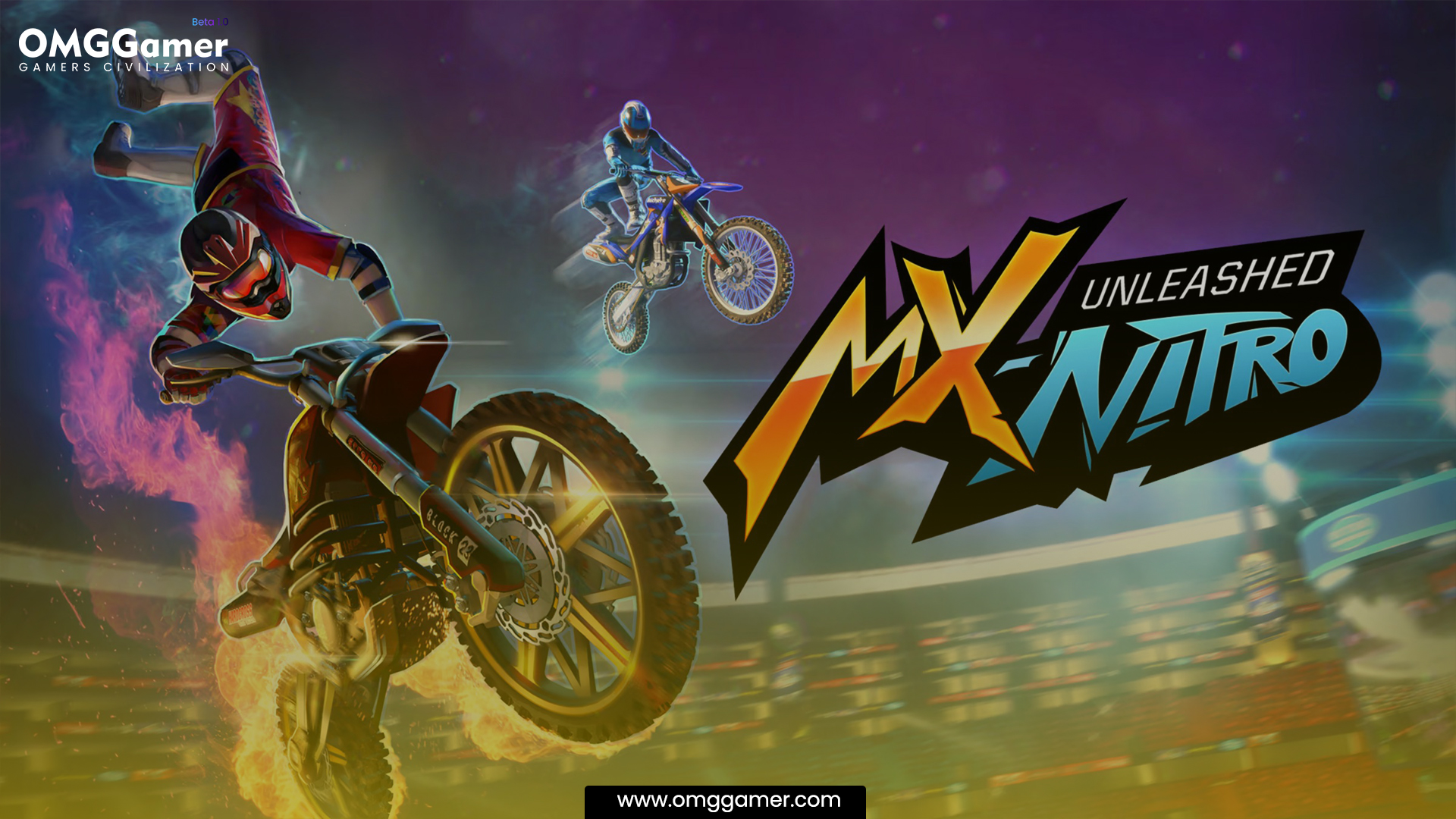
MX Unleashed, developed by Rainbow Studios and published by THQ in 2004 for the PlayStation 2, remains a benchmark for off-road motorcycle video games. It successfully balances arcade accessibility with deep simulation mechanics, offering a diverse array of vehicles, expansive environments, and a physics engine that captures the raw unpredictability of two-wheel racing.
When evaluating the vast library of off-road racing titles released during the sixth generation of consoles, several key elements elevate this particular release above its contemporaries. From its groundbreaking physics implementation to its extensive open-world track design, here are five foundational reasons why MX Unleashed stands out as the definitive dirt bike experience on the PlayStation 2.
1. The Revolutionary "Rhythm Racing" Physics Engine
The core of any great dirt bike game lies in how the motorcycle interacts with the terrain. Rainbow Studios implemented an advanced physics model that treated the motorcycle and the rider as two distinct, interacting entities. This separation allowed for nuanced weight distribution control using the dual-analog sticks—a mechanic that would go on to define the legendary MX vs. ATV franchise.
Unlike arcade racers where the bike sticks to the track surface like glue, MX Unleashed required players to actively manage traction, momentum, and body lean. Cornering was not merely a matter of steering left or right; it involved braking early, sliding the rear wheel through ruts, and accelerating smoothly out of the apex.
Furthermore, the game introduced sophisticated suspension reactions. Landing a massive triple jump required precise throttle control and pitch adjustment mid-air. If a rider landed nose-first or leaned improperly, the bike would violently buck, simulating real-world physics accurately. This steep yet rewarding learning curve established a high skill ceiling that kept players returning to master every track.
2. Unprecedented Open-World Exploration and Freeride Zones
During an era when most racing games strictly confined players to narrow, predetermined asphalt or dirt tracks, MX Unleashed broke boundaries by introducing massive open-world environments. Dubbed "Freeride" mode, these sprawling maps allowed players to explore vast landscapes ranging from desert canyons and dense forests to mountainous terrain without hitting invisible walls.
These environments were not just visual backdrops; they were functional playgrounds packed with natural obstacles. Players could scale jagged cliffs, launch off unexpected ridge lines, and carve their own lines through sand and mud.
This design philosophy anticipated the open-world craze that would later dominate gaming. It offered a profound sense of freedom that traditional circuit racing could not match, allowing players to practice stunts, test bike limits, and simply enjoy the scenery at their own pace.
3. Diverse Vehicle Classes Beyond Traditional Motocross
While the title highlights motocross bikes, MX Unleashed cleverly expanded its roster to include an impressive variety of alternative off-road machinery. This diversity prevented the gameplay loop from becoming monotonous and catered to fans of broader motorsports culture.
In addition to 125cc and 250cc two-stroke and four-stroke dirt bikes, players could pilot powerful ATVs, monstrous Supercross trucks, agile buggies, and even helicopters in specific modes. Each vehicle class possessed distinct handling characteristics, weight distribution, and acceleration curves.
| Vehicle Class | Primary Strength | Handling Profile | Ideal Environment |
|---|---|---|---|
| 125cc/250cc Motocross Bikes | Agility and air control | Highly responsive, requires momentum management | Tight Supercross tracks and technical trails |
| ATVs (Quads) | Straight-line stability and high-speed cornering | Heavier, less prone to tipping on rough terrain | Open desert maps and wide outdoor tracks |
| Supercross Trucks | Raw power and obstacle destruction | Heavy, momentum-driven, wider turning radius | Specialized stadium tracks and rough terrain |
| Buggies | Balanced speed and versatile suspension | Quick acceleration, forgiving jump landings | Mixed dirt tracks and open exploration zones |
This variety ensured that the single-player career mode and split-screen multiplayer matches remained fresh, offering different tactical approaches depending on the chosen machine.
4. Comprehensive Career Progression and Customization
A compelling sports racing title requires a structured path for single-player progression, and MX Unleashed delivered a robust career mode. Players started as relative unknowns competing in regional amateur events, steadily earning cash prizes and unlocking higher-tier championships, professional contracts, and factory sponsorships.
The economic loop was directly tied to customization. Earnings could be used to upgrade engine performance, suspension components, and exhaust systems, or to purchase cosmetic gear such as branded riding jerseys, helmets, pants, and bike liveries.
While the licensed gear and bike brands may not reflect the current 2026 roster of professional supercross, they accurately captured the authentic motocross culture of the mid-2000s. Managing bike upgrades introduced a strategic element to the progression, as players had to balance horsepower increases with manageable handling traits tailored to specific track layouts.
5. Engaging Multiplayer and Split-Screen Longevity
In the landscape of 2004 console gaming, local split-screen multiplayer was a vital metric of a game's long-term value. MX Unleashed excelled in this arena, supporting competitive multi-player modes that transformed living rooms into virtual racing pits.
Beyond standard multi-lap circuit races, the game featured dedicated multiplayer minigames and stunt competitions. Modes like "Snake," tag variants, and freestyle stunt showdowns encouraged social play and friendly rivalry.
The fluid physics engine translated exceptionally well to multiplayer, resulting in unpredictable, chaotic races where a single misplaced landing on the final lap could cost a player the entire race. This emergent gameplay created memorable moments that cemented the title's reputation as a couch-multiplayer essential for racing fans.
Comparative Overview of PS2 Off-Road Titles
To understand why MX Unleashed holds its esteemed position, it helps to examine how it compares to other notable off-road titles released on the PlayStation 2 platform during the same era.
| Game Title | Release Year | Primary Focus | Physics Style | Open-World Elements |
|---|---|---|---|---|
| MX Unleashed | 2004 | Motocross & Off-Road Variety | Semi-simulation / Dual-stick control | Expansive Freeride zones |
| MX vs. ATV Unleashed | 2005 | Expanded Crossover Racing | Evolved from MX Unleashed | Larger open worlds and compound maps |
| ATV Offroad Fury 2 | 2002 | Quad Racing & Stunts | Arcade-leaning suspension | Large exploratory terrain maps |
| Freekstyle | 2002 | Extreme Arcade Stunt Racing | Over-the-top, exaggerated physics | Linear stunt tracks |
While titles like ATV Offroad Fury focused heavily on quads and arcade flair, and Freekstyle leaned entirely into trick-based arcade action, MX Unleashed struck the ideal balance between authentic dirt bike simulation and accessible, high-speed entertainment.
Frequently Asked Questions
What makes the physics in MX Unleashed different from other PS2 racing games?
MX Unleashed separates the rider and the motorcycle into two independent entities controlled via the dual-analog sticks. This setup allows players to independently manage body weight distribution, bike tilt, and traction, resulting in a more tactile and realistic off-road handling model than standard button-steering games.
Can you play MX Unleashed in cooperative or multiplayer modes?
Yes, the game features robust split-screen multiplayer support for up to two players. It includes traditional circuit races, Supercross events, stunt competitions, and specialized mini-games designed for competitive local play.
Are there vehicles other than dirt bikes available to drive?
While dirt bikes are the primary focus, the game features a diverse vehicle roster including ATVs (quads), monster trucks, dune buggies, and even helicopters, each offering unique handling dynamics across different environments.
Does MX Unleashed feature an open-world exploration mode?
Yes, the game includes expansive "Freeride" maps that allow players to explore wide-open landscapes, discover hidden stunts, and practice riding techniques without the constraints of traditional race tracks or timers.
How does the career mode progression work?
Players begin in amateur regional championships and progress by winning races, earning prize money, and unlocking professional tiers. Earnings can be reinvested into bike performance upgrades and aesthetic rider and vehicle customization options.
Final Recommendation
For enthusiasts of retro racing titles or collectors exploring the PlayStation 2 library, MX Unleashed remains a mandatory playthrough. To get the most out of the experience today, players should utilize original hardware with a well-maintained DualShock 2 controller to properly appreciate the sensitivity of the dual-analog stick physics system. Whether diving into the sprawling Freeride maps for nostalgic exploration or tackling the rigorous championship career mode, MX Unleashed delivers an enduring, high-octane off-road experience that stands the test of time.