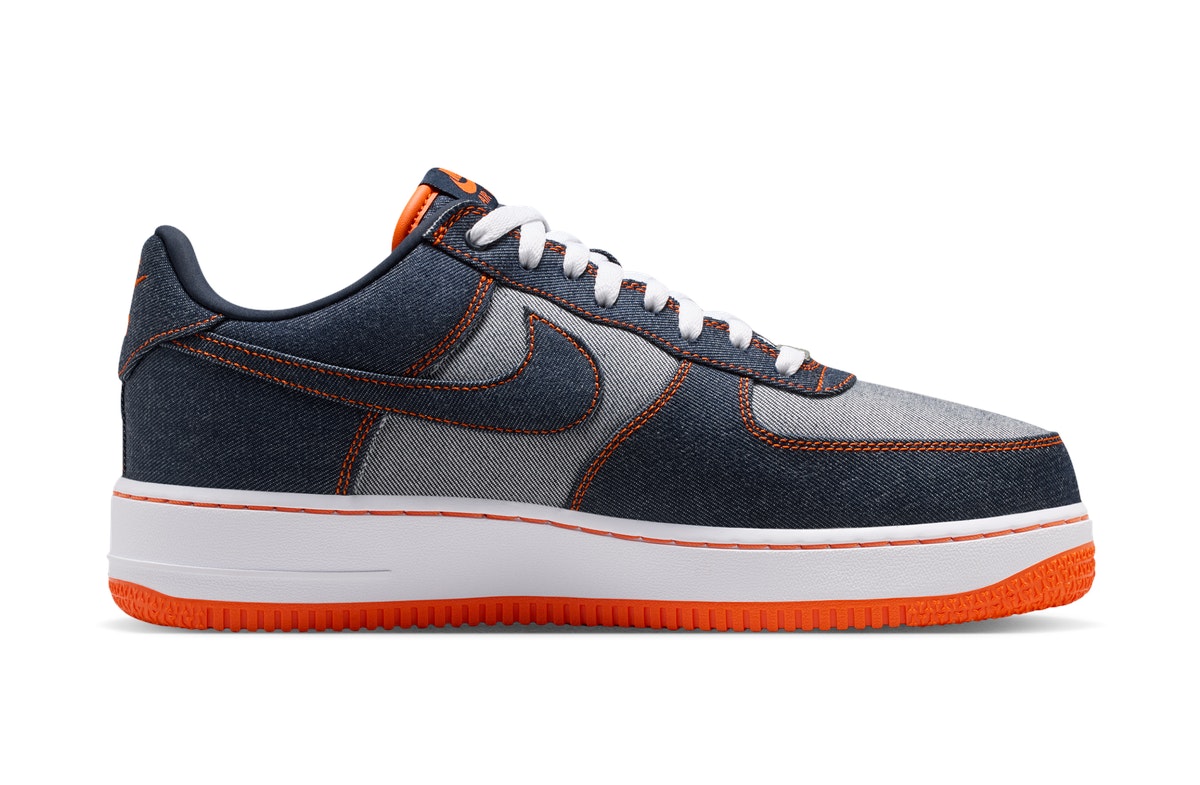
The Kobe Denim Air Force 1 fails to live up to its massive expectations due to its impractical material choice, inflated price point driven by the "Kobe Tax," and a fundamental disconnect between the "Mamba Mentality" performance legacy and a stiff, lifestyle-only silhouette that lacks modern ergonomic comfort for daily wear.
Since the relaunch of the Nike Kobe line in 2022 and its subsequent expansion through 2025, the sneaker community has seen a flurry of releases. However, the 2026 market landscape has become increasingly critical of "lifestyle" pivots for performance legends. While the silhouette carries the iconic name of Kobe Bryant, the shift toward a heavy denim construction on a 1982 basketball frame creates more problems than it solves for the average collector and wearer.
1. Material Impracticality and the "Indigo Bleed" Factor
Denim is a storied textile in American fashion, but it is notoriously difficult to master as a primary sneaker upper. The Kobe Denim Air Force 1 utilizes a high-ounce, raw-style denim that presents significant maintenance challenges. Unlike the traditional leather found on standard Air Force 1s, denim is a porous, absorbent material.
One of the primary complaints from early adopters in late 2025 and early 2026 is indigo transfer. Raw denim contains excess dye that frequently "bleeds" onto surrounding surfaces. For a sneaker featuring white midsoles or light-colored laces, this means the shoe often ruins its own aesthetic within the first few wears. Furthermore, if you wear light-colored socks, the interior lining of the Kobe Denim AF1 is likely to leave permanent blue stains on them.
From a technical cleaning perspective, denim is a nightmare compared to tumbled leather. On a standard AF1, a simple wipe with a damp cloth and mild detergent removes most surface dirt. On the Kobe Denim version, dirt becomes trapped within the weave of the fabric. Scrubbing the material often results in "fuzzing" or pilling of the fibers, permanently altering the texture and making the shoe look aged prematurely. In a 2026 market where "deadstock" looks are prized, the rapid degradation of denim is a significant drawback.
2. The Identity Crisis: Performance Legacy vs. Lifestyle Stagnation
Kobe Bryant’s legacy is built on the "Mamba Mentality"—a relentless pursuit of performance, efficiency, and technical perfection. This is why his signature line (the Kobe 4, 5, and 6) remains the gold standard for on-court performance sneakers even years after his passing.
The Air Force 1, however, is a lifestyle relic. While it began as a premier basketball shoe in 1982, it has long since been retired from competitive play. By putting Kobe’s branding on a stiff denim Air Force 1, Nike creates a fundamental identity crisis.
- The Disconnect: There is no "performance" in this shoe. The denim upper offers zero lateral support compared to modern synthetics or even high-quality leather.
- The Weight: Denim, especially when reinforced for shoe construction, adds unnecessary weight to an already heavy silhouette.
- The Cushioning: While the 2026 Kobe AF1 models occasionally feature updated drop-in midsoles, the denim version largely sticks to the standard encapsulated Air-Sole unit, which feels archaic compared to the Zoom Air setups found in Kobe’s actual performance shoes.
Collectors who buy "Kobe" shoes usually expect a certain level of technical innovation. The Denim AF1 offers none of that, making it feel less like a tribute to an athlete and more like a generic lifestyle product with a famous logo slapped on the heel.
3. The "Kobe Tax" and Inflated Retail Pricing
In the 2026 sneaker economy, retail prices have climbed steadily, but the Kobe Denim Air Force 1 carries a premium that is hard to justify. When you strip away the branding, you are looking at a standard Air Force 1 construction with a textile upper.
Typically, "Premium" (PRM) or "Special Project" (SP) Air Force 1s retail between $130 and $150. However, due to the Kobe branding and the "limited" nature of the denim release, retail prices have pushed toward the $170–$190 range. This $40–$50 "Kobe Tax" provides very little in the way of tangible value.
Price and Specification Comparison (2026 Market)
| Feature | Kobe Denim AF1 | Kobe AF1 Leather (Lakers Colorway) | Standard AF1 '07 |
|---|---|---|---|
| Upper Material | Heavyweight Indigo Denim | Tumbled/Smooth Leather | Synthetic/Action Leather |
| Retail Price | $175 | $150 | $115 |
| Weight (Size 10) | Approx. 18.5 oz | Approx. 16.8 oz | Approx. 16.2 oz |
| Breathability | Very Low | Moderate (Perforated Toe) | Moderate |
| Maintenance | High (Specialized kits needed) | Low (Wipe and go) | Low |
| Primary Tech | Encapsulated Air | Encapsulated Air | Encapsulated Air |
When comparing the specs, the Denim version is heavier, harder to clean, and more expensive. For the price of one pair of Kobe Denim AF1s, a consumer could almost buy two pairs of standard AF1s or a pair of actual performance Kobe 8 Protros, which offer significantly more value in terms of engineering and comfort.
4. Ergonomic Failures and Break-In Periods
One of the most overlooked aspects of the "hype" surrounding this shoe is the comfort—or lack thereof. The Air Force 1 is notorious for having a "brick-like" feel before it is broken in. When you replace the relatively flexible leather with rigid, multi-layered denim, the break-in period doubles.
The "pinch point" at the forefoot, where the shoe creases as you walk, is particularly aggressive on the Denim AF1. Because denim doesn't "give" like leather, it tends to create sharp folds that can dig into the top of the foot. Furthermore, the heel collar on the denim version is often stiffer to prevent the fabric from collapsing, leading to an increased risk of blisters during the first 10 to 15 wears.
In 2026, sneaker technology has advanced to a point where "comfort out of the box" is a standard expectation. Hype often blinds buyers to the physical reality of wearing the shoe. If a shoe stays in the box because it’s too uncomfortable to wear for more than four hours, it isn't worth the investment, regardless of the name attached to it.
5. Market Saturation and Diminishing Resale Value
The hype for Kobe products reached a fever pitch between 2023 and 2025. However, by 2026, the market has seen an influx of "Mamba" branded products. Nike's strategy to increase stock numbers and release more lifestyle variants has led to a saturation point.
The Kobe Denim Air Force 1 was positioned as a "must-have" collector's item, but market data suggests otherwise. Because the shoe is polarizing and lacks the timeless appeal of the "Varsity Maize" or "Varsity Purple" leather versions, its resale value has struggled to stay above retail.
- The Speculation Bubble: Many buyers in early 2026 bought pairs hoping for a "Kobe 6" style price surge. Instead, they found a market disinterested in bulky denim lifestyle shoes.
- The "Double-Down" Effect: With Nike releasing more Kobe Protros in 2026, the demand has shifted back to the performance models that Kobe actually wore on the court. The lifestyle AF1s are increasingly viewed as "filler" releases.
For those looking at sneakers as an investment, the Denim AF1 represents a high-risk, low-reward scenario. The high initial retail price leaves very little "meat on the bone" for secondary market growth, especially as the denim material naturally ages and loses its "new" appeal even while sitting in a box.
Structural and Aesthetic Limitations
Beyond the five primary reasons, there are aesthetic considerations that make this shoe a difficult "fit" for many wardrobes. Denim-on-denim (the "Canadian Tuxedo") is a difficult look to pull off, and wearing denim shoes with denim jeans often results in a clashing of textures and shades.
The Kobe Denim AF1 also lacks the signature sleekness associated with Kobe Bryant. Kobe’s design philosophy was always about being "low to the ground" and "sleek like a soccer boot." The AF1 is the antithesis of this—it is chunky, high-profile, and aggressive. The addition of denim only emphasizes this bulkiness, making the shoe feel clumsy rather than "Mamba-esque."
Technical Specifications to Consider
- Stitch Density: The denim version requires a higher stitch-per-inch (SPI) count to prevent the fabric from fraying at the seams. This adds internal friction points.
- Eyelet Durability: Metal eyelets are often used on denim models to prevent the fabric from tearing under lace pressure, which can add even more weight and change the classic AF1 silhouette profile.
- Lining Material: Many 2026 denim releases utilize a synthetic "tech-fleece" or nylon lining to combat the roughness of the denim, but this can lead to heat retention and "sweaty foot" syndrome.
Frequently Asked Questions
Does the Kobe Denim Air Force 1 run true to size?
Yes, like most Air Force 1s, the Kobe Denim version runs about a half-size large. However, due to the stiffness of the denim material, many users find that staying "true to size" (TTS) provides a necessary buffer for the rigid upper, whereas they might normally size down in leather versions.
How do I prevent the denim dye from bleeding onto the midsole?
Preventing "indigo bleed" is difficult. Some collectors apply a fabric protector spray immediately after unboxing, but this can change the texture of the denim. The most effective way is to avoid getting the shoes damp and to store them away from light-colored materials.
Is the Kobe Denim AF1 limited edition?
While it was marketed as a "Special Edition" release in 2025/2026, the production numbers were higher than the early Kobe Protro drops. In the current 2026 market, they are considered "attainable" rather than truly "limited," which impacts their long-term hype and value.
Can I play basketball in these since they have Kobe's name?
It is strongly discouraged. The Air Force 1 lacks the modern traction, lockdown, and impact protection required for contemporary basketball. The denim upper also lacks the breathability and flexibility needed for lateral movements on the court.
Is there a leather version that is a better alternative?
The Nike Air Force 1 Low "Kobe Bryant" in the White/Varsity Maize/Varsity Purple colorway (re-released in 2024/2025) is a far superior alternative. It uses classic leather construction that is easier to maintain and better honors the Lakers' aesthetic without the drawbacks of denim.
Final Recommendation
If you are a hardcore Kobe Bryant completionist, the Kobe Denim Air Force 1 may have a place on your shelf as a display piece. However, for the daily wearer or the value-conscious sneakerhead in 2026, the shoe is a skip. Between the maintenance headaches of raw denim, the lack of performance DNA, and the "Kobe Tax" pricing, your money is better spent on a pair of Kobe Protros (the 4, 5, or 6) or a classic leather Air Force 1 that will age more gracefully and provide better comfort. Prioritize the models that reflect the actual innovation of the Mamba line rather than lifestyle experiments that sacrifice function for a trendy material.