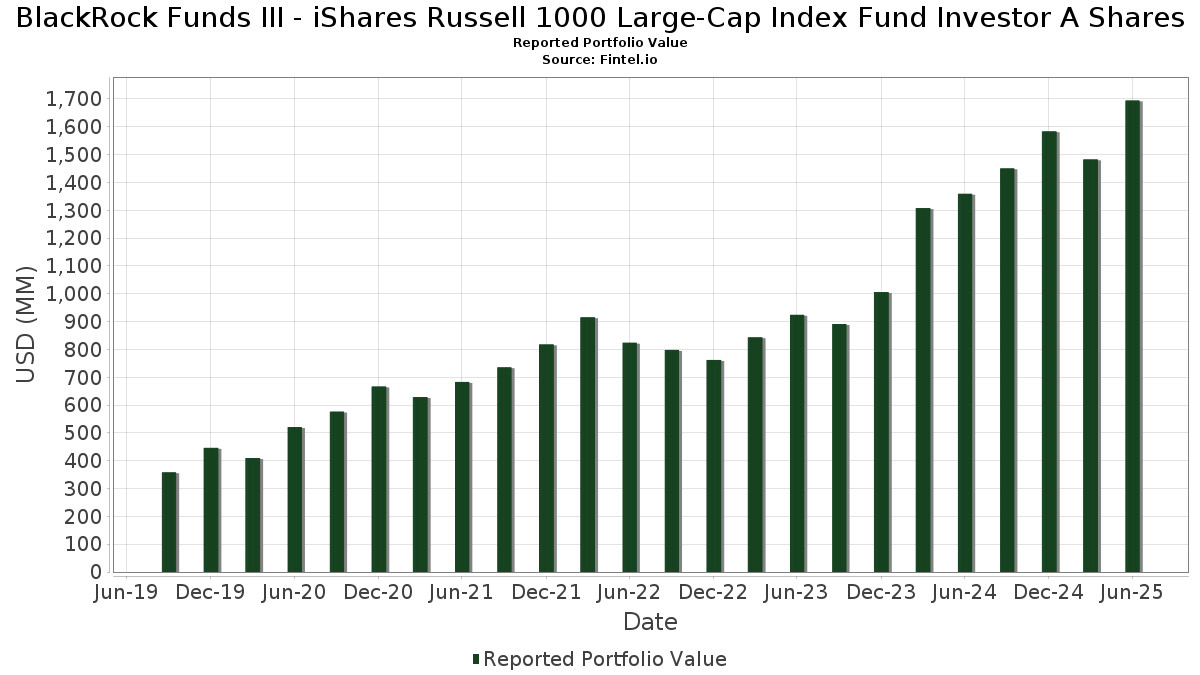
The Russell 1000 Value Index Fund tracks a major market benchmark composed of large-capitalization US equities exhibiting value characteristics—such as lower price-to-book ratios and lower forecasted growth values—offering investors targeted exposure to foundational, cash-generating sectors like financials, industrials, and healthcare.
Navigating the landscape of large-cap equity investing requires understanding not just broad market indexes, but also the specialized subsets that tilt portfolios toward specific investment styles. Among these, value investing remains a cornerstone philosophy for participants seeking tangible assets, steady dividend income, and lower volatility relative to high-flying growth segments. A Russell 1000 Value index fund serves as a primary vehicle for achieving this style-specific exposure.
To evaluate how these funds operate within a modern asset allocation framework, it is vital to examine their mechanics, construction rules, and practical role in a diversified portfolio. The following five facts provide a comprehensive look at the Russell 1000 Value Index Fund, breaking down its underlying mechanics, methodology, and structural characteristics.
1. Underlying Benchmark and Universe Definition
To understand any index fund, one must first examine the index it tracks. The Russell 1000 Value Index is a subset of the broader Russell 1000 Index, which measures the performance of the large-cap segment of the US equity universe.
The Parent Index: The Russell 1000
The Russell 1000 comprises approximately the top 1,000 US companies by total market capitalization. Together, these companies represent roughly 92% to 93% of the total investable US equity market. Rather than relying purely on a static list or subjective human committee, the index is governed by objective, rules-based methodology maintained by FTSE Russell.
The Style Split: Growth Versus Value
Once the Russell 1000 universe is established, component companies are evaluated based on style characteristics to determine whether they belong in the Growth index, the Value index, or a combination of both. FTSE Russell utilizes three primary variables to determine style orientation:
- Book-to-Price (B/P) Ratio: The primary metric for value characteristics, identifying companies trading at a discount relative to their net asset value.
- Medium-Term Growth Forecast: Evaluated via Institutional Brokers' Estimate System (IBES) consensus growth forecasts.
- Sales-to-Price (S/P) Ratio: Used historically to provide a secondary check on fundamental valuation.
Companies in the Russell 1000 are not necessarily split neatly into 50% growth and 50% value buckets. Instead, FTSE Russell uses a non-linear probability method. A company can be assigned 100% to the value index, 100% to the growth index, or—if its characteristics are mixed—split proportionally between both indexes. Consequently, an index fund tracking the Russell 1000 Value holds companies that exhibit pronounced value characteristics, weighted by their relative market capitalization within that style definition.
2. Sector Composition and Economic Tilts
Because the index relies on fundamental valuation metrics rather than sector quotas, its composition heavily reflects the prevailing economic realities of traditional industries. Investors looking at a Russell 1000 Value index fund will notice a distinct sectoral footprint that differs sharply from the technology-heavy Russell 1000 Growth Index.
Dominant Sectors
Historically, the Russell 1000 Value Index is heavily weighted toward sectors characterized by tangible assets, established cash flows, and mature business models. The most prominent sectors typically include:
- Financials: Banks, asset managers, insurance providers, and real estate investment trusts (REITs) frequently make up the largest weight in the index. These businesses often trade at lower price-to-book multiples, particularly during economic cycles where interest rate dynamics favor net interest margins.
- Industrials: Manufacturing, aerospace, defense, transportation, and engineering firms provide substantial representation, reflecting capital-intensive operations and steady industrial demand.
- Healthcare: Large pharmaceutical manufacturers, medical device companies, and healthcare providers often trade at valuation discounts relative to high-growth biotechnology firms, placing them firmly within the value spectrum.
- Energy: Integrated oil and gas majors, exploration companies, and pipeline operators contribute significant dividend yields and commodity-linked cash flows.
Contrast With Growth Indexes
Understanding sector tilt is essential for risk management. While a growth index fund may allocate 40% to 50% of its assets to Information Technology and Consumer Discretionary sectors, a Russell 1000 Value index fund generally limits high-multiple tech exposure, substituting it with steady dividend-payers. This structural difference means the fund behaves differently during various market regimes, often outperforming when interest rates rise or when market sentiment shifts toward earnings certainty over speculative future expansion.
3. Passive Reconstitution Mechanics
A critical feature of any index fund is how it handles changes over time. The Russell 1000 Value Index undergoes an annual reconstitution process every June, a scheduled event that maintains the integrity and style purity of the benchmark.
The Annual Reconstitution Process
During the annual reconstitution in June, FTSE Russell ranks all eligible companies by market capitalization and evaluates their style scores. This process ensures that companies whose valuations have shifted significantly—such as a former growth stock whose price has declined, or a value stock that has experienced a massive multiple expansion—are appropriately reallocated.
| Reconstitution Phase | Action Taken | Primary Objective |
|---|---|---|
| May Ranking Day | Market caps and style scores calculated across the eligible US equity universe. | Establish baseline data without market disruption. |
| Preliminary Lists | FTSE Russell publishes preliminary reconstitution additions and deletions. | Allow institutional participants and portfolio managers to review changes. |
| Effective Date (Late June) | Index weights are officially updated after market close on the final Friday of June. | Align index holdings precisely with updated market and style metrics. |
Impact on Index Funds
For an index fund tracking the Russell 1000 Value, the annual reconstitution requires careful portfolio trading. The fund manager must buy newly added value stocks and sell securities that have migrated out of the index or shifted entirely into the growth category. Because the reconstitution date is known months in advance, high trading volumes occur on the effective date, though institutional managers utilize sophisticated execution strategies to minimize transaction costs and tracking error.
4. Investment Characteristics: Dividends and Volatility
Investors frequently select a Russell 1000 Value index fund to achieve specific structural outcomes within their portfolios, primarily regarding cash flow generation and downside protection.
Dividend Yield Profile
Because value companies are typically mature enterprises with established earnings rather than early-stage firms reinvesting all capital for rapid expansion, they return a significant portion of cash to shareholders via dividends. Consequently, a Russell 1000 Value index fund generally exhibits a higher aggregate dividend yield than the broader market index or its growth counterpart. This makes these funds popular among income-focused investors, retirees, and those utilizing dividend reinvestment strategies to compound long-term wealth.
Volatility and Risk Metrics
Value stocks often display lower price volatility during market downturns compared to growth stocks, whose valuations depend heavily on earnings expected far in the future. When discount rates rise—reducing the present value of distant cash flows—growth equities often experience sharper corrections. Value equities, supported by tangible book values and current earnings, can offer a buffer during macroeconomic contraction. However, this defensive posture can also lead to underperformance during aggressive bull markets driven by speculative technology rallies.
5. Implementation Vehicles and Cost Structures
Investors can access the Russell 1000 Value Index through various pooled investment vehicles, primarily mutual funds and Exchange-Traded Funds (ETFs). Understanding the structural differences, expense ratios, and tax efficiencies of these vehicles is vital for optimizing net returns.
Mutual Funds Versus ETFs
- Index Mutual Funds: Offered by major asset management firms, these funds price once per day after market close. They are well-suited for automated recurring investments and retirement accounts.
- Exchange-Traded Funds (ETFs): Traded on public exchanges throughout the trading day, ETFs offer intraday liquidity and often utilize an in-kind creation/redemption mechanism that minimizes capital gains distributions, enhancing tax efficiency in taxable brokerage accounts.
Cost Considerations
Because index funds manage portfolios passively by mirroring a pre-existing rulebook rather than employing active research analysts, their expense ratios are generally low. When selecting a Russell 1000 Value index fund, investors should examine:
- Expense Ratio: The annual management fee expressed as a percentage of assets under management. Competitive index funds in this asset class often feature very low expense ratios.
- Tracking Error: The divergence between the fund's performance and the actual Russell 1000 Value Index return. Low tracking error indicates effective portfolio management and tight replication.
- Tax Efficiency: Particularly relevant for taxable accounts, the fund's ability to minimize realized capital gains during portfolio turnover and reconstitution.
Frequently Asked Questions
What is the difference between the Russell 1000 Value Index and the S&P 500 Value Index?
While both indexes focus on large-cap US value equities, they use different methodology and provider families. The Russell 1000 Value Index covers approximately 1,000 large-cap companies and uses a probabilistic style assignment method where stocks can be split between growth and value. The S&P 500 Value Index is restricted to the 500 large-cap companies in the S&P 500 and assigns each constituent entirely to either growth or value based on strict fundamental cutoffs. Consequently, their sector weights and specific holdings can vary.
Are dividends from a Russell 1000 Value index fund guaranteed?
No. While value indexes generally feature higher average dividend yields due to the nature of mature companies, underlying portfolio constituents can reduce, suspend, or eliminate their dividend payments at any time based on financial performance, economic conditions, or board decisions.
How often are holdings updated in a Russell 1000 Value index fund?
The underlying index is reconstituted once per year in June, at which point membership and style weightings are comprehensively updated. However, the index fund manager may also execute minor adjustments throughout the year to account for corporate actions, mergers, spin-offs, and continuous cash flow management from investor subscriptions and redemptions.
Is a Russell 1000 Value index fund suitable for a retirement portfolio?
Many long-term investors use value index funds as a core holding to establish large-cap equity exposure with a tilt toward dividends and lower relative volatility. Whether it fits a specific retirement plan depends on an investor's overall asset allocation strategy, risk tolerance, and time horizon. Consulting a qualified financial professional can help determine appropriate portfolio weightings.
Practical Next Actions
To incorporate this asset class effectively, review your current portfolio allocation to determine your existing exposure to large-cap value equities. If you identify a gap or want to balance a growth-heavy portfolio, compare available index funds and ETFs tracking the Russell 1000 Value Index based on expense ratios, liquidity, and account compatibility. Ensure that your selection aligns with your broader financial plan and tax strategy before executing transactions.