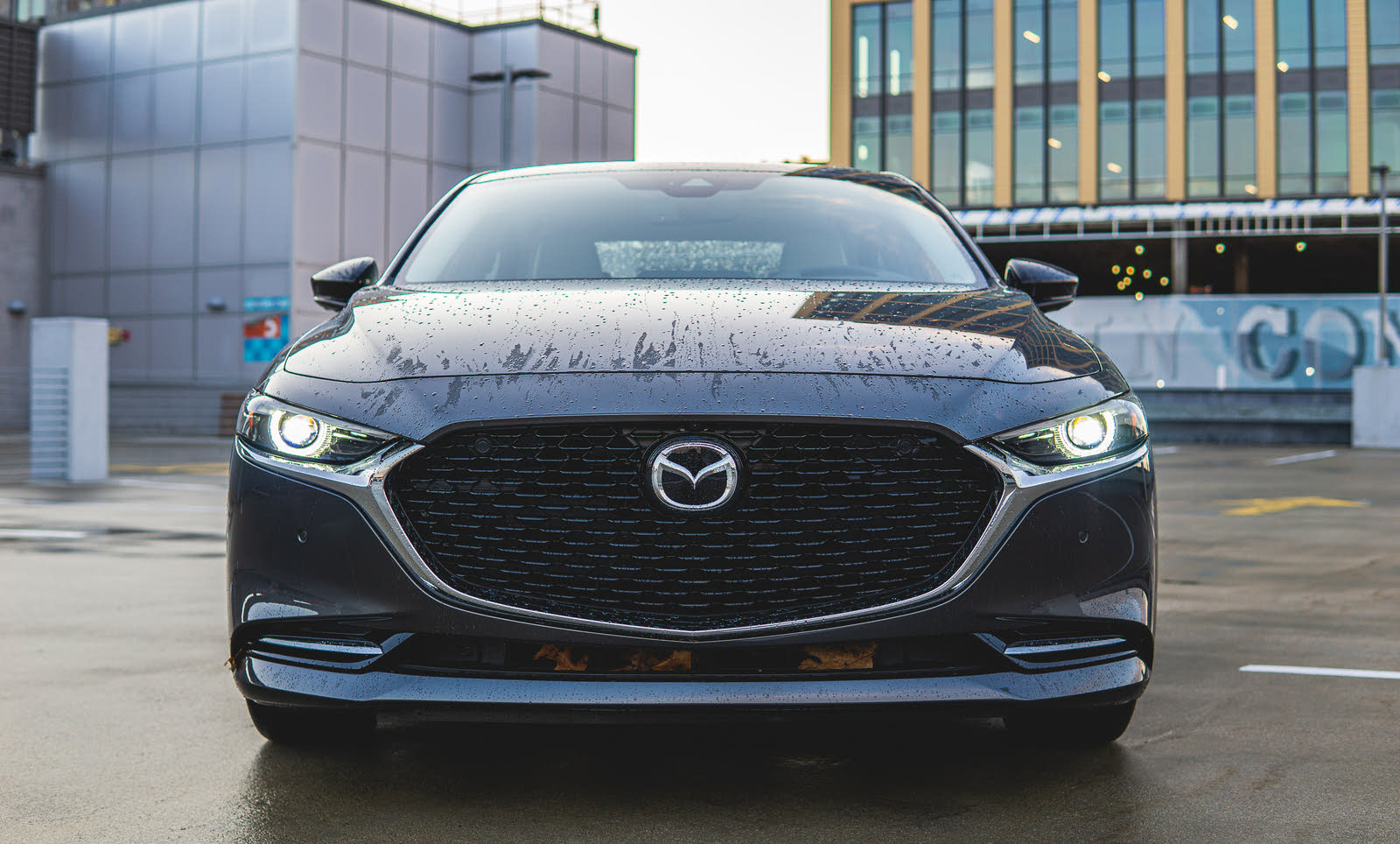
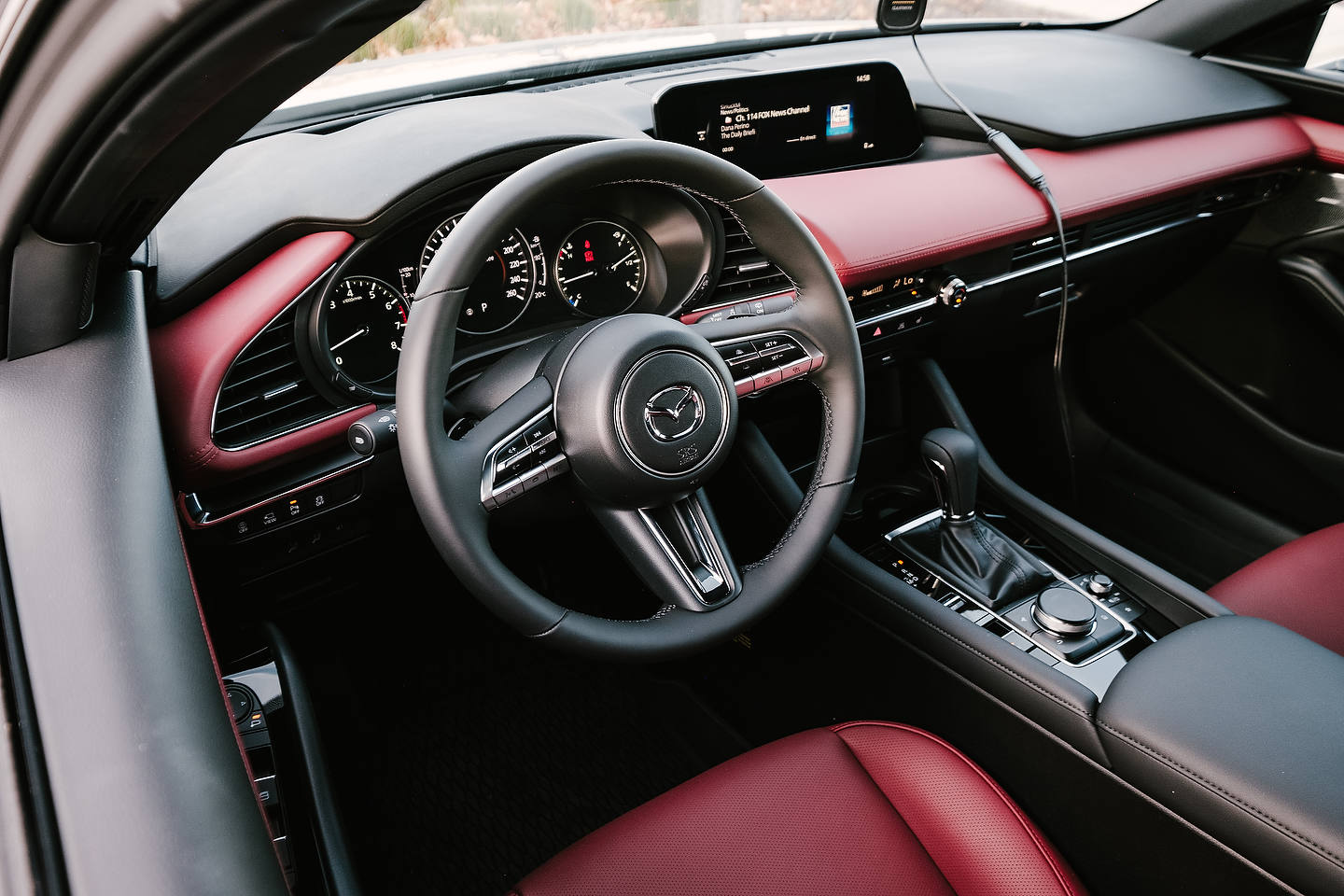
The 2021 Mazda 3 2.5 Turbo achieves a tested 0–60 mph acceleration time of 5.6 seconds in independent instrumented testing. Powered by a 2.5-liter Skyactiv-G turbocharged engine outputting up to 250 horsepower and 320 lb-ft of torque via an i-Activ all-wheel-drive system, it bridges the gap between compact hot hatches and entry-level luxury sport sedans.
Understanding the 5.6-Second Benchmark
When Mazda introduced the 2.5 Turbo powertrain to the fourth-generation Mazda 3 for the 2021 model year, it fundamentally shifted the car’s market positioning. Rather than resurrecting the raw, aggressive Mazdaspeed3 badge of the past, Mazda targeted refined velocity. Automotive testing outlets, including Car and Driver, recorded 0 to 60 mph sprints as low as 5.6 seconds for the sedan and 5.7 seconds for the hatchback, validating that this compact commuter had evolved into a serious performance contender.
Achieving a sub-6-second time in a compact vehicle without a dual-clutch transmission or an aggressive launch control program relies heavily on low-end engine torque and traction management. The 2021 Mazda 3 Turbo achieves its quick launch by delivering maximum torque very low in the rev range, coupled with standard all-wheel drive that eliminates wheelspin off the line.
Engine Architecture and Fuel Dynamics
The core engine responsible for this performance snapshot is Mazda’s Skyactiv-G 2.5T inline four-cylinder engine. Featuring a Dynamic Pressure Turbocharger, the system uses a butterfly valve to restrict exhaust flow at low RPMs, accelerating exhaust gas velocity through smaller ports to spool the turbine faster—virtually eliminating turbo lag.
- Low RPM (< 1,620 RPM)
- Narrow Exhaust Valve Ports
- Fast Gas Velocity
- Instantaneous Boost
- High RPM (> 1,620 RPM)
- Fully Open Exhaust Valves
- Maximum Flow Volume
- Peak Horsepower
The output of this powerplant depends heavily on the octane rating of the fuel used in the tank:
- 93 Octane (Premium Gasoline): Yields 250 horsepower at 5,000 RPM and 320 lb-ft of torque at 2,500 RPM.
- 87 Octane (Regular Gasoline): Yields 227 horsepower at 5,000 RPM and 310 lb-ft of torque at 2,000 RPM.
The engine management ECU uses knock sensors to detect fuel quality continuously. On 93-octane fuel, ignition timing is advanced to maximize power output, delivering the specific threshold necessary to hit the published 5.6-second 0–60 mph sprint. On 87 octane, acceleration drops slightly to roughly 6.0–6.2 seconds due to pulled timing.
Transmission and All-Wheel-Drive Traction
Unlike many performance rivals that utilize modern eight-speed automatics, dual-clutch transmissions (DCT), or six-speed manuals, the 2021 Mazda 3 2.5 Turbo relies exclusively on Mazda’s Skyactiv-Drive 6-speed torque-converter automatic transmission.
- Engine: 320 lb-ft Torque
- Skyactiv-Drive 6-Speed Automatic
- i-Activ AWD (Electromechanical Clutch)
- Front Wheels
- Rear Wheels (Up to 50% Torque Transfer)
While six gears may seem conservative by modern standards, the transmission features torque-converter lockup across all six gears for nearly 90% of operation. This mechanical lockup provides direct gear engagement similar to a manual transmission, reducing energy loss and sharpening throttle response.
Power is directed to the road via Mazda’s predictive i-Activ all-wheel-drive system. Using 27 sensor inputs—ranging from steering angle and ambient temperature to wiper status and individual wheel speeds—the system calculates road conditions 200 times per second. During hard acceleration from a complete stop, the electromechanical center coupling engages instantly, directing up to 50% of available engine torque to the rear axle. This prevents front wheelspin and propels the chassis forward with minimal drama.
Complete 2021 Mazda 3 Performance Specifications
The table below outlines the comprehensive performance parameters for both the Sedan and Hatchback configurations of the 2021 Mazda 3 2.5 Turbo.
| Specification Parameter | 2021 Mazda 3 2.5 Turbo Sedan | 2021 Mazda 3 2.5 Turbo Hatchback |
|---|---|---|
| Engine Type | Skyactiv-G 2.5L Turbocharged Inline-4 | Skyactiv-G 2.5L Turbocharged Inline-4 |
| Horsepower (93 / 87 Octane) | 250 hp @ 5,000 RPM / 227 hp @ 5,000 RPM | 250 hp @ 5,000 RPM / 227 hp @ 5,000 RPM |
| Torque (93 / 87 Octane) | 320 lb-ft @ 2,500 RPM / 310 lb-ft @ 2,000 RPM | 320 lb-ft @ 2,500 RPM / 310 lb-ft @ 2,000 RPM |
| Transmission | 6-speed Automatic with Sport Mode | 6-speed Automatic with Sport Mode |
| Drivetrain | i-Activ All-Wheel Drive (AWD) | i-Activ All-Wheel Drive (AWD) |
| 0–60 mph Acceleration | 5.6 seconds | 5.7 seconds |
| Quarter-Mile Time | 14.1 seconds @ 99 mph | 14.2 seconds @ 98 mph |
| Top Speed | 134 mph (Governor limited) | 134 mph (Governor limited) |
| Curb Weight | 3,379 lbs | 3,393 lbs |
| Braking (70–0 mph) | 169 feet | 172 feet |
| EPA Fuel Economy (City/Hwy/Comb) | 23 / 32 / 27 mpg | 23 / 31 / 26 mpg |
Launch Dynamics and Track Acceleration Characteristics
Achieving a 5.6-second 0–60 time in daily driving conditions requires an understanding of how the car responds to launch techniques.
Brake-Torque Launching
Unlike track-focused performance vehicles equipped with dedicated launch control modes, the Mazda 3 uses standard brake-torqueing (holding the brake pedal down while loading the torque converter with the accelerator).
- Engagement: With traction control left on, press the brake firmly with your left foot.
- Pre-loading: Apply throttle up to approximately 2,000–2,200 RPM.
- Release: Release the brake quickly.
Because the engine hits its maximum 320 lb-ft of torque at just 2,500 RPM, brake-torqueing builds boost pressure before vehicle motion begins. The i-Activ AWD system routes power rearward immediately, preventing front tire scrub and launching the vehicle off the line smoothly.
0-60 MPH Acceleration Profile:
- 0.0s: Brake Release & Boost Engagement
- 1.0s: 18 mph (Peak Torque 320 lb-ft Applied)
- 2.5s: 35 mph (1-2 Shift Point)
- 4.0s: 48 mph (Linear Power Band Hold)
- 5.6s: 60 mph (Crossed in 2nd Gear Target Range)
In-Gear Acceleration and Passing Power
Where the 2.5 Turbo excels is in mid-range passing acceleration. The 30–50 mph and 50–70 mph sprint times measure 2.8 seconds and 3.6 seconds respectively. Because peak torque arrives low in the rev range, highway merges rarely force the 6-speed automatic into multi-gear downshifts, resulting in swift, quiet acceleration without engine strain.
Sedan vs. Hatchback: Performance Distinctions
While both body styles share identical powertrains, minor differences affect their performance and driving feel:
- Aerodynamics & Weight: The sedan has a slightly sleeker aerodynamic profile and weighs roughly 14 pounds less than the hatchback. This minimal weight advantage gives the sedan a slight edge in 0–60 mph tests (5.6 seconds versus 5.7 seconds).
- Rear Sightlines & Rigidity: The hatchback's structural C-pillar design alters weight distribution slightly toward the rear axle, which improves rear wheel traction on slick surfaces but adds minor blind spots during aggressive maneuvering.
- Suspension Tuning: Both models utilize MacPherson struts up front and a torsion-beam rear suspension. Mazda tuned the rear torsion beam to balance stiffness and ride comfort, minimizing body roll during hard acceleration launches while maintaining a quiet cabin.
How the 2021 Mazda 3 Turbo Compares to Competitors
To assess the 5.6-second performance benchmark, it is helpful to compare the 2021 Mazda 3 Turbo against its key competitors in the compact performance segment.
0-60 mph Acceleration Comparison (Seconds):
| Vehicle | Acceleration |
|---|---|
| 2021 Volkswagen Golf GTI (DSG) | 5.4s |
| 2021 Mazda 3 2.5 Turbo AWD | 5.6s |
| 2021 Subaru WRX (Manual) | 5.6s |
| 2021 Honda Civic Si | 6.8s |
Volkswagen Golf GTI (MK7.5 / MK8)
The Golf GTI with a dual-clutch transmission (DSG) posts 0–60 times around 5.4 seconds. While slightly faster off the line than the Mazda 3 due to quick transmission shifts, the front-wheel-drive GTI can suffer from axle tramp and wheelspin on wet pavement. The Mazda 3 Turbo offers superior inclement-weather acceleration thanks to its standard AWD.
Subaru WRX (2021 Model Year)
The 2021 Subaru WRX with a 6-speed manual matches the Mazda 3’s 5.6-second 0–60 mph run, but requires an aggressive high-RPM clutch drop to achieve it. In normal driving conditions, the Mazda 3 Turbo delivers its power with far less mechanical strain and noise.
Honda Civic Si
The Honda Civic Si focuses on lightweight handling and manual engagement rather than raw straight-line speed. With a 0–60 time hovering around 6.8 seconds, the Civic Si is noticeably slower in straight-line acceleration than the 2.5 Turbo Mazda 3.
Long-Term Maintenance and Reliability Considerations
For drivers evaluating the 2021 Mazda 3 2.5 Turbo on the pre-owned market, maintaining its 5.6-second acceleration performance requires adhering to specific maintenance steps.
Recommended Maintenance Matrix (2.5 Turbo Powertrain):
| Component / Service | Maintenance Interval |
|---|---|
| Synthetic Engine Oil (5W-30) | Every 5,000 - 7,500 miles |
| Spark Plugs (NGK Laser Irid) | Every 40,000 miles (Turbo requirement) |
| Rear Differential Fluid | Every 30,000 miles (Under heavy load) |
| Intake Valve Cleaning | Every 50,000 miles (Direct Injection) |
Spark Plug Wear
Turbocharged engines put higher stress on spark plugs. Mazda specifies replacing the spark plugs on the 2.5T every 40,000 miles to prevent ignition misfires under high boost pressure. Worn spark plugs cause timing pull, degrading performance and increasing 0–60 times beyond 6 seconds.
Heat Management and Oil Quality
The turbocharger relies on clean engine oil for both cooling and lubrication. Using high-quality 5W-30 full synthetic engine oil and changing it regularly prevents oil carbonization within the turbo center housing. Allowing the engine to idle for 30 seconds after hard driving helps cool the turbocharger components before shutdown.
Direct Injection Carbon Accumulation
Because the Skyactiv-G 2.5T uses direct fuel injection, fuel does not wash over the intake valves. Over time, carbon deposits can build up on the intake valves, reducing airflow and power output. Periodic intake valve cleaning helps preserve the engine's original power delivery.
Frequently Asked Questions
Can the 2021 Mazda 3 Turbo achieve 5.6 seconds on regular gas?
No. To reach 5.6 seconds, the engine requires 93-octane fuel to output 250 hp and 320 lb-ft of torque. When running on 87-octane regular gasoline, the ECU retards ignition timing to prevent engine knock, reducing output to 227 hp and extending 0–60 times to roughly 6.0–6.2 seconds.
Is the 2021 Mazda 3 2.5 Turbo available with a manual transmission?
No. Mazda fits the 2.5 Turbo engine exclusively with the Skyactiv-Drive 6-speed torque-converter automatic transmission and i-Activ AWD. A 6-speed manual transmission is available only on specific naturally aspirated, front-wheel-drive Mazda 3 trims.
Why doesn't the Mazda 3 Turbo feature a dual-clutch transmission?
Mazda designed the Mazda 3 2.5 Turbo as a refined premium compact rather than a track-focused hot hatch. The 6-speed torque-converter automatic delivers smooth low-speed operation, low maintenance requirements, and long-term durability while handling the engine's high 320 lb-ft torque output.
How does the 0–60 time compare to the non-turbo Mazda 3?
The non-turbo 2.5L Mazda 3 (outputting 186 hp) posts 0–60 times between 7.0 and 7.5 seconds, depending on whether it is configured with front-wheel drive or all-wheel drive. The 2.5 Turbo drops that sprint time by nearly two full seconds.
Does turning off traction control lower the 0–60 mph time?
Generally, no. Because the i-Activ AWD system automatically manages torque distribution to eliminate wheelspin, leaving traction control enabled produces consistent launch times. Disabling dynamic stability control can lead to slight wheel slip on imperfect surfaces, which may increase acceleration times.
Final Buyer Recommendations
The 5.6-second 0–60 mph capability of the 2021 Mazda 3 2.5 Turbo demonstrates that compact commuter cars can deliver impressive straight-line speed alongside modern interior refinement. If you are shopping for a pre-owned 2021 model, keep the following guidance in mind:
- Verify Fuel History: Confirm whether previous owners routinely used 93-octane fuel. Regular maintenance records showing consistent oil changes are essential for preserving turbocharger longevity.
- Inspect Differential and Transfer Case: Ensure the rear differential and AWD power takeoff unit (PTU) have been serviced if the vehicle is near or past 40,000 miles.
- Check Spark Plugs: Plan to replace spark plugs promptly if the car is approaching its 40,000-mile service interval to maintain maximum boost and responsiveness.