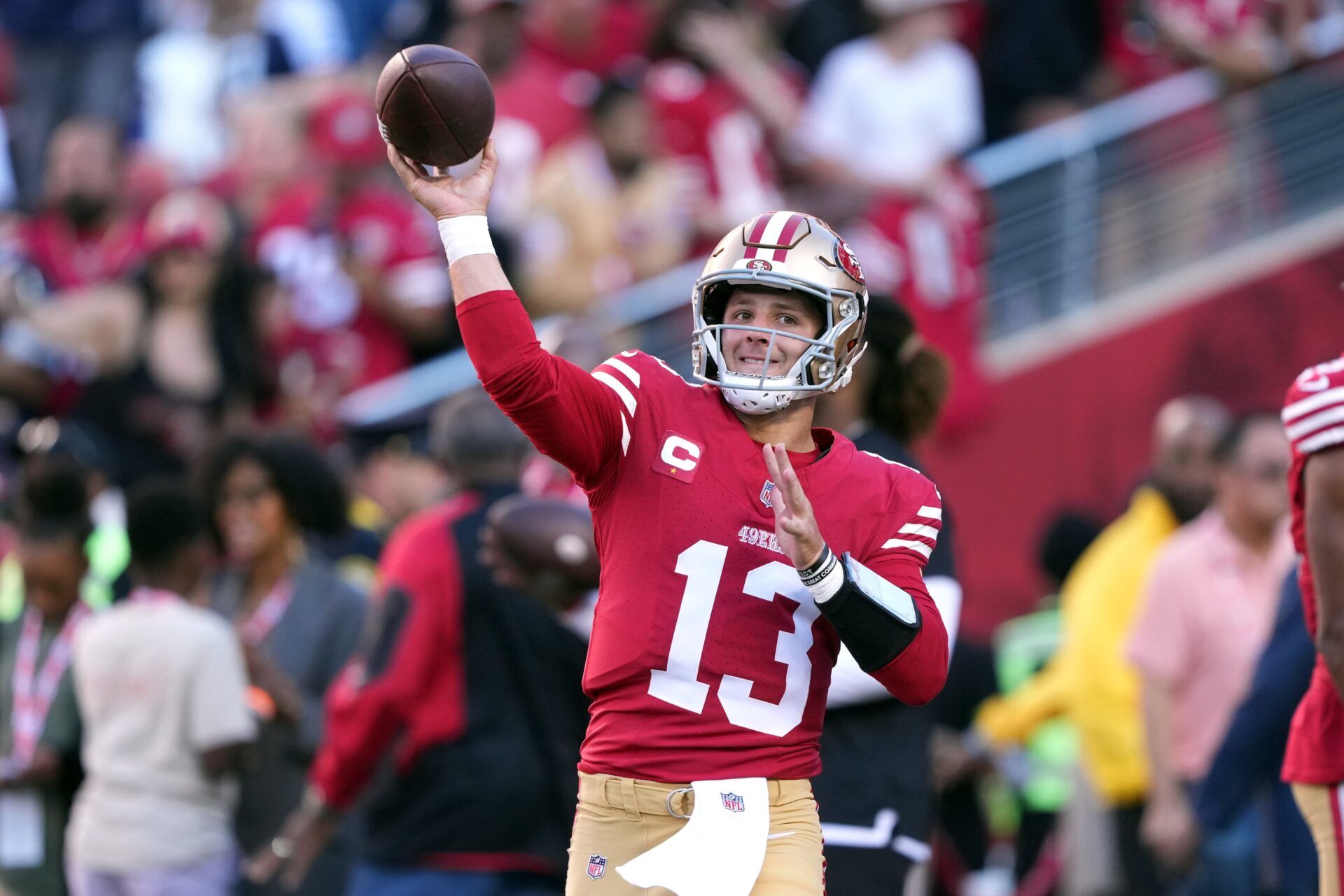
San Francisco 49ers quarterback Brock Purdy experienced a series of "stingers" during the 2023 NFL season, most notably during high-stakes games against the Arizona Cardinals and Baltimore Ravens. While these nerve-related injuries caused immediate concern, they are common in contact sports and typically involve temporary compression or stretching of the brachial plexus nerves.
The health of a franchise quarterback is the single most important variable in a team’s success. For the San Francisco 49ers, the emergence of Brock Purdy as a top-tier starter was briefly clouded by a recurring shoulder and neck issue known as a "stinger." As we look at the quarterback's status in 2026, understanding the mechanics of that 2023 injury window provides essential context for his long-term durability and the medical protocols the 49ers have since refined.
A "stinger" (sometimes called a "burner") is more than just a sore shoulder; it is a neurological event. To understand the update on Purdy’s health, one must understand the anatomy of the injury, the specific hits that triggered his symptoms, and the clinical pathway used to ensure his safe return to the field.
The Anatomy of a Stinger: What Happened to Brock Purdy?
In the medical community, a stinger is technically referred to as a brachial plexus injury. The brachial plexus is a complex network of nerves that sends signals from the spinal cord to the shoulder, arm, and hand. These nerves (specifically the C5 through T1 nerve roots) are responsible for both motor function (movement) and sensory feedback (feeling).
When Brock Purdy suffered his stingers in late 2023, he was experiencing one of two physical mechanisms:
- Compression: The head is driven toward the shoulder, "pinching" the nerve roots as they exit the spinal canal.
- Traction/Stretching: The head is forced away from the shoulder, stretching the nerves beyond their normal range.
For Purdy, the hits he took—particularly the one involving Baltimore Ravens’ Kyle Hamilton—resulted in an acute "zinging" or burning sensation that radiated down his throwing arm. This is a classic symptom of the nerve being momentarily shocked. While the sensation is intense, it is usually transient. However, the 49ers' medical staff had to be particularly cautious because Purdy suffered two such incidents in back-to-back weeks, raising the specter of "chronic burner syndrome," which can lead to long-term muscle weakness if not managed properly.
Chronology of the 2023 Injury Incidents
To understand Purdy's current 2026 health profile, we must revisit the specific timeline of the 2023 season. This period was the first real test of his physical resilience following his recovery from UCL surgery on his elbow earlier that year.
Week 15 vs. Arizona Cardinals
During a routine play, Purdy took a hit that caused him to head to the blue medical tent. He described a "numbness" in his left (non-throwing) shoulder. He missed only a few plays before returning to the game, as the symptoms subsided quickly. At the time, it was viewed as a minor "burner" that wouldn't affect his status for the following week.
Week 16 vs. Baltimore Ravens
On Christmas night, the stakes were much higher. In the fourth quarter of a physical game, Purdy was sacked and landed awkwardly. This time, the stinger affected his right side—his throwing shoulder. Unlike the previous week, Purdy was pulled from the game and did not return, with Sam Darnold finishing the contest. Head coach Kyle Shanahan later confirmed that while Purdy could have potentially gone back in, the team prioritized his long-term safety given the recurring nature of the nerve irritation.
Medical Evaluation and Diagnostic Protocols
When an NFL quarterback suffers a stinger, the "update" process involves a series of rigorous neurological tests. The 49ers' medical team, led by team physicians and specialists from Stanford Medicine, follows a specific protocol to determine if the player is at risk for permanent damage.
The evaluation starts with strength testing. The medical staff looks for "focal weakness," specifically in the deltoid, biceps, and external rotators of the shoulder. If a player can’t "hold" their arm against resistance, they are immediately disqualified from returning to play. In Purdy’s case, his strength returned almost immediately after the Ravens game, which is the primary indicator that the nerve was merely irritated, not damaged.
Secondary testing often involves an MRI or an EMG (Electromyogram). An MRI is used to ensure there is no structural damage to the cervical discs (like a herniation) that could be causing the nerve compression. An EMG, which measures the electrical activity of muscles, is usually reserved for cases where symptoms persist for more than a few days. In 2023, Purdy’s imaging remained "clean," allowing him to avoid the "chronic" label and continue his path toward the Super Bowl.
Comparative Analysis: Stingers vs. Structural Nerve Damage
It is helpful to compare the "stinger" Purdy faced with other common football injuries to understand the severity and recovery expectations.
| Injury Type | Primary Structure Affected | Typical Recovery Time | Long-Term Risk |
|---|---|---|---|
| Stinger / Burner | Brachial Plexus (Nerve) | Minutes to Days | Low, unless recurrent |
| Cervical Radiculopathy | Spinal Nerve Root | 2–6 Weeks | Moderate (Disc issues) |
| Shoulder Subluxation | Labrum / Capsule (Joint) | 1–4 Weeks | High (Instability) |
| UCL Tear (Elbow) | Medial Collateral Ligament | 6–9 Months | High (Surgical) |
As shown, the stinger is on the lower end of the recovery spectrum, but its recurrence is what concerns trainers. If the sheath surrounding the nerve (the epineurium) becomes inflamed, the nerve becomes more sensitive to future contact.
Prevention and Equipment Adjustments
Since the 2023 incidents, the 49ers and Brock Purdy have implemented several preventative measures that remain in place today in 2026. These updates to his daily routine and equipment are designed to minimize the "neck-to-shoulder" compression that causes stingers.
Custom Shoulder Pads
Purdy transitioned to more specialized, low-profile shoulder pads with increased "cantilever" support. This design helps distribute the force of a hit across the chest and back rather than allowing the pad to collapse directly onto the AC joint and the underlying brachial plexus.
Neck Strengthening (Cervical Isometrics)
One of the most effective ways to prevent stingers is to strengthen the muscles that stabilize the head and neck. Purdy’s off-season training now includes heavy emphasis on the upper trapezius and sternocleidomastoid muscles. A stronger neck acts as a shock absorber, preventing the violent side-to-side snapping of the head that stretches the nerves.
The Q-Collar
While Purdy has experimented with various protective gear, many players in his position have looked into the Q-Collar, a device that applies light pressure to the jugular veins. While primarily marketed for concussion prevention by increasing blood volume in the cranium, some theorize that the increased stabilization of the neck area can indirectly assist in reducing the mechanical strain that leads to burners.
The Role of Play-Calling in Injury Prevention
Kyle Shanahan’s offensive scheme also plays a role in the "49ers quarterback update." To protect Purdy from the high-velocity hits that cause stingers, the 49ers have leaned into a "quick-game" passing attack. By reducing the number of seven-step drops, Purdy spends less time in the "danger zone" where unblocked edge rushers can deliver the blindside hits that most frequently cause nerve injuries.
Furthermore, the 49ers’ emphasis on the run game and play-action keeps defenders "on their heels," preventing the pinned-back-ears pass rush that leads to the specific type of folding-up hits Purdy took against Baltimore. In 2026, this remains a cornerstone of the 49ers' offensive philosophy: protecting the quarterback through scheme as much as through padding.
Long-Term Outlook for Purdy’s Health
As of 2026, Brock Purdy has shown no lingering effects from the stingers suffered in 2023. This is consistent with medical literature on the subject, which suggests that if a player avoids "chronic burner syndrome" through proper rest and neck strengthening, the nerves recover fully.
The primary concern for any quarterback with a history of stingers is the potential for stenosis, a narrowing of the spinal canal. However, there has been no reporting to suggest Purdy has this congenital condition. Players like Peyton Manning faced career-threatening nerve issues because of disc herniations and stenosis, whereas Purdy’s issues were purely mechanical and external.
The 49ers' training staff continues to monitor Purdy’s "baseline" strength. Before every game, Purdy undergoes a brief manual muscle test to ensure his neurological output is at 100%. This proactive approach has been instrumental in his continued availability as the team's starter.
Frequently Asked Questions
What exactly is a shoulder stinger in football?
A stinger is a common injury where the nerves in the neck and shoulder (the brachial plexus) are compressed or stretched. This causes an immediate, sharp, burning pain or a "pins and needles" sensation that travels down the arm. It is usually temporary but can cause brief muscle weakness.
Did Brock Purdy's stinger affect his throwing motion?
While the stinger itself does not damage the mechanics of the shoulder joint, the resulting muscle weakness can make it difficult to grip the ball or generate velocity. In Purdy's 2023 case, the weakness was temporary, and he regained full throwing capability within days of the incidents.
How do the 49ers treat a stinger during a game?
The initial treatment involves a neurological assessment on the sideline. Trainers check for "grip strength" and the ability to shrug the shoulders. If there is any lingering numbness or weakness, the player is held out. If the symptoms clear completely within minutes, the player is often allowed to return, provided their neck range of motion is full and pain-free.
Are stingers related to concussions?
No, they are separate injuries. A concussion is a brain injury caused by impact, while a stinger is a peripheral nerve injury. However, because both often involve a hit to the head or neck area, players are usually screened for concussions simultaneously when they report stinger symptoms.
Can a stinger lead to permanent damage?
In rare cases, if a player suffers repeated, severe stingers without adequate recovery time, it can lead to permanent nerve damage or chronic muscle atrophy. This is why the 49ers were cautious with Purdy in 2023; preventing the "second hit" before the first one has healed is critical for long-term health.
Why do some people call it a "burner" instead of a "stinger"?
The terms are used interchangeably. "Burner" refers to the hot, burning sensation felt in the arm, while "stinger" refers to the sharp, electric shock sensation. Both describe the same underlying nerve irritation.
Practical Recommendation for 49ers Fans and Analysts
When monitoring Brock Purdy’s status—or any quarterback’s update regarding nerve injuries—the key indicator to watch is practice participation. If a player is a "limited participant" due to a stinger, it usually means the team is waiting for the nerve inflammation to subside to prevent a recurrence. If Purdy is "full" in practice, it indicates that his strength tests are back to baseline and the risk of a repeat injury is no higher than for any other player on the field.
For those tracking Purdy's career in 2026, his ability to maintain his weight and upper-body muscle mass is the best evidence of his neurological health. Chronic nerve issues almost always manifest as visible muscle wasting in the shoulder or triceps. As long as Purdy maintains his physical frame and throwing velocity, the stingers of 2023 can be viewed as a resolved chapter in his professional development.