360 Security Cloud is China’s leading SaaS-based cybersecurity ecosystem, developed by 360 Digital Security Group. It utilizes a massive "Security Brain" powered by big data and AI to provide real-time threat detection, endpoint protection, and managed security services for over 1.2 billion individual users and millions of Chinese enterprises.
The landscape of digital security in China has undergone a radical transformation. Moving away from traditional, standalone antivirus software, the industry has shifted toward a cloud-native, service-oriented architecture. At the forefront of this shift is 360 Security Cloud (360安全云), a platform that has redefined how small, medium, and large enterprises (SMEs) protect their digital assets in an era of sophisticated persistent threats and complex regulatory requirements.
The Evolution of 360 Security Cloud
The origins of 360 Security Cloud lie in the disruptive "free antivirus" model introduced by Qihoo 360 in the late 2000s. However, as of 2026, the platform has matured far beyond simple malware scanning. The current iteration represents a strategic pivot toward Security as a Service (SaaS). This evolution was driven by the realization that traditional hardware-based security was too expensive and complex for the average Chinese business to maintain.
In the early 2020s, 360 launched its "Digital Security for All" initiative, aiming to provide enterprise-grade protection to SMEs at a fraction of the traditional cost. This was achieved by moving the heavy lifting—the data processing, threat analysis, and intelligence gathering—to the cloud. By 2026, this infrastructure has become a central pillar of China’s national digital defense strategy, integrating not just endpoint protection but also network security, data security, and cloud security into a single, unified interface.
The Core Architecture: The 360 Security Brain
The heart of 360 Security Cloud is the 360 Security Brain (360安全大脑). This is not merely a database of virus signatures but a massive, distributed artificial intelligence system that processes trillions of data points daily.
Big Data and Threat Intelligence
360 maintains one of the world’s largest repositories of security data. This includes:
- Sample Libraries: Billions of unique file samples, both malicious and benign.
- Domain and URL Data: Real-time tracking of malicious domains and phishing sites across the Chinese internet.
- Behavioral Data: Patterns of how software interacts with operating systems, allowing the AI to identify zero-day attacks that have no known signature.
In 2026, this "Brain" is further enhanced by 360’s proprietary large language models (LLMs), which allow for automated incident response and natural language querying for security administrators. When a new threat is detected on a single endpoint in Shanghai, the "Brain" can immunize the entire 360 Security Cloud network across China within seconds.
Cloud-Native SaaS Delivery
Unlike legacy systems that required on-premise servers and manual updates, 360 Security Cloud operates on a cloud-native model. This allows for:
- Instant Deployment: Users can protect their entire network by installing a lightweight agent that connects directly to the 360 cloud.
- Scalability: Whether a company has five employees or five thousand, the cloud infrastructure scales resources automatically.
- Real-Time Updates: Security policies and threat intelligence are updated continuously without requiring user intervention or system restarts.
Solutions for Different Segments
360 Security Cloud is partitioned into distinct service tiers to meet the diverse needs of the Chinese market, ranging from individual consumers to government agencies.
For Individual Users and Soho
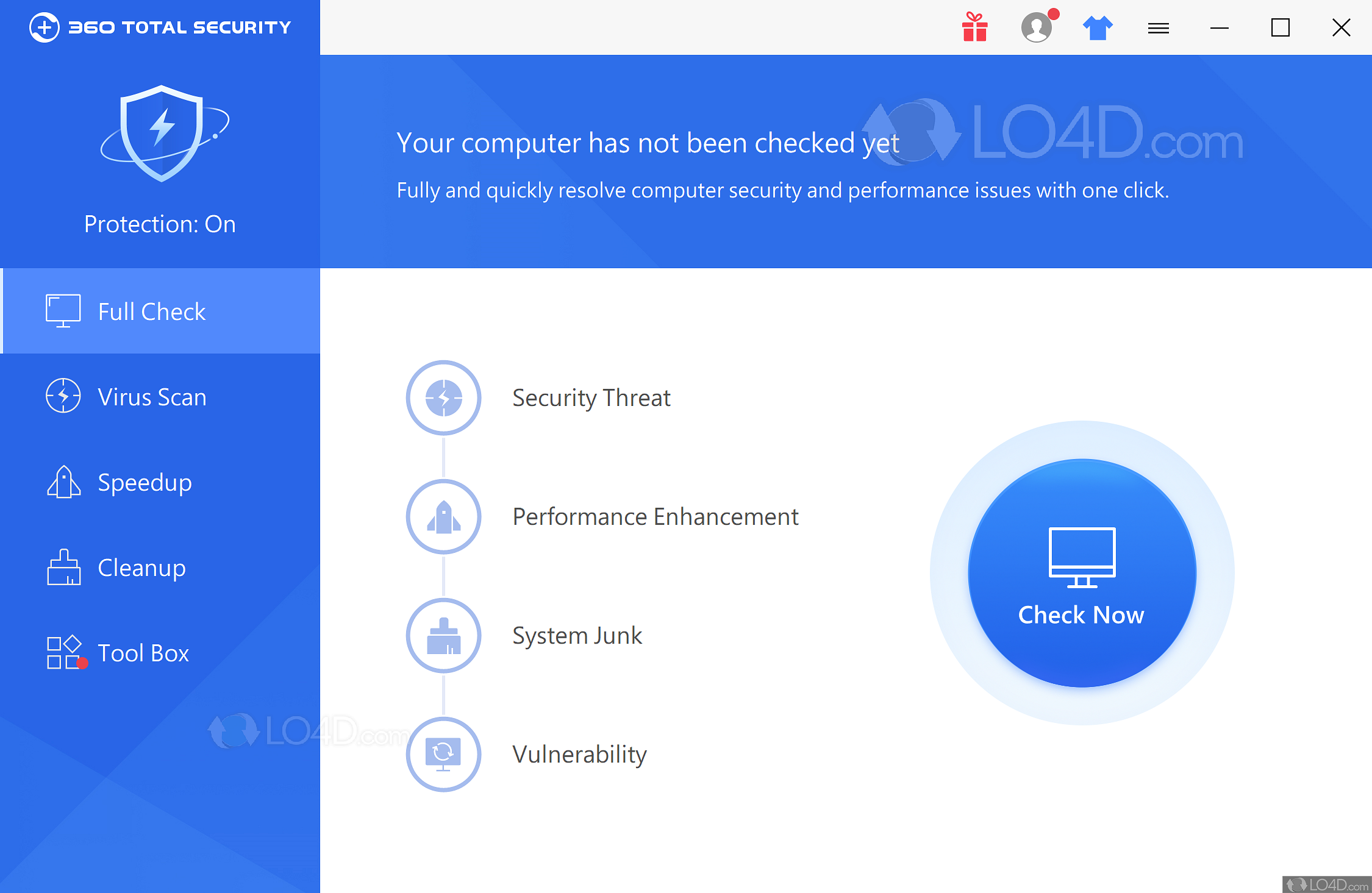
For the individual, 360 Security Cloud manifests as the familiar 360 Total Security or 360 Security Guard. In 2026, these tools focus heavily on privacy protection and system optimization. With the rise of deepfake scams and sophisticated phishing in China, the cloud service provides real-time verification of video calls and web links, leveraging the cloud's processing power to analyze metadata that a local computer could not handle.
For Small and Medium Enterprises (SMEs)
The SME version of 360 Security Cloud is perhaps the most significant disruption in the Chinese market. Historically, Chinese SMEs were vulnerable because they lacked the budget for a dedicated Security Operations Center (SOC). 360 solved this by offering a "Public Cloud" security model. It provides:
- Asset Management: Automatic discovery and tracking of all hardware and software on the network.
- Vulnerability Patching: Centralized management of Windows and Linux patches, ensuring that no machine is left exposed.
- Ransomware Protection: A combination of behavioral analysis and automatic file backup to the 360 cloud, ensuring data can be recovered even if an endpoint is compromised.
For Large Enterprises and Government
For entities with strict data residency requirements, 360 offers Private Cloud and Hybrid Cloud deployments. These versions allow the organization to keep their data on-site while still benefiting from the threat intelligence updates pushed from the 360 Security Brain. This is particularly critical for compliance with China’s Multi-Level Protection Scheme (MLPS 2.0).
Technical Specifications and Compatibility
360 Security Cloud is designed to operate within the unique technological ecosystem of China. This includes support for both international and domestic hardware and software.
| Feature | Specification / Support |
|---|---|
| Operating Systems | Windows (XP through 11), macOS, Linux (CentOS, Ubuntu, Debian), and domestic OS (UOS, Kylin). |
| Deployment Model | Public SaaS, Private Cloud, or Hybrid Cloud. |
| Core Technologies | QVM AI Engine, Cloud Proactive Defense, System Repair Engine. |
| Network Support | Fully optimized for China Telecom, China Unicom, and China Mobile backbones. |
| Compliance | MLPS 2.0 (Grade 3 and above), Data Security Law (DSL), PIPL. |
| Management | Web-based console with mobile app integration for real-time alerts. |
Key Advantages of 360 Security Cloud in the Chinese Market
Understanding why 360 dominates the Chinese landscape requires looking at the specific localized advantages the platform offers.
Localization and Language
Global security vendors often struggle with the nuances of Chinese software behavior. Many legitimate Chinese applications exhibit behaviors that Western antivirus might flag as "adware" or "grayware." 360 Security Cloud has a deep understanding of the local software ecosystem, resulting in a significantly lower false-positive rate for Chinese users compared to international competitors.
Integration with National Infrastructure
360 works closely with Chinese regulatory bodies. This ensures that their cloud services are always in sync with the latest legal requirements regarding data export and cybersecurity reporting. For a business operating in China, using a locally compliant cloud provider simplifies the annual cybersecurity audits required by the government.
Advanced Persistent Threat (APT) Detection
360 has gained a reputation for its "APT Research Center," which has exposed numerous high-level cyber-espionage campaigns targeting Chinese infrastructure. The intelligence gathered from these high-stakes investigations is fed directly into the 360 Security Cloud, giving commercial users access to the same level of protection used by state-level actors.
Challenges and Considerations
While 360 Security Cloud is a powerhouse, users must navigate certain aspects of the ecosystem:
- Ad-Supported Legacy: The consumer version of 360 has historically been associated with pop-up advertisements. While the enterprise "Security Cloud" versions are clean and professional, the brand still carries this reputation among some users.
- Resource Usage: While the cloud-based model reduces the load on the CPU for scanning, the initial synchronization and real-time monitoring of large networks can require significant bandwidth.
- Privacy Trade-offs: To provide cloud-based protection, certain metadata and file hashes must be uploaded to 360’s servers. While 2026 regulations (PIPL) strictly govern this, businesses must be comfortable with this level of data sharing with the provider.
Implementing 360 Security Cloud: A Step-by-Step Approach
For a business looking to deploy 360 Security Cloud in 2026, the process is streamlined to minimize downtime.
Step 1: Requirements Audit
Determine the number of endpoints (servers, PCs, mobile devices) and the type of data being handled. If you are a government-affiliated entity, you will likely need the Private Cloud version to satisfy MLPS 2.0 requirements.
Step 2: Account Registration and Console Setup
Registration typically requires a Chinese business license (Unified Social Credit Code). Once verified, the administrator gains access to the web-based management console.
Step 3: Deployment of the "Lightweight Agent"
The agent can be deployed via:
- Manual Download: For small teams.
- Group Policy (AD): For Windows-based enterprises.
- Scripted Install: For Linux server environments.
Step 4: Policy Configuration
Administrators define "Protection Groups." For example, the finance department may have stricter USB-blocking policies than the creative team. The 360 Security Cloud allows for granular control over peripheral usage, web filtering, and software installation.
Step 5: Monitoring and Response
Once the "Security Brain" begins receiving data from the endpoints, the dashboard provides a real-time "Security Score" for the entire organization. In 2026, many of the remediation steps—such as isolating a suspected infected laptop from the network—can be automated based on pre-defined triggers.
Frequently Asked Questions
Is 360 Security Cloud free for businesses?
There is a "Basic" tier of the 360 Security Cloud that is free for small businesses with a limited number of endpoints. However, advanced features such as EDR (Endpoint Detection and Response), deep data forensics, and priority threat intelligence feeds require a paid subscription.
Can 360 Security Cloud be used outside of China?
While 360 has an international version (360 Total Security), the full "360 Security Cloud" ecosystem—complete with its deep integration into Chinese threat intelligence and domestic OS support—is specifically optimized for the mainland China market. International users can access the software, but they may not experience the same level of localized support or infrastructure speed.
Does 360 Security Cloud support HarmonyOS and other domestic systems?
Yes. By 2026, 360 has achieved full compatibility with the "Xinchuang" (Information Technology Application Innovation) ecosystem. This includes Huawei’s HarmonyOS, as well as desktop operating systems like UOS (Unity Operating System) and Kylin, which are widely used in Chinese government and financial sectors.
How does 360 handle ransomware in 2026?
360 uses a "three-tier" defense against ransomware:
- Prevention: Blocking the entry of known ransomware via email and web filters.
- Detection: Identifying the encryption behavior of unknown ransomware in real-time and killing the process.
- Recovery: Automatically backing up critical documents to a secure cloud vault when suspicious activity is detected, allowing for one-click restoration.
Is the data stored in 360 Security Cloud secure?
360 is subject to China’s stringent Data Security Law. In 2026, all data processed by the Security Cloud is encrypted both in transit and at rest. For enterprises with extreme security needs, the hybrid deployment model ensures that sensitive file metadata never leaves the local network.
Final Recommendation
For any organization operating within mainland China in 2026, 360 Security Cloud is a vital consideration. Its strength lies in its unmatched local threat intelligence and its ability to provide sophisticated security tools through a simple, cost-effective SaaS model.
Small businesses should start with the free or entry-level SaaS tier to immediately improve their defense against common malware and ransomware. Larger organizations, particularly those in the "critical infrastructure" sectors, should look toward the 360 Security Brain integration for private clouds to ensure both top-tier protection and full regulatory compliance. As the digital landscape continues to evolve, the ability to outsource complex threat analysis to a centralized "Brain" is no longer a luxury—it is a necessity for digital survival.