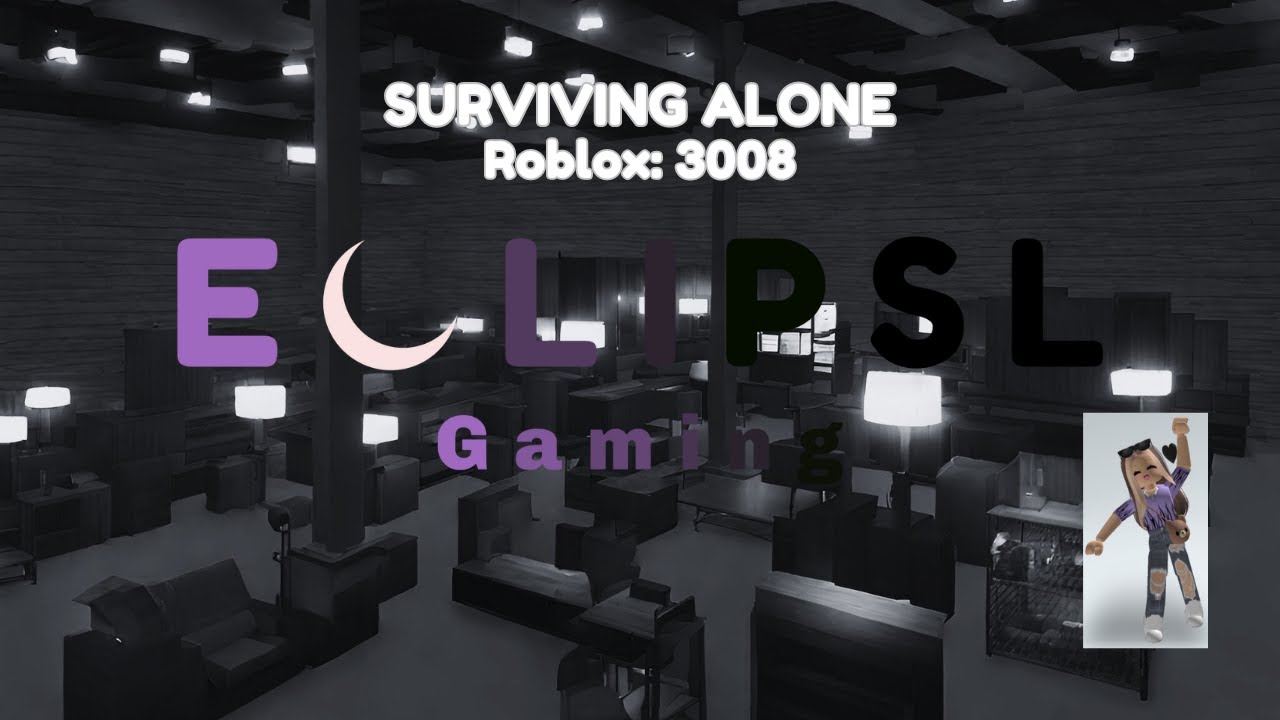
3008 on Roblox is a survival horror experience inspired by SCP-3008, an infinite IKEA retail store containing anomalous, hostile employees and an endless labyrinth of Swedish furniture. Players must scavenge for food, build elaborate bases, and avoid danger when the lights go out.
The concept of horror within digital spaces has evolved far beyond traditional jump-scare hallways and haunted mansions. In recent years, virtual worlds built on user-generated platforms have carved out unique niches that subvert mundane, everyday environments into psychological labyrinths. Among these experiences, 3008 on the Roblox platform stands out as a masterclass in atmospheric tension. Based loosely on the popular internet mythos of SCP-3008—an infinite furniture store operating under anomalous geometric and physical rules—the game turns the bright, clean, and consumer-friendly aisles of a Swedish retail warehouse into a silent, haunting struggle for survival.
Understanding 3008 requires looking past its blocky Roblox aesthetic to examine how environmental design, scarcity mechanics, and social cooperation create genuine dread. Rather than relying on gore or rapid-fire scares, the experience relies on a quiet, creeping isolation punctuated by the sudden arrival of unnatural entities. This examination explores the core mechanics, survival strategies, architectural challenges, and psychological appeal of navigating the infinite furniture store.
The Origin and Premise of the Infinite Retail Nightmare
To understand the atmosphere of 3008, one must first examine its conceptual roots. The SCP Foundation community popularized the idea of a retail outlet whose interior is infinitely larger than its exterior. Entrances close once a person steps inside, and finding an exit becomes an impossibility governed by non-Euclidean geometry. In the Roblox adaptation developed by a user known as UglyBurger0, this premise translates into a sprawling, procedurally generated map that mimics a massive warehouse and showroom filled with couches, beds, lamps, and flat-pack boxes.
Players spawn into this colossal store with a simple, stark reality: they are trapped. The store is divided into standard zones reminiscent of real-world furniture hubs, featuring show-rooms, market halls, self-serve areas, and cavernous high-ceilinged warehouses stacked with wooden pallets. However, there are no cashiers, no other shoppers, and no way out. The overarching objective is deceptively straightforward—survive day after day by scavenging for sustenance, constructing defensible shelters, and evading the humanoid staff members who become aggressive when the store closes.
The genius of this setup lies in the familiarity of the environment. Most players have visited large furniture stores in real life, experiencing mild disorientation among the maze-like displays. 3008 takes that minor, mundane anxiety and scales it up to infinity. The fluorescent overhead lights buzz softly, the arrows on the floor point toward exits that lead only to more aisles, and the sheer scale of the building instills an immediate sense of smallness and vulnerability.
The Cycle of Day and Night: Light as a Lifeline
Survival in 3008 is dictated by a strict day-night cycle that governs both player behavior and environmental danger. Time progression is crucial to master, as failing to prepare for the transition between phases almost always results in elimination.
During the day phase, the store is illuminated by bright overhead fluorescent lighting. Employees—tall, featureless, crudely drawn humanoid figures wearing blue and yellow uniforms—wander the aisles in a docile state. They do not attack unless provoked or until night falls. This daytime period is the window of opportunity for players. It must be spent exploring uncharted sectors of the store, gathering food and drink items scattered across shelves and display kitchens, and dragging furniture pieces back to a designated base location.
| Phase | Lighting State | Employee Behavior | Recommended Player Actions |
|---|---|---|---|
| Day | Fully Illuminated | Docile / Passive | Scavenge food, transport furniture, build base structures, explore |
| Dusk | Dimming / Transition | Restless / Alert | Secure entry points, stockpile supplies inside the base, group up |
| Night | Total Darkness | Aggressive / Hostile | Maintain silence, hide, defend against breaches, avoid lights |
When dusk approaches, the overhead lights flicker and shut off completely, plunging the infinite store into pitch blackness. Concurrently, the employees undergo a psychological and behavioral shift. Their passive wandering ceases, and they begin hunting for players with relentless determination. They can track player movement, break through poorly constructed barricades, and wander into player bases if structural integrity is compromised. Navigating the dark aisles without a flashlight or structural shelter is exceptionally dangerous, turning a casual exploration game into a tense exercise in stealth and hide-and-seek.
Scavenging and Base Building Mechanics
Because there are no pre-built safe zones, players must construct their own refuges using the very inventory that populates the store. This introduces a robust physics-based sandbox element to the survival loop. Almost every item of furniture—sofas, mattresses, bookshelves, tables, and partitions—can be picked up, rotated, and moved across vast distances.
Building a secure base requires careful architectural planning. Simply stacking a few chairs together is insufficient against aggressive employees who possess pathfinding capabilities and brute strength. Successful survival groups typically employ several structural strategies:
- Elevated Platforms: Building bases high up on top of tall shelving units or constructing second-story platforms using flat table tops prevents ground-level employees from reaching the players directly.
- Double-Walled Barricades: Lining walls with thick, heavy wardrobes or multiple layers of couches absorbs structural damage and blocks line-of-sight, reducing the chance of employees detecting movement inside.
- Hidden Entrances: Utilizing removable roof panels or convoluted maze-like entryways allows players to slip inside their base while confusing the pathfinding logic of pursuing entities.
Simultaneously, players must manage hunger and thirst meters. Consuming food items restores vital statistics, but supplies are finite within any given sector. As players strip nearby areas of edible goods, they are forced to venture further into uncharted territory during subsequent days, increasing the risk of getting lost in the endless aisles.
The Psychological Horror of Mundane Spaces
What separates 3008 from standard monster-survival games is its reliance on liminal space horror. Liminal spaces are transitional locations—empty hallways, deserted parking lots, and closed stores—that evoke a sense of quiet unease because they are designed for human activity but devoid of human presence.
In 3008, the horror is ambient. Walking through a pristine bedroom display set under humming fluorescent lights when no other players are around creates a profound sense of isolation. The vast scale of the store means that a player can wander for ten or twenty minutes without encountering another soul, hearing only the distant footsteps of an employee or the echoing mechanical hum of the building.
When combat or flight does occur, it lacks the cinematic bombastic nature of traditional action games. The employees do not roar or wield complex weapons; they simply give chase with outstretched arms, sometimes uttering deadpan, customer-service-oriented phrases in synthesized voices. This juxtaposition of mundane retail culture with inescapable mortal peril creates a surreal, darkly humorous, yet genuinely unsettling atmosphere.
Social Dynamics and Multiplayer Cooperation
While 3008 can be experienced as a lonely solo trial, it truly shines as a multiplayer collaborative sandbox. Servers typically support dozens of players who must decide whether to cooperate, form mega-communities, or operate as independent nomads.
Working in a group drastically changes the gameplay loop. Division of labor emerges organically:
- Specialist builders engineer complex multi-room fortresses out of modular kitchen units.
- Scavenge teams fan out across different quadrants of the map, communicating via text or voice chat to map out locations of high-value food items.
- Defense squads stay behind to maintain structural integrity, patch up holes in the walls during night attacks, and rescue stranded wanderers.
However, multiplayer also introduces chaos. Poorly constructed bases built by inexperienced players can attract employees to neighboring camps. Griefers occasionally attempt to sabotage defenses by tearing down walls or letting entities inside. This social layer adds unpredictable human dynamics to a game already governed by environmental threats.
Common Survival Mistakes and Troubleshooting
Players new to 3008 often encounter predictable pitfalls that lead to early elimination. Recognizing these common errors helps streamline the survival experience:
- Building Too Close to Spawn: The initial spawn area is heavily trafficked and quickly depleted of resources. Moving deep into the store during the first day is crucial for long-term sustainability.
- Ignoring Lighting Management: Leaving flashlights on or placing light sources near transparent walls during the night makes bases visible to patrolling employees. Total darkness inside a sealed base is often the safest policy.
- Over-Reliance on Single-Layer Walls: Employees can clip through or break thin barriers. Thick, reinforced walls constructed from dense items like bookcases provide superior protection.
- Neglecting Hydration and Nutrition Meters: Focusing entirely on architecture while ignoring food spawns leads to starvation. Always keep an emergency stash of consumables hidden deep within the base interior.
Conclusion: The Enduring Appeal of the Infinite Store
3008 on Roblox succeeds because it takes a simple, relatable premise and executes it with atmospheric precision. By transforming a mundane retail environment into an endless labyrinth governed by brutal survival rules, it captures a unique brand of quiet horror that resonates with millions of players. Whether you are engineering an elaborate multi-story fortress out of Swedish flat-packs or running blindly through the dark aisles while avoiding a towering, empty-eyed employee, the experience remains a landmark achievement in user-generated virtual world design.