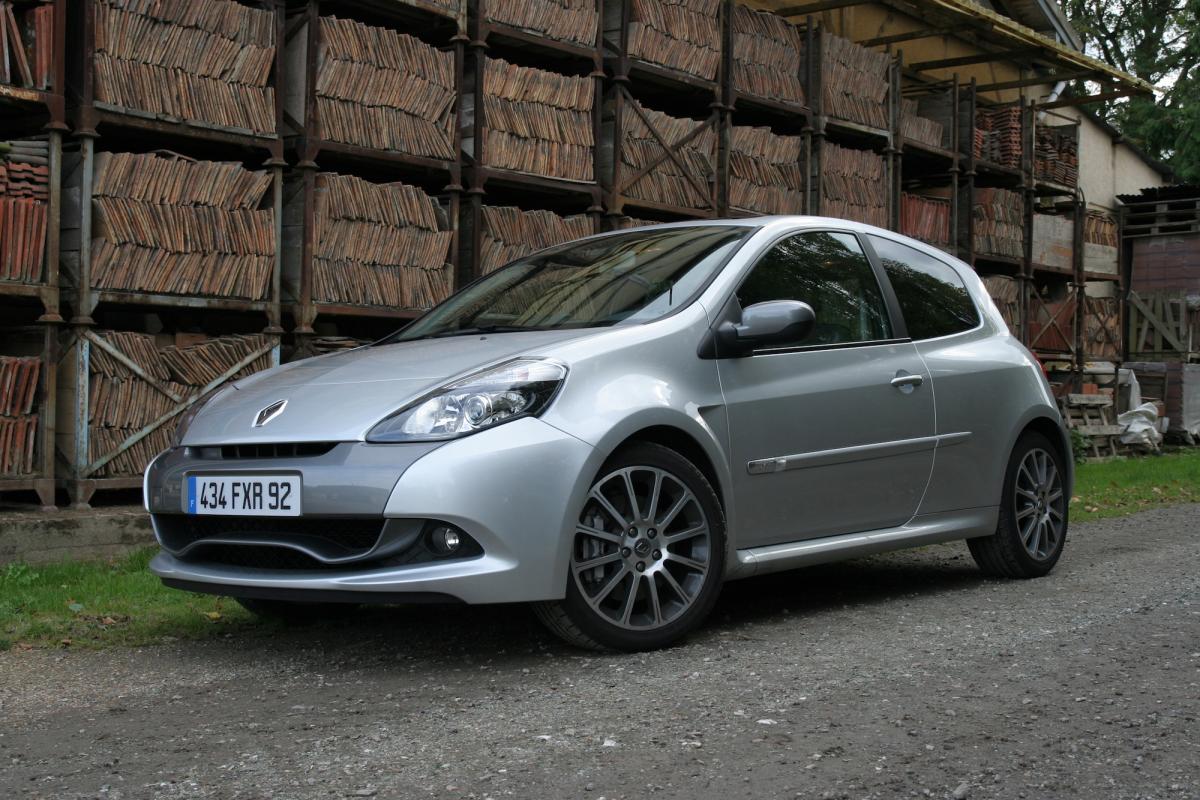
The Renault Clio 3 Sport, produced during the late 2000s, represents a pinnacle of naturally aspirated hot hatch engineering, combining a high-revving 2.0-liter engine, a rigid chassis, and precise manual transmission tuning into a compact three-door or five-door hatchback body.
The third-generation Renault Clio, launched in Europe in 2005, brought significant structural improvements, increased safety ratings, and modern refinement over its predecessor. Within this lineup, the high-performance variant—officially badged as the Clio Renault Sport or Clio RS—carved out a reputation among automotive enthusiasts as one of the best-handling front-wheel-drive cars of its era. Developed by Renault Sport, the motorsport and performance division of the French automaker, the Clio 3 Sport benefited directly from track-derived technology, wide-track suspension architecture, and distinctive aerodynamic enhancements.
Understanding the Clio 3 Sport requires examining its mechanical specifications, driving dynamics, evolutionary phases, and ownership considerations. Whether evaluated as a used track-day car or a spirited daily driver, this hot hatch remains a significant milestone in modern automotive history.
Development and Evolution of the Clio 3 Sport Platform
The foundation of the Clio 3 Sport began with a heavily modified version of the standard Clio 3 platform. Renault Sport engineers increased the wheelbase and widened the track significantly compared to standard production models. This widening required entirely bespoke front and rear fenders, giving the Sport a muscular, aggressive stance that immediately distinguished it from everyday city cars.
Production of the Clio 3 Sport spanned from roughly 2006 through 2012, with a major mid-cycle refresh introduced around 2009. Throughout its production lifecycle, the car was offered primarily in a three-door hatchback configuration, though select markets received five-door variants. The body shell incorporated high-strength steel reinforcements to improve torsional rigidity, which served as a solid foundation for the stiffened MacPherson strut front suspension and the torsion-beam rear axle.
Unlike many turbocharged competitors of its era, Renault Sport retained a naturally aspirated philosophy for the Clio 3 Sport. This commitment prioritized linear throttle response, high-RPM power delivery, and mechanical feedback. Over its production span, several distinct trim levels and special editions were introduced, catering to varying preferences between daily usability and track-focused performance.
Powertrain and Technical Specifications
At the heart of the Clio 3 Sport is the F4R 830 engine, a naturally aspirated 2.0-liter (1,998 cc) inline-four gasoline engine. This powerplant featured a dual-overhead camshaft (DOHC) layout, four valves per cylinder, and variable valve timing on the intake camshaft.
| Specification Feature | Clio 3 Sport (Phase 1 & Phase 2) |
|---|---|
| Engine Type | Naturally Aspirated 2.0L Inline-4 (F4R) |
| Displacement | 1,998 cc |
| Max Power | 200 PS (197 bhp) at 7,100 rpm |
| Max Torque | 215 Nm (159 lb-ft) at 5,500 rpm |
| Transmission | 6-Speed Manual (TL4) |
| Drivetrain | Front-Engine, Front-Wheel Drive |
| 0-100 km/h (0-62 mph) | ~6.9 seconds |
| Top Speed | ~215 km/h (134 mph) |
The engine produced 200 metric horsepower (197 bhp) at a high-revving 7,100 rpm and 215 Nm (159 lb-ft) of torque at 5,500 rpm. Achieving this specific output without forced induction required careful tuning of the intake manifold, exhaust system, and compression ratio. Power was transmitted to the front wheels via a six-speed manual gearbox (the TL4 transmission developed in partnership with Nissan), featuring close-ratio gearing designed to keep the engine operating within its optimal power band during spirited driving.
The chassis came in two primary suspension setups depending on the market and trim level:
- Sport Chassis: Engineered to offer a balanced compromise between daily ride comfort and agile handling, suitable for everyday road use.
- Cup Chassis: Lowered by 7 mm compared to the standard Sport setup, featuring stiffer springs (stiffer by roughly 27% at the front and 30% at the rear), a quicker steering rack ratio, and distinct dark-colored alloy wheels. This setup was optimized for track use and aggressive driving.
Design, Aerodynamics, and Interior Ergonomics
The exterior styling of the Clio 3 Sport was defined by functional aerodynamic elements rather than purely cosmetic additions. The front bumper incorporated a prominent lower splitter and integrated air ducts designed to cool the front brakes and channel airflow efficiently around the widened wheel arches. At the rear, a functional diffuser sat beneath the bumper, working in conjunction with a subtle roof spoiler to generate high-speed downforce and reduce aerodynamic lift. Dual exhaust tips integrated neatly into the rear valance completed the aggressive rear profile.
Inside, the cabin blended everyday hatchback practicality with motorsport-inspired appointments. Standard or optional Recaro bucket seats provided substantial lateral support during high-G cornering, while a thick-rimmed leather steering wheel featured a centered yellow or red alignment stripe. Aluminum pedal covers, specialized instrument cluster graphics with a yellow background, and optional carbon-fiber-look trim accents reinforced the performance-oriented ambiance. Despite its sporty focus, the Clio 3 retained usable rear seating and a practical boot capacity, making it a viable car for daily commuting and weekend trips alike.
Driving Dynamics and Performance on Road and Track
On the road, the Clio 3 Sport is characterized by its chassis agility and front-end grip. The hydraulic-assisted steering system provides direct, communicative feedback, allowing the driver to place the car precisely apex after apex. The front suspension geometry, which utilized an independent steering axis layout (similar to Renault's "perfo-hub" concept seen on larger models), effectively mitigated torque steer—a common trait in high-powered front-wheel-drive vehicles.
When pushed on a circuit, particularly models equipped with the Cup chassis, the car demonstrates neutral handling balance. Lift-off oversteer is easily induced and controlled, allowing experienced drivers to rotate the car into tight corners. The braking system, featuring ventilated discs gripped by Brembo four-piston calipers at the front, delivers consistent stopping power with minimal fade under repeated heavy applications.
The naturally aspirated engine demands driver engagement. Unlike modern turbocharged hatchbacks that deliver low-end torque surges, the Clio's power builds progressively, rewarding drivers who keep the tachometer needle hovering in the upper registers between 5,000 and 7,500 rpm.
Phases and Special Editions
The Clio 3 Sport lifecycle is generally divided into two main production phases:
- Phase 1 (2006–2009): Characterized by sharper, more angular front headlamp designs, a lower grille opening surrounded by body-colored or contrasting trim, and an analog interior aesthetic.
- Phase 2 (2009–2012): Introduced a facelifted front fascia with swept-back headlights, a more prominent front grille, revised rear bumper styling, and slight revisions to interior material quality and electronics. Notable special variants during this period included the Clio RS Gordini, featuring classic blue paint with white stripes and upgraded interior trim, and the ultra-focused Clio RS 200 Raider.
Ownership Considerations, Maintenance, and Common Issues
Maintaining a Renault Clio 3 Sport requires adherence to scheduled maintenance intervals, particularly regarding the timing belt and dephaser pulley.
- Timing Belt and Dephaser: The F4R engine relies heavily on a healthy timing belt and camshaft dephaser pulley. Failure to replace these items every 5 years or 72,000 miles (whichever comes first) can lead to catastrophic engine damage.
- Gearbox Durability: The TL4 six-speed manual gearbox is generally robust, but high-mileage or track-used examples can suffer from synchromesh wear, particularly in third and fourth gears. Checking for smooth gear engagement during test drives is essential.
- Suspension Components: Bushings, top mounts, and dampers wear out over time, especially on Cup-chassis models due to their stiffer spring rates. Upgrading to aftermarket polyurethane bushings or refreshed OEM dampers restores original handling precision.
- Electrical Systems: Minor gremlins involving keyless entry cards, window regulators, and dashboard sensor faults can occur, typical of French compact cars of this era.
Summary and Verdict
The Renault Clio 3 Sport stands out as a purist's hot hatch. By combining a naturally aspirated high-revving engine, a world-class chassis, and genuine motorsport pedigree, it offers an engaging driving experience that is increasingly rare in modern automotive segments. For enthusiasts seeking an analog driving experience with everyday usability, the Clio 3 Sport remains a compelling option.