A full ride nursing scholarship covers 100% of undergraduate or graduate nursing tuition, mandatory institutional fees, required textbooks, and clinical supplies, while frequently providing a monthly living stipend. Prominent programs—such as the HRSA Nurse Corps Scholarship Program, the Department of Veterans Affairs Health Professional Scholarship Program, and military nurse officer packages—trade complete educational funding for post-graduation service commitments in designated high-need healthcare facilities.
Understanding Full Ride Funding vs. Full Tuition Scholarships
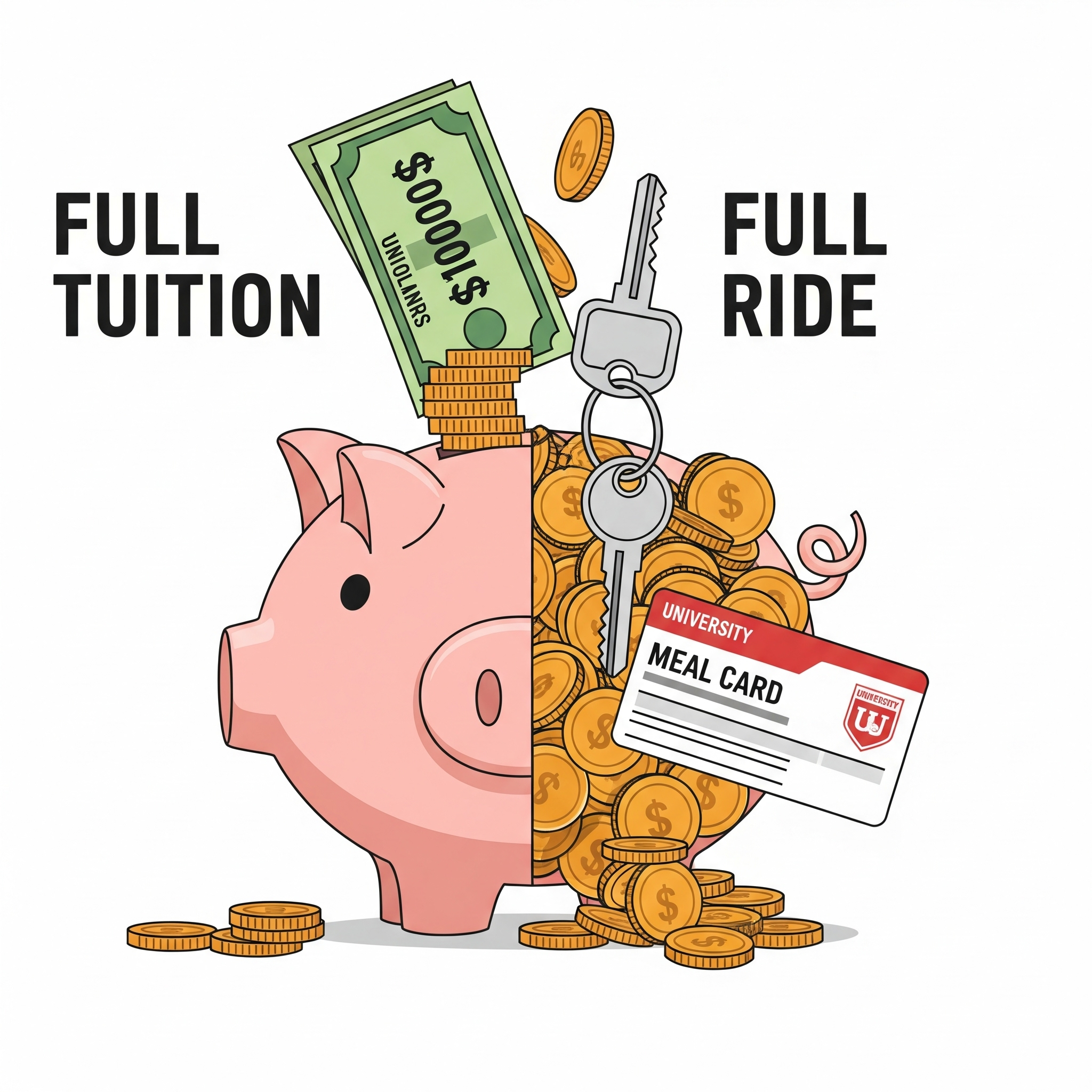
Securing comprehensive financial support for nursing school requires understanding the precise terminology used by financial aid offices and scholarship sponsors. While prospective students often use the terms interchangeably, a full tuition scholarship and a full ride scholarship differ significantly in their scope of financial coverage.
A full tuition scholarship pays exclusively for instructional tuition charges billed by an academic institution. It leaves the student responsible for mandatory university fees (such as technology fees, lab fees, and campus health center costs), clinical equipment, textbooks, medical equipment (like stethoscopes and diagnostic gear), uniforms, and everyday living expenses.
In contrast, a full ride nursing scholarship is an all-inclusive financial award designed to eliminate the need for out-of-pocket educational spending and student loans. A comprehensive full-ride package typically covers:
- 100% of Tuition Costs: Full coverage for standard semester or quarter credit hours required by the accredited nursing curriculum.
- Mandatory Academic and Clinical Fees: University registration fees, technology access fees, clinical simulation lab fees, background check fees required by clinical sites, and liability insurance.
- Educational Materials and Equipment: Required nursing textbooks, digital learning subscriptions, adaptive testing platforms (such as NCLEX review modules), diagnostic equipment, and mandatory clinical attire/uniforms.
- Monthly Living Stipend: A fixed monthly allowance paid directly to the student to cover housing, meals, transportation, and personal living expenses throughout the academic year.
Most full-ride nursing awards operate as service-for-equity agreements. Funding agencies provide financial backing in exchange for a contractual agreement that the recipient will practice nursing for a specified timeframe at an approved healthcare facility upon licensure.
Full Ride Nursing Scholarship Structure:
- Tuition & Mandatory Fees
- Books, Equipment & Clinical Supplies
- Monthly Living Stipend
- Equals: Zero Out-of-Pocket Cost + Post-Graduation Service Commitment
Leading Federal Full Ride Nursing Scholarship Programs
The federal government operates the largest service-obligated nursing scholarship programs in the United States. These awards address nationwide nursing shortages in critical-need areas, underserved rural communities, and federal healthcare systems.
1. HRSA Nurse Corps Scholarship Program
Administered by the Health Resources and Services Administration (HRSA), the HRSA Nurse Corps Scholarship Program is one of the most comprehensive federal funding mechanisms for nursing students.
- Financial Benefits: The program pays full tuition, eligible fees, and an annual payment for reasonable educational costs (such as books, clinical supplies, and equipment). Additionally, HRSA provides a monthly living stipend directly to students during the academic year.
- Eligible Programs: Students accepted or enrolled in accredited Associate Degree in Nursing (ADN), Bachelor of Science in Nursing (BSN), Graduate-level nursing programs (Master’s or Doctoral degrees for Nurse Practitioners and clinical specialists), or registered nurse-to-BSN bridge programs.
- Service Obligation: Recipients must agree to serve for a minimum of two years full-time (or the part-time equivalent) at an eligible Critical Shortage Facility (CSF). CSFs are healthcare facilities located in designated Health Professional Shortage Areas (HPSAs) across the United States. These include rural health clinics, federally qualified health centers (FQHCs), Indian Health Service facilities, and public hospitals experiencing severe nursing vacancies.
2. VA Health Professional Scholarship Program (HPSP)
The U.S. Department of Veterans Affairs offers full-ride opportunities to nursing students through the VA Health Professional Scholarship Program. The VA HPSP directly targets the recruitment of high-performing registered nurses and advanced practice registered nurses (APRNs) into the Veterans Health Administration (VHA) system.
- Financial Benefits: Full payment of tuition and required educational fees, an annual book allowance, and a monthly stipend for living expenses.
- Eligible Programs: Undergraduate BSN programs, Master of Science in Nursing (MSN) programs, and Doctor of Nursing Practice (DNP) tracks focusing on nurse practitioner specialties (such as Adult-Gerontology, Primary Care, or Psychiatric-Mental Health).
- Service Obligation: Scholars incur a post-graduation service obligation of six months of continuous, full-time employment at a VHA medical center for each academic year (or partial year) of scholarship support, with a minimum service requirement of two years.
3. Military ROTC and Service Branch Nursing Scholarships
The United States Armed Forces offer full-ride nursing scholarships through Reserve Officers' Training Corps (ROTC) programs across the Army, Navy, and Air Force, as well as specialized direct-commission pipelines like the Navy Nurse Candidate Program (NCP).
- Army ROTC Nurse Option & Navy ROTC Nurse Corps: These four-year and upper-division two-year scholarships pay 100% of college tuition and mandatory fees, provide a book allowance, and supply a tiered monthly living allowance. Candidates complete standard BSN coursework alongside military leadership training and specialized summer clinical deployments.
- Service Obligation: Upon earning a BSN and passing the National Council Licensure Examination for Registered Nurses (NCLEX-RN), graduates receive a commission as an officer in the respective branch's Nurse Corps, serving an active-duty commitment (typically 4 years active duty followed by Individual Ready Reserve service).
State-Level and University-Specific Full Ride Opportunities
Beyond federal agencies, state departments of health and higher education institutions manage full-ride and full-tuition initiatives aimed at retaining healthcare talent locally.
State Healthcare Service Corps Programs
Many state governments sponsor full-ride scholarship programs modeled after the federal Nurse Corps. These programs target local health disparities by offering full financial coverage to nursing students willing to work in designated state shortage zones, state psychiatric hospitals, or correctional health facilities.
- Program Structure: States offer competitive grant awards that cover tuition, campus fees, and stipends in exchange for a 2- to 4-year service contract within the state's public health infrastructure.
- Jurisdictional Variations: Eligibility often requires state residency, enrollment in an in-state public university nursing program, and a commitment to practice within specific rural or inner-city counties. Examples include state-funded health workforce initiatives in California, Texas, Pennsylvania, and New York.
Institutional Merit and Need-Based Nursing Scholarships
Prominent universities and nursing schools offer endowed full-ride scholarships funded through private philanthropic gifts, university foundations, and health system partnerships.
- Health System Partnerships: Regional hospital networks frequently collaborate with university nursing schools to fund "hospital scholar" initiatives. In these arrangements, the health system pays all tuition, fees, and material expenses for a cohort of nursing students. In return, students sign a binding post-graduation employment contract with the hospital system (typically ranging from 2 to 3 years of clinical practice).
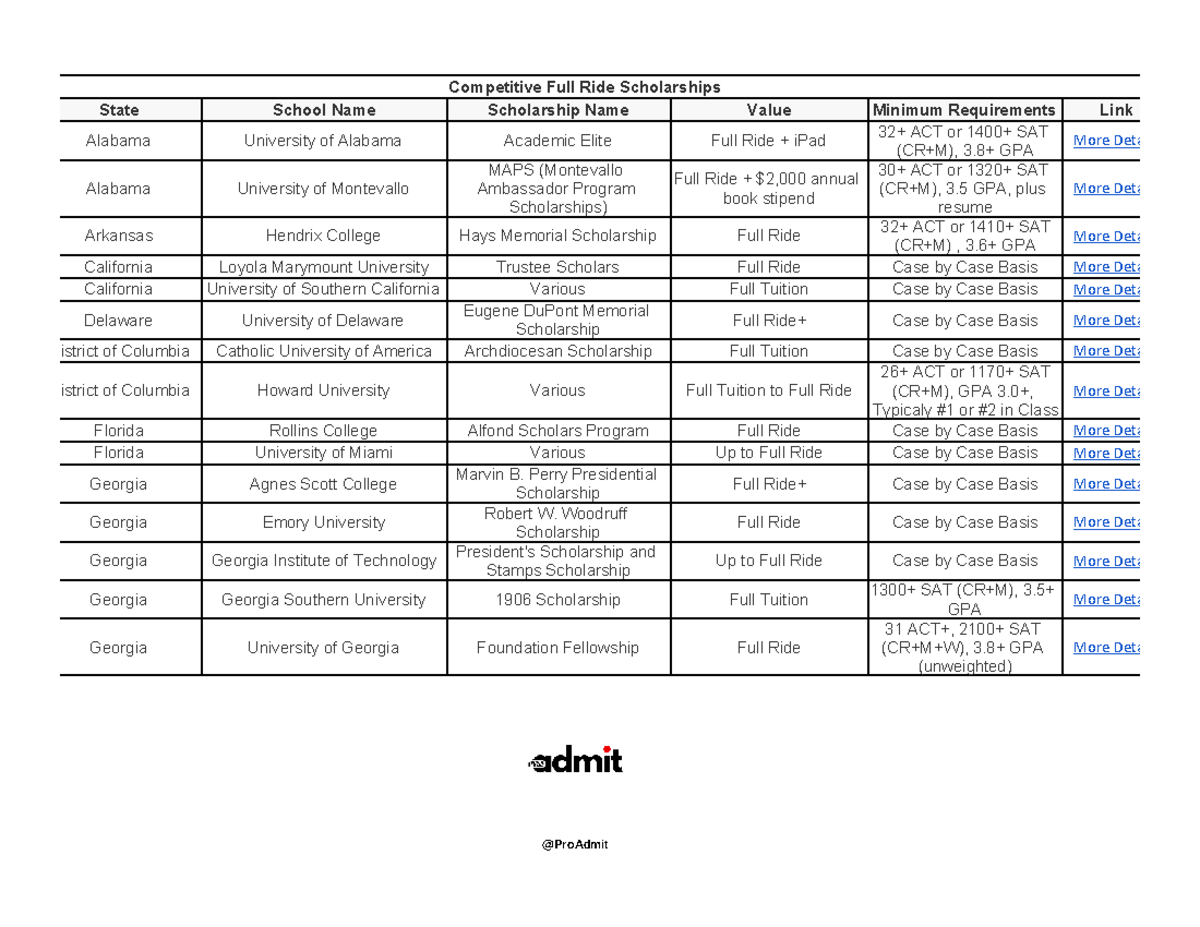
- Merit and Equity Awards: Select flagship universities offer institutional full-ride awards to nursing applicants demonstrating exceptional academic achievement (high cumulative GPA and standardized test scores), leadership potential, or underrepresented backgrounds in healthcare.
Comprehensive Comparison of Full Ride Nursing Scholarships
The following matrix compares major full-ride and primary service-obligated nursing scholarship programs across their core administrative terms, financial features, and post-graduation requirements:
| Scholarship Program | Primary Funding Scope | Monthly Living Stipend | Post-Graduation Service Obligation | Minimum GPA / Academic Requirement | Target Academic Level |
|---|---|---|---|---|---|
| HRSA Nurse Corps | Tuition, mandatory fees, clinical supplies, uniforms | Yes (Adjusted annually by federal rate) | 2 Years at a Critical Shortage Facility (CSF) | Minimum 2.0 GPA (Competitive applicants typically exceed 3.5) | ADN, BSN, MSN, DNP, NP Certificates |
| VA HPSP | Full tuition, mandatory fees, annual book stipend | Yes (Fixed monthly federal rate) | 6 months per semester funded (Minimum 2-year service at VHA) | Good academic standing (Varies by institution, typically 3.0+) | Upper-division BSN, MSN, DNP |
| Army / Navy ROTC Nurse Option | Full tuition, mandatory fees, book allowance | Yes (Tiered monthly stipend by academic year) | 4 Years Active Duty as a Nurse Corps Officer | Competitive GPA (typically 3.0+ high school or college) | BSN (4-Year or 2-Year Upper Division) |
| Navy Nurse Candidate Program (NCP) | Annual tuition grant plus monthly accession bonus | Yes ($1,000 monthly grant + $10,000 accession bonus) | 4 to 5 Years Active Duty Navy Nurse Corps | Minimum 3.3 cumulative GPA | Junior and Senior year BSN students |
| Hospital System Sponsored Grants | Tuition, mandatory fees, lab supplies, books | Varies (Some offer hourly working stipends) | 2 to 4 Years at sponsoring health system/hospital | Minimum 3.0 cumulative GPA | BSN, Accelerated BSN (ABSN) |
Key Eligibility Requirements and Candidate Profiles
While specific criteria depend on the sponsoring organization, competitive applicants for full-ride nursing scholarships share common qualifications.
1. Educational Accreditation Requirements
Scholarship sponsors require candidates to be accepted into or currently enrolled in an accredited nursing program. The two recognized national accrediting bodies for nursing education in the United States are:
- Commission on Collegiate Nursing Education (CCNE): Accredits baccalaureate, graduate, and residency programs in nursing.
- Accreditation Commission for Education in Nursing (ACEN): Accredits all levels of nursing education, including associate, baccalaureate, master’s, and clinical doctorate programs.
Enrolling in an unaccredited program or a school on academic probation disqualifies candidates from receiving federal or state scholarship disbursements.
2. Academic Benchmarks and Candidate Profiling
Given the high cost of full-ride awards, selection committees apply rigorous evaluation standards:
- Grade Point Average (GPA): Most federal and institutional programs set a minimum eligibility baseline of a 3.0 cumulative GPA on a 4.0 scale. However, because these programs are highly competitive, successful applicants generally maintain a 3.5 to 4.0 GPA in science prerequisites (Anatomy, Physiology, Microbiology, Chemistry, and Statistics).
- Holistic Evaluation: Committees review personal essays, leadership experiences, volunteer work in community health settings, and letters of recommendation from nursing faculty or healthcare supervisors.
3. Citizenship and Legal Background Clearance
Federal programs (such as HRSA, VA HPSP, and military ROTC) require applicants to be U.S. citizens (by birth or naturalization) or U.S. nationals. Applicants must pass background checks, drug screenings, and security clearances to ensure eligibility for clinical rotations and federal employment post-graduation.
Applicant Eligibility Checklist:
- Enrollment in CCNE or ACEN Accredited Program
- U.S. Citizenship or National Status (For Federal/State Awards)
- Cumulative GPA >= 3.0 (3.5+ recommended for competitive pools)
- Unencumbered Background Check & Health Screen Clearance
- Willingness to Sign Binding Post-Graduation Service Contract
Step-by-Step Application Roadmap and Deadlines
Winning a full-ride nursing scholarship requires planning 6 to 12 months before the academic term begins. Below is a practical application timeline.
Application Timeline:
- Phase 1: Months 12–9: Research & Verify Program Accreditation
- Phase 2: Months 9–6: Complete FAFSA & Request Academic Transcripts
- Phase 3: Months 6–3: Write Essays & Secure Recommendation Letters
- Phase 4: Months 3–0: Submit via Portal & Review Legal Terms
Step 1: Verify Program Accreditation and Target Match (12 Months Prior)
Confirm that your current or intended nursing school holds active CCNE or ACEN accreditation. Review the service commitments of each scholarship program to ensure you are willing to relocate or work at assigned facilities after graduation.
Step 2: Complete Financial Documentation (9 Months Prior)
Submit the Free Application for Federal Student Aid (FAFSA). Federal programs like HRSA evaluate financial need alongside academic merit using your FAFSA Submission Summary and Student Aid Index (SAI).
Step 3: Write Essays and Secure Recommendations (6 Months Prior)
Draft targeted personal statements that explain your commitment to serving underserved populations, working in public health, or caring for veterans. Request letters of recommendation early from science faculty, clinical instructors, or nursing supervisors who can speak to your academic stamina and clinical abilities.
Step 4: Complete Portal Submissions and Document Uploads (3 Months Prior)
Submit applications through official portals (such as the HRSA Bureau of Health Workforce portal). Ensure all transcripts, acceptance letters, and financial verification documents are uploaded before strict application deadlines, which typically fall between March and May for the upcoming academic year.
Step 5: Contract Review and Award Acceptance
Upon notification of an award, review the legal agreement carefully. Note service duration, reporting deadlines, licensing timelines, and contract breach provisions before signing.
Financial, Tax, and Legal Considerations
Full-ride nursing scholarships carry financial and legal obligations that require careful attention.
IRS Tax Treatment of Full Ride Packages
Under current Internal Revenue Code rules summarized in IRS Publication 970 (Tax Benefits for Education), scholarship funds are treated differently depending on how they are spent:
- Tax-Free Portion: Funds spent directly on qualified tuition, mandatory enrollment fees, and required books or course-related equipment are non-taxable income for degree-seeking candidates.
- Taxable Portion: Any portion of a scholarship allocated to room, board, travel, or paid directly to the student as a monthly living stipend is considered gross income for federal income tax purposes. Recipients must report stipend payments on their annual federal and state tax returns and may need to make estimated tax payments throughout the year.
Service Obligation Default and Financial Penalties
Service-for-scholarship agreements are legally binding federal or state contracts. If a student accepts funding but fails to fulfill the contract, severe financial penalties apply.
Service Default Financial Impact:
- Scholarship Funds Received + Accrued Standard Interest
- Statutory Penalty Fees (Up to $7,500/month of unserved duty)
- Equals: Immediate Total Debt Due (Convertible to Federal Judgment)
Default scenarios include:
- Failing to complete the academic nursing program or dropping out.
- Failing the NCLEX-RN within the required timeframe after graduation.
- Voluntarily resigning or being terminated for cause from a service facility before fulfilling the service term.
Default Consequences: Sponsoring agencies will convert the total value of all paid tuition, fees, and stipends into a direct debt obligation. For federal programs like the HRSA Nurse Corps, the default penalty requires paying back the full scholarship amount plus accrued interest, along with statutory penalty fees (which can total up to $7,500 for every month of unserved service obligation). This debt is non-dischargeable in standard bankruptcy proceedings and can lead to federal tax refund offsets and wage garnishment.
Frequently Asked Questions
Can I apply for a full ride nursing scholarship before being accepted into a nursing program?
Most major programs—including HRSA Nurse Corps and VA HPSP—require official acceptance or current enrollment in an accredited nursing program at the time of application submission. However, high school seniors applying for military ROTC nursing scholarships can apply during their senior year before receiving their college acceptance letters.
What qualifies as a Critical Shortage Facility (CSF) for HRSA Nurse Corps?
A Critical Shortage Facility is a public or private non-profit healthcare facility located in a federally designated Health Professional Shortage Area (HPSA). Examples include Community Health Centers, Federally Qualified Health Centers (FQHCs), rural health clinics, Indian Health Service health centers, public hospitals, and certified home health agencies located in high-need geographic areas.
Are living stipends provided by full ride scholarships taxable under IRS rules?
Yes. According to IRS guidelines, scholarship funds received as living stipends, room and board allowances, or direct compensation for living expenses are considered taxable income. Funds applied directly to tuition, mandatory fees, and required books remain non-taxable for degree candidates.
What happens if I fail to complete my service obligation after graduation?
Failing to fulfill a scholarship service obligation constitutes a breach of contract. Sponsoring agencies convert all expended scholarship money—including paid tuition, fees, and stipends—into a federal or state debt that must be repaid with interest and statutory financial penalties.
Are full ride nursing scholarships available for graduate-level degrees (MSN, DNP, NP)?
Yes. Both the HRSA Nurse Corps Scholarship Program and the VA Health Professional Scholarship Program provide full-ride opportunities for graduate students pursuing Master of Science in Nursing (MSN) or Doctor of Nursing Practice (DNP) degrees, particularly for Advanced Practice Registered Nurse (APRN) specialties such as Nurse Practitioners and Certified Registered Nurse Anesthetists (CRNAs).
Strategic Next Steps for Applicants
To maximize your chances of securing a full ride nursing scholarship, follow these concrete action steps:
- Confirm Accreditation: Check your nursing school's accreditation status via the CCNE or ACEN directory databases before submitting scholarship applications.
- Order Transcripts and Prepare FAFSA: Submit your FAFSA early to establish your financial need baseline, and request official transcripts from all previously attended colleges.
- Align Service Expectations: Evaluate whether you are prepared to fulfill a multi-year service obligation in a high-need clinic, rural community, VA facility, or military environment post-graduation.
- Engage Financial Aid Counselors: Contact your university's financial aid office to inquire about local hospital system partnerships and institutional full-tuition grants that may not be advertised nationally.
Disclaimer: Scholarship eligibility criteria, application windows, statutory default terms, and funding allocations are governed by federal, state, and institutional guidelines subject to annual updates. Prospective applicants should verify current guidelines directly on official program portals prior to applying.