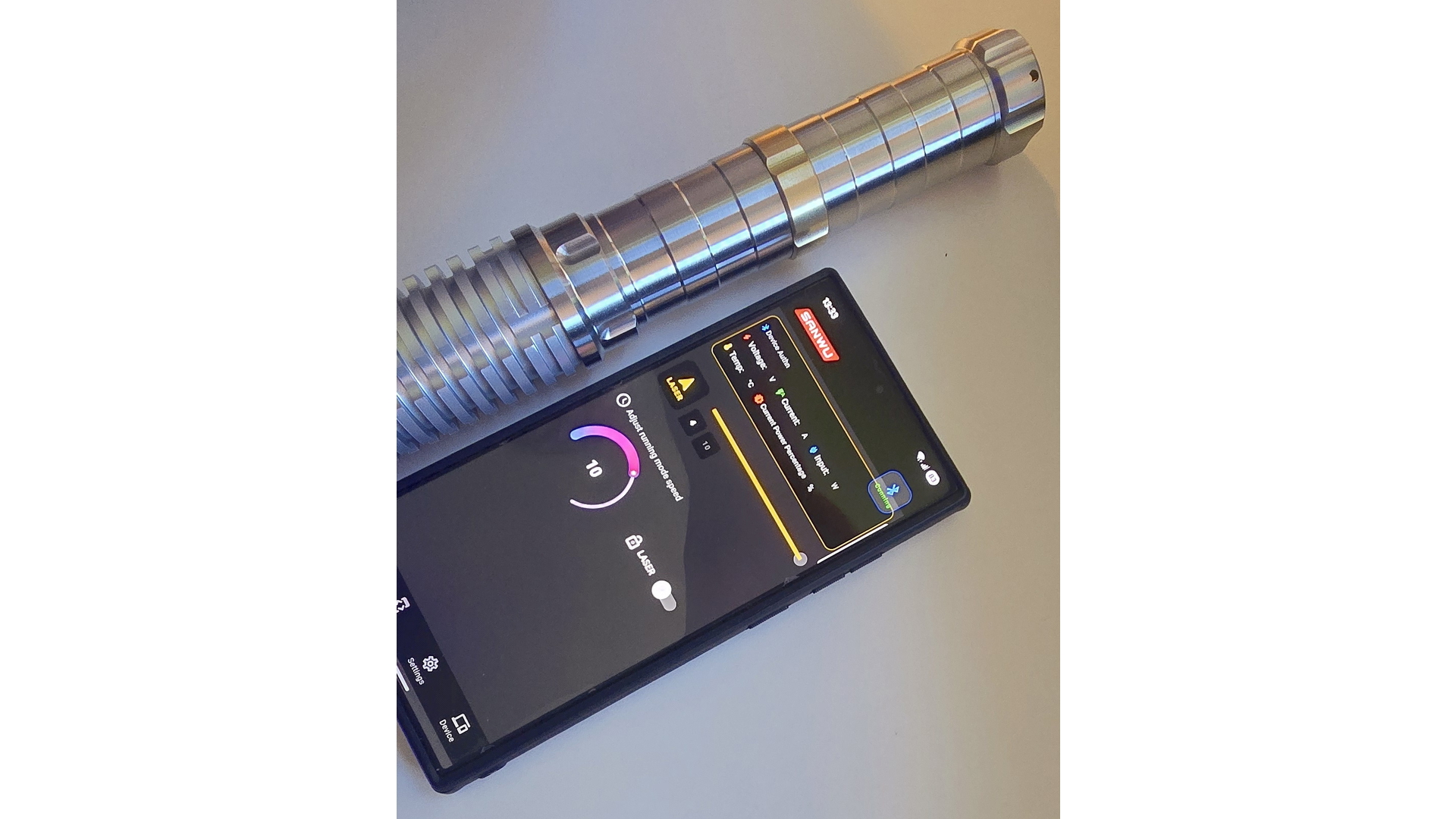
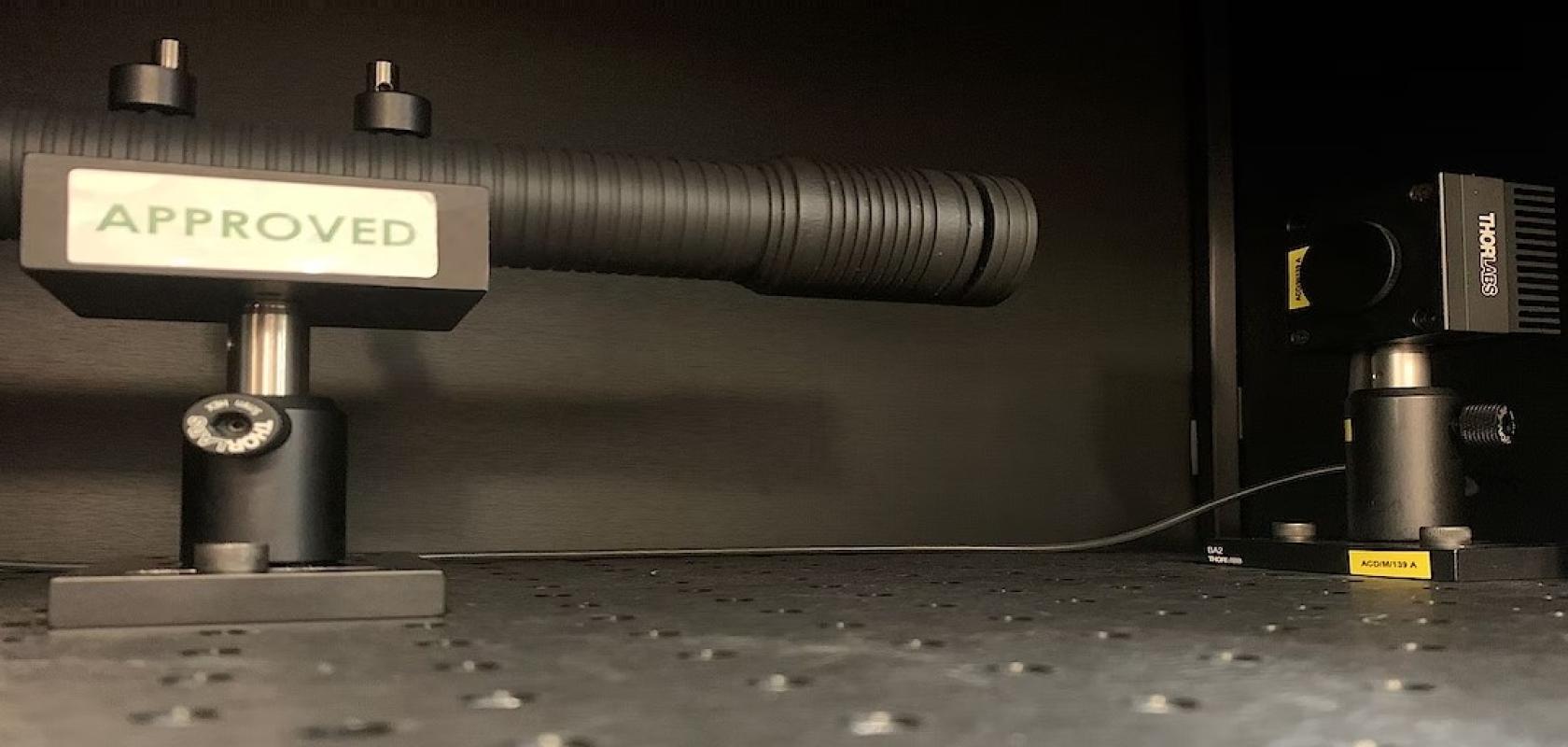
In 2018, the peak of handheld consumer laser performance reached unprecedented optical output levels, ranging from 3.5 watts to over 7.5 watts of continuous wave output. The five most powerful handheld lasers available in 2018 were the Sanwu Striker, JetLasers PL-E Pro, Survival Laser Pro Series, Dragon Lasers Spartan Blue, and Thor H2 450nm. Driven by direct-bank blue semiconductor diodes, these Class 4 portable devices represented the summit of mobile optical power density.
The Technical Evolution of Handheld Lasers Leading into 2018
To understand the market landscape of 2018, one must recognize the technological shift that occurred in portable coherent light sources over the preceding decade. Early portable lasers relied heavily on Diode-Pumped Solid-State (DPSS) technology, such as infrared 808nm laser diodes pumping neodymium-doped yttrium aluminum garnet ($\text{Nd:YVO}_4$) crystals to produce 1064nm light, which was then frequency-doubled through potassium titanyl phosphate (KTP) crystals to generate 532nm green light. While highly visible to the human eye, DPSS systems suffered from poor wall-plug efficiency (often under 15%), high thermal sensitivity, alignment fragility, and strict power limitations in handheld hosts.
By 2018, the industry shifted toward high-power direct semiconductor blue laser diodes, primarily operating between 445nm and 455nm. Developed originally for high-brightness projection systems, components like the Nichia NUB07B, NUB08, and NUGM01T diodes allowed handheld laser manufacturers to bypass complex optical crystal arrays. Direct diodes convert electrical energy into laser light with slope efficiencies exceeding 1.0 watt per ampere. When paired with high-current lithium-ion cells and advanced constant-current buck drivers, handheld hosts scaled from milliwatt-level pointers to multi-watt optical instruments capable of instantaneously igniting combustible targets, cutting thin materials, and projecting visible beams across vast distances.
However, scaling optical output beyond 3 watts created engineering challenges in thermal management, optical collimation, and user safety. High-power blue diodes exhibit significant beam asymmetry between their fast and slow axes, requiring multi-element optical lenses or beam expanders to maintain usable beam divergence. Furthermore, operating a 7-watt diode generates substantial waste heat, necessitating mass-dense copper heatsinks and strict duty cycles to prevent junction overheating and irreversible thermal degradation.
Detailed Profiles: The 5 Most Powerful Handheld Lasers of 2018
1. Sanwu Striker (450nm / 455nm — Up to 7.5 Watts)
The Sanwu Striker established the performance ceiling for consumer handheld lasers in 2018. Engineered by Sanwu Lasers, the Striker host was crafted from solid polished stainless steel or pure copper, weighing over 500 grams without batteries. This high structural mass served a functional purpose: providing the thermal sink capacity required to manage high-current diode heat.
The highest-output variant of the Striker utilized multi-watt Nichia blue diodes (such as the NUB07B), overdriven via customized high-efficiency buck drivers to deliver between 7.0W and 7.5W of continuous optical output power (CW). The Striker featured a multi-mode digital tail switch allowing users to cycle through half-power, full-power, strobe, and emergency beacon modes.
To handle the electrical current draw—often exceeding 4.5 to 5.0 amperes at full throttle—the Striker utilized two 26650 or high-drain 18650 lithium-ion batteries in series configuration. Because of the rapid thermal accumulation in the copper module, Sanwu recommended a operational duty cycle of 60 seconds on followed by 60 seconds of cooling down to preserve diode longevity.
2. JetLasers PL-E Pro Series (450nm / 465nm — Up to 7.0 Watts)
JetLasers developed a reputation for industrial-grade build quality, and their flag-bearer PL-E Pro host represented one of the most rugged handheld laser architectures available in 2018. Unlike minimalist cylindrical designs, the PL-E Pro incorporated built-in active and passive safety controls, making it popular among researchers, field technicians, and laser enthusiasts.
The high-power blue PL-E Pro models yielded between 6.0W and 7.0W of optical output at 450nm or 465nm. The unit's structural housing was milled from thick aircraft-grade aluminum, incorporating deep circumferential heat fins along the entire emitter assembly. This design allowed for superior heat dissipation compared to un-finned hosts, enabling longer continuous run times.
Safety features on the PL-E Pro met stringent operational controls:
- Mechanical key lock prevention against unauthorized activation.
- Aperture shutter mechanism to physically block the beam path.
- Remote interlock pin support for external system integration.
- Delayed activation switch and LED indicator status lights.
The PL-E Pro also featured an adjustable focal mechanism compatible with external 10x optical beam expanders, transforming the wide, asymmetric beam of high-power blue diodes into a tightly collimated beam capable of maintaining a tight spot size over long distances.
3. Survival Laser Pro / Survival Laser III Series (445nm / 450nm — Up to 5.0 Watts)
Survival Laser offered a modular approach to high-power handheld devices, providing pre-assembled units and component host kits designed for user assembly. In 2018, the Survival Laser Pro and Survival Laser III series represented the benchmark for high-output modular design, producing stable power outputs between 3.5W and 5.0W.
The core of the Survival Laser Pro host was built around an extended anodized aluminum body containing an oversized solid copper drop-in heat sink module. This copper drop-in seated the 9mm blue laser diode directly against a high thermal conductivity surface using synthetic diamond thermal paste.
Operating on two high-drain rechargeable lithium-ion cells (such as 16340 or 18350 battery formats depending on host extension tube setups), the Survival Laser III delivered maximum energy density in a compact footprint. Users routinely customized these lasers with single-element AR-coated G-2 glass lenses for maximum raw output power or 3-element glass lenses to improve beam divergence at the expense of a 20-25% drop in total optical transmission.
4. Dragon Lasers Spartan Blue Series (445nm / 450nm — Up to 5.0 Watts)
Dragon Lasers was an established name in high-power optical products, and their Spartan series provided a minimalist, tactical host casing paired with high-performance output capabilities. By 2018, the Spartan Blue line topped out at an optical power rating of 5.0W (5000mW).
The Spartan design focused on functional simplicity. Constructed from hard-anodized black aluminum, the unit omitted complex digital mode cycling in favor of a straightforward push-button momentary/click-on tail switch. Internal thermal conduction relied on a brass and aluminum heatsink structure housing a regulated constant-current driver.
The Spartan 5W laser operated on two 18650 batteries, delivering high energy capacity to sustain the diode's high forward voltage ($V_f \approx 4.5\text{V} - 5.2\text{V}$) under high current loading. The unit incorporated a manual front-focusing ring, allowing the user to adjust the optical focal point from near-field focal burning distance to far-field parallel collimation.
5. Thor H2 450nm Handheld Laser (450nm — Up to 5.0 Watts)
Distributed through outlets such as Laser Pointer Store, the Thor H2 was a widely recognized high-power laser model in 2018, featuring a distinctive aggressive cooling-fin design reminiscent of tactical flashlights. The top-tier 450nm model achieved verified output levels between 3.5W and 5.0W CW.
The Thor H2 host was engineered entirely from aluminum alloy, styled with heavy radial heatsink grooves along the diode housing block. This geometry maximized surface area contact with ambient air, facilitating passive convection cooling during operation.
The laser utilized dual 18650 batteries and provided dual operating modes, allowing power reduction for close-up calibration or alignment work, and full power output for burning or long-distance projection. Coupled with an adjustable optical focus crown, the Thor H2 offered high performance at a lower price point than custom-milled copper alternatives, solidifying its place among the top handheld lasers of the era.
Comparative Technical Specifications Table
The following table synthesizes the verified technical parameters, output thresholds, structural materials, and power configurations of the top five handheld lasers of 2018.
| Laser Model | Peak Output Power (Watts) | Dominant Wavelength (nm) | Diode / Engine Architecture | Battery Configuration | Primary Host Material | Key Safety Features |
|---|---|---|---|---|---|---|
| Sanwu Striker | 7.0W – 7.5W | 455nm | Nichia NUB-series direct blue diode | 2x 26650 / 2x 18650 | Solid Copper / Stainless Steel | Multi-mode digital switch, strict thermal duty cycles |
| JetLasers PL-E Pro | 6.0W – 7.0W | 450nm / 465nm | High-current blue semiconductor diode | 2x 18650 / 2x 26650 | Aircraft-grade finned Aluminum | Key lock, mechanical shutter, remote interlock pin, LED status |
| Survival Laser Pro / III | 3.5W – 5.0W | 445nm / 450nm | 9mm high-power blue diode module | 2x 16340 / 2x 18350 | Anodized Aluminum with solid Copper heat sink | Pass-through safety lock ring, battery polarity protection |
| Dragon Lasers Spartan | 1.0W – 5.0W | 445nm / 450nm | Direct-emission semiconductor diode | 2x 18650 | Hard-anodized tactical Aluminum | Safety key cap / lock, tail-cap safety disconnect switch |
| Thor H2 | 3.5W – 5.0W | 450nm | Multi-watt blue direct diode | 2x 18650 | Radial finned Aluminum alloy | Dual power mode settings, safety switch pin |
Core Engineering Components Enabling Multi-Watt Handheld Power
The jump to multi-watt handheld performance achieved in 2018 relied on specific optical, electrical, and thermal engineering advances.
POWER FLOW & DIRECT DIODE SYSTEM
- High-Drain Li-Ion Cells (2x 18650 / 26650)
- Buck Regulated Driver (Constant Current)
- Nichia Blue Diode (NUB07B / NUB08)
- Raw Optical Output (3.5W - 7.5W Beam)
- Heavy Copper Heatsink (Thermal Dissipation)
- Focusable Glass Optics (G-2 / 3-Element)
Direct Semiconductor Blue Diodes
Before the widespread extraction and industrial availability of multi-watt projection diodes—specifically Nichia's NUB05, NUB07B, NUB08, and NBM515 series—achieving more than 1.5 watts in a handheld host was extremely difficult. These 9mm TO-5 packages featured large emitter junctions designed to withstand forward currents up to 3.5 to 4.5 Amperes. Because these diodes produce coherent light directly via quantum well recombination within the indium-gallium-nitride ($\text{InGaN}$) semiconductor layers, their electrical-to-optical conversion efficiency is remarkably high compared to DPSS technology.
Optics and Beam Divergence Dynamics
High-power blue laser diodes present a fundamental optical challenge: severe beam astigmatism. The semiconductor emitter stripe is wide on the horizontal axis (slow axis) and narrow on the vertical axis (fast axis). As a result, the uncorrected output beam projects an expanding rectangular profile rather than a symmetric circle.
To manage this profile, 2018 handheld lasers employed specialized optical assemblies:
- Single-Element AR-Coated Glass Lenses (e.g., G-2): These ultra-short focal length lenses ($f \approx 4.0\text{mm}$) provide maximum light transmission efficiency (up to 95%). However, they yield relatively high beam divergence (often $>2.5\text{ mrad}$), causing the rectangular beam to expand rapidly over distance.
- Three-Element Glass Lens Assemblies: Utilizing a triplet achromatic lens design reduces beam divergence to around $1.0 - 1.5\text{ mrad}$ and produces a cleaner beam profile. However, internal glass reflection and absorption losses reduce total output power by roughly 20% to 25%.
- Anamorphic Prism Pairs & External Beam Expanders: High-end hosts like the JetLasers PL-E Pro offered external telescopic beam expanders ($5\text{x}$ to $10\text{x}$). By expanding the initial beam diameter prior to long-distance projection, the overall angular divergence drops proportionally according to Lagrange's optical invariant:
$$\Theta_1 \cdot D_1 = \Theta_2 \cdot D_2$$
Where $\Theta$ represents the divergence angle and $D$ represents the initial beam diameter.
Electrical Drivers and Power Supplies
High-power laser diodes require strict constant-current regulation; direct connection to unregulated batteries causes thermal runaway and catastrophic optical damage (COD). Linear drivers dissipate excessive excess voltage as pure heat, which makes them unsuitable for high-current multi-watt handhelds. Consequently, 2018 designs relied on high-efficiency synchronous buck converter circuits. Buck drivers step down the voltage from two lithium-ion cells in series ($\approx 8.4\text{V}$ fully charged) to the diode's operating forward voltage ($\approx 4.5\text{V} - 5.0\text{V}$) while converting excess voltage into additional output current at efficiency rates exceeding 90%.
Laser Safety Classifications, Legal Standards, and Operational Hazards
All five lasers detailed in this analysis exceed the 500-milliwatt (0.5-watt) threshold, placing them squarely in Class 4—the highest and most hazardous laser classification defined under international safety standards such as IEC 60825-1.
CLASS 4 LASER HAZARD CAPABILITY MATRIX
- Instant Ocular Retinal Blindness: Direct or Diffuse Reflection Risk
- Thermal Skin Burns: Direct Beam Exposure
- Material Ignition / Fire Hazard: Combustible Targets at Focal Point
- Aviation / Distraction Hazard: Multi-Mile Visible NOHD Range
Ocular and Direct Radiation Hazards
Class 4 lasers present catastrophic hazards to human vision:
- Direct Beam Exposure: Immediate, permanent retinal destruction and blindness occur faster than the human blink reflex (which takes approximately 0.25 seconds).
- Diffuse Reflections: Unlike lower-class lasers, a 3.5W to 7.5W laser beam reflected off a matte, non-specular surface (such as wall paint, wood, or paper) retains sufficient power density to cause irreversible retinal burns at close proximity.
- Nominal Ocular Hazard Distance (NOHD): For a 7-watt blue laser with a 2.0 mrad divergence, the NOHD—the distance at which the beam energy density drops below the Maximum Permissible Exposure (MPE) limit for eye safety—can exceed several hundred meters (frequently over 1.2 kilometers).
Fire and Combustion Hazards
At focal point convergence, a 5-watt or 7-watt blue laser produces power densities exceeding several hundred watts per square centimeter. This energy absorption easily ignites dark clothing, paper, cardboard, plastics, and volatile organic solvents. Operatives must maintain a clear background free of flammable materials and always store active devices in fire-resistant locations.
Mandatory Protective Eyewear
When operating Class 4 handheld lasers, standard sunwear or low-density safety glasses offer zero protection. Operators must wear certified alignment or protection goggles offering an Optical Density (OD) rating appropriate for the diode wavelength:
$$\text{Required Optical Density for 445nm–465nm} \ge \text{OD 6+}$$
An OD rating of 6 reduces light transmission at the specified wavelength by a factor of $10^6$ ($0.0001%$), keeping stray light exposure safely below the MPE threshold. For more information on professional laser safety protocols and exposure limits, refer to the Laser Institute of America Safety Standards.
Regulatory and Legal Frameworks
In many international jurisdictions, portable handheld lasers exceeding specific power thresholds are strictly controlled or banned:
- United States: Under U.S. FDA Center for Devices and Radiological Health (CDRH) Regulations (21 CFR 1040.10), handheld laser devices sold as simple "pointers" are capped at 5mW (Class 3R). Class 4 portable devices must incorporate specific physical safety features—including key locks, aperture shutters, emission delay indicators, and remote interlock connectors—and manufacturers must submit formal safety accessions prior to distribution.
- Australia: Importation and possession of handheld lasers exceeding 1mW are strictly restricted under Customs (Prohibited Imports) Regulations, classifying them as controlled weapons requiring specialized police permits.
- United Kingdom & European Union: Strict limits govern consumer sales of high-powered laser devices, and pointing high-power lasers at aircraft, vehicles, or public safety personnel constitutes a serious criminal offense subject to imprisonment.
Frequently Asked Questions
What was the single most powerful handheld laser produced in 2018?
The Sanwu Striker equipped with Nichia's highest-grade NUB-series direct blue diode held the title for the highest optical output in a standard handheld host in 2018, reaching verified peak levels between 7.0 and 7.5 watts of continuous wave (CW) power.
Why were almost all top-power handheld lasers in 2018 blue (445nm–455nm)?
Blue semiconductor diodes, specifically those developed for commercial projection equipment (such as Nichia NUB07B and NUB08), provided the highest wall-plug efficiency, thermal stability, and current tolerance of any mass-produced laser diode at the time. Green (520nm direct or 532nm DPSS) and red (638nm/650nm) diodes generated far lower continuous optical wattage per unit area.
Can a 5W or 7W handheld laser burn through materials?
Yes. A Class 4 handheld laser operating between 5W and 7.5W focused down to a point easily burns dark plastics, wood, leather, paper, electrical insulation, and electrical tape within seconds. The high optical power density converts directly into localized thermal energy upon contact with absorbing materials.
What optical density (OD) safety glasses were required for these lasers?
Operators require laser safety glasses rated at OD6+ or higher specifically tuned to the blue spectral band (400nm to 470nm). General-purpose safety glasses or sunglasses offer no protection against direct or diffusely reflected Class 4 laser radiation.
What is the difference between G-2 lenses and 3-element glass lenses on these lasers?
A G-2 lens is a single-element lens that maximizes raw power transmission (up to 95% throughput), but results in higher beam divergence and a wider rectangular spot profile at long distances. A 3-element glass lens reduces overall power transmission by 20–25% due to optical absorption across multiple glass surfaces, but produces a tightly focused beam with significantly lower divergence.
Retrospective Summary and Final Guidance
The 2018 generation of high-power handheld lasers marked a significant engineering milestone, pushing portable optical output power past 7 watts. Models like the Sanwu Striker and JetLasers PL-E Pro demonstrated the absolute limits of host heat management and direct diode efficiency, while hosts from Survival Laser, Dragon Lasers, and Thor provided modular performance across diverse price tiers.
For collectors, researchers, and technical enthusiasts examining these landmark models from a modern perspective:
- Prioritize Safety Infrastructure: Class 4 handheld lasers require high-grade OD6+ protective eyewear, physical interlock controls, and clear operational zones free of combustible targets or unauthorized bystanders.
- Observe Strict Thermal Duty Cycles: Multi-watt direct blue diodes generate excessive waste heat. Operating these hosts beyond recommended run times (typically 30–60 seconds continuous) damages internal diode junction layers and degrades optical output.
- Verify Regulatory Compliance: Ensure all portable laser equipment adheres to local jurisdictional restrictions, CDRH compliance mechanisms, and transportation safety guidelines governing high-intensity light sources.