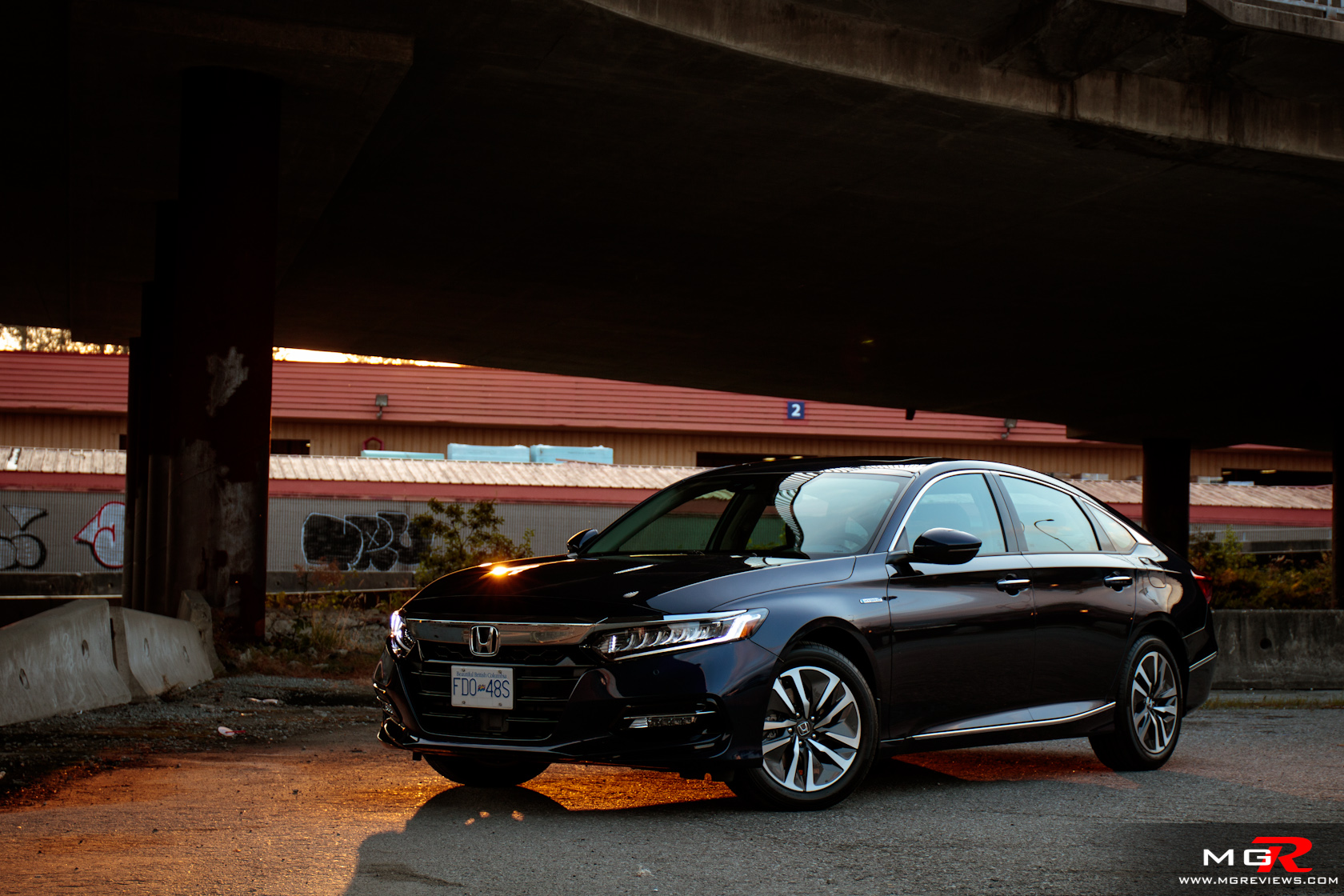
Professional reviews of the 2018 Honda Accord Hybrid universally praised the midsize sedan for its refined driving dynamics, spacious cabin, and exceptional fuel economy achieved through its third-generation two-motor hybrid system. Automotive critics lauded its ability to deliver near-luxury comfort and responsive handling without sacrificing efficiency, marking a massive leap forward from previous iterations of the Accord Hybrid.
Evaluating a used hybrid vehicle requires looking past initial launch excitement to understand how a car holds up over time. When automotive journalists, consumer reporting organizations, and everyday owners analyzed the 2018 Honda Accord Hybrid, they uncovered a complex picture of high-tech efficiency, occasional infotainment quirks, and steadfast mechanical reliability. This review synthesizes professional evaluations, technical specifications, and real-world considerations to help prospective buyers understand what makes this generation of Honda's flagship hybrid sedan a compelling choice on the pre-owned market.
The Evolution of the 2018 Honda Accord Hybrid
The 2018 model year ushered in the tenth generation of the Honda Accord, bringing a ground-up redesign that completely transformed the hybrid variant. Previous Accord Hybrids often suffered from compromised trunk space because of bulky battery packs, and their styling was frequently indistinguishable from standard gas-powered models or burdened with awkward aerodynamic styling cues.
Honda addressed these pain points directly for 2018. Engineers repackaged the lithium-ion battery pack, placing it entirely beneath the rear floor rather than encroaching on cargo capacity. This crucial layout change meant the Hybrid offered the exact same 16.7 cubic feet of trunk space as its non-hybrid sibling, preserving the utility that midsize sedan buyers demand.
Furthermore, the 2018 redesign adopted a fastback-inspired silhouette, a longer wheelbase, and a wider stance. Reviewers noted that the car looked significantly more upscale and athletic than its predecessor. By shedding the awkward styling tropes often associated with alternative-fuel vehicles, Honda positioned the Accord Hybrid as a handsome, mainstream sedan that happened to be exceptionally efficient.
Powertrain and Performance Dynamics
At the heart of the 2018 Honda Accord Hybrid is a sophisticated powertrain combining a 2.0-liter Atkinson-cycle four-cylinder engine with an electric propulsion motor and a generator motor. Unlike traditional hybrid systems that rely on a conventional multi-speed automatic transmission, Honda’s dual-motor setup operates without a traditional gearbox. Instead, the electric motor drives the wheels directly in most driving conditions, while the gasoline engine acts primarily as a generator to supply electricity, locking into direct drive only at higher cruising speeds.
Reviewers heavily praised this mechanical layout for several key reasons:
- Seamless Power Delivery: Because the electric motor produces maximum torque instantly, acceleration from a standstill is smooth, linear, and completely devoid of shift shock or rubber-band CVT drone.
- Combined Output: The system generates a total system output of 212 horsepower, providing ample passing power on highways and confident merging capability.
- Refined Transitioning: The handoffs between electric-only mode, hybrid mode, and engine drive are remarkably quiet and polished, often noticeable only via the power flow graphic on the instrument cluster.
Fuel Economy and Real-World Efficiency
The EPA rated the 2018 Honda Accord Hybrid at an impressive 47 mpg city, 47 mpg highway, and 47 mpg combined across all trim levels (EX, EX-L, and Touring), with the base model achieving slightly higher figures in some early testing cycles before standardized EPA adjustments. Professional reviewers testing the car in mixed real-world driving environments consistently reported matching or coming very close to these EPA estimates, a rarity in the automotive industry where real-world fuel economy often falls short of window stickers.
This efficiency is aided by driver-selectable driving modes (Normal, Econ, and Sport) alongside steering-wheel-mounted deceleration paddles. These paddles allow the driver to adjust the level of regenerative braking on the fly, capturing kinetic energy during coasting and feeding it back into the battery pack while slowing the vehicle down smoothly.
| Trim Level | EPA Fuel Economy (City / Hwy / Comb) | Key Standard Features |
|---|---|---|
| Hybrid (Base) | 47 / 47 / 47 MPG | Dual-zone climate, LED headlights, Honda Sensing safety suite |
| EX | 47 / 47 / 47 MPG | 8-inch touchscreen, Apple CarPlay, Android Auto, sunroof |
| EX-L | 47 / 47 / 47 MPG | Leather upholstery, driver memory seats, premium audio system |
| Touring | 47 / 47 / 47 MPG | Head-up display, ventilated front seats, adaptive damper system |
Interior Comfort, Cabin Tech, and Practicality
Stepping inside the 2018 Accord Hybrid revealed a cabin that many automotive journalists compared favorably to entry-level luxury vehicles. The interior materials utilized soft-touch plastics, premium stitching, and clean dashboard architecture. The longer wheelbase introduced for this generation translated into a cavernous rear seat, offering 40.4 inches of legroom that allowed taller adults to stretch out comfortably.
Infotainment and Usability Lessons
One of the most heavily scrutinized areas in early reviews was the infotainment system. Honda listened to consumer complaints from previous years by bringing back a physical volume knob and tuning knob for the 8-inch touchscreen interface (available on EX trims and above). However, reviewers noted that while the interface was a vast improvement, the menu structures could occasionally feel convoluted.
Fortunately, the inclusion of standard Apple CarPlay and Android Auto across most trim levels meant that many drivers could bypass the native operating system entirely in favor of familiar smartphone interfaces. The Touring trim added a head-up display that projected vital driving data onto the windshield, keeping the driver's eyes safely focused on the road ahead.
Ride Quality and Handling Characteristics
Historically, hybrid sedans were criticized for riding stiffly or feeling heavy due to the added weight of battery systems. Reviewers found that the 2018 Accord Hybrid defied this expectation.
The low placement of the battery pack helped maintain a balanced center of gravity. Furthermore, higher trims equipped with adaptive damper systems could adjust stiffness in milliseconds depending on road conditions. The steering was praised for its quick ratio, natural weighting, and precise feedback, making the sedan feel surprisingly nimble on winding backroads while remaining compliant and composed over highway expansion joints and urban potholes.
Safety Ratings and Driver-Assistance Technology
Safety represents a cornerstone of the Accord's market appeal. The 2018 model came standard across all hybrid trim levels with the Honda Sensing suite of advanced safety and driver-assistance technologies. Professional evaluators from the Insurance Institute for Highway Safety (IIHS) awarded the vehicle high marks, naming it a Top Safety Pick, while the National Highway Traffic Safety Administration (NHTSA) granted it a 5-star overall safety rating.
Standard safety features included:
- Collision Mitigation Braking System (CMBS) with forward collision warning
- Road Departure Mitigation System (RDM)
- Lane Keeping Assist System (LKAS)
- Adaptive Cruise Control (ACC) with low-speed follow
- Traffic Sign Recognition (TSR)
Reviewers generally found these systems to be well-calibrated for daily commuting, though early versions of the lane-keep assist could occasionally ping-pong gently between lane markers on poorly striped rural roads.
Common Complaints and Long-Term Considerations
While 2018 reviews were overwhelmingly positive, long-term evaluations and owner feedback highlight a few recurring issues to keep in mind when examining a used model:
- Road Noise: Some reviewers noted that while the powertrain is whisper-quiet at low speeds, coarse asphalt can introduce notable tire roar into the cabin, prompting some owners to swap out factory tires for quieter touring alternatives.
- Infotainment Glitches: Early production models occasionally suffered from software freezes or Bluetooth disconnection issues, many of which could be resolved via software updates performed at Honda dealerships.
- Ground Clearance: Due to the vehicle's low-slung, aerodynamic stance and the packaging underneath, drivers must exercise caution when navigating steep driveway ramps or severe speed bumps to avoid scraping the front air dam.
Frequently Asked Questions
Does the 2018 Honda Accord Hybrid lose trunk space compared to the gas model?
No. Unlike older hybrid sedans that sacrificed cargo room for battery placement, the 2018 redesign relocated the lithium-ion battery pack beneath the rear floorboards. This allows the hybrid model to retain the exact same 16.7 cubic feet of trunk capacity found in the non-hybrid Accord.
Is the 2018 Honda Accord Hybrid fun to drive?
Yes, within the context of midsize family sedans. Reviewers frequently highlighted its responsive instant torque from the electric motor, sharp steering, and composed handling. While it is not a dedicated sports car, it offers engaging driving dynamics that outclass many traditional competitors in its segment.
What common problems should I watch out for when buying a used 2018 model?
Most mechanical components are exceptionally durable, but buyers should check for historical service records regarding software updates for the infotainment system. Additionally, verify that the hybrid battery health has been inspected, though Honda's battery systems from this era have proven remarkably resilient over long periods.
Can the rear seats fold down in the 2018 Accord Hybrid?
Yes. Despite housing the hybrid control units and battery hardware, Honda engineered the rear seats to feature a 60/40 split-fold design, allowing owners to slide long items through the trunk into the cabin when needed.
How does the 2018 model compare to newer used Accords?
The core powertrain architecture and fuel economy figures remained largely consistent through subsequent model years until a major exterior and interior refresh in 2023. Buying a 2018 model allows you to secure nearly identical fuel efficiency and safety technology to newer used iterations at a more approachable price point.
Final Recommendation
The 2018 Honda Accord Hybrid stands out as a benchmark for practical, efficient, and engaging midsize transportation. For drivers seeking to slash their fuel consumption without sacrificing driving enjoyment, interior space, or modern safety features, it remains a premier choice on the pre-owned market. Prospective buyers should prioritize well-maintained models with documented service histories, verify infotainment software updates, and ensure a pre-purchase inspection confirms the health of the hybrid battery system before finalizing a purchase.