The 2016 Subaru Impreza achieves an EPA-estimated 31 MPG combined (28 city / 37 highway) when equipped with the Lineartronic CVT. Models featuring the 5-speed manual transmission see a reduction in efficiency, yielding roughly 28 MPG combined (25 city / 34 highway), reflecting the mechanical trade-offs of Subaru’s standard Symmetrical All-Wheel Drive system.
Understanding the 2016 Subaru Impreza Efficiency Profile
By 2016, the fourth-generation Subaru Impreza (GP/GJ chassis) had matured into one of the most fuel-efficient all-wheel-drive (AWD) vehicles in the compact segment. As we look back from 2026, this specific model year remains a benchmark for how Subaru balanced the inherent mechanical drag of a full-time AWD system with the increasing demand for high-MPG commuter vehicles.
The heart of this efficiency is the FB20 2.0-liter Boxer engine. Unlike the larger engines found in the Legacy or Outback, this naturally aspirated four-cylinder was engineered with a focus on reduced internal friction and optimized airflow. It produces 148 horsepower and 145 lb-ft of torque, which, while modest, allows the vehicle to maintain competitive fuel consumption ratings that rival many front-wheel-drive (FWD) competitors of the same era.
The Impact of the Lineartronic CVT
The most significant factor in the 2016 Impreza's fuel economy is the Continuously Variable Transmission (CVT). Subaru’s Lineartronic system was designed to keep the engine in its most efficient power band at all times. Unlike a traditional stepped automatic, the CVT can infinitely adjust its gear ratios.
On the highway, the CVT allows the engine to cruise at very low RPMs, which is why the 2016 Impreza can reach up to 37 MPG in ideal conditions. This was a significant engineering feat for an AWD car. However, drivers often notice a "rubber band" feel during hard acceleration—a common characteristic of mid-2010s CVTs—where the engine revs ahead of the vehicle's actual speed increase.
Manual Transmission Trade-offs
For enthusiasts or those preferring a 5-speed manual transmission, there is a clear "efficiency tax." The manual gearbox lacks the tall overdrive ratios found in the CVT, resulting in higher engine speeds at 70 MPH. Furthermore, the manual version uses a different center differential (Continuous AWD) compared to the CVT’s electronically controlled Variable Torque Management. This mechanical difference contributes to the lower 25/34/28 MPG rating.
EPA Ratings vs. Real-World Expectations
While the EPA figures provide a standardized baseline, real-world fuel economy for a 2016 Subaru Impreza can vary significantly. Now that these vehicles are a decade old in 2026, several factors influence whether a used Impreza still hits its original targets.
Environmental and Terrain Factors
Subarus are notoriously popular in cold-weather climates and mountainous regions. These environments are naturally detrimental to fuel economy:
- Winter Blends: Cold-weather gasoline blends have lower energy density, often reducing MPG by 5-10%.
- All-Wheel Drive Engagement: While the Symmetrical AWD is always active, deep snow or mud causes the system to work harder, increasing internal friction and fuel consumption.
- Aerodynamics: The 2016 Impreza features Active Grille Shutters (on CVT models) that close at high speeds to reduce drag. However, many owners add roof racks or cargo boxes, which can slash highway efficiency by 2-5 MPG.
Body Style Differences
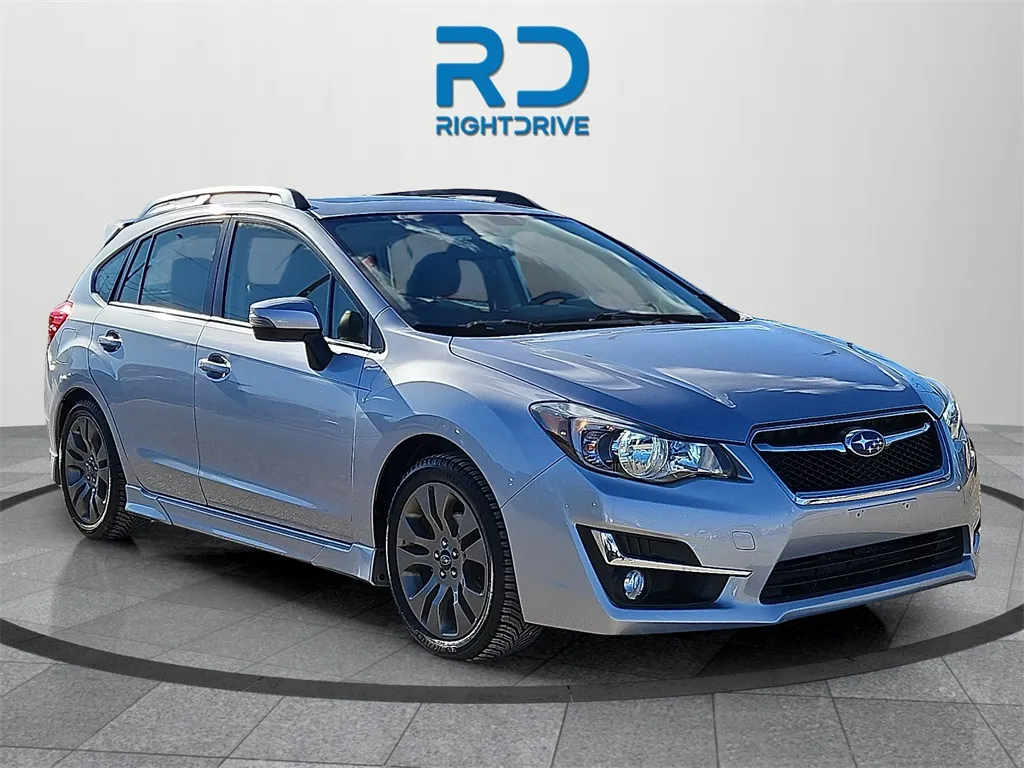
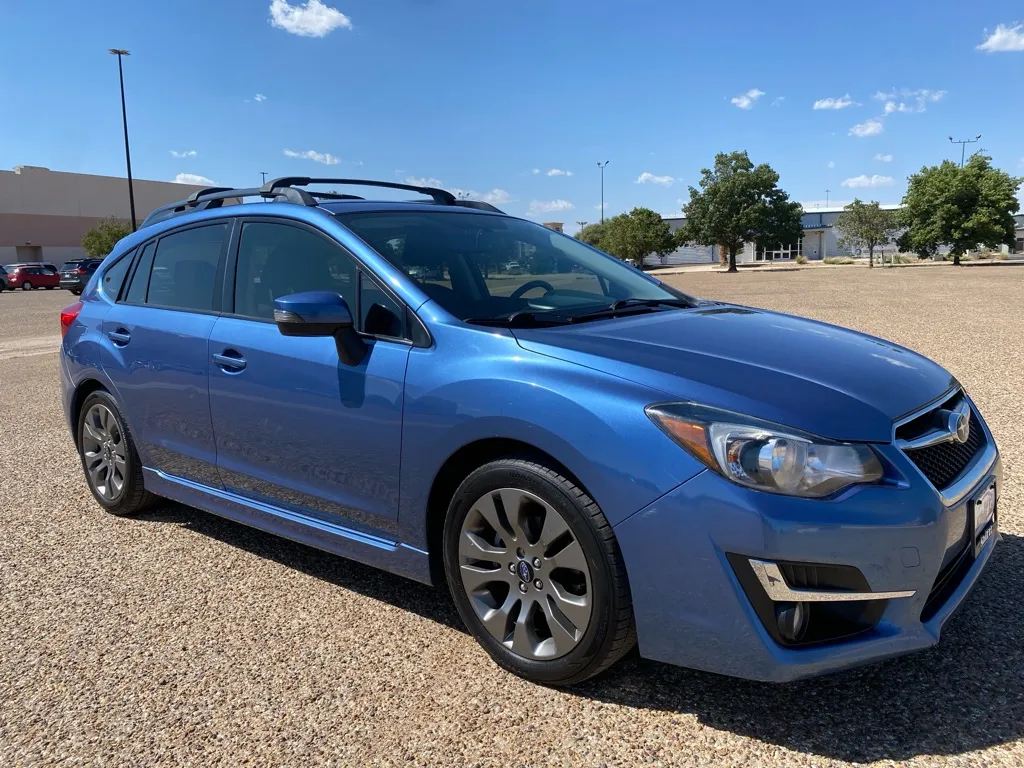
The 2016 Impreza was offered as both a 4-door sedan and a 5-door hatchback. Interestingly, the aerodynamic profile of the sedan is slightly superior at high speeds, leading to marginally better real-world highway numbers. The hatchback, while more versatile, creates a larger wake of turbulent air behind the vehicle. Furthermore, the "Sport" trims (Sport Premium and Sport Limited) often come with roof rails as standard equipment, which adds a small amount of aerodynamic drag even when not in use.
Detailed Fuel Economy Specifications by Trim and Configuration
To help you compare the various iterations of the 2016 Impreza, the following table breaks down the official EPA estimates. Note that the 2.0i "Sport" variants often see a 1-MPG dip in highway ratings due to larger wheels and roof rails.
| Configuration | City MPG | Highway MPG | Combined MPG | Estimated Range (Miles) |
|---|---|---|---|---|
| Sedan (CVT) | 28 | 37 | 31 | 449 |
| Hatchback (CVT) | 28 | 37 | 31 | 449 |
| Sport Limited (CVT) | 27 | 36 | 31 | 449 |
| Sedan (5-Speed Manual) | 25 | 34 | 28 | 406 |
| Hatchback (5-Speed Manual) | 25 | 34 | 28 | 406 |
Range estimates are based on the 14.5-gallon fuel tank capacity.
How the 2016 Impreza Compares to 2016 Competitors
In the 2016 marketplace, the Impreza occupied a unique niche. Most compact cars, such as the Honda Civic or Toyota Corolla, were front-wheel drive. Adding AWD usually meant stepping up to a crossover (like the Subaru Crosstrek or Mazda CX-5), which generally suffered from lower fuel economy due to increased weight and height.
- 2016 Honda Civic (1.5T CVT): The Civic achieved an impressive 31 city / 42 highway. Without AWD, it was significantly more efficient than the Impreza but lacked the all-weather traction.
- 2016 Mazda3 (2.0L Automatic): Known for its "SkyActiv" technology, the Mazda3 offered 30 city / 41 highway. It provided a more engaging drive but, again, was limited to FWD.
- 2016 Volkswagen Golf SportWagen (TDI/TSI): Before the phase-out of certain engines, the Golf offered competitive highway numbers, but the AWD "Alltrack" versions (released later) struggled to match the Impreza's base efficiency.
The takeaway for buyers in 2026 is that the 2016 Impreza was the "efficiency king" of AWD compacts for its time. It offered a middle ground for those who needed traction but didn't want the 24-26 MPG average of a mid-sized SUV.
Maintenance and Its Effect on MPG in 2026
As these vehicles reach the ten-year mark, maintenance becomes the primary driver of fuel efficiency. A neglected 2016 Impreza can easily drop into the low 20s for combined MPG. To maintain the original 31 MPG rating, owners must pay attention to several Subaru-specific areas.
The Importance of Differential and Transmission Fluid
Because the Symmetrical AWD system involves a front differential, a rear differential, and a complex CVT, fluid health is paramount. Old, viscous fluid in the differentials creates "parasitic loss," where the engine has to work harder just to turn the axles. Subaru officially lists CVT fluid as "lifetime" in some markets, but most technicians recommend changes every 60,000 to 100,000 miles to ensure the pulley system operates without slippage or excessive heat.
Spark Plugs and Carbon Buildup
The FB20 engine uses a Dual Overhead Cam (DOHC) setup with long-life iridium spark plugs. By 2026, many 2016 models are approaching or have passed the 100,000-mile mark. Worn plugs lead to incomplete combustion, which directly reduces fuel economy and can eventually damage the catalytic converter.
Tire Selection and Pressure
Subarus are sensitive to tire diameter and rolling resistance. If you install heavy, aggressive "all-terrain" tires—a popular mod for Subaru owners—your fuel economy will drop by 2-3 MPG instantly. To maintain the 37 MPG highway rating, it is essential to use Low Rolling Resistance (LRR) tires and maintain the factory-recommended PSI (usually 32-33 PSI depending on the load).
Technical Deep Dive: PZEV and Emissions
Many 2016 Subaru Imprezas sold in the United States carry the PZEV (Partial Zero Emission Vehicle) badge. While PZEV status does not directly increase fuel economy, it indicates that the vehicle has a more sophisticated engine management system and a more efficient catalytic converter.
PZEV vehicles are designed to eliminate fuel system evaporative emissions. In the context of fuel economy, the sensors in a PZEV model are highly tuned to maintain a precise air-fuel ratio. If a PZEV Impreza has a vacuum leak or a faulty O2 sensor, the drop in MPG will often be more pronounced than in a non-PZEV car, as the computer attempts to compensate for the imbalance to maintain low emissions.
Practical Tips for Improving Your Impreza's MPG
If you own a 2016 Impreza in 2026 and find your mileage is lacking, consider these specific actions:
- Clean the Mass Air Flow (MAF) Sensor: Over time, dust can coat the MAF sensor, causing the engine to run "rich" (using too much fuel). A simple cleaning with specialized spray can restore 1-2 MPG.
- Check the PCV Valve: A clogged Positive Crankcase Ventilation (PCV) valve is a common Subaru issue. It can lead to oil consumption and decreased efficiency. It is a cheap, 15-minute fix.
- Monitor the Wheel Bearings: Subaru wheel bearings from this era are known to wear out. A failing bearing creates friction and heat, which acts like a subtle brake on the car, dragging down fuel efficiency.
- Use the Eco-Gauge: The 2016 Impreza features a small digital display in the center of the dashboard that shows real-time MPG. Learning to keep the "needle" in the green zone by using gradual throttle inputs is the most effective way to reach the 37 MPG highway mark.
Frequently Asked Questions
Does the 2016 Subaru Impreza require premium fuel?
No, the 2016 Subaru Impreza is designed to run on 87-octane regular unleaded gasoline. Using premium fuel (91 or 93 octane) will not improve fuel economy or performance in this naturally aspirated engine, as the compression ratio and timing are optimized for regular fuel.
How much does the AWD system actually hurt fuel economy?
Generally, the Symmetrical AWD system in the 2016 Impreza accounts for a 2-4 MPG penalty compared to what the car would achieve if it were FWD. However, Subaru offsets this with the CVT’s efficiency and the Boxer engine’s low-friction design.
Why is my 2016 Impreza getting less than 25 MPG in the city?
Short trips in cold weather are the primary cause. The FB20 engine takes time to reach its optimal operating temperature. During the "warm-up" phase, the ECU injects more fuel to heat the catalytic converter. If your commute is under 5 miles, you may never reach the peak efficiency of 28 city MPG.
Is the Hatchback less efficient than the Sedan?
On paper, they are rated identically. However, in high-speed highway testing (over 75 MPH), the sedan's trunk-lid design provides a cleaner "break" for the airflow, often resulting in about 1 MPG better performance than the hatchback's more vertical rear end.
Does the 2016 Impreza have an "Eco Mode"?
The 2016 Impreza does not have a dedicated button for "Eco Mode." Instead, the CVT is programmed to default to its most efficient behavior. Drivers must use "feathering" techniques on the accelerator to induce the transmission to upshift earlier and lower the RPMs.
Final Recommendation for 2026 Buyers
In 2026, the 2016 Subaru Impreza remains a financially sound choice for those prioritizing fuel economy without sacrificing AWD capability. To maximize your investment, prioritize models with a documented CVT fluid service and ensure the spark plugs have been replaced if the vehicle is over 100,000 miles. For the highest possible MPG, seek out the Sedan with the CVT, as it offers the best aerodynamic and mechanical configuration for long-distance highway efficiency. Avoiding the "Sport" trims and sticking to the standard 16-inch wheels will also ensure you get the lowest possible rolling resistance and the highest real-world mileage.