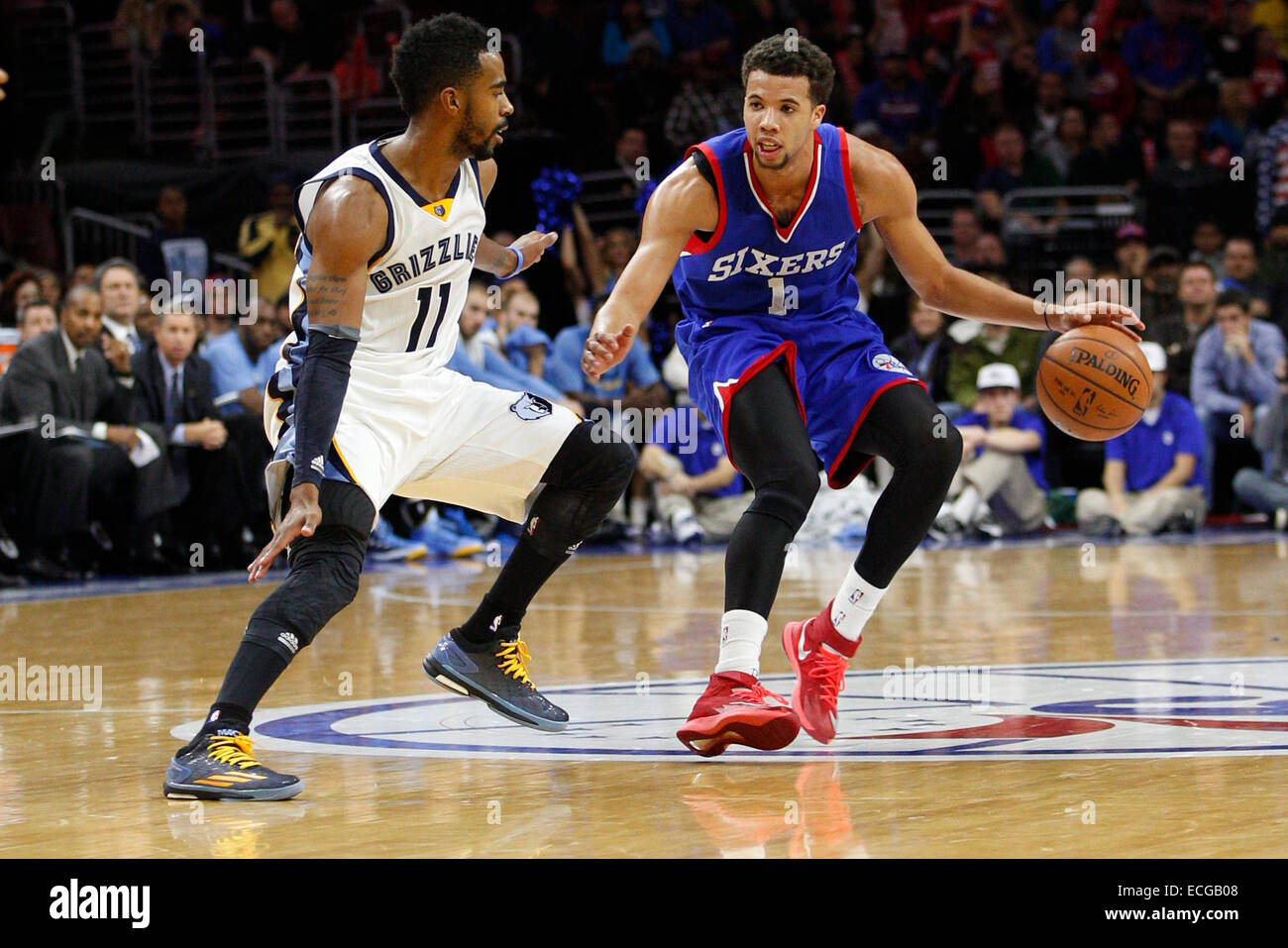
The 2014–15 Philadelphia 76ers season was a foundational and heavily calculated chapter in the franchise's modern history, defined by an aggressive front-office rebuilding strategy known colloquially as "The Process." Led by General Manager Sam Hinkie, the organization prioritized long-term asset accumulation, salary cap flexibility, and the acquisition of high-ceiling young prospects through the NBA Draft over immediate on-court competitiveness. While the resulting product on the floor produced a difficult 18-64 record, the campaign served as a critical laboratory for evaluating developmental talent, establishing a distinct defensive identity under head coach Brett Brown, and positioning the franchise for future drafts.
Strategic Framework and Front Office Philosophy
To understand the 2014 Philadelphia 76ers season, one must examine the overarching strategy engineered by the front office. Sam Hinkie’s blueprint relied on economic and structural advantages inherent to the NBA collective bargaining agreement, specifically the draft lottery system. By intentionally fielding a roster lacking veteran stars, the team minimized payroll obligations, maximized salary cap space to absorb troublesome contracts from other franchises in exchange for future draft picks, and maximized its mathematical odds of securing elite talent at the top of the NBA Draft.
Critics frequently challenged the aesthetic and competitive integrity of this approach, pointing to the scarcity of established veterans and the burden placed on ticket-holding fans. However, ownership and the executive suite remained steadfast, viewing the strategy as the only viable path to transcend mediocrity and contend for a championship. The 2014–15 campaign represented the second full installment of this multi-year undertaking, following an equally stark 2013–14 season.
Roster Construction and Key Personnel
The 2014–15 Philadelphia 76ers roster was one of the youngest and most economically flexible groups in modern NBA history. With a payroll well below the league floor for much of the early season, the team operated as a revolving door for developmental prospects, undrafted free agents, and D-League (now G-League) call-ups. Despite the heavy turnover, a core group of foundational pieces shaped the narrative of the season.
The Frontcourt and Defensive Anchor
Nerlens Noel, who missed his actual rookie campaign due to a torn ACL sustained in college, made his highly anticipated professional debut during the 2014–15 season. Playing primarily at the center position, Noel showcased exceptional defensive instincts, lateral mobility, and shot-blocking prowess. He averaged 9.9 pixels—or rather, points—alongside 8.1 rebounds, 1.8 steals, and 1.9 blocks per game, earning consensus NBA All-Rookie First Team honors. His defensive versatility allowed head coach Brett Brown to implement aggressive trapping schemes, masking some of the team's deficiencies on the perimeter.
The Guard Rotation and Scoring Load
The perimeter was anchored by guard Michael Carter-Williams, who had won the NBA Rookie of the Year award the previous season. Carter-Williams filled the stat sheet with averages of 15.0 points, 6.2 rebounds, and 7.4 assists per game, establishing himself as the primary engine of the offense. However, his shooting efficiency remained a concern, and the front office ultimately made a high-profile decision at the February trade deadline, sending Carter-Williams to the Milwaukee Bucks in a complex three-team trade that yielded a coveted protected future first-round draft pick via the Los Angeles Lakers.
Following the departure of Carter-Williams, guard Isaiah Canaan assumed a significant ball-handling role after being acquired via trade from the Houston Rockets. Canaan provided perimeter shooting, injecting much-needed floor spacing through his three-point volume. Meanwhile, veteran presence was minimal, though players like Jason Richardson (returning from long-term injury) and forward Luc Richard Mbah a Moute provided essential professional mentorship to the locker room.
Coaching Staff and Tactical Identity
Head coach Brett Brown faced the unenviable task of maintaining high morale, defensive discipline, and competitive effort within a roster engineered for defeat. Despite the outward struggles, Brown earned widespread respect around the league for his player development acumen and tactical consistency.
Defensively, the 76ers were surprisingly competitive. They finished the season in the upper half of the league in defensive rating for stretches, driven by active hands, switching schemes, and the rim protection provided by Noel. Offensively, however, the team struggled significantly. They ranked near the bottom of the league in field goal percentage, three-point shooting accuracy, and turnovers. The offensive scheme often relied heavily on isolation plays, transition opportunities, and open perimeter shots generated by drive-and-kick sequences that frequently misfired due to limited roster shooting capabilities.
Season Progression and Major Milestones
The campaign unfolded in distinct phases, characterized by extended losing streaks punctuated by surprising upset victories against playoff-bound opponents who took the youthful squad lightly.
- The Opening Struggles: The team began the year with a dismal 0-17 record, matching historical franchise lows for consecutive losses to start a season and intensifying national media scrutiny surrounding the rebuilding model.
- Mid-Season Adjustments: The team found modest rhythm in December and January, securing a series of gritty home victories at the Wells Fargo Center. Noel's defensive impact matured significantly during this stretch, and forward Robert Covington emerged as a vital rotation piece after being signed from the D-League, showcasing elite three-and-D potential.
- The Trade Deadline Pivot: February brought substantial roster upheaval. The trade of Michael Carter-Williams signaled a definitive doubling-down on asset accumulation. The subsequent rotation relied heavily on G-League call-ups and international draft-and-stash rights conversions, further reducing immediate win-loss expectations.
- The Stretch Run: The closing months were dedicated entirely to evaluation. Young players received heavy minutes, and the team secured the third-worst record in the league, ensuring optimal lottery odds for the upcoming draft.
Roster Composition and Statistical Snapshot
To understand the mechanics of the 2014 Philadelphia 76ers squad, it is helpful to examine the primary contributors, their positional roles, and their core developmental metrics during the campaign.
| Player | Position | Age | Points Per Game | Rebounds Per Game | Assists Per Game | Key Season Note |
|---|---|---|---|---|---|---|
| Nerlens Noel | Center / Power Forward | 20 | 9.9 | 8.1 | 1.8 | All-Rookie First Team; defensive anchor |
| Michael Carter-Williams | Point Guard | 23 | 15.0 | 6.2 | 7.4 | Traded in February to Milwaukee |
| Robert Covington | Small Forward | 24 | 13.5 | 4.5 | 1.5 | Emerged as primary wing shooter |
| Isaiah Canaan | Point Guard | 23 | 12.6 | 2.6 | 3.1 | Acquired via trade mid-season |
| Luc Richard Mbah a Moute | Forward | 28 | 9.9 | 4.9 | 1.6 | Provided veteran defensive stability |
Frequently Asked Questions
What was the final record of the 2014 Philadelphia 76ers season?
The team finished the 2014–15 NBA regular season with an 18-64 record. This placed them fourth in the Atlantic Division and fourteenth in the Eastern Conference, missing the postseason as intended by the front office's long-term roster strategy.
Who was the head coach of the 76ers during this season?
Brett Brown served as the head coach of the Philadelphia 76ers for the entirety of the 2014–15 season. He was praised by analysts and peers for maintaining a rigorous developmental environment and strong defensive culture despite a talent deficit.
Why did the 76ers trade Michael Carter-Williams?
The front office traded Michael Carter-Williams to the Milwaukee Bucks in February 2015 to acquire a highly coveted, protected future first-round draft pick originally belonging to the Los Angeles Lakers. This move aligned with Sam Hinkie's strategy of prioritizing future draft assets and long-term upside over keeping current non-all-star talent.
How did Nerlens Noel perform in his rookie season?
Nerlens Noel had an impressive debut campaign after missing the previous year with an injury. He averaged 9.9 points, 8.1 rebounds, 1.8 steals, and 1.9 blocks per game, anchoring the team's defense and earning a spot on the NBA All-Rookie First Team.
What was "The Process" in relation to this season?
"The Process" was the colloquial term for the Philadelphia 76ers' organizational rebuilding strategy led by General Manager Sam Hinkie. It involved intentionally lowering short-term competitiveness to accumulate high draft picks, cap space, and assets to build a sustainable championship contender.
Conclusion and Next Actions
The 2014 Philadelphia 76ers season remains a polarizing yet fascinating case study in sports management. For fans and analysts studying modern NBA roster construction, examining this campaign highlights the tension between short-term entertainment and radical long-term planning. To gain a deeper understanding of this era, review historical front-office transaction logs from the 2015 trade deadline, analyze subsequent NBA draft lottery outcomes, and examine how foundational pieces like Nerlens Noel and Robert Covington influenced the franchise's trajectory in the years that followed.