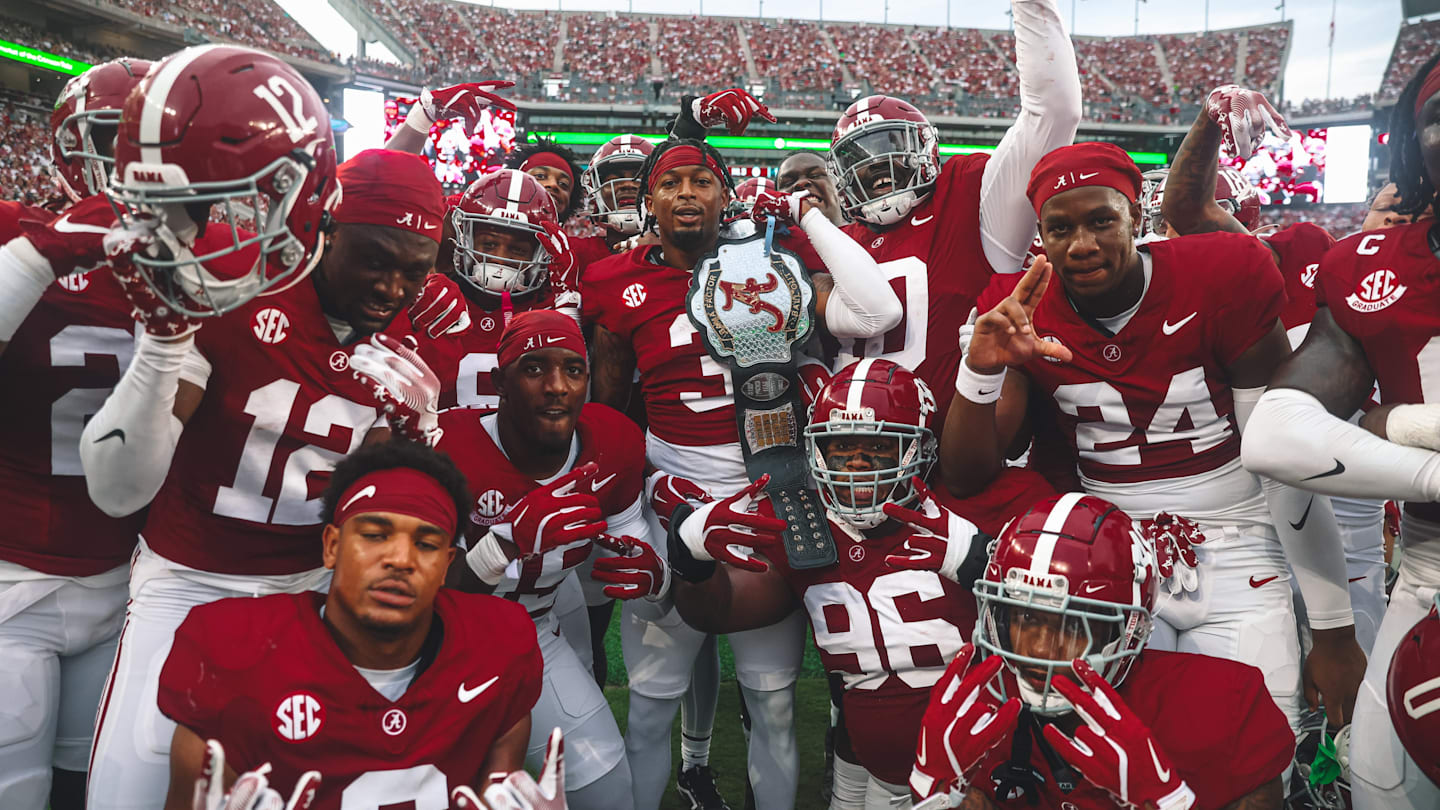
The 2011 Alabama Crimson Tide defense stands as one of the most dominant statistical units in modern college football history. By allowing only 8.2 points per game and holding opponents to an average of 183.6 total yards per game, this unit defined the "process" era under Nick Saban, utilizing a hybrid 3-4 scheme, elite gap integrity, and unrivaled sideline-to-sideline speed to suffocate opposing offenses throughout the season.
The Foundation of Defensive Dominance
To understand the 2011 Alabama defense, one must first recognize the structural shift Nick Saban brought to Tuscaloosa. Moving away from the traditional 4-3 schemes prevalent in the SEC at the time, Saban implemented a sophisticated, multi-front 3-4 base. This was not merely a formation but a philosophy centered on "pattern matching" in the secondary and "two-gapping" along the defensive line.
The 2011 roster was the culmination of four recruiting cycles that focused on versatility. The coaching staff prioritized defensive linemen who possessed the size to anchor against double-teams and the athleticism to shift into sub-packages. This flexibility allowed Alabama to rotate players frequently, keeping the unit fresh while maintaining defensive intensity throughout four quarters. Unlike teams that relied on a few stars, the 2011 Crimson Tide utilized a "next man up" mentality facilitated by a depth chart that featured future NFL starters at nearly every position.
Technical Execution: Gap Integrity and the Hybrid Front
The core of the 2011 unit’s success was its absolute commitment to gap integrity. In modern football, offenses look to manipulate defenses by forcing them to declare their assignments. Saban’s 2011 defense was unique because it functioned as a "living" organism; it changed its identity based on the offensive look without sacrificing its fundamental rules.
Two-Gapping vs. Attacking
At the point of attack, Alabama’s defensive linemen, led by Josh Chapman at the nose guard position, were tasked with occupying blockers rather than just rushing the passer. By "two-gapping"—controlling the space on both sides of an offensive lineman—Chapman and his cohorts effectively neutralized the interior run game. This discipline forced running backs to move laterally, directly into the waiting arms of Alabama’s linebackers, most notably C.J. Mosley and Dont'a Hightower.
The Secondary’s Pattern Matching
The secondary, featuring players like Mark Barron, DeQuan Menzie, and Dre Kirkpatrick, employed a "match-quarters" coverage scheme. This system combined the safety of zone coverage with the man-to-man accountability of tight coverage. When receivers ran vertical routes, the defenders shifted into man coverage; when receivers ran underneath or crossing routes, the defenders remained in zones, passing receivers off seamlessly. This eliminated the "blind spots" that many spread offenses exploited during that era.
Statistical Profile and Historical Comparison
The raw numbers generated by the 2011 unit defy standard historical comparisons. Finishing as the top-ranked defense in total defense, rushing defense, passing defense, and scoring defense, they achieved a statistical "grand slam" that is rarely seen in the modern era of high-scoring offenses.
| Metric | 2011 Alabama Average | Rank |
|---|---|---|
| Points Allowed per Game | 8.2 | 1st |
| Total Yards Allowed per Game | 183.6 | 1st |
| Rushing Yards per Game | 72.2 | 1st |
| Passing Yards per Game | 111.5 | 1st |
The most telling statistic, however, was the success rate of third-down conversions against the defense. By consistently forcing opponents into "third and long" situations, the defense dictated the tempo of the game, forcing opposing offensive coordinators to abandon their game plans early in the first half.
Leadership and On-Field Intelligence
Beyond the scheme, the 2011 defense was characterized by high-level football IQ. Linebackers Dont'a Hightower and Courtney Upshaw served as the "quarterbacks" of the defense. Their ability to read offensive line formations—identifying run versus pass based on stance, backfield alignment, and wide receiver splits—meant that the defense was often in the correct alignment before the ball was snapped.
This intelligence was amplified by the coaching staff, particularly defensive coordinator Kirby Smart. Smart’s ability to disguise blitz packages allowed the defense to exert pressure without needing to send an extra man. By dropping seven players into coverage while generating pressure with just four—or sometimes three—the defense maintained a numerical advantage in the secondary at all times, making it nearly impossible for opposing quarterbacks to find open receivers.
The National Championship Performance: The LSU Rematch
The true litmus test for the 2011 unit occurred in the BCS National Championship game against LSU. Having lost to LSU in the regular season, the Alabama defense entered the championship game with a clear objective: force LSU into one-dimensional play. The defensive performance was historic, holding LSU to a mere 92 yards of total offense and only five first downs.
This game demonstrated the ultimate versatility of the unit. Alabama adjusted their interior front to account for LSU’s power-run game while simultaneously playing tighter coverage on the perimeter. The performance served as a definitive case study in how to neutralize a high-powered, balanced offense through sheer discipline, physical dominance, and tactical superiority.
Frequently Asked Questions
Why was the 2011 Alabama defense considered better than other great defenses?
The 2011 defense was considered exceptional not just for its physical dominance, but for its statistical consistency across all categories. It achieved the #1 ranking in every major defensive category simultaneously, which is an extremely rare feat in the era of pass-heavy spread offenses.
What was the specific role of the "Star" position?
The "Star" (the nickelback) was essential in the 2011 scheme. This player had to be athletic enough to cover slot receivers and fast enough to blitz from the edge. It required a unique blend of a cornerback’s coverage skills and a linebacker’s physicality.
How did the defense impact the rest of the team's strategy?
Because the defense consistently held opponents to low scores, the Alabama offense could play a conservative, ball-control style. They did not need to take unnecessary risks, which allowed the team to minimize turnovers and win the "field position" battle every game.
What happened to the players from the 2011 defense?
The 2011 roster was heavily stocked with future NFL talent. A significant majority of the starting defensive unit were selected in the subsequent NFL Drafts, with many going on to have successful professional careers as starters, All-Pros, and Super Bowl champions.
Can a modern college team replicate the 2011 Alabama defense?
Replicating this unit is difficult in 2026 due to the evolution of fast-paced, "no-huddle" offenses that fatigue defenses. The 2011 unit benefited from the ability to substitute personnel and a rigid adherence to a scheme that required immense discipline, which is harder to sustain against modern tempo-based offenses.
Conclusion: A Benchmark for Excellence
The 2011 Alabama defense remains a benchmark for excellence in collegiate sports. Its impact was not merely in the games won, but in the standard it set for the "Process"—the idea that meticulous preparation, physical toughness, and extreme discipline can overcome any offensive trend. For those analyzing college football history, this unit serves as the gold standard for defensive coordination and execution. The primary takeaway for any defensive program is that success is built upon the foundational commitment to gap integrity and the ability to adapt defensively without abandoning one’s core principles.