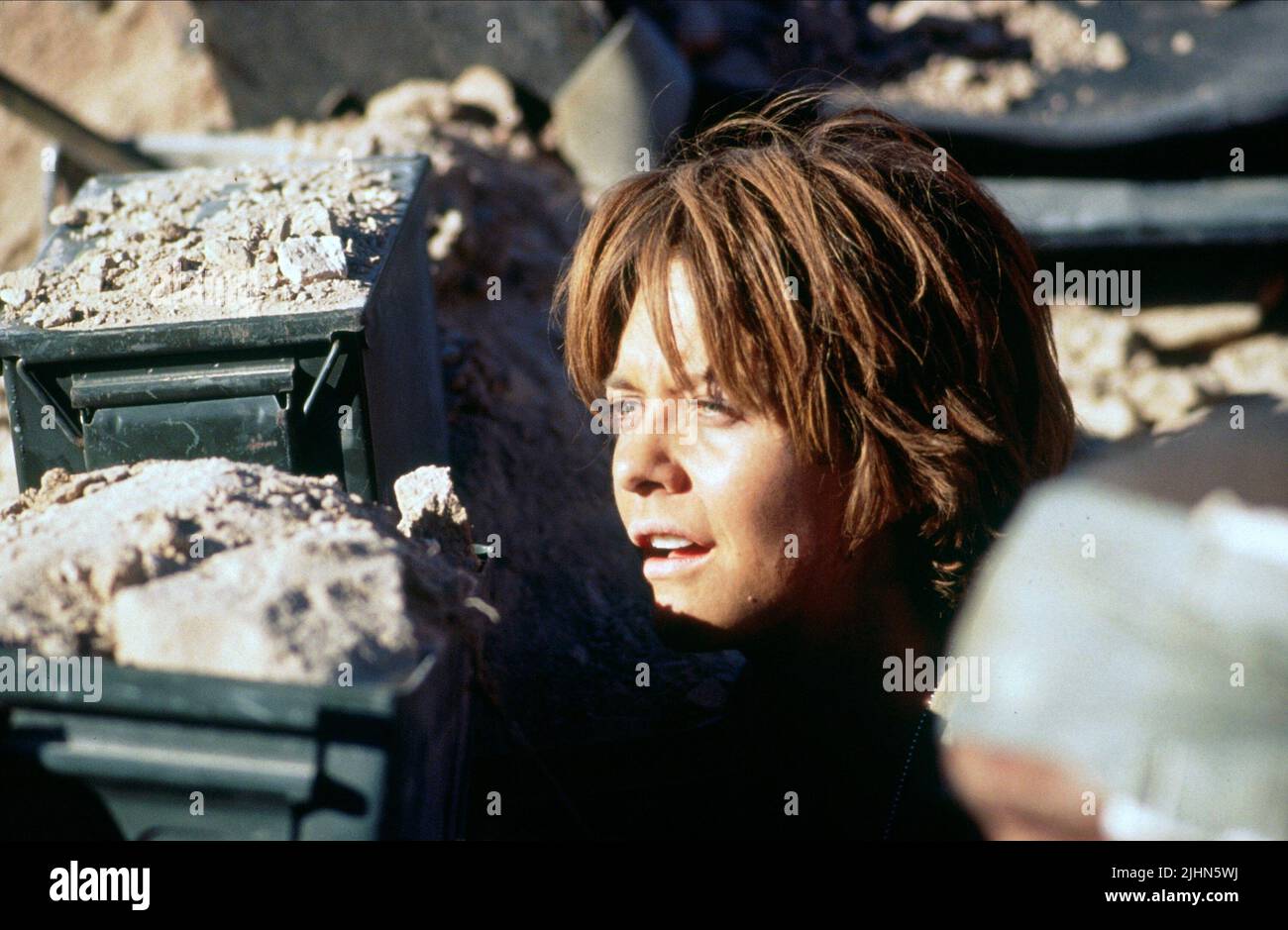
Released in 1996, Courage Under Fire remains a seminal piece of American cinema, blending the intensity of a military drama with the intricate procedural elements of a mystery. Directed by Edward Zwick, the film explores the subjective nature of truth, the psychological toll of combat, and the historical struggle for gender integration within the United States Armed Forces.
The Narrative Structure: A Military Mystery in the Style of Rashomon
At its core, Courage Under Fire is a "Rashomon-style" narrative, a storytelling technique where a single event is recounted through multiple, often conflicting, perspectives. The film follows Lieutenant Colonel Nathaniel Serling (Denzel Washington), a tank commander struggling with the guilt of a friendly fire incident during the Gulf War. Serling is tasked with investigating a posthumous Medal of Honor recommendation for Captain Karen Walden (Meg Ryan), a Medevac pilot who perished under mysterious circumstances while attempting to rescue a downed helicopter crew.
The film meticulously builds its tension by presenting three distinct versions of Walden's final hours. As Serling interviews the surviving crew members—played with haunting intensity by actors like Matt Damon and Lou Diamond Phillips—the audience is forced to piece together the fragments of a chaotic battlefield. One version paints Walden as a heroic, unflinching leader; another suggests she was a coward who cracked under pressure; a third depicts a tragic struggle for survival marked by mutiny and desperation. This structure does more than just provide a mystery; it mirrors the fog of war and the unreliability of human memory under extreme trauma.
Casting and Character Deep-Dives
The success of the 1996 production relied heavily on its ensemble cast, many of whom were at pivotal points in their careers.
Denzel Washington as Lt. Col. Nathaniel Serling
Washington delivers a performance defined by restraint and simmering internal conflict. Unlike the typical "action hero" roles of the mid-90s, Serling is a man breaking under the weight of a cover-up he was forced to participate in. His investigation into Walden’s death is as much a search for his own redemption as it is a search for the truth. Washington's ability to convey deep-seated PTSD through subtle facial expressions and weary dialogue anchors the film’s emotional stakes.
Meg Ryan as Capt. Karen Walden
In 1996, Meg Ryan was primarily known as the "queen of romantic comedies." Her casting as a gritty, grease-stained combat pilot was a significant risk that paid off. Ryan appears primarily in flashbacks, requiring her to play multiple "versions" of the same character based on the narrator's bias. She successfully transitions from a motherly, comforting figure to a fierce, commanding officer, and finally to a wounded soldier facing an impossible choice.
Matt Damon’s Physical Transformation
One of the most discussed technical aspects of the film’s production was Matt Damon’s dedication to the role of Specialist Ilario. To portray a soldier ravaged by drug addiction and guilt, Damon lost approximately 40 pounds in a very short period. This physical transformation was so severe that it reportedly caused him health issues for years afterward, but it provided the film with a visceral sense of reality that bolstered the credibility of the "broken soldier" archetype.
Production Design and Historical Authenticity
Director Edward Zwick and cinematographer Roger Deakins aimed for a visual style that distinguished the Gulf War from the jungle-heavy aesthetics of Vietnam War films. The cinematography utilizes a palette of harsh ambers, dusty browns, and deep shadows.
The production team faced challenges in recreating the Iraqi desert. While much of the film was shot in Texas, the "Al Kout" oil field fires were recreated using sophisticated pyrotechnics and visual effects to simulate the apocalyptic atmosphere of the 1991 retreat. The attention to technical detail extended to the military hardware; the film utilized actual M1A1 Abrams tanks and UH-1 Huey helicopters, often coordinated with the assistance of the National Guard to ensure tactical movements felt authentic to veterans.
Thematic Depth: Truth, Trauma, and Gender
Courage Under Fire was ahead of its time in its treatment of several sensitive military topics.
- Post-Traumatic Stress Disorder (PTSD): Long before PTSD became a common topic in public discourse, the film illustrated the symptoms through Serling’s alcoholism, night terrors, and social isolation. It highlights how the military hierarchy of the 90s often discouraged seeking help, viewing psychological wounds as a lack of "courage."
- Friendly Fire and Accountability: The film bravely tackles the "fog of war" and the institutional desire to sanitize combat reports. Serling’s struggle against his superiors—who want him to quickly verify Walden’s heroism to provide the public with a "good story"—critiques the intersection of military PR and actual battlefield reality.
- Women in Combat: In 1996, women were still restricted from many direct combat roles in the U.S. military. The film posits Karen Walden as a candidate for the first woman to receive the Medal of Honor for combat valor. It explores the skepticism and outright misogyny she faced from her own subordinates, making her story a microcosm of the larger institutional resistance to female integration.
Comparing Courage Under Fire to Other Military Classics
To understand the film's standing in 2026, it is helpful to compare it to other major military dramas of its era and beyond.
| Film Title | Release Year | Primary Focus | Narrative Style |
|---|---|---|---|
| Courage Under Fire | 1996 | Investigation & PTSD | Non-linear / Multi-perspective |
| Saving Private Ryan | 1998 | Direct Combat / Duty | Linear / Visceral Action |
| Black Hawk Down | 2001 | Tactical Failure | Real-time / Ensemble |
| The Hurt Locker | 2008 | Addiction to Combat | Character Study / Suspense |
| Zero Dark Thirty | 2012 | Intelligence / Pursuit | Procedural / Historical |
While films like Saving Private Ryan are lauded for their technical depiction of combat, Courage Under Fire is often cited by film scholars for its superior character development and its willingness to engage with the moral ambiguity of the "hero" narrative.
Critical Reception and Financial Performance
Upon its release in July 1996, the film received positive reviews from critics, who praised the performances and the sophisticated screenplay by Patrick Sheane Duncan. It currently holds an "82% Fresh" rating on Rotten Tomatoes (as of 2026 data archives). Critics like Roger Ebert noted that the film was "a rare Hollywood war movie that was more interested in the aftermath and the people than the explosions."
Financially, the film was a solid success, grossing approximately $100 million worldwide against a budget of $46 million. It proved that audiences were willing to engage with mature, dialogue-heavy military dramas that didn't rely solely on action set-pieces.
The Legacy of the 1996 Production in 2026
Thirty years after its debut, the film’s relevance has not waned. In 2026, the discussion surrounding women in combat has evolved significantly, with women now serving in all branches and roles, including infantry and special operations. Courage Under Fire serves as a historical marker of the transition period when the military and the public were still debating the "suitability" of female soldiers in life-or-death scenarios.
Furthermore, the film is frequently used in leadership and ethics courses within military academies. The central conflict—Serling’s refusal to sign off on a lie even when it would benefit his own career—remains a textbook example of moral courage.
How to Access and Watch Courage Under Fire Today
As of 2026, the film is widely available across various digital and physical formats.
- Streaming Services: It is frequently included in the libraries of major platforms like Disney+ (via the 20th Century Studios catalog) or Max.
- 4K Ultra HD Remaster: A 30th-anniversary 4K restoration was released recently, featuring enhanced HDR that brings out the incredible detail in Roger Deakins' cinematography.
- Digital Purchase: Available for high-definition purchase on platforms such as Amazon, Apple TV, and Google Play.
For those interested in the technical "making-of," the anniversary editions include extensive commentary from Edward Zwick, detailing the logistical hurdles of filming the night-time desert sequences.
Frequently Asked Questions
Was Captain Karen Walden based on a real person?
No, the character of Captain Karen Walden is fictional. However, the story was inspired by the real-life debates regarding the role of women in the Gulf War and the historical fact that, at the time, no woman had yet received the Medal of Honor for combat valor (Mary Edwards Walker received it during the Civil War, but it was for medical service).
Why did Matt Damon lose so much weight for the movie?
Damon portrayed a character who had become a heroin addict as a way to cope with the guilt of the events following the helicopter crash. He felt that a skeletal, sickly appearance was necessary to convey the character's internal decay. He lost roughly 40 pounds through a self-imposed, unsupervised diet, which he later stated was a dangerous mistake.
What does the title "Courage Under Fire" signify?
The title has a dual meaning. Literally, it refers to the bravery required by soldiers like Walden and her crew when their helicopter was shot down and they were surrounded by enemy forces. Metaphorically, it refers to the moral courage Serling must show while "under fire" from his superiors and his own conscience during the investigation.
Did the film win any Academy Awards?
Despite strong critical acclaim and Denzel Washington’s powerful performance, the film did not win any Oscars. It was released in a highly competitive year that included The English Patient and Fargo. However, it received several nominations from other bodies, including the Image Awards and the Political Film Society.
Is the "friendly fire" incident in the movie accurate to the Gulf War?
The Gulf War saw a statistically high number of friendly fire incidents due to the speed of the advance and the limitations of night-vision and thermal identification technology at the time. The film’s depiction of a tank commander mistakenly firing on his own men in the heat of a night battle is considered a very accurate representation of the technical and psychological confusion present in those engagements.
Final Recommendation
If you are looking for a military film that prioritizes psychological depth and narrative complexity over mindless action, Courage Under Fire is an essential watch. It remains one of Denzel Washington's most underrated roles and provides a haunting look at the cost of war that feels just as relevant in 2026 as it did in 1996. Whether you are a student of film history or simply looking for a compelling mystery, this film offers a profound exploration of what it truly means to be a hero.