To access the full 1987 Broadway production of August Wilson’s Fences, readers must distinguish between the written script and the filmed performance. While the complete script is widely available through major book retailers and libraries, the original video recording featuring James Earl Jones is legally restricted to archival viewing at the New York Public Library for the Performing Arts and is not available for public streaming or purchase.
August Wilson’s Fences stands as a titan of American drama, a play that redefined the landscape of Broadway when it debuted in 1987. For those searching for "1987 fences full play," the intent often splits between students looking for the text to study and enthusiasts hoping to witness the legendary performances of James Earl Jones and Mary Alice. Understanding how to navigate the legal, archival, and literary avenues to experience this masterpiece is essential for any serious student of the arts.
The Cultural Significance of the 1987 Debut
The 1987 production of Fences was not merely a successful play; it was a cultural phenomenon. It was the second of August Wilson's "Pittsburgh Cycle" (also known as the Century Cycle) to reach Broadway, following Ma Rainey's Black Bottom. Directed by Lloyd Richards, the play opened at the 46th Street Theatre (now the Richard Rodgers Theatre) on March 26, 1987.
The production arrived at a time when Broadway was largely dominated by British musicals. Fences brought a raw, poetic, and quintessentially American story to the forefront, focusing on the Maxson family in the 1950s. It swept the 1987 Tony Awards, winning Best Play, Best Direction, Best Actor (James Earl Jones), and Best Featured Actress (Mary Alice). Furthermore, it earned August Wilson his first Pulitzer Prize for Drama, cementing his status as one of the greatest playwrights in history.
How to Access the Full Text of the 1987 Play
For those looking to read the "full play," the written script is the most accessible medium. The 1987 text is the definitive version of the play, capturing the dialogue and stage directions exactly as they were intended for the original Broadway run.
Authorized Editions and Publishers
The primary publisher for Fences is Plume (an imprint of Penguin Random House). When searching for the 1987 edition, look for the following:
- The Plume Paperbacks: These often feature a distinctive black cover with a baseball motif or images from the 1987 production.
- The August Wilson Century Cycle Box Set: Published by Theatre Communications Group (TCG), this is a more expensive, scholarly collection that includes all ten plays with forward material by renowned critics and artists.
- Digital Access: The play is available in Kindle and EPUB formats through Amazon, Barnes & Noble, and Apple Books.
Library Resources
Most public and university libraries carry multiple copies of Fences. If you are looking for the script specifically for academic purposes, check the Drama Online database or ProQuest, which many universities subscribe to, providing digital "full play" access to students and faculty.
Can You Watch the 1987 Full Play Video?
The search for a video of the "1987 fences full play" is more complex. Many viewers hope to find a high-definition recording on platforms like Netflix, Max, or YouTube. However, the reality of theatrical preservation and union regulations makes this difficult.
The TOFT Archive (New York Public Library)
The only official, full-length video recording of the original 1987 Broadway cast exists within the Theatre on Film and Tape Archive (TOFT) at the New York Public Library for the Performing Arts at Lincoln Center.
To view this recording, there are strict requirements:
- On-Site Viewing Only: You must physically travel to the library in New York City. The recording cannot be checked out or streamed remotely.
- Professional or Educational Justification: Access is typically granted to theater professionals, students, and researchers. You may be asked to provide a reason for your viewing request.
- Appointments: As of 2026, the archive requires advance reservations to use their viewing booths.
Why the 1987 Production is Not on Streaming
The lack of a commercially available 1987 video is due to Actors' Equity Association (AEA) and Screen Actors Guild (SAG-AFTRA) regulations from that era. In 1987, theater productions were rarely filmed for commercial distribution. The recordings made for TOFT were intended for archival and research purposes only, not for profit. Releasing these recordings publicly would require new negotiations and residual payments to the estates of the actors, director, and playwright—a process that is often prohibitively expensive and legally convoluted.
The Original 1987 Cast and Creative Team
Part of the allure of the 1987 version is the specific "lightning in a bottle" chemistry of the original cast. While the 2016 film starring Denzel Washington is excellent, the 1987 stage production offered a different energy and interpretation.
| Role | Actor (1987 Broadway) | Significance |
|---|---|---|
| Troy Maxson | James Earl Jones | A towering, booming performance that highlighted Troy's tragic grandeur. |
| Rose Maxson | Mary Alice | Portrayed Rose with a quiet, steely resolve that exploded in Act 2. |
| Cory Maxson | Courtney B. Vance | Captured the youthful defiance and eventual heartbreak of the son. |
| Jim Bono | Ray Aranha | Troy’s loyal friend and the moral "chorus" of the play. |
| Lyons Maxson | Charles Brown | Represented the jazz-era aspirations of the older son. |
| Gabriel Maxson | Frankie Faison | Troy’s brother, whose mental injury serves as a spiritual focal point. |
| Director | Lloyd Richards | Wilson’s longtime collaborator and a pioneer for Black directors on Broadway. |
Plot Summary and Key Themes of the 1987 Script
Whether reading the script or watching a production, the power of Fences lies in its dense, metaphorical storytelling. The play is set in 1957, a time of shifting racial dynamics in America.
The Character of Troy Maxson
Troy is a former Negro League baseball star who was too old to join the Major Leagues when they finally integrated. Now a garbage collector, he is embittered by the "stolen" opportunities of his youth. His character is a complex mix of provider and patriarch, whose rigid adherence to his own experiences blinds him to the changing world his son, Cory, inhabits.
The Central Metaphor: The Fence
The titular fence that Troy builds around his yard serves multiple symbolic purposes:
- Rose’s Perspective: For Rose, the fence is a way to keep her loved ones in, a symbol of her desire to hold her family together.
- Troy’s Perspective: For Troy, the fence is intended to keep "the Grim Reaper" (Death) out. Ironically, the fence also represents the barriers he builds between himself and his family through his infidelity and his refusal to support Cory's football dreams.
The Conflict of Generations
The "full play" revolves around the clash between Troy’s 1930s-era pragmatism and Cory’s 1950s-era optimism. Troy believes that because he was barred from professional sports, Cory will be too. He tells Cory, "The white man ain't gonna let you get nowhere with that football no way." This generational trauma is the engine that eventually drives the family apart.
Comparing the 1987 Production with Later Versions
Because the 1987 video is hard to find, many turn to later versions. Comparing these can provide a deeper understanding of the play's evolution.
The 2010 Broadway Revival
Directed by Kenny Leon, this revival starred Denzel Washington and Viola Davis. This production is significant because it served as the blueprint for the 2016 film. While the 1987 production was noted for its larger-than-life, almost Shakespearean quality (driven by James Earl Jones), the 2010 version was praised for its gritty realism and the visceral emotional connection between the leads.
The 2016 Feature Film
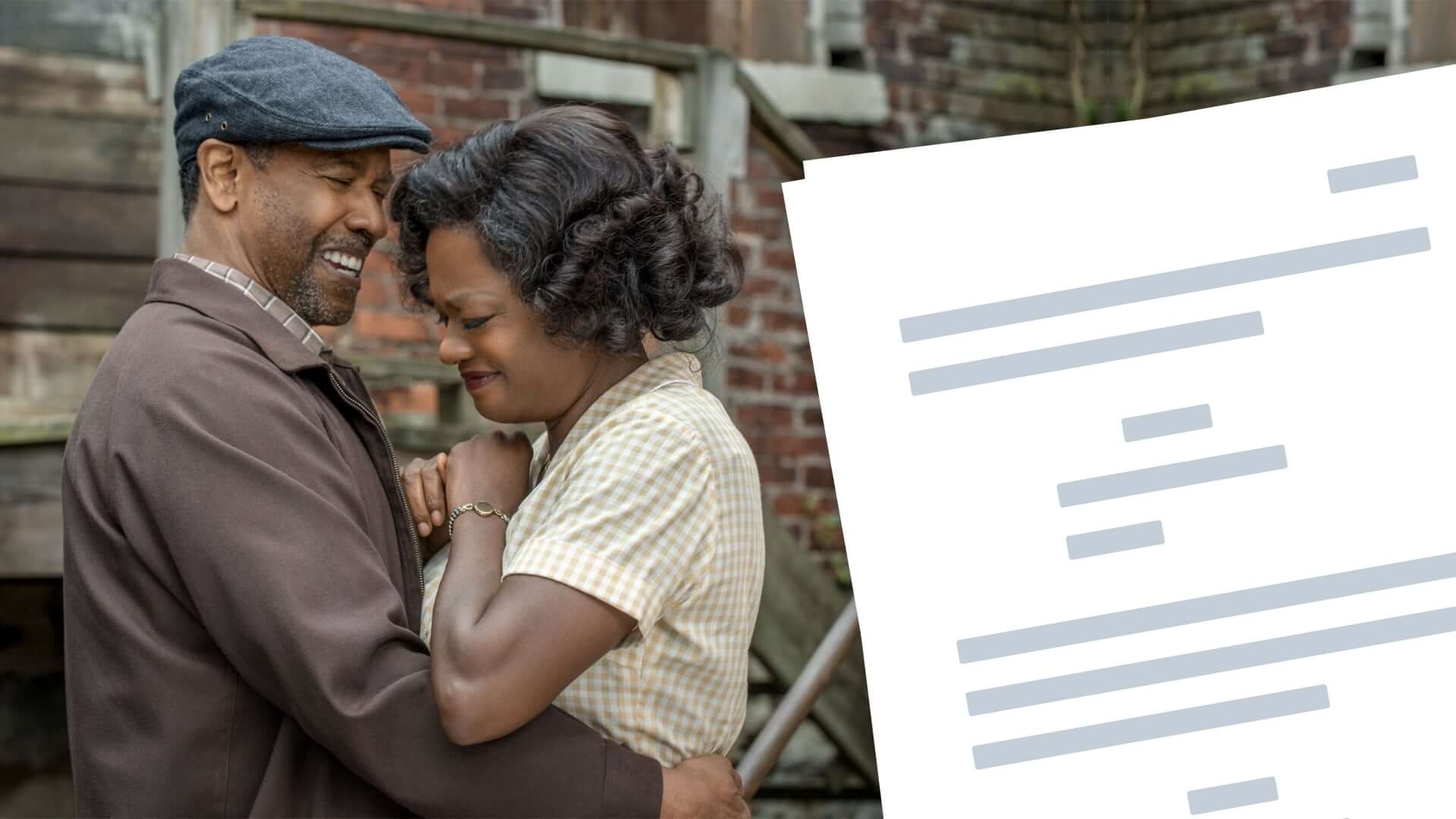
Directed by and starring Denzel Washington, the film is the most accessible way to experience the "full play" visually. The screenplay, written by August Wilson before his death in 2005, remains extremely faithful to the 1987 stage script. While it is a different medium, it captures the pacing and language of the 1987 version better than any other recorded format available to the general public.
Critical Reception and Legacy of the 1987 Run
When Fences premiered, critics were nearly unanimous in their praise. Frank Rich of The New York Times called it "a play that gives James Earl Jones the role of a lifetime." The production’s success proved that there was a massive, mainstream audience for serious, non-musical Black drama on Broadway.
The legacy of the 1987 production continues to influence how the play is taught in schools and performed in regional theaters. The vocal cadences of James Earl Jones and the specific blocking used by Lloyd Richards are often cited in dramaturgical notes for new productions.
Common Obstacles and Troubleshooting for Researchers
If you are a student or teacher trying to source the 1987 materials, you may encounter several hurdles.
- Bootleg Recordings: You may find low-quality "bootleg" snippets of the 1987 production on video-sharing sites. These are often unauthorized, incomplete, and violate copyright. For educational integrity, it is always better to rely on the published script or the official TOFT archive.
- Script Variations: While the 1987 Plume edition is the standard, some very early acting editions (like those from Samuel French/Concord Theatricals) may have minor stage direction differences based on the pre-Broadway run at the Yale Repertory Theatre. For the most "complete" experience, the Plume version is recommended.
- Finding the "1987 Movie": It is a common misconception that there was a movie released in 1987. No film was produced during the original run; the only feature film is the 2016 version.
Frequently Asked Questions
Is there a DVD of the 1987 Fences with James Earl Jones?
No, there was never a commercial DVD release of the 1987 Broadway production. The only high-quality recording is the archival version held by the New York Public Library, which is restricted to on-site viewing for researchers and professionals.
Where can I download the full 1987 Fences script for free?
While some sites may host PDFs, the most reliable and legal way to access the script is through a library’s digital lending service (like Libby or Hoopla) or by purchasing the ebook from an authorized retailer. Unauthorized PDF downloads often contain errors or missing scenes.
How long is the full play of Fences?
A full performance of Fences typically runs approximately 2 hours and 30 minutes, including one intermission. The script itself is roughly 100 pages long, depending on the edition’s formatting.
Did the 1987 production win any awards?
Yes, the 1987 production is one of the most awarded plays in Broadway history. It won the Pulitzer Prize for Drama and four Tony Awards: Best Play, Best Direction of a Play (Lloyd Richards), Best Actor in a Play (James Earl Jones), and Best Featured Actress in a Play (Mary Alice).
Can I watch the 1987 version on YouTube?
You may find short clips or interviews featuring the 1987 cast on YouTube, such as the Tony Awards performance excerpt. However, the "full play" is not legally available on the platform due to strict theatrical copyright laws.
Practical Recommendation for Next Actions
If your goal is to experience August Wilson's Fences in its most complete and authentic form:
- Read the 1987 Plume Script: This provides the foundation of Wilson’s language and the "full play" as it was intended to be heard.
- Watch the 2016 Film: While not the 1987 cast, it is the most faithful visual representation available to the public and uses Wilson's own screenplay.
- Visit the NYPL TOFT Archive: If you are a student or researcher in the New York area, schedule an appointment to view the original 1987 recording. This is a transformative experience for anyone studying the history of American theater.
- Listen to the Audio Play: L.A. Theatre Works offers a high-quality audio recording of Fences. While it does not feature the 1987 cast, it is an excellent way to hear the rhythm and "music" of Wilson’s dialogue, which is essential to the play's power.