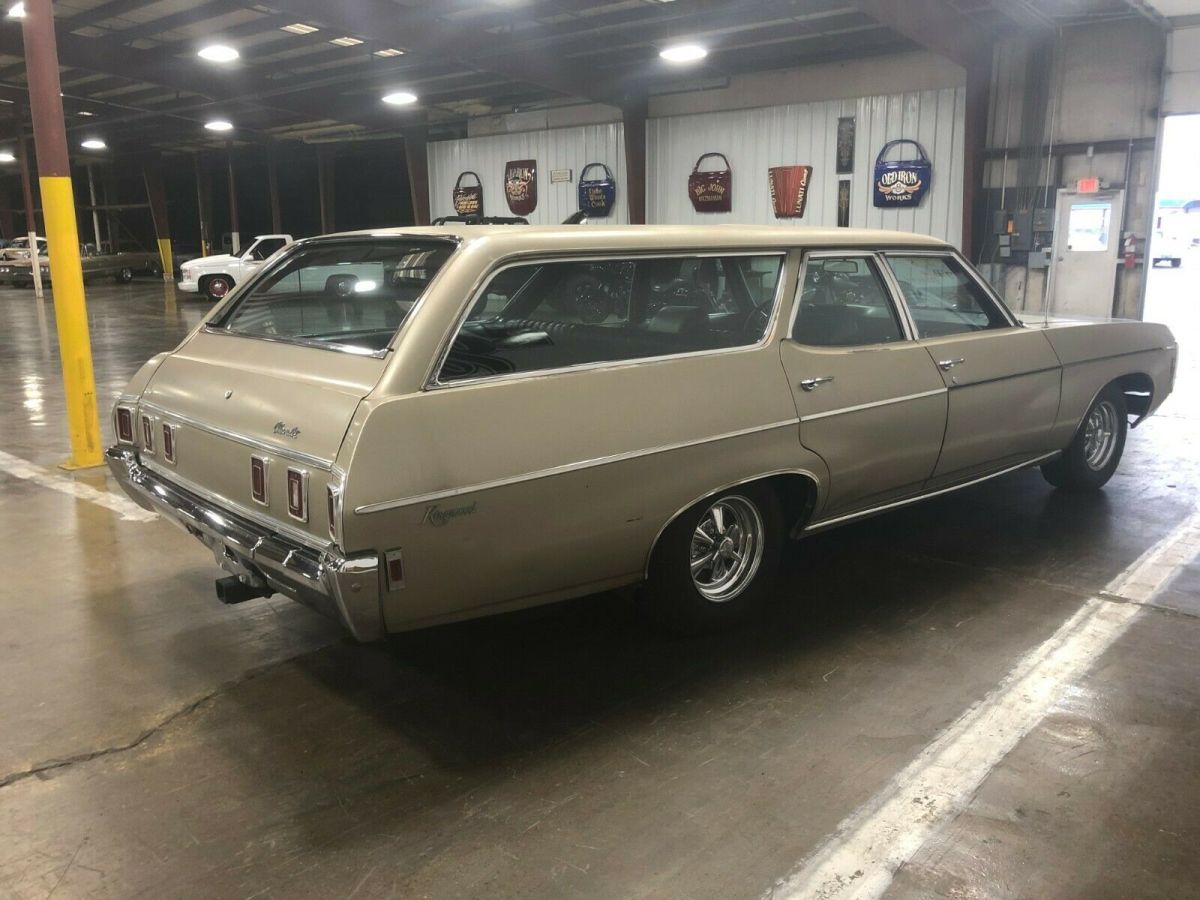
The 1969 Chevrolet Kingswood Estate wagon represents a pinnacle of full-size American station wagon design, offering a unique blend of heavy-duty chassis capability, luxurious interior trim, and immense cargo capacity powered by iconic Chevrolet big-block and small-block V8 engines.
Introduction to the 1969 Chevrolet Kingswood Estate Wagon
The year 1969 marked a significant redesign for General Motors' full-size automobile lineup, and Chevrolet’s top-tier station wagon offerings were no exception. Positioned at the apex of the wagon hierarchy above the Brookwood, Townsman, and standard Kingswood, the 1969 Chevrolet Kingswood Estate wagon combined utilitarian hauling capacity with the upscale interior appointments and exterior woodgrain paneling typically reserved for luxury sedans.
For collectors, automotive historians, and classic car enthusiasts, this vehicle embodies an era when station wagons served as the ultimate family land yachts before the rise of the modern minivan and sport utility vehicle. Understanding the nuanced engineering, trim variations, powertrain options, and restoration landscape of the 1969 Kingswood Estate requires a detailed look into what made full-size General Motors wagons unique during the late 1960s.
Evolution and Hierarchy of Chevrolet Wagons in 1969
In 1969, Chevrolet structured its full-size wagon portfolio by trim level and passenger capacity rather than completely separate body architectures. The model range started with the utilitarian Brookwood, progressed through the mid-tier Townsman and the standard Kingswood, and culminated in the luxurious Kingswood Estate.
While the standard Kingswood shared its trim level roughly with the Impala line, the Kingswood Estate was aligned with the more luxurious Caprice series. This alignment meant that buyers of the Estate wagon received upgraded door panels, richer upholstery materials, simulated woodgrain dashboard accents, and plush carpeting that elevated the driving environment far above a basic utility vehicle.
Body Styling and Exterior Features
The 1969 full-size Chevrolet models featured a completely new body design characterized by flowing side contours, a longer hood, a crisply styled rear deck, and a distinctive front fascia with recessed headlights. The Kingswood Estate was instantly recognizable by its simulated woodgrain vinyl appliques that lined the flanks and rear tailgate, bordered by bright chrome moldings.
Unlike the standard Kingswood, which featured smooth sheet metal along its sides, the Estate’s woodgrain trim gave it a formal, wood-paneled aesthetic reminiscent of high-end station wagons of the era. Furthermore, the vehicle rode on a generous 119-inch wheelbase, providing a stable, boulevard-cruising ride quality that absorbed highway undulations with ease.
The Innovative Clamshell Tailgate
One of the most remarkable engineering achievements associated with the 1969 full-size General Motors station wagons—including the Kingswood Estate—was the introduction of the drop-hide-slide tailgate, commonly known as the " clamshell" tailgate or the Glide-Away tailgate.
Prior wagon designs utilized a traditional tailgate that either folded down flat or opened sideways like a door, which could make loading cargo in tight spaces awkward. The General Motors clamshell design revolutionized this functionality by allowing the glass window to slide up and completely into the roof panel, while the lower steel gate slid forward and down into a recess beneath the vehicle's rear load floor.
Operation and Maintenance Considerations
The clamshell mechanism was operated either manually via a crank on the quarter panel or electrically through a dashboard switch or a key cylinder in the rear fender. While engineering marvel of its time, this complex assembly utilized numerous cables, rollers, tracks, and electric motors.
For modern restorers and owners, the clamshell tailgate is a primary focal point during inspection. Sourcing replacement motors, repairing rusted-out lower glide tracks, and aligning the glass channels require patience and specialized mechanical knowledge. When fully functional, however, it remains one of the most entertaining and practical features of a 1969 Chevrolet wagon.
Powertrain Options and Performance Specifications
Underneath the long hood of the 1969 Chevrolet Kingswood Estate wagon lay a wide array of engine and transmission combinations, reflecting General Motors' philosophy of tailoring vehicle performance to specific customer needs, whether for casual family road trips or heavy towing duties.
| Engine Displacement | Configuration | Horsepower (Net) | Primary Application |
|---|---|---|---|
| 327 cubic inches | Small-Block V8 | 235 hp | Base Estate Engine |
| 350 cubic inches | Small-Block V8 | 255 - 300 hp | Mid-Range Utility |
| 427 cubic inches | Big-Block V8 | 335 - 390 hp | Heavy Towing/High Performance |
Transmission and Drivetrain Reliability
Power was channeled to the rear wheels through either a column-shifted three-speed manual transmission, a four-speed manual, or the ubiquitous Turbo Hydra-Matic automatic transmissions (TH350 for smaller engines and the heavy-duty TH400 for big-block applications). The Turbo Hydra-Matic units are praised for their durability and smooth shifting characteristics, making them exceptionally well-suited for the weight of a full-size wagon.
The suspension system utilized a traditional front independent layout with unequal-length control arms and coil springs, paired with a robust four-link rear suspension with coil springs. Because these wagons were frequently tasked with hauling up to nine passengers or heavy cargo, many were equipped with heavy-duty suspension packages and rear air-adjustable shock absorbers to maintain a level ride height under load.
Interior Comfort, Seating Configurations, and Cargo Capacity
Inside, the Kingswood Estate offered expansive roominess. Available in both two-seat and three-seat configurations, the three-row version utilized a rear-facing third-row bench seat that allowed the vehicle to accommodate up to nine passengers safely. When not in use, the third-row seat could be folded flat into the floor, creating an uninterrupted cargo floor.
| Interior Feature | Specification / Detail |
|---|---|
| Seating Capacity | Up to 9 passengers (Three-row bench layout) |
| Upholstery Materials | Premium vinyl or cloth-and-vinyl combinations |
| Dashboard Trim | Simulated woodgrain applique with round gauge pods |
| Cargo Volume | Over 100 cubic feet with all rear seats stowed |
The acoustic insulation in the Kingswood Estate was superior to lower-tier models, featuring extra sound-deadening materials in the floorboards and roof pillars to reduce road and wind noise during long highway journeys. Amenities such as factory air conditioning, power steering, power front disc brakes, and AM/FM radios enhanced the driving experience, turning long-distance travel into a comfortable endeavor.
Ownership Realities: Restoration, Parts Availability, and Maintenance
Restoring or maintaining a 1969 Chevrolet Kingswood Estate wagon presents unique challenges and advantages compared to contemporary two-door muscle cars. Because these wagons share a vast majority of their mechanical components, front-end sheet metal, and interior architecture with Chevrolet’s popular Impala and Caprice models of the same year, finding engine, brake, and suspension parts is relatively straightforward.
However, wagon-specific components can be exceptionally difficult to source. Items such as rear quarter panels, tailgate trim, side glass, roof racks, and the aforementioned clamshell tailgate hardware are rarely reproduced by aftermarket manufacturers. Consequently, owners often rely on scouring specialized swap meets, donor cars, and dedicated classic wagon enthusiast networks to complete restoration projects.
Common Rust Areas to Inspect
Potential buyers and restorers must thoroughly inspect specific structural zones prone to corrosion:
- Rear Load Floor: Moisture trapped beneath the rubber cargo mat or water leaks around old tailgate weatherstripping frequently cause rust-through in the rear cargo bed.
- Rear Wheel Arches and Quarters: Salt and road debris thrown by the rear tires accumulate behind the inner wheel liners, leading to hidden corrosion.
- Frame Rails: The perimeter box frame is generally durable, but areas near the rear suspension mounts and tail sections require careful examination for structural integrity.
Frequently Asked Questions
What seating capacities were available in the 1969 Chevrolet Kingswood Estate?
The Kingswood Estate was offered in two distinct seating arrangements: a standard two-row model seating six passengers, and a popular three-row model featuring a rear-facing third-row bench seat that increased total passenger capacity to nine individuals.
Are replacement parts easy to find for a 1969 Chevrolet wagon?
Mechanical parts, brakes, suspension components, and small-block engine parts are widely available because they are shared with Chevrolet's full-size passenger cars. However, wagon-specific body panels, trim, and clamshell tailgate mechanisms are scarce and often required sourcing from used or donor vehicles.
What engines came standard in the Kingswood Estate?
For the 1969 model year, the Kingswood Estate typically came equipped with V8 powerplants, starting with displacement options like the 327 and 350 cubic-inch small-blocks, scaling up to high-output 427 cubic-inch big-block V8 engines for those requiring maximum towing capability.
How does the clamshell tailgate operate?
The clamshell tailgate features a two-piece design where the rear window slides up and into the roof structure while the lower metal gate retracts downward and forward underneath the cargo floor. This operation can be performed via dashboard switches, a key cylinder, or a manual crank mechanism depending on factory equipment.
Is the 1969 Kingswood Estate considered a collectible classic?
Yes, full-size station wagons from the late 1960s have experienced a significant surge in popularity and collector interest. Pristine or well-preserved examples, particularly those equipped with big-block engines and woodgrain trim, command strong attention at collector car auctions and vintage vehicle gatherings.
Final Recommendation for Enthusiasts
Acquiring and maintaining a 1969 Chevrolet Kingswood Estate wagon offers a rewarding journey into the golden age of American automotive design and utility. Prospective buyers should prioritize structural soundness, particularly concerning the rare wagon-specific trim and clamshell tailgate mechanisms, over minor mechanical wear which is easily addressed. Whether intended for family weekend excursions, vintage car shows, or nostalgic road cruising, this classic wagon delivers unmatched road presence and historical charm.