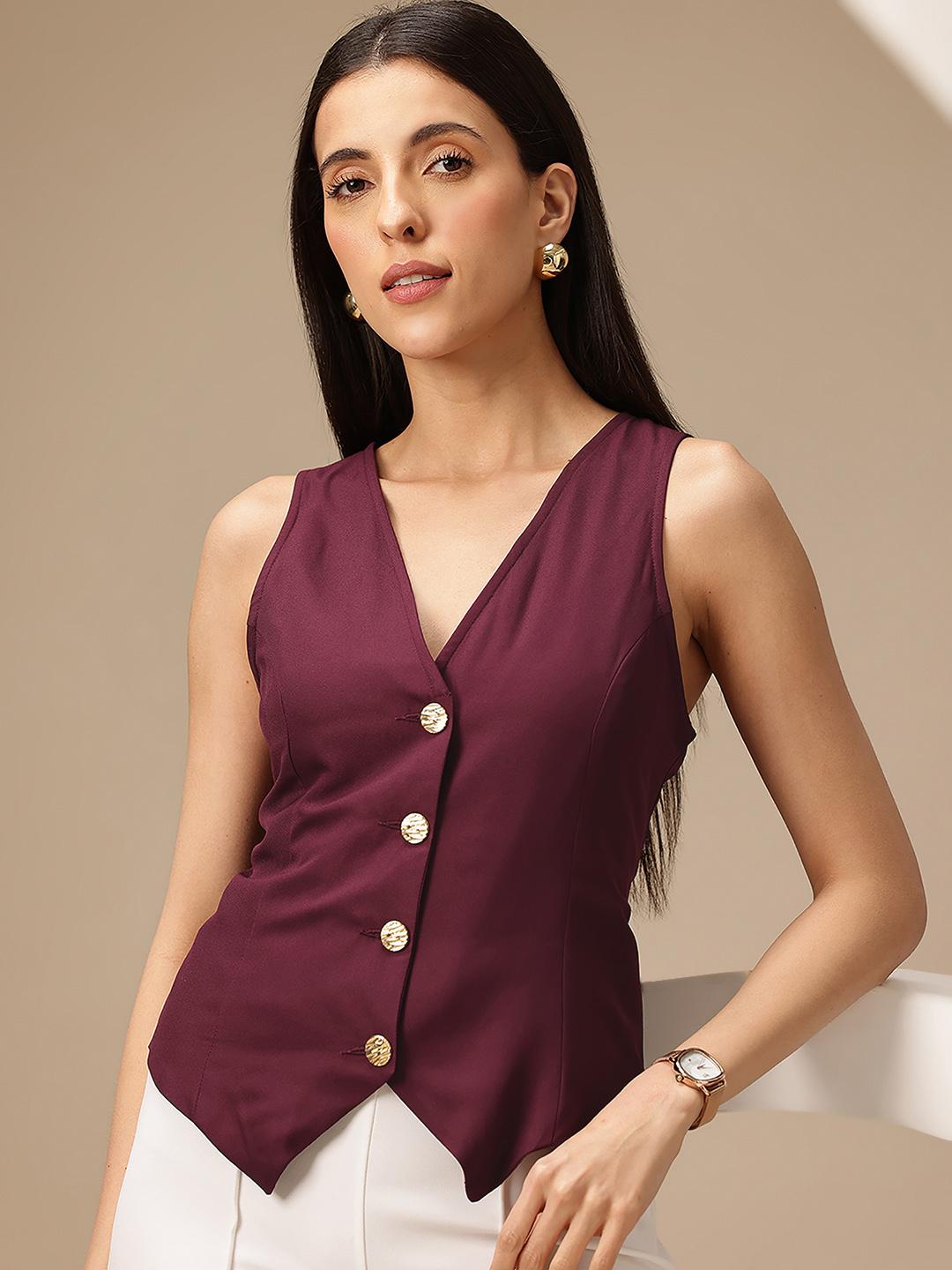
The 1 vest style top is a versatile garment category defined by its sleeveless, front-opening construction, modeled after the traditional waistcoat or tailored vest. Primarily recognized as a standalone piece in modern fashion, it bridges the gap between structured office wear and casual layering, offering a tailored silhouette without the requirement of a full-sleeved jacket.
Defining the Vest Style Top
In the context of contemporary apparel, a "vest style top" refers to a sleeveless garment that mimics the cut and tailoring of a classic waistcoat. Unlike a sweater vest, which is typically knit and pulled over the head, the vest style top is defined by its structural integrity, front-button or clasp closure, and fitted or semi-fitted bodice.
This garment has evolved from its historical roots as a layer worn beneath a suit jacket into a prominent, singular fashion item. Its core characteristics include:
- Sleeveless Profile: The design focuses on the torso, featuring deep armscyes (armholes) that allow for a full range of motion.
- Front Closure: Most authentic vest style tops feature a button-front placket, though modern iterations may utilize hidden hooks, zippers, or tie-front closures.
- Structured Hemline: Unlike fluid blouses or camisoles, these tops usually feature a tailored hem, often pointed at the front center or cut straight, providing a polished look that hangs cleanly over waistbands.
- Fabric Composition: While traditionally made of suiting wool or brocade, modern versions utilize cotton poplin, linen blends, and high-quality synthetic textiles to offer both breathability and durability.
Evolution and Modern Interpretation
The vest style top has experienced a resurgence in 2026, driven by a broader trend toward "tailored minimalism." By stripping away the sleeves of a traditional blazer or waistcoat, designers have created a garment that satisfies the need for professional office attire during warmer months while maintaining a sophisticated aesthetic.
Historically, vests (or waistcoats) were essential components of the three-piece suit. In modern styling, however, the vest style top is rarely worn as an underlayer. Instead, it serves as the focal point of an outfit. The transition from a supporting role to a starring role in the wardrobe reflects a shift toward modular dressing, where individual pieces must be capable of standing alone without complex layering.
Structural Requirements and Fit
Achieving the correct fit is critical for the vest style top. Because it lacks the forgiving nature of a loose-fitting blouse, the garment relies on precise tailoring to maintain its shape against the body. When selecting or constructing a vest style top, three specific areas of measurement are paramount:
- The Shoulder Slope: The vest must sit flush against the collarbone and shoulders without gaping. If the fabric pulls away from the skin at the chest or neckline, the structural illusion of the garment is lost.
- Armscye Depth: A high-quality vest top should feature armholes that are deep enough for comfort but narrow enough to hide undergarments. Poorly drafted armscyes are the most common cause of discomfort in this style.
- Waist Darting: Whether the top is designed to be oversized or fitted, internal or external darts are usually required to prevent the fabric from buckling at the waist. A well-constructed vest top follows the natural curve of the torso.
Material Selection and Maintenance
The durability and drape of a vest style top depend heavily on the textile choice. For a formal or office-appropriate look, professionals look for medium-weight fabrics that offer some structure, such as gabardine, heavy linen, or wool blends.
| Material | Best Use Case | Maintenance Requirement |
|---|---|---|
| Wool/Poly Blend | Business Formal | Dry clean recommended |
| Linen/Cotton | Casual Summer Wear | Steam or light iron; hand wash |
| Structured Cotton | Everyday Professional | Machine wash cold; hang dry |
| Silk/Satin Blend | Evening/Event Wear | Professional dry cleaning only |
Maintenance requires attention to the hardware. If the top features metal buttons or intricate fasteners, it is advisable to wash the garment inside out or within a protective garment bag. For tailored pieces, pressing the garment after washing—specifically along the button placket—is essential to prevent a rumpled appearance.
Strategic Styling: Beyond the Suit
The true utility of the vest style top lies in its versatility across different sartorial contexts. Because it functions as a "third piece," it can instantly elevate a basic outfit without the bulk of a jacket.
For Professional Environments: Pair the vest style top with matching high-waisted trousers or a pencil skirt. This creates a "faux suit" appearance that is highly disciplined and appropriate for formal settings. The key is to keep the proportions aligned; if the vest is tailored, a slim-cut bottom works best. If the vest is slightly relaxed or boxy, a wide-leg pant provides a balanced silhouette.
For Casual Settings: The vest style top can be paired with high-quality denim or relaxed linen trousers. Wearing the vest buttoned completely up creates a sharp, minimalist look. Alternatively, leaving the bottom two buttons undone can add a sense of ease to the ensemble, softening the formal associations of the cut.
Common Pitfalls and Troubleshooting
When adopting the vest style top, many users encounter issues regarding styling and fit. Addressing these early ensures the piece remains a staple rather than a difficult-to-wear item.
- Undergarment Visibility: Because vest tops are sleeveless and often feature deep armholes, standard bras may peek through. Utilizing adhesive cups or seamless, low-profile undergarments is often necessary to maintain a clean line.
- Gapping Between Buttons: If a vest is too tight across the bust or ribcage, it will "gape" at the buttonhole. This is not a failure of the garment's design but an indication of incorrect sizing. If you fall between sizes, always size up and have the waist taken in by a professional tailor.
- Fabric Wrinkling: Natural fibers like linen are prone to wrinkling at the lower back when sitting. Opting for a linen-viscose blend can retain the breathable texture of linen while providing the wrinkle resistance necessary for a full workday.
The Impact of Tailoring
If you have purchased a vest style top that does not fit perfectly, do not discard it. The beauty of this garment style is that it is highly "tailorable." Because the construction is relatively simple—typically consisting of front panels, a back panel, and a facing—a competent tailor can adjust the side seams to create a more custom fit. Investing in small alterations often turns an off-the-rack garment into a piece that looks custom-made.
Frequently Asked Questions
1. Can a vest style top be worn without anything underneath? Yes, in 2026, the dominant trend is to wear the vest style top as a standalone shirt. It is designed to be the primary layer, though it can be worn over a fitted mock-neck or thin tee if the armholes allow for comfortable layering without bunching.
2. How do I choose the right length for a vest style top? The ideal length depends on your bottoms. If you are wearing high-waisted trousers, a cropped or hip-length vest works best. If you prefer low-rise or mid-rise jeans, a longer, slightly tapered vest that sits below the waistband will provide a more cohesive look.
3. Is a vest style top appropriate for formal events? When crafted from luxurious materials like velvet, silk-satin, or high-density wool, a vest style top can certainly be worn in formal settings. It presents as a refined, modern alternative to a traditional gown or dress, especially when paired with wide-leg evening trousers.
4. How does a vest style top differ from a waistcoat? Historically, they are essentially the same garment. In modern retail categorization, a "vest style top" is marketed as a feminine, standalone blouse, whereas "waistcoat" usually implies a piece meant to be paired with a matching suit jacket and trousers.
5. How do I prevent the buttons from pulling? Button pulling is almost always a result of tension. Ensure the garment is not pulling across your widest point (usually the bust or ribcage). If the fit is correct but the buttons still pull, you may need to move the buttons slightly or add internal reinforcement tape to the placket to keep it flat.
Next Steps for Wardrobe Integration
To successfully integrate a vest style top into your wardrobe, start by assessing your current collection of bottoms. Identify one pair of trousers or a skirt that you already wear frequently and find comfortable. Select a vest style top in a neutral color—such as navy, charcoal, black, or cream—that complements the existing textures in your closet. By focusing on a neutral foundation piece, you allow the structure of the vest to do the work of "dressing up" your existing basics, providing an immediate upgrade to your daily rotation.