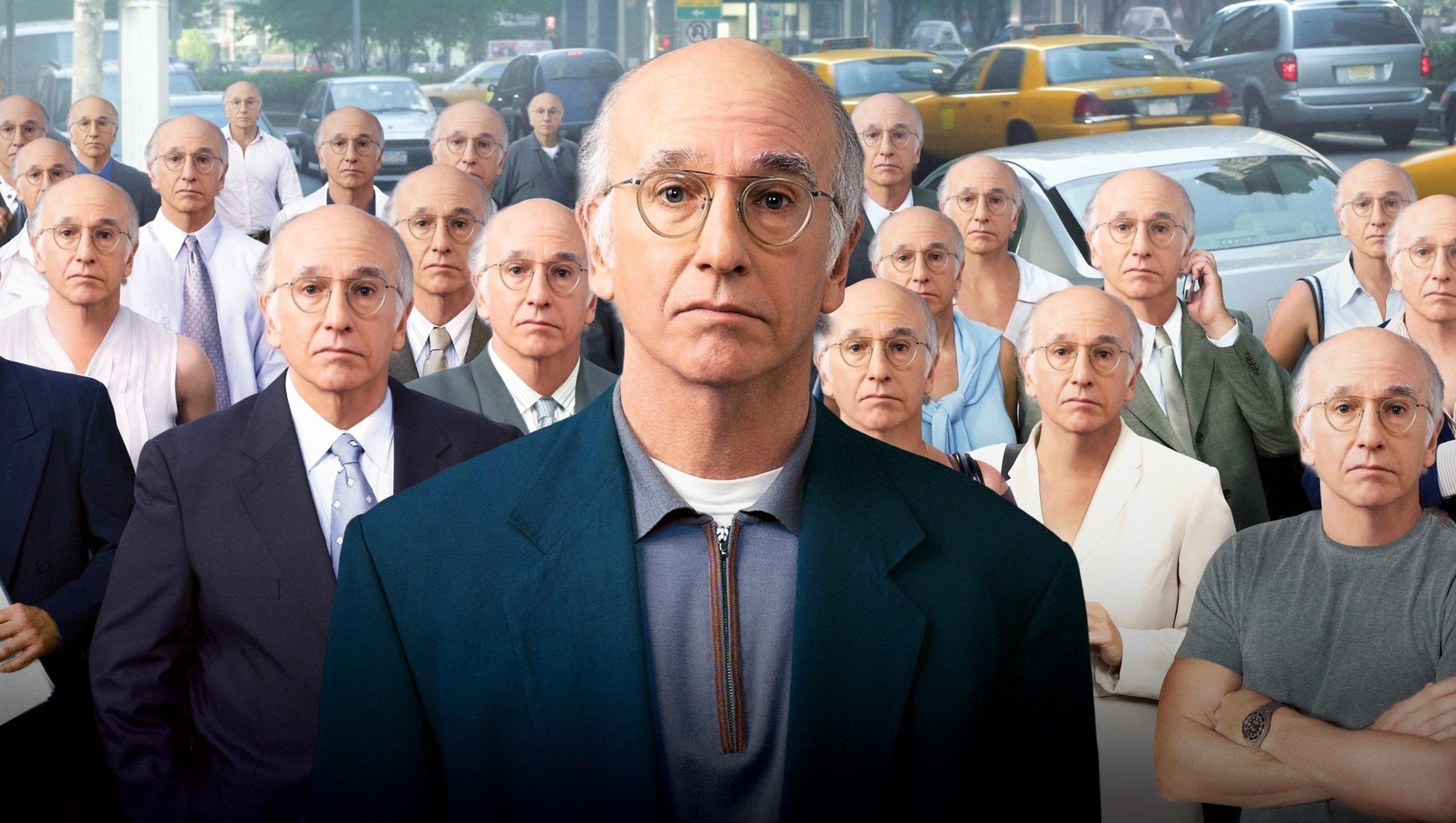
Curb Your Enthusiasm Season 1 introduces Larry David’s signature brand of cringe comedy, establishing the social missteps, neurotic observations, and intricate, interlocking narrative plots that defined twelve seasons of the HBO series.
Introduction to Larry David’s Post-Seinfeld Creation
Following the monumental success of Seinfeld, which co-creator Larry David left at the end of its seventh season, the comedy landscape anticipated his next move. Rather than diving immediately into another traditional multi-camera network sitcom, David partnered with HBO to produce a one-hour mockumentary special titled Larry David: Curb Your Enthusiasm in 1999. The positive reception of this special led to a 10-episode first season, which premiered on October 15, 2000.
Season 1 broke conventional television rules by shooting on digital video rather than film, relying almost entirely on improvised dialogue from an outline rather than a script, and casting actors who often played exaggerated versions of themselves. At the center of the narrative is Larry, a semi-retired multimillionaire television writer living in Los Angeles with his wife, Cheryl. Across the ten episodes, Larry repeatedly triggers social friction by refusing to let go of minor infractions, unspoken etiquette violations, and perceived slights.
Examining the Core Premise and Production Style
The foundational architecture of Curb Your Enthusiasm Season 1 rests on a documentary-style aesthetic combined with unscripted performance methods. Directors and camera operators used handheld equipment, giving episodes a raw, immediate feel that contrasted sharply with the polished look of late-1990s television. This visual approach reinforced the sense that viewers were observing real, uncomfortable interactions rather than rehearsed fictional scenes.
The Improvised Narrative Structure
Unlike traditional television writing rooms that script every line of dialogue, David and his production team operated using detailed beat sheets. These documents outlined the sequence of narrative events, key plot points, and necessary comedic turning points for each scene. Actors were given freedom to improvise their dialogue within these structural boundaries. This method fostered naturalistic interruptions, stammering, overlapping conversations, and authentic behavioral reactions that heightened the cringe factor of Larry’s social blunders.
The Evolution of the Story Arc
Season 1 established the show's signature storytelling technique: the interlocking plot. Minor inconveniences or seemingly unrelated misunderstandings encountered in the first few minutes of an episode invariably snowball, collide, and resolve—or disastrously compound—by the final scene. This structure required precise timing and rigorous editing, transforming mundane daily occurrences like buying a television, attending a dinner party, or going to a movie theater into high-stakes social minefields.
Key Episodes and Narrative Progression of Season 1
Every episode of the inaugural season introduces distinct social dilemmas that test the patience of Larry’s wife, Cheryl, his manager and best friend, Jeff Greene, and various acquaintances, strangers, and public figures.
| Episode Title | Primary Social Dilemma / Central Plot |
|---|---|
| The Pants Tent | Larry buys uncomfortable trousers and offends Cheryl. |
| Ted and Mary | Larry doubts the sincerity of a seemingly perfect couple. |
| Porno Gil | Larry tries to help an eccentric pornographer buy art. |
| Bracelet | A lost anniversary gift and a disputed country club tip. |
| Interior Decorator | Larry clashes with Cheryl's hired decorator. |
| The Wire | Larry attempts to help an ex-convict find a job. |
| Awed About Town | An awkward encounter with a psychic and a baseball. |
| Beloved Aunt | A typo in a newspaper obituary sparks family outrage. |
| Placebo Effect | Larry deals with an unreliable doctor and broken TV. |
| The Group | Larry joins an incest support group to meet a woman. |
The Pants Tent (Episode 1)
The series premiere sets the tone immediately. Larry walks through a shopping mall with Cheryl and notices that his new trousers create an embarrassing anatomical bulge—a "pants tent." This minor visual distraction leads to misunderstandings with a security guard and sets off a chain of events involving a television set, a movie theater concession stand, and an accidental insult to Cheryl’s sister. The episode demonstrates how Larry’s hyper-fixation on physical discomfort overrides basic social tact.
Beloved Aunt (Episode 9)
In one of the most culturally resonant episodes of the season, Cheryl’s beloved aunt passes away, and Larry is tasked with placing the newspaper obituary. Due to a typesetting error, the notice features an unfortunate typographical error that changes a flattering description into an offensive insult. The family reacts with fury, forcing Larry to navigate a minefield of grief, anger, and defensive rationalization as he attempts to prove his innocence without accepting blame for a mistake that was technically out of his direct control.
Character Dynamics and Ensemble Cast
While Larry David remains the undeniable focal point of the series, the success of Season 1 depends heavily on the supporting cast, who anchor his erratic behavior in recognizable human relationships.
- Cheryl David (Cheryl Hines): Serving as Larry’s moral compass and primary sounding board, Cheryl balances patience with exhaustion. Hines mastered the art of reacting to Larry’s absurd logic with a quiet, devastating skepticism.
- Jeff Greene (Jeff Garlin): As Larry’s manager and closest confidant, Jeff is equally cynical and willing to indulge in schemes, though he often lacks Larry’s self-destructive need to correct every perceived injustice.
- Susie Greene (Susie Essman): Though her role expanded over time, Susie’s explosive, profanity-laced tirades against Larry established her as one of the most formidable comedic forces in the series, beginning with her fierce defense of her home and family in Season 1.
Cultural Impact and Legacy in Television Comedy
Curb Your Enthusiasm Season 1 arrived at a transitional moment in television history. Coming immediately after the cultural phenomenon of Seinfeld, the show proved that Larry David’s comedic voice was not dependent on network television constraints or multi-camera setups.
By demonstrating the viability of single-camera, improvised comedy on premium cable, Season 1 paved the way for a generation of cringe-comedy and mockumentary series that prioritized awkward realism over traditional joke setups and punchlines. Shows that explore social anxiety, neurotic introspection, and the unwritten rules of modern etiquette frequently trace their stylistic lineage back to the foundation laid by David in the fall of 2000.
Frequently Asked Questions
Is Curb Your Enthusiasm Season 1 scripted?
No, the episodes are not traditionally scripted. The production team utilized detailed outlines that dictated the plot points, narrative turns, and objectives of each scene, but the actors improvised their dialogue on the spot to capture realistic conversational rhythms.
How many episodes are in Season 1?
Season 1 consists of 10 episodes, beginning with the premiere episode "The Pants Tent" and concluding with the season finale "The Group."
Where can I watch Curb Your Enthusiasm Season 1?
All episodes of Season 1 are available to stream on Max (formerly HBO Max) and can be purchased digitally through major video-on-demand platforms such as Apple TV and Amazon Prime Video.
Was the 1999 HBO special part of Season 1?
The one-hour special Larry David: Curb Your Enthusiasm, broadcast in 1999, served as a pilot for the series, but it is treated as a separate precursor, with Season 1 officially beginning with the 10-episode run that premiered in October 2000.
Why was Season 1 shot on digital video?
Director and producer Robert Weide and Larry David chose digital video to give the production an unobtrusive, documentary-like look that separated it from traditional glossy sitcoms and allowed for faster, more flexible shooting schedules during improvised scenes.
Next Actions for Viewers
For viewers exploring or revisiting the series, begin by watching the 1999 precursor special to understand the initial conceptualization of the mockumentary format before diving into the ten episodes of Season 1 on Max. Pay close attention to how early recurring motifs—such as unspoken social rules, tipping disputes, and misunderstandings with service workers—evolve across the season arc.