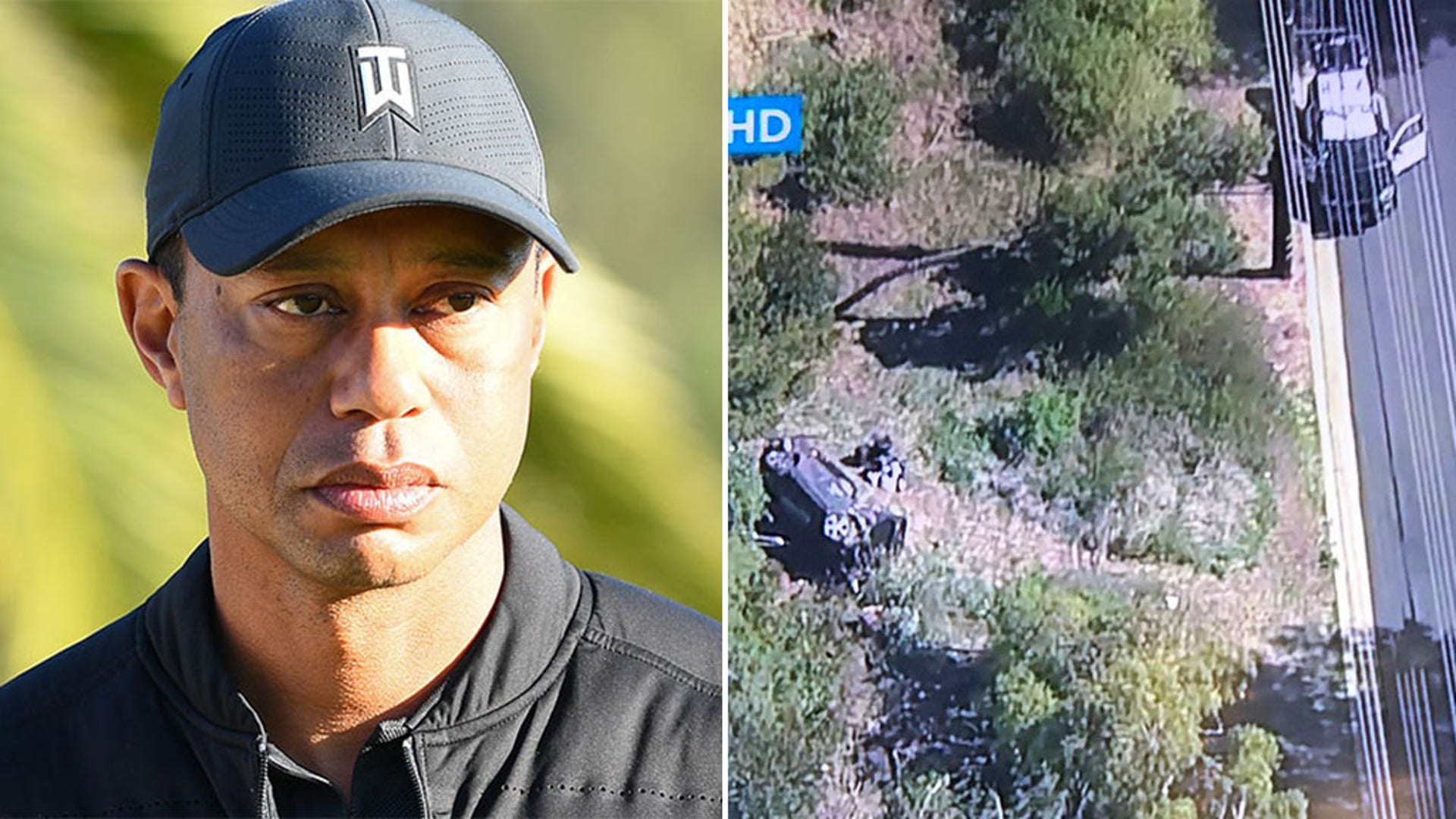
The Tiger Woods car accident refers to the high-speed rollover crash involving professional golfer Tiger Woods on February 23, 2021, in Rolling Hills Estates, California. Driven by excessive speed in a 2021 Genesis GV80, the incident resulted in severe leg injuries that fundamentally altered Woods’ career and sparked global discussions regarding vehicle safety engineering.
Chronology of the February 2021 Incident
The events of February 23, 2021, began in the early morning hours as Tiger Woods departed from a luxury hotel in Rancho Palos Verdes. Woods was in the Los Angeles area for the Genesis Invitational, a PGA Tour event he hosted. Driving a 2021 Genesis GV80, a mid-size luxury SUV provided by the tournament, Woods was traveling northbound on Hawthorne Boulevard—a stretch of road known for a steep downhill grade and a history of speeding-related accidents.
At approximately 7:12 AM, the vehicle struck the center median, crossed into the opposing lanes of traffic, hit a curb, and then struck a tree before rolling multiple times. The vehicle eventually came to rest on its side in the brush off the roadway. Los Angeles County Sheriff’s Department (LASD) deputies and firefighters arrived on the scene shortly after, finding Woods conscious but trapped inside the heavily damaged cabin.
Emergency responders utilized specialized tools, including a pry bar and an axe, to extract Woods through the windshield. Notably, while the exterior of the SUV was nearly unrecognizable, the interior "safety cell" remained largely intact—a factor that experts and officials later credited with saving the athlete's life.
Technical Investigation and Data Recorder Findings
The investigation into the crash was conducted by the Los Angeles County Sheriff’s Department with technical assistance from the vehicle manufacturer. Central to the investigation was the retrieval of the Event Data Recorder (EDR), commonly known as the "black box."
Speed and Braking Analysis
Data from the EDR revealed that Woods was traveling at speeds between 84 and 87 mph in a zone where the posted speed limit was 45 mph. Perhaps most critically, the data indicated that at the point of the initial impact with the median, the accelerator was depressed at 99%, and there was no evidence of braking.
Investigators concluded that Woods likely panicked as the vehicle began to veer off course, mistakenly pressing the accelerator instead of the brake. This phenomenon, known as "pedal misapplication," is a common factor in high-stress vehicular incidents. By the time the vehicle hit the tree, it was still traveling at an estimated 75 mph.
Impairment and Legal Rulings
Despite the severity of the crash and the excessive speed, the LASD did not seek a warrant for blood tests or toxicology reports. Responding officers stated there was no evidence of impairment, such as the smell of alcohol or the presence of narcotics, at the scene. Because the incident was a single-vehicle accident with no witnesses to the speeding besides the data logs, it was classified as an infraction rather than a criminal reckless driving charge. No citations were ultimately issued, a decision that faced some public scrutiny but was defended by legal experts as consistent with standard department protocol for such incidents.
The Engineering Behind the Survival: Genesis GV80 Safety
The survival of Tiger Woods during the 2021 accident became a significant case study for automotive safety. The 2021 Genesis GV80 was equipped with advanced structural engineering designed to manage high-energy impacts.
The Safety Cell and Airbag Deployment
The GV80 features a high-strength steel passenger compartment designed to resist deformation during rollovers. In the Woods crash, the crumple zones—the front and rear of the vehicle designed to absorb kinetic energy—performed exactly as engineered. While the engine and suspension were sheared off, the A-pillars and roof remained structurally sound.
Furthermore, the vehicle was equipped with 10 standard airbags, including a unique center-side airbag designed to prevent passengers from colliding with each other or the vehicle’s interior during a lateral impact. Woods was also wearing his seatbelt, which worked in tandem with the pretensioner system to keep him positioned within the safety cell as the vehicle rolled.
Comparison of Crash Metrics
To understand the forces involved, the following table outlines the technical specifications of the crash compared to standard safety testing parameters.
| Metric | Woods Accident Data | Standard IIHS/NHTSA Test |
|---|---|---|
| Primary Speed | 84–87 mph | 35–40 mph |
| Impact Speed (Tree) | ~75 mph | ~40 mph |
| Vehicle Weight | ~4,900 lbs (GV80) | Varies (typically 4,000 lbs) |
| Rollover Events | Multiple | Single (controlled) |
| Safety Result | "Safety Cell" Intact | "Good" / 5-Star Rating |
The fact that the vehicle protected the occupant at nearly double the speed of standard safety tests highlighted the efficacy of modern luxury SUV safety standards.
Medical Implications: Orthopedic Injuries and Recovery
The physical toll on Tiger Woods was catastrophic, specifically to his right lower extremity. He was transported to Harbor-UCLA Medical Center, a Level 1 trauma center, where he underwent hours of emergency surgery.
Specific Injuries Sustained
Medical reports confirmed that Woods suffered comminuted open fractures to both the upper and lower portions of the tibia and fibula. A "comminuted" fracture means the bone has shattered into several pieces, and "open" indicates the bone broke through the skin, significantly increasing the risk of infection.
Surgical Interventions
- Internal Fixation: Surgeons inserted a rod into the tibia to stabilize the bone.
- Screws and Pins: Additional hardware was used to stabilize the foot and ankle bones, which were also severely damaged.
- Fasciotomy: To relieve pressure due to swelling in the leg muscles (a condition known as compartment syndrome), surgeons had to perform a fasciotomy—slicing the skin and fascia to allow the muscle to expand.
As of 2026, the long-term impact of these injuries remains the primary obstacle in Woods' professional life. The "internal bracing" and the sheer amount of hardware in his right leg have resulted in a permanent reduction in ankle mobility, which is critical for the rotational forces of a professional golf swing.
Impact on the Professional Golf Landscape
The "Tiger car accident" did more than just pause a career; it reshaped the PGA Tour and the public’s relationship with the sport's greatest icon.
The Return to Competition
Woods’ return to the 2022 Masters—just 14 months after the crash—is considered one of the greatest physical feats in modern sports history. However, the reality of 2026 shows a golfer who is largely restricted to a "Majors-only" schedule. The physical strain of walking 72 holes over four days remains a greater challenge than the actual striking of the ball.
The "Tiger Effect" and Insurance
The accident highlighted the vulnerability of the PGA Tour's commercial viability when tied to a single individual. In the years following 2021, there has been a notable shift in how athlete endorsements and appearance contracts are structured, often including more robust "continuity" clauses and increased focus on private transportation security for top-tier talent.
Disambiguation: Other Notable "Tiger" Incidents
While the 2021 Woods crash is the most searched and discussed event, it is occasionally confused with other topics:
- The 2009 Incident: A low-speed accident involving Woods hitting a fire hydrant and a tree in Florida. This event was primarily a domestic matter and did not involve the life-threatening injuries seen in 2021.
- Sunbeam Tiger Accidents: In the world of classic car restoration, accidents involving the Sunbeam Tiger (a 1960s British sports car) are frequent topics of technical discussion due to the vehicle's high power-to-weight ratio.
- Animal-Vehicle Collisions: In regions like India or Southeast Asia, literal accidents involving cars and tigers (the animal) occur. These are wildlife conservation issues and are distinct from the sporting event discussed here.
Road Safety Lessons and Hawthorne Boulevard
The stretch of Hawthorne Boulevard where the accident occurred has since been the subject of several safety reviews. The steep grade of "the hill" can cause vehicles to gain momentum rapidly without the driver realizing it. Local authorities have used the Tiger Woods accident as a high-profile example to advocate for stricter speed enforcement and better signage in the Palos Verdes Peninsula.
For the general public, the accident serves as a reminder of the dangers of pedal misapplication and the life-saving importance of vehicle safety ratings. Even for an elite athlete with world-class reflexes, the physics of an 80-mph crash are insurmountable without the intervention of modern automotive engineering.
Frequently Asked Questions
What car was Tiger Woods driving during the accident?
Tiger Woods was driving a 2021 Genesis GV80. This was a courtesy vehicle provided by the Genesis Invitational tournament. The GV80 is a luxury mid-size SUV that received high safety ratings from both the IIHS and NHTSA.
How fast was Tiger Woods going when he crashed?
Data from the vehicle's black box showed Woods was traveling between 84 and 87 mph on a downhill section of Hawthorne Boulevard. The posted speed limit in that area was 45 mph. He struck a tree while still traveling at approximately 75 mph.
Was Tiger Woods charged with a crime for the 2021 accident?
No, Tiger Woods was not charged with a crime. The Los Angeles County Sheriff’s Department ruled it an "accident" and an "infraction." Because there were no witnesses to the speeding and no evidence of impairment (drugs or alcohol), no reckless driving charges or citations were issued.
Will Tiger Woods ever play golf again?
As of 2026, Tiger Woods has returned to competitive golf but plays a very limited schedule. He primarily focuses on the four Major Championships. His ability to compete is limited by his mobility and the physical toll of walking long distances rather than his ability to hit the ball.
Did the airbags deploy in the Tiger Woods crash?
Yes, the Genesis GV80’s airbag system functioned correctly. Multiple airbags, including the knee airbags and the center-side airbag, deployed. This, along with the structural integrity of the "safety cell," is credited with preventing fatal injuries.
What is "pedal misapplication" in the context of this crash?
Pedal misapplication occurs when a driver accidentally presses the accelerator instead of the brake, or continues to press the accelerator during a panic event. Investigators believe this occurred during the Tiger Woods accident, as the EDR showed 99% acceleration and 0% braking during the crash sequence.
Practical Recommendation for Drivers
The primary takeaway from the Tiger Woods car accident for any driver is the critical importance of monitoring speed on downhill gradients and ensuring you are driving a vehicle with a high safety rating (Top Safety Pick+). Even with the best safety technology, high-speed collisions result in life-altering injuries. Drivers should familiarize themselves with their vehicle’s "black box" capabilities and always wear a seatbelt, as it remains the single most effective safety device in a rollover scenario. If you are driving in unfamiliar, hilly terrain, utilize engine braking or lower gears to maintain a safe speed without over-relying on the braking system.