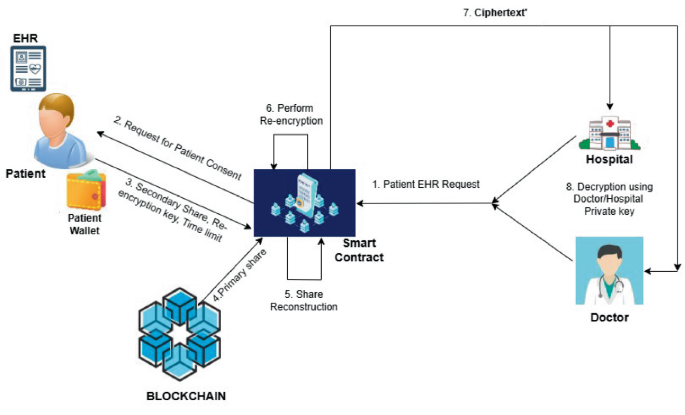
Developing a secure, role-based cloud storage system for patient-centric health records requires a rigorous architectural approach that prioritizes data sovereignty, granular access control, and robust encryption. By decoupling clinical data from identity management and implementing Zero-Trust principles, healthcare organizations can facilitate secure information exchange while ensuring compliance with stringent global data protection regulations in 2026.
The Architecture of Patient-Centric Cloud Storage
A patient-centric health record system shifts the paradigm from institutional ownership to patient-managed access. In this model, the cloud repository acts as a neutral, secure vault where the patient holds the primary keys to their medical history. The architectural foundation rests on three pillars: encryption at rest, encryption in transit, and client-side key management.
To achieve this, the system must utilize a multi-layered security stack. First, data must be encrypted before it ever reaches the cloud provider’s infrastructure. Using Advanced Encryption Standard (AES) with 256-bit keys for data at rest ensures that even in the event of a cloud service provider (CSP) breach, the underlying content remains unintelligible. Second, transport layer security (TLS) 1.3 is the mandatory standard for all data moving between clinical endpoints and the storage environment.
Role-Based Access Control (RBAC) and Granularity
Role-Based Access Control (RBAC) is the mechanism that determines what a specific user—be it a physician, a nurse, a billing specialist, or the patient themselves—can do within the system. In a health context, static roles are often insufficient. Instead, Attribute-Based Access Control (ABAC) is frequently layered on top of RBAC to provide the necessary precision.
The Hierarchical Role Structure
- Patient (Owner): Maintains full read/write/share permissions over their entire health record.
- Primary Physician (Clinician): Granted read/write access to specific clinical modules (e.g., laboratory results, imaging, medication history).
- Specialist (Consultant): Granted time-bound, read-only access to relevant subsets of the patient’s file.
- Administrative/Billing: Restricted to non-clinical metadata, such as insurance identifiers and appointment scheduling data, with no access to diagnostic narratives.
By implementing these boundaries, the system minimizes the "blast radius" of any credential compromise. If a billing account is breached, the attacker remains unable to access sensitive diagnostic images or mental health records, as these are partitioned through logical silos and cryptographic barriers.
Cryptographic Key Management Strategies
The integrity of an encrypted cloud system is entirely dependent on its Key Management Service (KMS). In a patient-centric architecture, the "Bring Your Own Key" (BYOK) or "Hold Your Own Key" (HYOK) approach is vital.
The system should employ a Distributed Key Management strategy. Master keys should reside in a FIPS 140-3 validated Hardware Security Module (HSM). When a clinician requests access to a record, the system verifies the user’s role against the metadata, confirms the patient’s authorization token, and then provides a temporary, decrypted view of the requested file. Crucially, the system should never store plaintext records; it should store only encrypted blobs, with the decryption process occurring in volatile memory at the point of consumption.
Comparing Storage Implementation Strategies
Selecting the right cloud infrastructure depends on the organization's requirements for latency, regulatory compliance, and cost. Below is a comparison of standard approaches for health record cloud storage.
| Feature | Private Cloud Vault | Public Cloud (IaaS) | Hybrid Decentralized |
|---|---|---|---|
| Control | Absolute, In-house | Shared Responsibility | High (Patient-led) |
| Latency | Low (Internal network) | Medium (Global CDNs) | Variable |
| Cost | High (CapEx heavy) | Scalable (OpEx) | Moderate |
| Compliance | DIY Certification | Built-in HIPAA/GDPR | Complex audit trail |
Compliance and Regulatory Requirements in 2026
As of 2026, healthcare providers operating globally must navigate an increasingly complex regulatory landscape. The Health Insurance Portability and Accountability Act (HIPAA) in the United States, the General Data Protection Regulation (GDPR) in the European Union, and the Personal Information Protection and Electronic Documents Act (PIPEDA) in Canada all demand stringent data lifecycle management.
A compliant system must include an automated audit log that tracks not just who accessed a file, but why. Every access event should be timestamped, signed with a digital certificate, and stored in an immutable ledger—often using private blockchain or secure append-only databases—to prevent tampering. This audit trail is the primary artifact produced during regulatory inspections and security audits.
Mitigating Common Risks
Despite technical rigor, human error remains the leading cause of data breaches. Common pitfalls in cloud-based health systems include:
- Over-privileged Accounts: Assigning "Admin" rights to personnel who only need "Viewer" rights. Regularly scheduled "Access Reviews" must be conducted to revoke unused permissions.
- Insecure API Endpoints: Healthcare data is often accessed via RESTful APIs. These must be protected with OAuth 2.0 and OpenID Connect (OIDC) to ensure robust identity federation.
- Fragmented Data Silos: When patient records are scattered across different cloud instances, the attack surface grows. A unified metadata layer that indexes encrypted files across different cloud regions is required to maintain a single source of truth.
Frequently Asked Questions
How does patient-centric encryption differ from standard cloud encryption? Standard cloud encryption protects the data from unauthorized external access but assumes the cloud provider has the power to decrypt data if requested by authorities. Patient-centric encryption ensures that the cryptographic keys are held by the patient or their designated agent, meaning the provider cannot access the record even if served with a subpoena.
What happens if a user loses their private encryption key? This is a critical failure point. Robust systems utilize a "Key Escrow" or "M-of-N" secret sharing scheme, where portions of the key are held by trusted entities (e.g., the patient, their doctor, and an independent vault). This allows for key recovery without creating a single point of failure.
Is it possible to perform analytics on encrypted health records? Yes. Through a technology known as Homomorphic Encryption, it is possible to perform mathematical operations on encrypted data without decrypting it. While computationally expensive as of 2026, it is increasingly used for aggregate population health research.
How is performance maintained with high-level encryption? Hardware acceleration is essential. Modern cloud processors include AES-NI (Advanced Encryption Standard New Instructions), which offloads the cryptographic workload from the central processor, allowing for near-line-rate performance even with heavy encryption.
Can a patient revoke access to their records in real-time? Yes. Because access is governed by dynamic tokens rather than permanent permissions, a patient can invalidate a clinician's access token via a mobile portal, resulting in immediate termination of the clinician’s ability to view that specific record.
Next Steps for Implementation
Organizations looking to deploy a secure, role-based cloud system should begin by conducting a formal Data Protection Impact Assessment (DPIA). This evaluation will identify which data elements are truly sensitive versus those that are administrative. Once mapped, the next step is to choose a cloud-agnostic encryption layer that allows you to maintain control over your keys regardless of whether you are hosted on AWS, Azure, or an on-premises data center. Always prioritize vendors that offer "zero-knowledge" architecture, ensuring that you—not the vendor—maintain absolute authority over patient information.