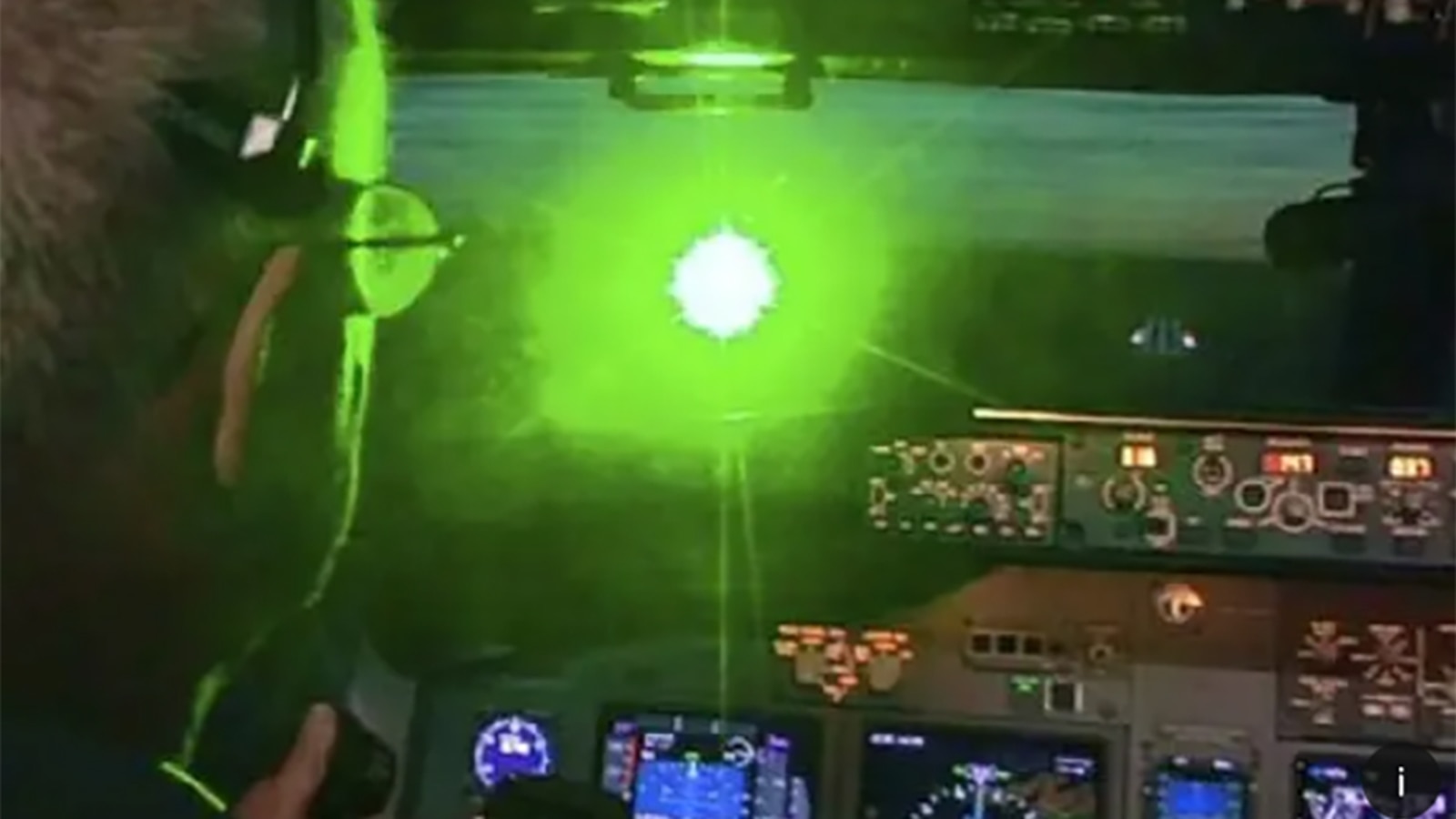
Yes, shining a laser at an aircraft is a severe safety risk that poses a direct threat to flight crews and passengers. A high-intensity laser beam can cause temporary blindness, flash blindness, and permanent retinal damage to pilots, significantly increasing the probability of a catastrophic incident, particularly during the critical phases of takeoff and landing.
The Physics of Laser-Aviation Interaction
The danger of a laser strike on an aircraft is fundamentally a problem of optics and human biology. When a laser beam—which is characterized by its high collimation—hits an aircraft cockpit, it does not dissipate as ambient light would. Instead, the beam passes through the windscreen and strikes the pilot’s eyes with significant power density.
The primary danger is "veiling glare," which occurs when light scatters within the vitreous humor of the eye, creating a massive, luminous cloud that masks the pilot’s vision. Beyond this, a laser strike often results in after-images or "flash blindness," where the sensitive photoreceptors in the retina are overwhelmed. These effects can last from several seconds to several minutes, during which time a pilot may be unable to read cockpit instruments or visually maintain separation from other aircraft or obstacles.
The threat is compounded by the design of modern cockpit windows. These windows are made of multi-layered acrylic or polycarbonate designed for aerodynamic structural integrity. When a laser hits these surfaces, the window acts as a scattering medium, refracting and dispersing the light, effectively turning the cockpit interior into a chamber filled with blinding light, rather than just a single point of impact.
Physiological Impacts on Flight Crews
The impact of a laser incident on a flight crew is not merely a momentary annoyance; it is a profound physiological event.
- Flash Blindness: This is a temporary visual impairment that occurs after exposure to a high-intensity light source. The retina’s pigments are bleached, rendering them unable to send visual signals to the brain until they recover.
- Glare and Dazzle: Glare is the interference with vision caused by a bright light source within the field of view. Dazzle occurs when the light source leaves an after-image that persists even after the source is removed.
- Retinal Damage: In cases where the laser power is sufficient and the exposure duration is long enough, the heat generated by the concentrated light can cause localized burns on the retina. Unlike the temporary effects of glare, this can lead to permanent loss of vision or permanent blind spots.
For a commercial pilot, the transition from night vision to a high-intensity laser strike can be disorienting. Pilots rely heavily on their ability to perceive depth and motion at night. When that ability is compromised, their "spatial orientation"—the ability to know the aircraft's position relative to the ground and horizon—can degrade rapidly.
Operational Consequences for Flight Safety
The most dangerous phases of flight are during takeoff and landing. During these periods, aircraft are at lower altitudes, where they are closer to ground-based light sources, and pilots are managing complex manual or semi-automated flight tasks.
A laser strike during these phases forces the flight crew to prioritize visual recovery and aircraft stabilization over secondary tasks. This can lead to a "startle effect," where a pilot’s reaction time is slowed, or they inadvertently pull back on the yoke or throttle due to shock. In the worst-case scenario, the loss of visual reference can lead to a loss of control, especially if the aircraft is on a steep approach or executing a complex turn.
Furthermore, the distraction caused by a laser strike can lead to a breakdown in crew resource management. The targeted pilot may become incapacitated, forcing the other pilot to take immediate control. This necessitates an emergency declaration, a change in flight path, and potential medical evaluations for the crew members involved, creating systemic delays and stress within the aviation infrastructure.
Legal Status and Federal Regulations
In most jurisdictions, including the United States, pointing a laser at an aircraft is a federal crime. Under 18 U.S. Code § 39A, knowingly aiming the beam of a laser pointer at an aircraft or its flight path is punishable by significant fines and imprisonment.
The Federal Aviation Administration (FAA) and law enforcement agencies maintain strict protocols for handling reports of laser illuminations. Pilots are required to report these incidents via radio to Air Traffic Control (ATC), which then disseminates the information to other aircraft in the area and alerts local law enforcement.
| Aspect | Regulation and Enforcement |
|---|---|
| Legal Basis | 18 U.S. Code § 39A (Aiming a laser pointer at an aircraft) |
| Potential Penalty | Up to 5 years in prison, substantial federal fines |
| FAA Role | Incident logging, pilot safety alerts, and reporting to law enforcement |
| Law Enforcement | Aerial search and ground tracking to apprehend offenders |
| Reporting Requirement | Pilots must report all laser strikes to ATC immediately |
Laser Classification and Power Levels
Not all lasers are created equal, and understanding the classification system is essential to realizing why some are more dangerous than others. Lasers are categorized by the FDA’s Center for Devices and Radiological Health (CDRH) based on the wavelength and power output in milliwatts (mW).
- Class 1 and 2: Low-power lasers (typically under 1 mW). These are generally considered safe for brief, accidental exposure.
- Class 3R: Lasers up to 5 mW. These can cause some eye injury if stared at directly.
- Class 3B: Lasers up to 500 mW. These are dangerous; even a reflection or a quick strike can cause damage.
- Class 4: Lasers over 500 mW. These are the most dangerous. They are capable of cutting through materials and causing immediate, permanent eye damage even from scattered reflections.
The lasers commonly used in malicious acts against aircraft are often modified or high-powered handheld devices that frequently exceed 5 mW, often reaching into the Class 3B and Class 4 ranges.
Mitigation and Protective Measures
Because of the persistent threat, the aviation industry has developed several layers of defense. These include:
- Pilot Training: Flight crews receive regular briefings on how to respond to a laser strike. The standard procedure is to shield one's eyes, hand control to the non-affected pilot, and immediately report the incident to ATC.
- Protective Eyewear: There has been significant research into laser-protective eyewear for pilots. These lenses are designed to filter out the specific wavelengths emitted by common laser pointers (typically green, 532 nm) while still allowing the pilot to see instrument panels and outside navigation lights. However, their use is limited by potential distortion and the need for pilots to see accurately in low-light conditions.
- Airport Surveillance: Law enforcement now utilizes sophisticated tracking systems to pinpoint the source of a laser beam. By coordinating with the aircraft’s GPS location and the angle of the beam, police on the ground can quickly identify the location of the person operating the device.
FAQ: Common Questions on Aviation Laser Safety
Can a laser beam actually bring down an airplane? While it is rare for a laser to cause a direct mechanical failure, it can cause a "pilot-incapacitated" scenario. If both pilots lose vision simultaneously during a critical maneuver, the aircraft could descend into the ground or collide with another object.
Why are green lasers considered more dangerous than red ones? The human eye is significantly more sensitive to green light (around 532 nm) than red light. A green laser of the same power output will appear much brighter to a pilot, causing a more intense glare and a larger distraction than a red laser.
Are laser strikes becoming more common? Reported incidents have fluctuated over the last decade, but they remain a persistent concern. With the increased availability of high-powered, low-cost laser modules online, the potential for intentional or accidental misuse continues to be a focus for aviation authorities.
What should I do if I see a laser being pointed at the sky? You should never point a laser at any aircraft, drone, or vehicle. If you see someone else doing so, do not attempt to intervene personally. Instead, contact local law enforcement, as they are equipped to track and address the source of the danger.
Does a laser strike require an aircraft to land? Not always, but it often requires a change in operational status. If the crew feels their safety is compromised, they will abort an approach or divert to another airport. Even if they continue, a medical check for the flight crew is usually mandated upon landing.
Next Steps and Recommendations
If you are a student pilot, a drone operator, or simply someone interested in aviation technology, remember that the airspace is a shared, high-stakes environment. Respecting the safety of flight crews is a legal and ethical imperative.
If you own a high-powered laser, store it securely and ensure it is never used in the vicinity of airports or flight paths. For those interested in the technical aspects of aviation safety, further information can be found via the FAA’s official safety portal regarding "Laser Hazards," which provides updated documents on incident reporting and safe usage guidelines for laser equipment in public spaces.