Sir Richard Branson, the billionaire founder of the Virgin Group, is widely recognized as the most prominent famous person with a learning disability, specifically dyslexia. Despite failing academically and leaving school at 16, Branson transformed his neurodivergence into a strategic advantage, building a global conglomerate and advocating for the recognition of "dyslexic thinking" as a vital professional skill.
Learning disabilities are often misunderstood as indicators of low intelligence. In reality, they represent neurological differences in how the brain processes information. For Sir Richard Branson, his struggle with traditional reading and mathematics did not prevent him from becoming one of the most successful entrepreneurs in history. His journey serves as a blueprint for how individuals can navigate a world designed for neurotypical minds by leveraging alternative strengths such as visualization, delegation, and creative problem-solving.
Defining Learning Disabilities in a Modern Context
To understand the magnitude of Branson’s achievements, one must first understand the technical nature of his condition. As we move through 2026, the medical and educational communities have shifted away from a "deficit model" of learning disabilities toward a "neurodiversity model."
Dyslexia, the disability Branson lives with, is a specific learning disorder that is neurobiological in origin. It is characterized by difficulties with accurate or fluent word recognition and by poor spelling and decoding abilities. These difficulties typically result from a deficit in the phonological component of language. However, secondary consequences may include problems in reading comprehension and reduced reading experience that can impede the growth of vocabulary and background knowledge.
Beyond dyslexia, other common learning disabilities include:
- Dyscalculia: A specific learning disability that affects a person’s ability to understand numbers and learn math facts.
- Dysgraphia: A condition that causes trouble with written expression, including difficulties with spelling, handwriting, and organizing thoughts on paper.
- Dyspraxia (Developmental Coordination Disorder): While often categorized as a motor skills disorder, it significantly impacts learning by affecting planning and coordination.
Sir Richard Branson’s experience highlights a common phenomenon: individuals with learning disabilities often develop compensatory strategies. Because the "standard" way of learning fails them, they are forced to innovate, a trait that is highly transferable to the world of high-stakes business.
The Early Life and Educational Struggles of Richard Branson
Born in 1950, Richard Branson grew up in an era when dyslexia was poorly understood. During his time at Stowe School, he was frequently labeled as "lazy" or "not very bright" by teachers who did not recognize his inability to process text as a medical condition. This is a common experience for many famous people with learning disabilities; the lack of early diagnosis often leads to a "trial by fire" in the classroom.
Branson’s headmaster famously told him that he would either end up in prison or become a millionaire. This ultimatum was born from Branson’s inability to conform to the rigid academic structures of the 1960s. He struggled with rote memorization and standardized testing—metrics that are still used today but are increasingly being supplemented by more holistic assessments.
Instead of focusing on his weaknesses, Branson turned his attention to his interests. At the age of 16, he started a magazine called Student. This venture allowed him to focus on his strengths: networking, sales, and big-picture conceptualization. He used the magazine as a platform to challenge the status quo, effectively starting his journey as an entrepreneur because he felt he had no other viable career path.
How Dyslexia Shaped the Virgin Empire
Many analysts point to Branson’s dyslexia as the secret weapon behind the Virgin Group’s branding. Because Branson found complex language and dense reports difficult to process, he insisted that all Virgin marketing, internal communications, and business plans be kept simple.
The Power of Simplicity
In the boardroom, Branson required his executives to pitch ideas as if they were explaining them to a child. This was not about a lack of intelligence; it was about clarity of vision. By stripping away corporate jargon, Virgin was able to create a brand that felt accessible and human to the general public. If Branson could understand a concept quickly, he knew the customer could too.
Strategic Delegation
Branson is a master of delegation, a skill he developed out of necessity. Knowing he could not spend hours reading financial statements or technical manuals, he surrounded himself with people who excelled in the areas where he struggled. This allowed him to remain the "visionary" while his team handled the granular execution. This approach is now a standard recommendation for neurodivergent professionals: focus on your "zone of genius" and build a support system for administrative or technical hurdles.
Visual Thinking and Innovation
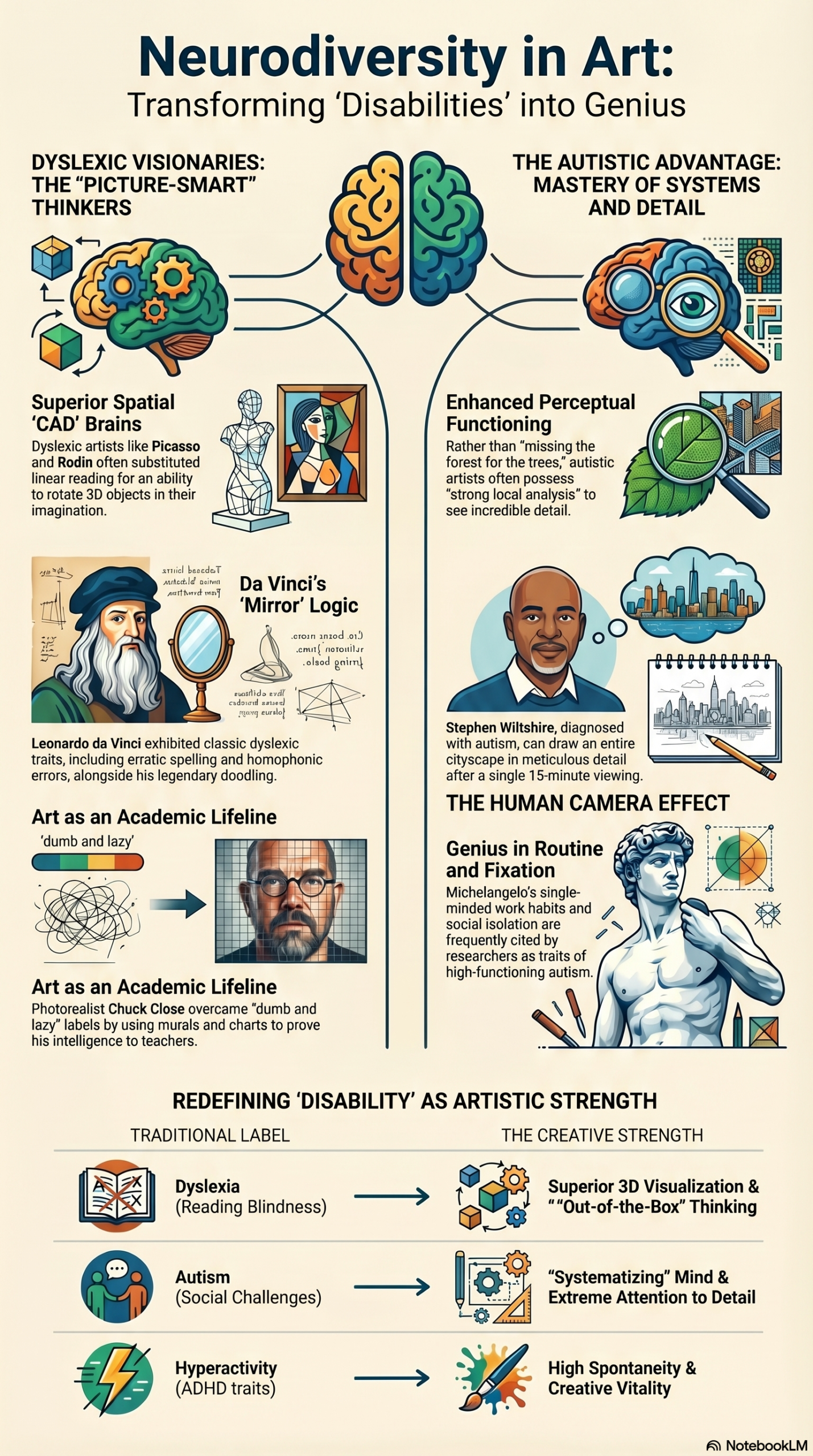
Research from the Yale Center for Dyslexia & Creativity suggests that the dyslexic brain is often wired for superior spatial reasoning and "out-of-the-box" thinking. Branson utilized this by looking at industries that were stagnant—such as airlines or telecommunications—and reimagining them through a consumer-centric lens. He didn't see the obstacles that experts saw; he saw the possibilities.
Notable Famous Figures with Learning Disabilities
While Richard Branson is a primary example, he is far from the only public figure to achieve greatness while navigating a learning disability. The following table provides a comparison of several high-profile individuals and how their neurodivergence influenced their careers.
| Name | Primary Learning Disability | Field of Excellence | Key Contribution/Insight |
|---|---|---|---|
| Sir Richard Branson | Dyslexia | Entrepreneurship | Founded Virgin Group; advocates for "Dyslexic Thinking." |
| Daniel Radcliffe | Dyspraxia | Acting | Openly discusses motor skill challenges; star of Harry Potter. |
| Steven Spielberg | Dyslexia | Film Production | Diagnosed at age 60; attributes visual storytelling to his LD. |
| Whoopi Goldberg | Dyslexia | Entertainment | EGOT winner; speaks on the importance of early intervention. |
| Charles Schwab | Dyslexia | Finance | Revolutionized discount brokerage by simplifying investing. |
| Daymond John | Dyslexia | Business/TV | FUBU founder; uses visual cues for Shark Tank preparation. |
The "Dyslexic Thinking" Movement in 2026
As of 2026, the global perception of learning disabilities has undergone a radical transformation, thanks in large part to the advocacy of people like Branson. In 2022, LinkedIn officially added "Dyslexic Thinking" as a recognized skill that members could add to their profiles. This movement, supported by the charity Made By Dyslexia, emphasizes that the skills associated with dyslexia—creativity, empathy, and cognitive flexibility—are the very skills most needed in the age of Artificial Intelligence.
In the 2026 workforce, companies are actively recruiting neurodivergent talent. They recognize that a "famous person with learning disability" is not an anomaly, but a representative of a cognitive style that drives innovation. Large firms now implement "Neurodiversity Hiring Programs" to ensure they are not filtering out brilliant minds due to traditional interview processes that favor neurotypical communication styles.
Practical Strategies for Success with a Learning Disability
For those who see themselves in the stories of Branson or Spielberg, success is not just about "trying harder"—it is about working differently. If you or someone you know is navigating a career or education with a learning disability, consider these verified strategies:
- Leverage Assistive Technology: In 2026, AI-driven speech-to-text, sophisticated grammar checkers (like Grammarly’s advanced neural models), and audio-reading software have leveled the playing field. These tools allow the user to bypass the mechanical barriers of reading and writing to focus on the content.
- Request Reasonable Accommodations: Under laws like the Americans with Disabilities Act (ADA) in the U.S. or the Equality Act in the U.K., individuals are entitled to workplace adjustments. This might include receiving written instructions in advance, using specialized software, or having extra time for certain tasks.
- Identify Your "Spiky Profile": Most people with learning disabilities have a "spiky" cognitive profile—meaning they have very high abilities in some areas (like verbal reasoning or creativity) and lower abilities in others (like processing speed or spelling). Focus your career on the peaks of those spikes.
- Disclose with Confidence: Following Branson’s lead, many professionals find that disclosing their disability early allows them to frame it as a strength. By explaining how you think, you can help your colleagues understand the best way to collaborate with you.
Frequently Asked Questions
Can you be highly intelligent and have a learning disability?
Yes. Learning disabilities are unrelated to intelligence. In fact, many individuals with dyslexia or dysgraphia have average to superior IQs. The disability refers specifically to a gap between an individual’s potential and their actual achievement in certain academic or cognitive areas due to neurological processing differences.
How did Richard Branson find out he had dyslexia?
Branson was not officially diagnosed until later in life, as the term was not widely used during his childhood. He recognized the symptoms in his own experiences after learning more about the condition as an adult. He has since become a global spokesperson for the British Dyslexia Association.
What is "Dyslexic Thinking"?
Dyslexic Thinking is a term used to describe the unique strengths associated with dyslexia. These include the ability to see the "big picture," advanced pattern recognition, vivid imagination, and high levels of empathy. In the modern economy, these skills are considered essential for leadership and innovation.
Are learning disabilities curable?
Learning disabilities are lifelong neurological conditions; they are not "diseases" to be cured. However, with the right support, strategies, and technology, individuals can thrive and minimize the impact of their challenges. Education focuses on "remediation" (improving the skill) and "compensation" (finding ways around the skill).
Is ADHD considered a learning disability?
Technically, ADHD (Attention-Deficit/Hyperactivity Disorder) is classified as a neurodevelopmental disorder, not a learning disability. However, it is very common for the two to co-occur. Many famous people who have dyslexia also have ADHD, and both require similar types of classroom and workplace accommodations.
Recommendations for Moving Forward
If you are inspired by the journey of Sir Richard Branson and want to explore your own potential or support someone else, the first step is formal assessment. Knowing exactly how your brain processes information is the key to unlocking the right tools.
- For Students: Seek an evaluation through your school district or a private educational psychologist. Ensure that an Individualized Education Program (IEP) or 504 Plan is in place to provide necessary accommodations.
- For Professionals: Explore the resources provided by organizations like Understood.org or the International Dyslexia Association. These groups offer guidance on navigating workplace disclosure and finding mentors.
- For Employers: Review your hiring and promotion practices. Consider whether your company’s culture is inclusive of different thinking styles and whether you are inadvertently excluding high-potential candidates who might be the next Richard Branson.
Ultimately, the story of Sir Richard Branson proves that a learning disability is not a ceiling—it is a different way of seeing the world. By embracing neurodiversity, both individuals and society can reach heights that a one-size-fits-all approach to learning could never achieve.