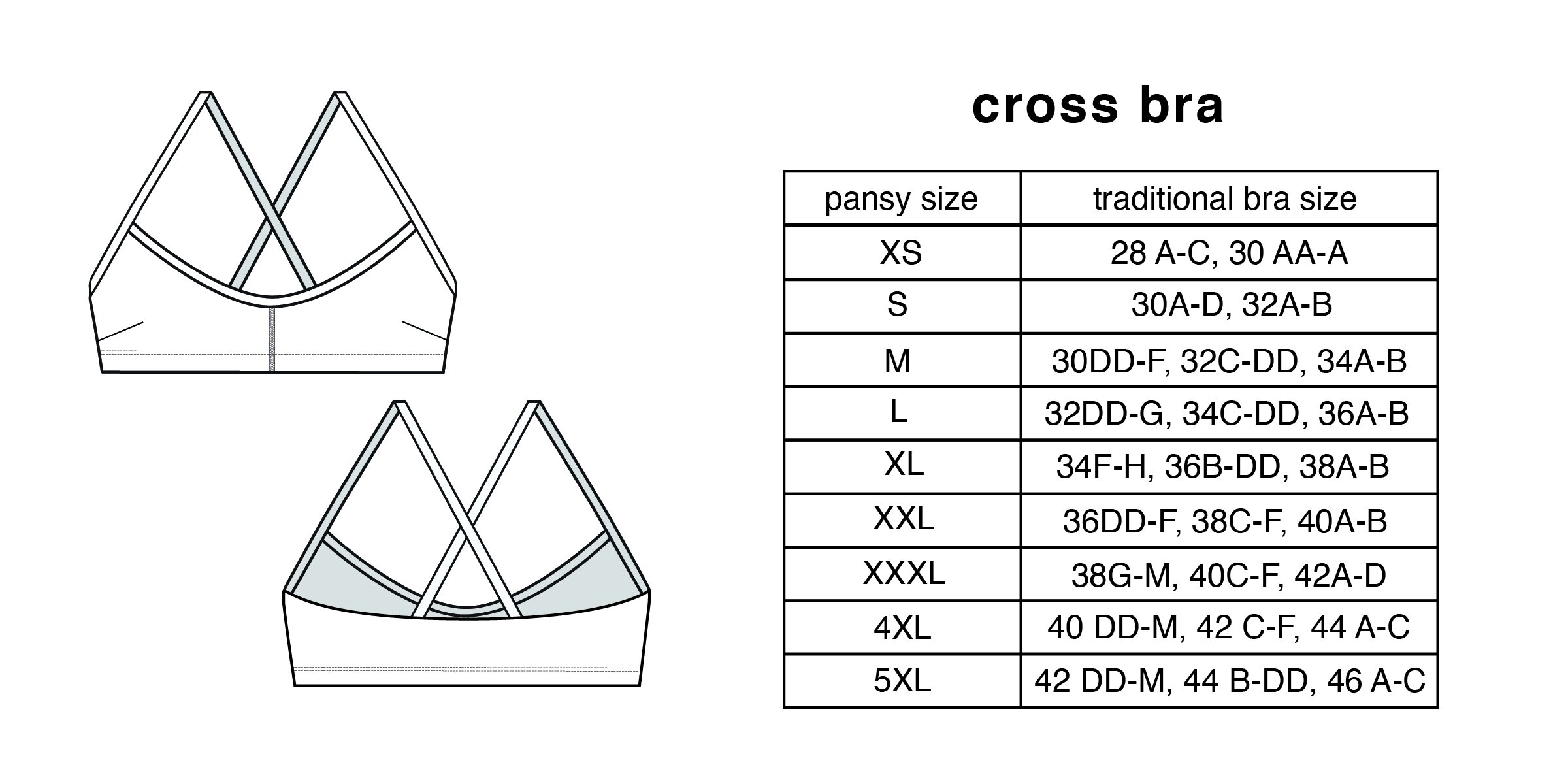
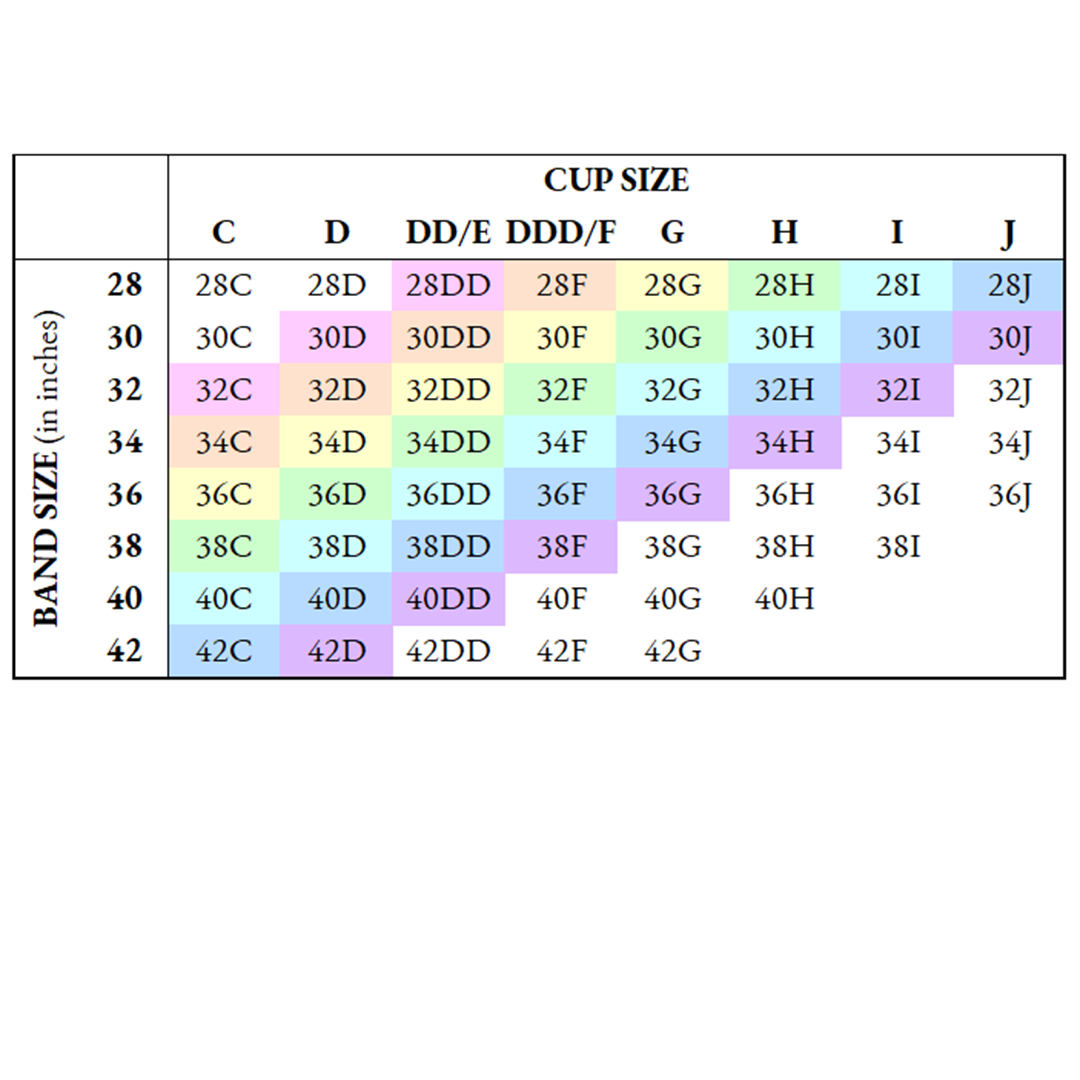
The modern bra cup sizing system, specifically the use of the letters A, B, C, and D, was first introduced in 1932 by S.H. Camp and Company. Before this pivotal shift, bras were sold primarily by bust measurement alone, offering little regard for the actual volume of the breast tissue relative to the ribcage. Over the subsequent century, this system has evolved to include sizes ranging from AAA to M and beyond, reflecting changes in manufacturing technology, body diversity, and consumer demand for better support.
The Pre-Size Era: Corsetry and the "One-Size" Concept (Pre-1900s)
Before the 20th century, the concept of a "cup size" simply did not exist. For hundreds of years, women relied on corsets and stays to shape the torso and support the bust. These garments were designed to compress and lift, creating a unified silhouette rather than supporting each breast individually. The fit of a corset was determined by the waist measurement and the "bust" (the circumference at the widest point), but because the garments were highly adjustable via lacing, precise cup volume was irrelevant.
In the late 1800s, as the Victorian era gave way to more active lifestyles, "bust improvers" and "breast supporters" began to appear in patent offices. These were the early precursors to the bra, often made of wire mesh or linen. However, they were typically sold in small, medium, or large, or simply by the total bust circumference in inches. The primary goal was modesty and a slight lift, not the structured, individualized support we expect in 2026.
1914: The First Modern Bra Patent
The shift toward the modern bra is often credited to Mary Phelps Jacob (later known as Caresse Crosby). In 1914, she received a patent for the "Backless Brassiere." Tired of her corset poking out from under her sheer evening gown, she fashioned a device using two silk handkerchiefs and pink ribbon.
While revolutionary for its comfort and lack of whalebone, Jacob’s design lacked any form of cup sizing. It was essentially a wrap that flattened the breasts. When she sold her patent to the Warner Brothers Corset Company for $1,500, the market was still focused on the "mono-bosom" look—a single, unified mound of flesh. For the next decade, bras (then called brassieres) were sold based on the "chest" measurement. If your bust measured 34 inches, you bought a size 34, regardless of whether that 34 inches was composed of a wide ribcage and small breasts or a narrow ribcage and large breasts.
1932: The Birth of the Alphabet (S.H. Camp and Company)
The most significant date in the timeline of bra cup sizes is 1932. This was the year S.H. Camp and Company introduced the first alphabetized cup system. Unlike modern sizing, which focuses on the difference between the ribcage and the bust, the original A through D system was designed to categorize the "pendulousness" or the degree of sagging and volume of the breast.
- Size A: For the "youthful" or small, firm bust.
- Size B: For the "average" bust.
- Size C: For the "heavy" or large bust.
- Size D: For the "very large" or pendulous bust.
While this was a massive leap forward, it wasn't yet the standardized system we use today. It was a specialized fitting tool used by S.H. Camp, which focused more on orthopedic and maternity supports than high-fashion lingerie.
1937: Warner’s and the Mass-Market "Alphabet Bra"
Seeing the success of segmented sizing, the Warner Brothers Corset Company (now known as Warners) popularized the alphabet system for the general public in 1937. They launched the "Alphabet Bra," which officially moved the industry toward the A, B, C, and D designations.
During this era, the sizing was still somewhat subjective. However, this period also saw the introduction of the "Plus-Four" rule. At the time, bras were made of non-stretch materials like cotton, linen, and silk. Because the fabric did not stretch, manufacturers told women to add four or five inches to their actual underbust measurement to determine their band size. For example, a woman with a 30-inch ribcage would wear a 34 band. This legacy rule continues to cause significant confusion in bra fitting today, even though modern materials like Spandex and Lycra make the extra inches unnecessary.
1940s–1950s: The War Effort and the Bullet Bra
World War II significantly impacted bra development. Metal was rationed for the war effort, leading to the temporary removal of metal underwires. Manufacturers turned to intricate stitching (concentric circles) to provide support and shape. This led to the rise of the "bullet bra" or "torpedo bra" made famous by the "Sweater Girls" of Hollywood.
By the 1950s, the "D" cup was no longer the upper limit. As post-war nutrition improved and the idealized female silhouette became more curvaceous, manufacturers began to see a demand for larger volumes. However, instead of expanding the alphabet significantly, many brands simply shifted their existing patterns. It wasn't until the late 1950s and early 1960s that the "DD" (double D) size was introduced as an intermediate step between D and E.
1970s–1980s: The Sports Bra and Global Standardization
The 1970s saw a shift toward naturalism, with many women opting for "no-bra" bras or lighter construction. However, 1977 brought a major milestone: the invention of the first sports bra. Lisa Lindahl, Hinda Miller, and Polly Smith sewed two jockstraps together to create the "Jogbra." This wasn't just a new product; it forced the industry to consider how cup volume behaved during high-impact movement.
During the 1980s, the sizing system became more standardized across international lines, though discrepancies remained between US, UK, and European (EU) sizing. The UK sizing system began to diverge by including "double" letters (DD, E, F, FF, G, GG), which provided a more granular fit for larger busts compared to the US system, which often skipped straight to DDD or G.
1990s–2010s: The Push-Up Craze and the "Small Band, Large Cup" Revolution
The 1994 relaunch of the Wonderbra in the United States ignited a global obsession with the "push-up" effect. This era focused less on the technical timeline of new letters and more on the engineering of the cup itself—using water, gel, and foam padding to manipulate volume.
However, a more important shift was happening underground. With the rise of internet forums and body-positive communities in the late 2000s, consumers realized that the "Plus-Four" rule was a marketing relic. This led to the "Small Band, Large Cup" revolution. Brands like Panache, Freya, and Bravissimo began catering to women who were 28G or 30J—sizes that simply didn't exist in the 1932 or 1937 frameworks.
2020–2026: The Age of Inclusivity and 3D Scanning
As we stand in 2026, the timeline of bra cup sizes has moved beyond the simple A-D alphabet. We now see a bifurcation in the industry. On one hand, traditional brands have expanded their ranges to include up to a "P" cup (in some specialty US brands) or "K" cup (common in UK brands). On the other hand, technological advancement is challenging the very idea of a "lettered" cup.
Modern 3D body scanning and AI-driven fit algorithms allow companies to create bespoke cups that don't rely on a difference between two measurements. In 2026, it is increasingly common for high-end lingerie retailers to use infrared scanners to map the exact cubic volume and root shape of the breast, providing a "perfect fit" that bypasses the inconsistencies of the historical A, B, C system.
Comparison of Historical vs. Modern Sizing Standards
The following table illustrates how the perception and calculation of cup sizes have shifted from the early 20th century to the standards observed in 2026.
| Era | Primary Sizing Metric | Available Cup Sizes | Fitting Logic |
|---|---|---|---|
| 1910s | Total Bust Circumference | None (One size fits most) | Compression and modesty. |
| 1932 | Pendulousness/Volume | A, B, C, D | Categorizing the "type" of breast. |
| 1950s | Bust minus Underbust (+4 rule) | A, B, C, D, DD | The "Plus-Four" rule for non-stretch fabric. |
| 1990s | Differential in inches | AAA to K (UK) | Emphasis on lift, cleavage, and padding. |
| 2026 | Volumetric/3D Analysis | AAA to M+ | High-stretch materials; removal of the +4 rule. |
Why the "Plus-Four" Rule Still Exists in 2026
One of the most persistent hurdles in the timeline of bra sizing is the "Plus-Four" (or Plus-Five) rule. This is the practice of adding 4 inches to the ribcage measurement to find the band size.
- Historical Origin: In the 1930s, fabrics like Powernet didn't exist. If your ribs measured 30 inches and you wore a 30-inch band made of linen, you wouldn't be able to breathe.
- Marketing Inertia: By adding 4 inches to the band, manufacturers can "fit" more women into a narrower range of cup sizes. For example, a woman who is truly a 30DD can be told she is a 34A. This allows a brand to carry only 15 sizes instead of 60.
- Consumer Confusion: Because many department stores still use this outdated method, many people believe they are a "B cup" when they are actually a "D cup" or larger on a smaller band.
In 2026, professional fitters almost universally reject the Plus-Four rule, recommending that the band size should match the snug underbust measurement.
International Variations in Cup Sizing
While the alphabet is the common language of bras, the letters do not mean the same thing everywhere. As the timeline progressed, different regions developed their own progressions.
- US Sizing: Typically follows A, B, C, D, DD, DDD, G, H, I, J.
- UK Sizing: Follows A, B, C, D, DD, E, F, FF, G, GG, H, HH. The use of double letters (like FF and GG) makes UK sizing much more consistent for larger volumes.
- EU Sizing: Uses centimeters for the band and a simplified A, B, C, D, E, F, G, H progression without double letters (except for the band increments).
Frequently Asked Questions
When was the DD cup size invented?
The DD cup size was introduced in the late 1950s. As the average body size increased and the "Bullet Bra" style demanded more specific volume increments, manufacturers added the "Double D" to bridge the gap between D and the then-rare E cup. By the 1960s, it became a staple in department store inventories.
Why do some brands use DDD and others use E?
This is a matter of regional standardization. In the United States, many manufacturers chose to use "DDD" to avoid confusing customers with the letter E. In the United Kingdom and Europe, "E" is the standard size following "DD." By 2026, most global retailers provide a conversion chart to reconcile these differences.
Who invented the first bra cup?
While S.H. Camp and Company invented the A-D lettering system in 1932, the concept of a "cup" (a structured space for each breast) evolved through the 1920s. Rosalind Kind of the Formfit Company is often credited with helping develop the "molded" cup shape that moved away from the flat-chested flapper look.
How has the "average" cup size changed over time?
In the 1950s, the average bra size was 34B. By the early 2000s, it was cited as 36C. In 2026, the most commonly sold size is 36DD (or 34E in UK sizing). This shift is attributed to a combination of better nutrition, increased average body mass index (BMI), more accurate fitting techniques, and a rise in breast augmentation surgeries.
Is the cup size the same on every band?
No. This is the concept of "Sister Sizing." The volume of a cup is relative to the band. A 34B holds less volume than a 36B. A 32D has roughly the same volume as a 34C or a 36B. Understanding this "volume-to-band" ratio is the most critical part of the modern sizing timeline.
Next Steps for a Perfect Fit
Understanding the history of bra sizing reveals one truth: the system was built on a mix of 1930s orthopedic theory and 1950s marketing convenience. To find your actual size in 2026, do not rely on the labels you wore five years ago.
- Measure your snug underbust: This is your band size (round up to the nearest even number if you are between sizes).
- Measure your full bust: Do this while wearing a non-padded bra or no bra at all.
- Calculate the difference: Each inch of difference generally represents one cup letter (1" = A, 2" = B, 3" = C, 4" = D, 5" = DD/E).
- Consult a UK-based size chart: Even if you are in the US, UK brands often offer better consistency and more options for larger cup volumes.