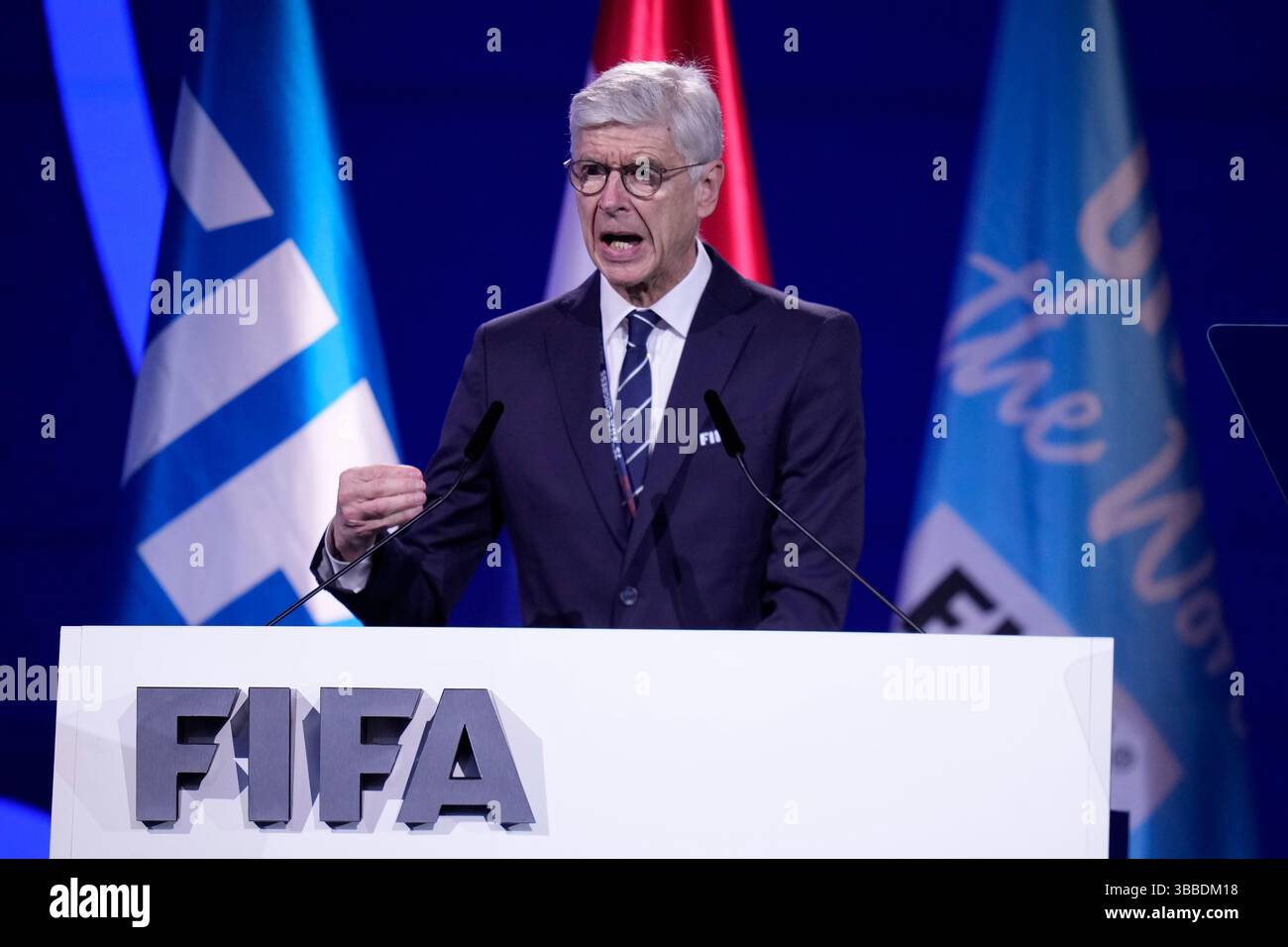
Since transitioning from his legendary tenure at Arsenal FC, Arsene Wenger has assumed the role of FIFA’s Chief of Global Football Development. In this capacity, he is responsible for overseeing the growth of the sport, managing technical standards, and spearheading innovations in football analysis and coaching education, effectively shifting his influence from a single club to the global governing body of the game.
The Transition from Management to Governance
Arsene Wenger’s departure from Arsenal in 2018 marked the end of an era in English football, but it also signaled the beginning of a significant chapter in his professional life. Unlike many of his contemporaries who opted for punditry or immediate returns to coaching at different clubs, Wenger sought an environment where he could influence the structural integrity and tactical evolution of the sport on a worldwide scale.
In November 2019, FIFA appointed him as the Chief of Global Football Development. This role is not merely honorary; it involves the systematic analysis of how football is played, coached, and structured across all of FIFA’s member associations. By moving into a high-level administrative role, Wenger has been able to channel his decades of tactical experience into policy proposals that affect leagues, national teams, and youth academies globally.
Defining the Role: Chief of Global Football Development
As the architect of FIFA’s technical department, Wenger’s core mandate is to ensure that football continues to progress in terms of quality, accessibility, and fairness. His work is primarily filtered through the FIFA Football Development division. The main focus areas of his work include:
- Technical Analysis: Utilizing data and video analysis to provide feedback to coaches and national federations about emerging tactical trends in the modern game.
- Coaching Education: Standardizing coaching licenses and development pathways to ensure that coaches in developing nations have access to the same intellectual resources as those in elite European leagues.
- Tournament Innovation: Advising on the structure of global competitions, including the expansion of the FIFA World Cup and the refinement of youth tournaments.
- Technological Integration: Working alongside the International Football Association Board (IFAB) to refine the laws of the game, including the implementation of Semi-Automated Offside Technology (SAOT).
Tactical Evolution and Rule Reforms
One of the most visible aspects of Wenger’s tenure at FIFA has been his advocacy for changes to the Laws of the Game. Wenger has frequently argued that football must adapt to remain attractive and dynamic. His influence has been particularly felt in discussions regarding the offside rule, where he has proposed a shift to a "daylight" rule, where an attacker is only offside if their entire body is ahead of the second-to-last defender.
Beyond the offside rule, Wenger has been a vocal proponent of modernizing tournament formats. He argues that the increase in the number of participating teams in the FIFA World Cup is a necessary step to provide exposure to underrepresented regions, thereby stimulating local investment in football infrastructure. His technical department produces exhaustive "Technical Reports" following major tournaments, which serve as blueprints for national team managers to study the evolving physical and tactical requirements of elite football.
Comparing Managerial vs. Administrative Impact
To understand the weight of his current position, it is helpful to compare his legacy as a club manager with his current administrative influence.
| Feature | Arsenal Manager (1996–2018) | FIFA Chief of Football Development |
|---|---|---|
| Primary Scope | Daily operations at one club | Global policy and strategy |
| Key Performance Indicator | Trophies, league position, profit | Global game growth, technical standards |
| Tactical Focus | Personnel development, internal playstyle | Trends across 211 member associations |
| Outcome Influence | Immediate (weekly matches) | Long-term (structural reforms) |
As an Arsenal manager, Wenger was constrained by budgets, transfer markets, and the physical limits of his squad. As a FIFA official, he operates within a framework of international governance, aiming to raise the "floor" of global football quality rather than competing for a specific title.
The Role of Data and Technology
A hallmark of Wenger’s philosophy at Arsenal was the early adoption of data analytics and sports science. He has imported this focus into FIFA. His department has developed the "FIFA Football Language," a comprehensive analytical framework used to define and identify tactical patterns. This is part of a larger project to digitize the learning experience for coaches globally. By providing standardized video analysis tools and performance data to federations that may lack the infrastructure of a Premier League side, Wenger is effectively democratizing access to high-level football intelligence.
Addressing Critics and Challenges
Wenger’s tenure at FIFA has not been without controversy. His support for more frequent international tournaments, such as a biennial World Cup proposal, faced significant backlash from European clubs and leagues concerned about player welfare and calendar congestion. Furthermore, some traditionalists argue that his proposed changes to the offside rule threaten the inherent rhythm of the game.
Wenger defends these positions by emphasizing the "global development" aspect of his mandate. He argues that the current football ecosystem is overly concentrated in Europe, and that FIFA must create more competitive matches for nations in Africa, Asia, and the Americas to bridge the historical gap in quality and funding. For Wenger, the goal is to ensure that talent development is not geographically biased.
Education and Talent Identification
A significant portion of his time is dedicated to the FIFA Talent Development Scheme (TDS). This program aims to identify and nurture young talent in nations that lack traditional academy structures. Wenger’s team provides expert consultants who travel to various regions to assess the existing youth setup and suggest improvements.
The program focuses on:
- Infrastructure: Helping federations build, maintain, and utilize pitches and training centers.
- Personnel: Training local scouts to identify talent earlier in their development.
- Pathways: Creating clear transitions from grassroots football to professional, league-based environments.
FAQ: Understanding Arsene Wenger’s FIFA Tenure
Does Arsene Wenger still manage a professional football club? No, Arsene Wenger retired from club management in 2018. His current role at FIFA is an executive and technical position, not a coaching role in the traditional sense of managing a team on a matchday.
What is the "FIFA Football Language"? The FIFA Football Language is a diagnostic and training tool designed by Wenger’s team. It provides a standardized terminology for describing match events, tactical movements, and player roles, intended to act as a universal vocabulary for coaches and analysts across the world.
How has Arsene Wenger changed the World Cup? Wenger has been a key advisor on the expansion of the FIFA World Cup tournament format. His research suggests that a larger field of teams provides more developmental opportunities for emerging nations, which, he argues, will eventually raise the overall technical level of international football.
Does Arsene Wenger decide the rules of football? Wenger acts as an influential advisor to the International Football Association Board (IFAB), which is the body that determines the Laws of the Game. While he does not have the final vote, his technical reports and proposals are highly influential in the decision-making process for potential rule changes.
How does his work affect youth academies? Through the FIFA Talent Development Scheme (TDS), Wenger’s department provides technical expertise to help national football associations establish, fund, and manage youth development programs, particularly in regions that have historically struggled to produce professional-level talent.
Final Recommendations for Further Exploration
For those interested in the ongoing work directed by Arsene Wenger, the best resource is the FIFA Training Centre. This platform acts as the public-facing repository for the technical insights, video analysis, and educational resources produced by his department. Whether you are a student of tactical theory, a coach looking for standardized training drills, or a fan interested in the structural evolution of the sport, this portal provides a direct view into the modern methodologies that define his current work. To remain updated on his latest proposals, follow the official FIFA communications regarding their technical committees, as these contain the most accurate and verified updates regarding future implementations of his development strategies.