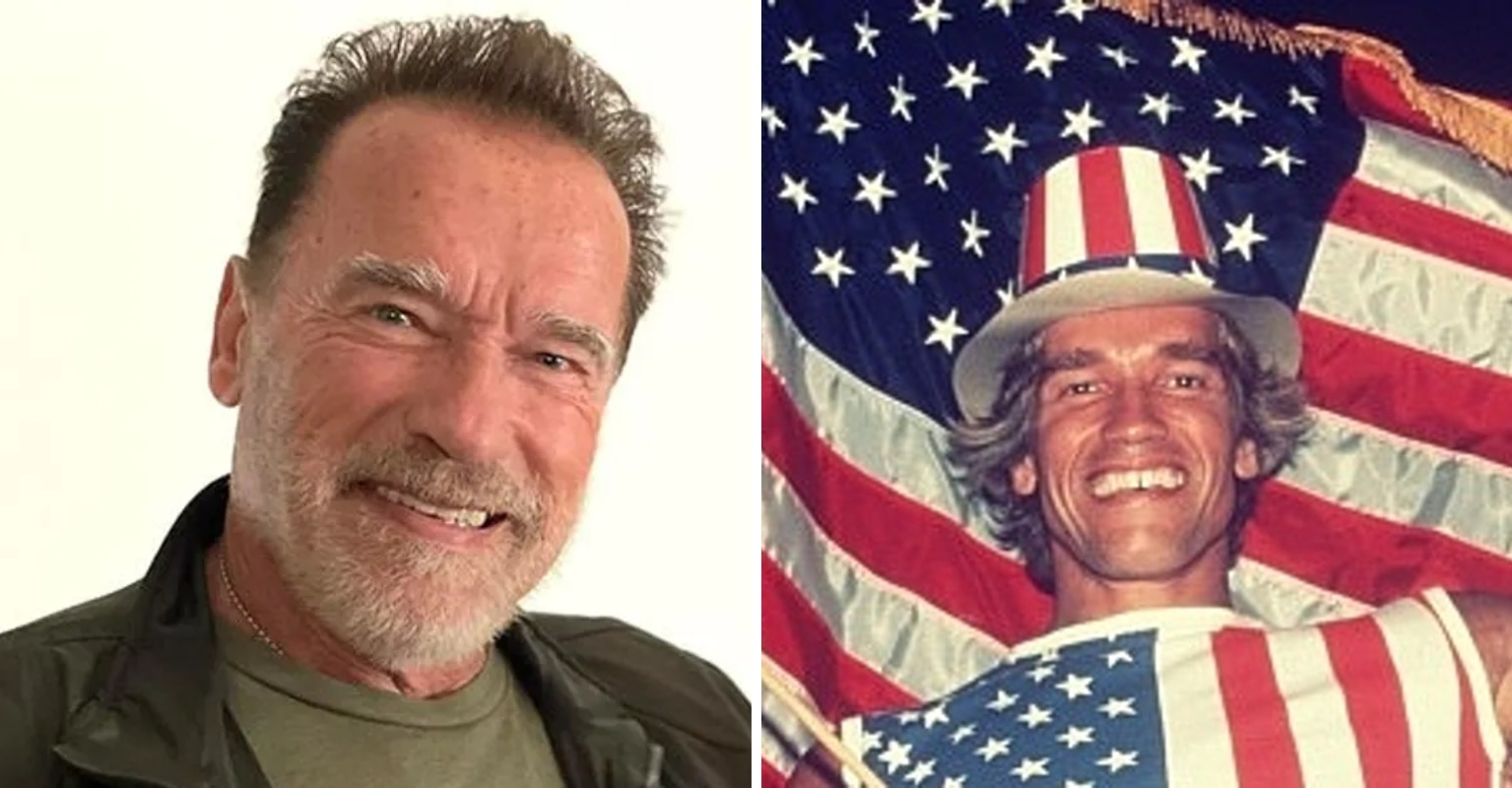
Arnold Schwarzenegger is a naturalized United States citizen, having officially gained his citizenship on September 16, 1983. While he maintains his original Austrian citizenship through a special dispensation, his status as a naturalized citizen grants him nearly all rights of a U.S. national, with the notable exception of presidential eligibility.
The story of Arnold Schwarzenegger’s American citizen status is more than a simple biographical footnote; it is a complex legal narrative that touches upon international law, constitutional restrictions, and the specific requirements of the United States Citizenship and Immigration Services (USCIS). For decades, Schwarzenegger has served as the "poster child" for the naturalization process, demonstrating both the opportunities and the legal limitations inherent in moving from an immigrant status to one of the highest political offices in the country. As of 2026, his status remains unchanged: he is a proud dual citizen of the United States and Austria, a position he has navigated with significant legal and political care.
The Journey to Naturalization: From Immigrant to Citizen
Arnold Schwarzenegger arrived in the United States in September 1968 at the age of 21. At the time, he spoke very little English and possessed limited financial resources, but he held a visionary goal of succeeding in bodybuilding and cinema. His initial entry was facilitated by his status as an elite athlete, a precursor to what we now categorize under various "extraordinary ability" visa paths.
For the first fifteen years of his life in America, Schwarzenegger operated as a legal permanent resident (LPR), colloquially known as a Green Card holder. During this period, he was required to adhere to the standard regulations governing foreign nationals, which included maintaining a clean criminal record and paying U.S. taxes on his burgeoning global income. The decision to pursue full citizenship was not one he took lightly, as it involved a profound legal commitment to a new sovereign power.
The naturalization process culminated in 1983. To become a citizen, Schwarzenegger had to meet several statutory requirements that remain largely similar today:
- Continuous Residence: He had to demonstrate that he had lived in the U.S. as a permanent resident for at least five years.
- Physical Presence: He was required to show he was physically present in the U.S. for at least 30 months out of those five years.
- Good Moral Character: This involved a background check to ensure no significant legal or ethical violations had occurred during his residency.
- English Language and Civics: Like all applicants, he had to pass a test demonstrating his ability to read, write, and speak English, as well as a basic understanding of U.S. history and government.
On September 16, 1983, Schwarzenegger took the Oath of Allegiance. This moment was transformative, as it shifted his legal identity from a "resident alien" to a "U.S. citizen," granting him the right to vote, carry a U.S. passport, and run for most public offices.
The Complexity of Dual Citizenship: The Austrian Dispensation
One of the most technically nuanced aspects of Arnold Schwarzenegger’s American citizen status is his retention of Austrian citizenship. Under standard Austrian nationality law (specifically the Austrian Nationality Act), an Austrian citizen who voluntarily acquires foreign citizenship usually loses their Austrian nationality automatically.
However, there is a legal mechanism—Section 28 of the Austrian Nationality Act—that allows a citizen to petition the Austrian government to retain their citizenship if it is in the interest of the Republic or if there are personal reasons of significant weight. Because of Schwarzenegger’s immense global fame and his role as an unofficial ambassador for Austria, he was granted a special dispensation to remain an Austrian citizen while simultaneously becoming an American.
This dual status is significant for several reasons:
- Legal Protections: He enjoys the protections and rights of both the European Union (via Austria) and the United States.
- Property and Inheritance: Dual status simplifies legal matters regarding his holdings and family interests in Styria, Austria.
- Political Optics: During his tenure as Governor of California, his dual status was occasionally a topic of debate, though it never legally interfered with his ability to execute his duties.
The United States government does not formally "recognize" dual citizenship in the sense of promoting it, but it does not prohibit it. The U.S. Supreme Court has ruled that a person can hold two citizenships without losing their U.S. status, provided they do not intend to relinquish their American allegiance.
Constitutional Limits: The "Natural Born" Barrier
Despite his status as a U.S. citizen for over four decades, Schwarzenegger faces a hard legal ceiling regarding his political aspirations. Article II, Section 1, Clause 5 of the U.S. Constitution states: "No Person except a natural born Citizen, or a Citizen of the United States, at the time of the Adoption of this Constitution, shall be eligible to the Office of President."
Because Schwarzenegger is a "naturalized" citizen (someone who acquired citizenship after birth) rather than a "natural born" citizen (someone who acquired citizenship at birth, usually by being born on U.S. soil or to U.S. citizen parents), he is constitutionally barred from serving as President or Vice President of the United States.
The "Arnold Amendment" Debate
Throughout the early 2000s, particularly during his governorship (2003–2011), there was significant public and legislative discussion regarding a potential constitutional amendment. Often referred to as the "Equal Opportunity to Govern Amendment" or the "Arnold Amendment," the proposal sought to allow naturalized citizens who had been U.S. citizens for a specific duration (usually 20 or 35 years) to be eligible for the presidency.
As of 2026, no such amendment has passed. The process for amending the Constitution remains incredibly rigorous, requiring a two-thirds majority in both the House and Senate, followed by ratification by three-fourths of the State legislatures. Schwarzenegger himself has frequently expressed his desire to run for the presidency if the law allowed, but he has remained a steadfast observer of the existing legal framework.
Comparing Rights: Naturalized vs. Natural Born Citizens
To understand the full scope of Arnold Schwarzenegger’s American citizen status, it is helpful to compare the rights afforded to him against those afforded to citizens born within the United States.
| Right / Responsibility | Naturalized Citizen (e.g., Schwarzenegger) | Natural Born Citizen |
|---|---|---|
| Right to Vote | Yes | Yes |
| U.S. Passport Eligibility | Yes | Yes |
| Federal Employment | Yes (Most positions) | Yes |
| Run for Congress/Senate | Yes (After 7/9 years of citizenship) | Yes |
| Serve as Governor | Yes (Varies by state law) | Yes |
| Eligibility for President | No | Yes |
| Loss of Citizenship | Possible via Denaturalization (Fraud) | Extremely rare (Renunciation only) |
| Jury Duty Requirement | Yes | Yes |
As shown in the table, the legal distinction is narrow but consequential. For Schwarzenegger, this distinction defined the peak of his political career, limiting him to the governorship of the nation's most populous state.
Impact on Political Career and Public Service
Schwarzenegger’s citizen status was the foundation of his political life. In 2003, he won the California gubernatorial recall election. California state law requires a governor to be an elector (a registered voter) and a citizen, but it does not require them to be "natural born."
During his two terms as Governor, Schwarzenegger’s status as an immigrant was a central theme of his platform. He often used his naturalization story to advocate for civic participation and the "American Dream." However, his status also required him to navigate sensitive international issues. For example, as an Austrian citizen, he faced criticism from his home country regarding California's use of the death penalty, which is abolished in Austria and the European Union. This highlight's the unique pressure placed on high-profile dual citizens who hold public office.
Even in 2026, his status continues to influence his advocacy. He remains a vocal proponent of immigration reform, often arguing for a system that provides a clear and attainable path to citizenship for those who, like him, wish to contribute to the American economy and culture.
Frequently Asked Questions
Can Arnold Schwarzenegger run for President in 2026?
No. Under Article II of the U.S. Constitution, only natural-born citizens are eligible for the presidency. Since Schwarzenegger was born in Austria and became a citizen through naturalization in 1983, he remains ineligible unless the Constitution is amended.
Did he lose his Austrian citizenship when he became an American?
No. Typically, Austrian law results in the loss of citizenship upon naturalizing elsewhere, but Schwarzenegger applied for and received a special waiver from the Austrian government. This allows him to maintain dual nationality legally.
How many years has Arnold Schwarzenegger been a U.S. citizen?
As of 2026, Arnold Schwarzenegger has been a U.S. citizen for 43 years. He took his oath of citizenship on September 16, 1983, in Los Angeles, California.
What is the difference between his status and a Green Card holder?
As a citizen, Schwarzenegger has the right to vote in federal elections, run for public office (except the presidency), and travel with a U.S. passport without residency requirements. A Green Card holder (permanent resident) can live and work in the U.S. but cannot vote and can lose their status if they remain outside the country for extended periods.
Has he ever faced the threat of losing his citizenship?
Naturalized citizenship can only be revoked through a process called denaturalization, which usually requires evidence that the citizenship was obtained through fraud or by concealing material facts. There have been no such allegations or legal actions against Schwarzenegger; his status is considered secure and fully compliant with U.S. law.
Next Steps for Understanding Naturalization
For those looking to follow a similar path or understand the legal nuances of Schwarzenegger’s status, the primary resource is the U.S. Citizenship and Immigration Services (USCIS). The naturalization process (Form N-400) remains the standard vehicle for legal permanent residents to attain the same status Schwarzenegger holds today.
If you are a dual national or considering naturalization, it is essential to consult with both U.S. immigration authorities and the consulate of your home country to determine if a "retention of citizenship" application (similar to the one Schwarzenegger used for Austria) is necessary. For those interested in the constitutional debate regarding presidential eligibility, monitoring the National Archives for historical amendments and current legislative proposals provides the best context for why Schwarzenegger’s status remains a point of significant legal interest in 2026.