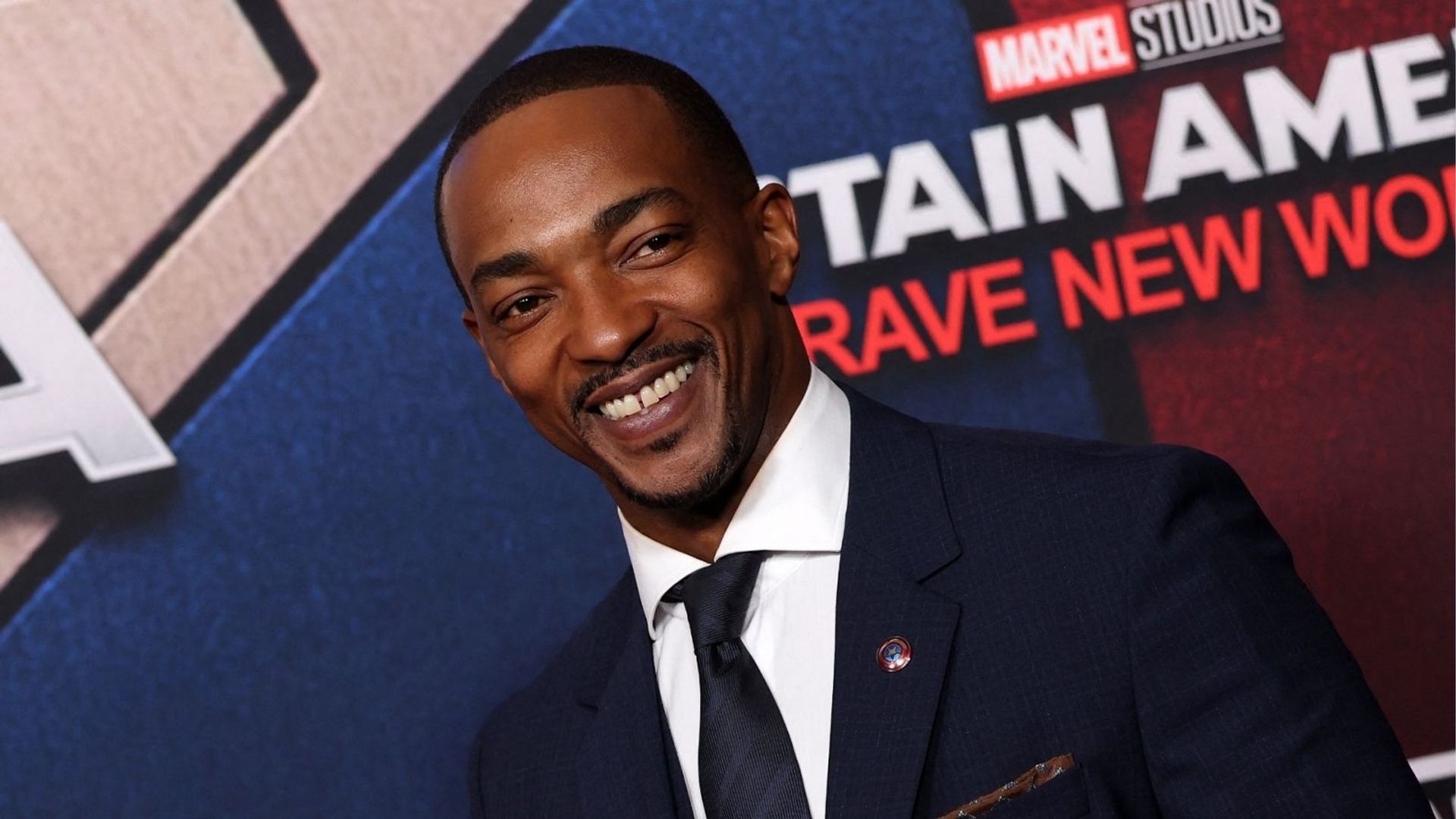
Anthony Mackie defines masculinity through a blend of traditional "provider" values and modern emotional intelligence. Grounded in his New Orleans upbringing and Juilliard training, he advocates for a manhood characterized by duty, labor, and the courage to be vulnerable, most notably seen in his portrayal of Sam Wilson as Captain America.
As we navigate the cultural landscape of 2026, the conversation surrounding masculinity has shifted from rigid archetypes to more fluid, nuanced expressions. At the center of this dialogue is Anthony Mackie, an actor who has successfully bridged the gap between the old-school "tough guy" and the contemporary, emotionally aware leader. Mackie’s perspective on what it means to be a man is not merely a collection of quotes; it is a philosophy forged in the working-class streets of New Orleans and refined on the world’s most prestigious stages. By examining his public statements, his career choices, and his role as the first Black Captain America, we can gain a comprehensive understanding of how he is reshaping the masculine ideal for a new generation.
The Foundations of a New Orleans Upbringing
To understand Anthony Mackie’s brand of masculinity, one must look at his origins in the 7th Ward of New Orleans. Mackie often cites his father, Willie Mackie Sr., as the ultimate blueprint for manhood. Willie Mackie ran a roofing business, a physically demanding trade that emphasized the "provider" aspect of masculinity. In various interviews over the years, Mackie has highlighted that his father’s work ethic and commitment to family formed the bedrock of his own identity.
This background instills a sense of "traditional" masculinity that focuses on duty and labor. Mackie has frequently spoken about the importance of men being a stabilizing force within their families. This isn't about dominance, but rather about the responsibility of presence. In a world where the definition of "manhood" can sometimes feel untethered from practical action, Mackie anchors it in the dignity of work and the protection of one's community. He represents a demographic of men who value the "alpha" trait of reliability over the "alpha" trait of aggression.
Furthermore, his upbringing in the vibrant, often precarious environment of New Orleans taught him the value of resilience. This resilience is a key component of his masculine identity—not a stoic, silent resilience, but one that is vocal, communal, and deeply rooted in heritage. It is the masculinity of the "provider" who also knows how to celebrate life, a balance that is often missing from more austere interpretations of manhood.
The Juilliard Influence: Artistry and Vulnerability
A significant, yet often overlooked, aspect of Mackie’s masculinity is his background as a classically trained actor at Juilliard. This experience added a layer of intellectual and emotional depth to his character. For a young man from the 7th Ward, entering the world of Shakespeare and contemporary drama required a different kind of strength: the strength to be observed and the strength to express complex emotions.
Juilliard forced Mackie to dismantle the "armor" that many men are taught to wear from a young age. This training is evident in his performances, where he often balances physical presence with a palpable sensitivity. This "Juilliard Masculinity" suggests that a man is not diminished by his ability to access his feelings; rather, he is expanded by it. Mackie’s career demonstrates that a man can be a soldier, a roofer, and a Shakespearean actor all at once, without any of these roles contradicting his manhood.
By embracing the arts, Mackie challenged the narrow definition of "toughness." He has often advocated for the idea that being a "man’s man" includes being cultured, articulate, and expressive. This synthesis of the "street" and the "stage" has made him a unique figure in Hollywood, capable of playing the most hyper-masculine roles while retaining a sense of grace and poise.
Navigating the Controversy: The "Traditionalist" Stance
Anthony Mackie’s views on masculinity have not always been met with universal acclaim. In the mid-2010s, he faced significant backlash for comments made in interviews regarding gender roles. Specifically, he spoke about the idea of men and women having distinct "roles" within a relationship, famously using a "make a sandwich" metaphor that many interpreted as sexist or antiquated.
However, viewing these comments through the lens of 2026, many cultural analysts see them less as a rejection of equality and more as an expression of his belief in "complementarity." Mackie’s argument was rooted in the idea of mutual service—the notion that in a partnership, both individuals have duties to one another. While his phrasing was arguably clumsy and triggered valid criticism, his underlying point was about the loss of "duty" in modern relationships.
This controversy highlights the tension between Mackie’s traditional roots and the rapidly evolving standards of gender discourse. He represents a segment of the population that believes certain traditional masculine virtues—like being the "protector" or the "lead"—still have value, provided they are practiced with respect and love rather than chauvinism. This "Traditionalist-Modernist" friction is a defining feature of his public persona, making him a lightning rod for debates on how much of the "old ways" should be preserved in the modern era.
Redefining the Hero: Sam Wilson as Captain America
The most significant contribution Mackie has made to the conversation on masculinity is his portrayal of Sam Wilson in the Marvel Cinematic Universe (MCU). When Sam Wilson officially took up the shield in The Falcon and the Winter Soldier and solidified his role in 2025’s Captain America: Brave New World, the archetype of the "super-soldier" was fundamentally changed.
Unlike Steve Rogers, who was a product of 1940s stoicism and literal physical enhancement, Sam Wilson is a man whose greatest power is his empathy. As a former pararescue airman who specialized in counseling veterans with PTSD, Sam’s masculinity is built on the foundation of the "healer" rather than the "destroyer." This is a revolutionary shift for a character who represents the pinnacle of American heroism.
Sam Wilson’s Masculine Pillars:
- Empathy as Tactical Advantage: Sam wins conflicts not just through force, but through understanding the motivations of his enemies (e.g., Karli Morgenthau).
- The Weight of Legacy: His struggle with the shield represented a man grappling with the historical trauma of his people, showing that a "strong" man acknowledges history rather than ignoring it.
- Leading Without a Serum: By being a "regular man" in a world of gods, Sam’s masculinity is defined by effort, training, and the refusal to give up, rather than innate superiority.
This version of Captain America models a masculinity that is inclusive and communicative. It suggests that the modern man should be as comfortable in a therapy session as he is in a cockpit. For young boys watching Mackie on screen, the message is clear: being a hero—and being a man—starts with the heart.
Fatherhood and the Legacy of the Four Sons
Mackie is a father to four sons, a role that he takes with extreme seriousness and which informs much of his public discourse on masculinity. In a world where many fathers struggle to find their footing, Mackie is vocal about the necessity of being an active, disciplining, and loving presence.
He often speaks about the "craft" of fatherhood. He doesn't view it as a passive status, but as a project that requires constant attention. He has discussed the importance of teaching his sons the value of a dollar, the importance of manners, and the necessity of respect for women. By doing so, he is attempting to pass down a version of masculinity that is "refined"—one that maintains the strength of his father’s generation but discards the toxic elements of the past.
His approach to parenting is a rejection of "absentee masculinity." He argues that the greatest failure of a man is the failure to raise his children properly. This focus on domestic responsibility as the ultimate test of manhood is a recurring theme in his life, providing a counter-narrative to the "playboy" image often associated with high-profile actors.
Vulnerability and the "Bromance" Phenomenon
One cannot discuss Anthony Mackie’s masculinity without mentioning his high-profile friendship with co-star Sebastian Stan. Their "bromance" has become a cultural touchstone, demonstrating a form of male friendship that is affectionate, supportive, and hilariously transparent.
This friendship serves as a model for "healthy male intimacy." In their press tours and social media interactions, Mackie and Stan frequently joke, tease, and praise each other in ways that subvert the "stoic loner" trope. Mackie, in particular, is often the aggressor of affection, forcing a level of openness that is both entertaining and meaningful. This public display of platonic love between two "action stars" helps normalize the idea that men can—and should—be emotionally close to their peers. It suggests that the "lone wolf" model of masculinity is not only outdated but unhealthy.
| Aspect of Masculinity | Anthony Mackie’s Interpretation | Impact on Modern Archetypes |
|---|---|---|
| The Provider | Focuses on the "duty" of labor and financial stability for the family. | Reaffirms the dignity of blue-collar roots in a digital world. |
| Vulnerability | Views emotional intelligence as a primary leadership skill. | Replaces the "silent hero" with the "communicative leader." |
| Physicality | Emphasizes "earned" strength and disciplined training. | Promotes a grounded, human-centric view of physical prowess. |
| Social Role | Believes in the value of mentorship and "brotherhood." | Challenges male isolation by modeling public platonic intimacy. |
| Fatherhood | Sees raising sons as a man's most critical "assignment." | Positions domestic engagement as the peak of masculine achievement. |
The "Modern Traditionalist" in 2026
As of 2026, Anthony Mackie has carved out a unique space that we might call "Modern Traditionalism." He does not shy away from the word "man" or the responsibilities traditionally associated with it, but he has stripped away the requirements of misogyny and emotional repression. He represents a path forward for men who feel alienated by hyper-liberal critiques of masculinity but also feel stifled by the toxic expectations of the "man-o-sphere."
His masculinity is active rather than reactive. He isn't a man because he suppresses others; he is a man because he elevates his family, his community, and his craft. Whether he is restoring a classic car, leading the Avengers, or advocating for the youth of New Orleans, he does so with a sense of purpose that is inherently masculine in its drive, yet modern in its delivery.
FAQs
What does Anthony Mackie say about the "alpha male" concept?
Anthony Mackie tends to redefine "alpha" as being the most responsible person in the room rather than the most aggressive. He has stated in various forums that a real man is one who provides, shows up, and takes care of his business without needing to shout about it. His version of an "alpha" is modeled after his father—a man of quiet strength and loud actions.
How did his New Orleans background shape his views on being a man?
Growing up in New Orleans exposed Mackie to a culture that values family, hard physical labor, and community resilience. He saw manhood as a tool for survival and community building. This "working-class" ethos remains at the core of his identity, even as a global superstar, influencing his preference for roles that feature "everyday heroes."
Is Anthony Mackie's version of masculinity considered "toxic"?
While some of his past comments on gender roles sparked debate, most cultural critics in 2026 view his stance as "traditionalist" rather than "toxic." The key difference lies in his emphasis on respect and service. "Toxic" masculinity typically involves the degradation of others, whereas Mackie’s philosophy focuses on the self-improvement and duty of the man himself.
Why is his friendship with Sebastian Stan important to this topic?
Their friendship is a public-facing example of "positive male bonding." It shows that masculine men can be vulnerable, funny, and deeply supportive of one another without it threatening their "manhood." In a time when male loneliness is a significant issue, their bond provides a healthy blueprint for adult male friendships.
How does Sam Wilson’s Captain America reflect Mackie’s personal values?
Sam Wilson reflects Mackie’s belief that true strength comes from empathy and a sense of service to others. By playing a hero who uses his words and his heart as much as his shield, Mackie is able to project his personal philosophy—that being a man is about the courage to help others heal—to a global audience.
Practical Recommendation: Embracing "Nuanced Manhood"
For those looking to apply Mackie’s philosophy of masculinity to their own lives, the path is one of balance. Focus on the "provider" aspect not just in terms of finances, but in terms of emotional stability. Practice "active fatherhood" or mentorship, viewing your role as a builder of the next generation. Finally, reject the false choice between being "tough" and being "sensitive." Like Mackie, aim to be the man who can roof a house during the day and appreciate the nuances of a complex narrative at night. The goal is a masculinity that is robust enough to handle the world’s challenges but gentle enough to nurture those who depend on you.